Best Exterior Siding for Hot, Sunny Climates
For most homes in hot, sunny climates, fiber cement is the best exterior siding choice. For dark colors or coastal heat, choose a factory-finished product with a strong UV warranty and a light-to-medium color. Poor choices can fade, chalk, warp, or buckle fast. This guide compares fiber cement, vinyl, engineered wood, metal, and similar long-life claddings for sun, heat, humidity, and maintenance.
Why hot sun changes siding performance
Hot, direct sun changes siding in three ways: it breaks down color and coatings, it expands and contracts materials more aggressively, and it dries out sealants and caulk sooner. West-facing walls and dark colors can take more of a heat load because they absorb more heat and stay hot longer after sunset.
UV fade and color shift
UV exposure can fade pigments, chalk coatings, and make a once-even color look patchy. That matters most on large, uninterrupted walls where the eye catches small differences fast. Factory finishes and UV-resistant coatings often hold color longer than field-applied paint or uncoated product.
Heat movement and warp risk
Heat makes siding move. Vinyl is often the most sensitive here, especially on long runs, tight cuts, and wall sections that get all-day sun. Fiber cement and metal generally move less in use, but both still depend on clearances, fastening pattern, and compatible trim details.
Caulk, sealant, and finish breakdown
Sun-baked caulk dries out faster at joints, penetrations, and transitions. Once those seals crack, water and hot air can get behind the siding. In hot weather, installation quality matters as much as material choice.
Hot-climate siding scorecard
This scorecard ranks the main failure modes that matter in hot, sunny weather. Lower maintenance does not mean no maintenance, and a strong material can still fail early if it is installed badly or finished with the wrong product for the exposure.
| Material | UV fade risk | Heat warp risk | Repaint cycle | Maintenance burden | Install sensitivity |
|---|---|---|---|---|---|
| Fiber cement | Low when factory finished | Low | About 7 to 15 years | Low to moderate | High |
| Vinyl | Moderate, lower with UV-resistant coating variants | Moderate to high in extreme heat | No repaint cycle for most solid-color products, but color change can occur | Low | Moderate to high |
| Engineered wood | Moderate | Low to moderate | Often needs periodic repainting or refinishing | Moderate to high | Moderate |
| Metal | Low when coated | Low | Long, coating-dependent cycle | Low | Moderate |
Is fiber cement the best choice?
Fiber cement is often considered a strong all-around choice for many hot, sunny homes because it is durable, moisture-resistant, relatively low maintenance, and fire-resistant. It handles sun better than vinyl in many full-sun settings, and it avoids the rot risk that can push wood products into more frequent upkeep.
Why it holds up in sun
Fiber cement does not depend on a flexible plastic body to stay flat in heat, so it is less prone to the warp problems that show up on sun-baked vinyl walls. Its finish still matters. Factory paint and good primer systems hold up better than a finish that was rushed in the field.
Where weight and install quality matter
Fiber cement is heavy. That weight is not a dealbreaker, but it does mean the installer needs correct fastening, flashing, and trim details. Poor installation can cause edge damage, joint issues, and early finish problems even when the siding itself is a strong fit for the climate.
Maintenance timing to plan
Repainting fiber cement may be needed every 7 to 15 years depending on manufacturer guidance. In hot, sunny regions, inspect caulk, joints, and trim paint each year, then plan touch-ups before small failures spread. Do not treat it as maintenance-free.
Does vinyl siding fade in direct sun?
Yes, vinyl siding can fade in direct sun. Better UV-resistant coating variants hold color longer, but standard vinyl can still lose color over time, and some products can warp in extreme heat. It remains affordable and low-maintenance, yet it is less forgiving on walls that get hard afternoon sun.
Standard vinyl vs. UV-coated products
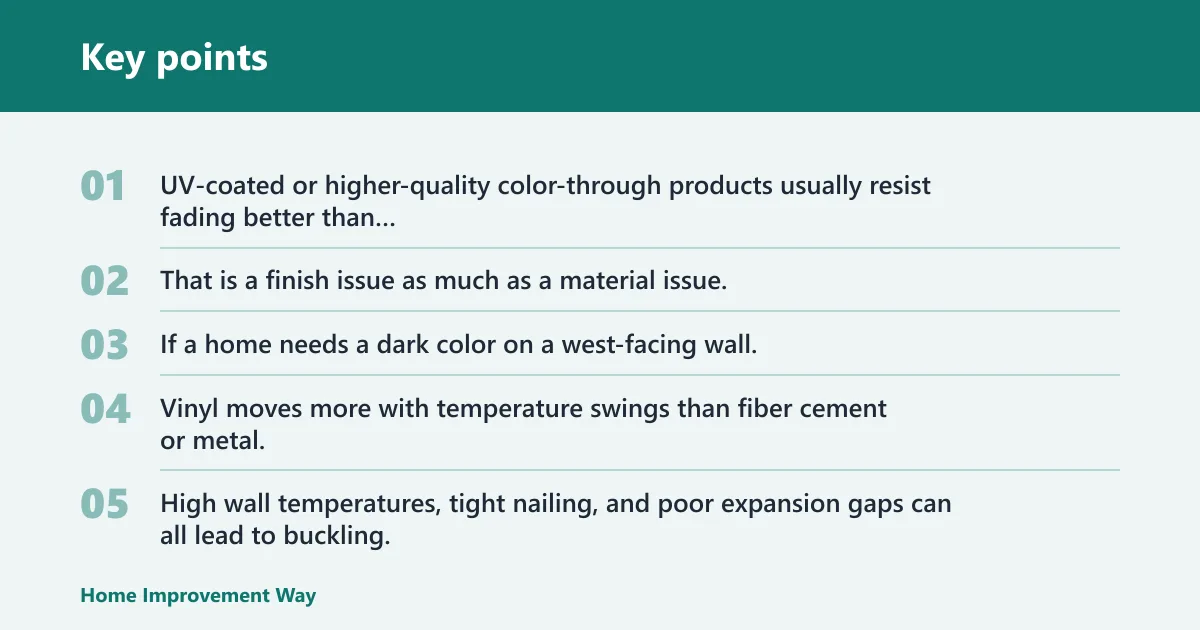
UV-coated or higher-quality color-through products usually resist fading better than basic vinyl. That is a finish issue as much as a material issue. If a home needs a dark color on a west-facing wall, the coating quality matters more than the sales brochure wording.
Heat warp risk in extreme exposure
Vinyl moves more with temperature swings than fiber cement or metal. High wall temperatures, tight nailing, and poor expansion gaps can all lead to buckling. James Hardie also notes that vinyl gets more brittle as temperature drops, which matters if the same house sees seasonal swings.
When insulated vinyl may help
Insulated siding can be worth considering if you want a more impact-tolerant feel, slightly better wall flatness, or a small comfort boost on a hot wall with limited shade. It is not a fix for poor sun exposure, and it does not erase fade risk. Choose it for a specific need, not as a cure-all.
Picture a two-story house with a west wall that gets hard sun from 2 p.m. to sunset. Basic dark vinyl on that wall is more likely to show waviness and fade than a light-color, UV-coated product with room for movement. The material choice and the fastening details both matter.
Metal siding in hot climates
Metal siding is lightweight and fire-resistant, and it handles sun well when coated. It is a strong option for hot, humid, or coastal areas if the coating and seal details are correct. Its main tradeoff is dent risk from hail, thrown debris, or accidental impact.
Sun exposure and coated finishes
Coated metal can stay color-stable longer than a low-grade finish, especially when the color is light to medium. It is a good match for strong UV exposure because the substrate itself does not soften the way vinyl can. The coating is the part to protect.
Rust resistance and seal quality
Metal siding is rust-resistant when sealed correctly. That makes edge treatment, fasteners, penetrations, and cut edges important. Coastal or humid areas need careful attention to sealant and product specification so moisture does not work into exposed places.
Dent risk from hail or debris
Metal is not dent-proof. A branch strike or hail event can leave visible marks, especially on thinner panels. If the home faces storm exposure as well as sun, the dent tradeoff should be part of the decision.
Engineered wood in sun and heat
Engineered wood is treated to resist moisture and insects, so it performs better than raw wood in many exposure situations. Even so, engineered wood is often a better fit for drier regions or mild climates with regular maintenance. Harsh sun and high humidity raise the upkeep burden.
Moisture and insect treatment
The treatment helps reduce rot and pest damage, but it does not make the product sunproof. Edges, cut ends, and joints still need careful sealing. If those details are weak, the material can still take on moisture and fail sooner than expected.
Why it fits drier or mild areas better
Engineered wood can look good and perform well where heat is present but not relentless, and where humidity is not constantly pushing moisture into joints. In very sunny climates, especially where siding is dark or unshaded, it usually demands more oversight than fiber cement or coated metal.
Maintenance needs in harsh weather
Plan on regular washing, paint checks, and sealant inspections. If the coating starts to break down, water can reach vulnerable edges. In hot, sunny conditions, that upkeep timeline shortens faster than many homeowners expect.
Which siding fits your house?
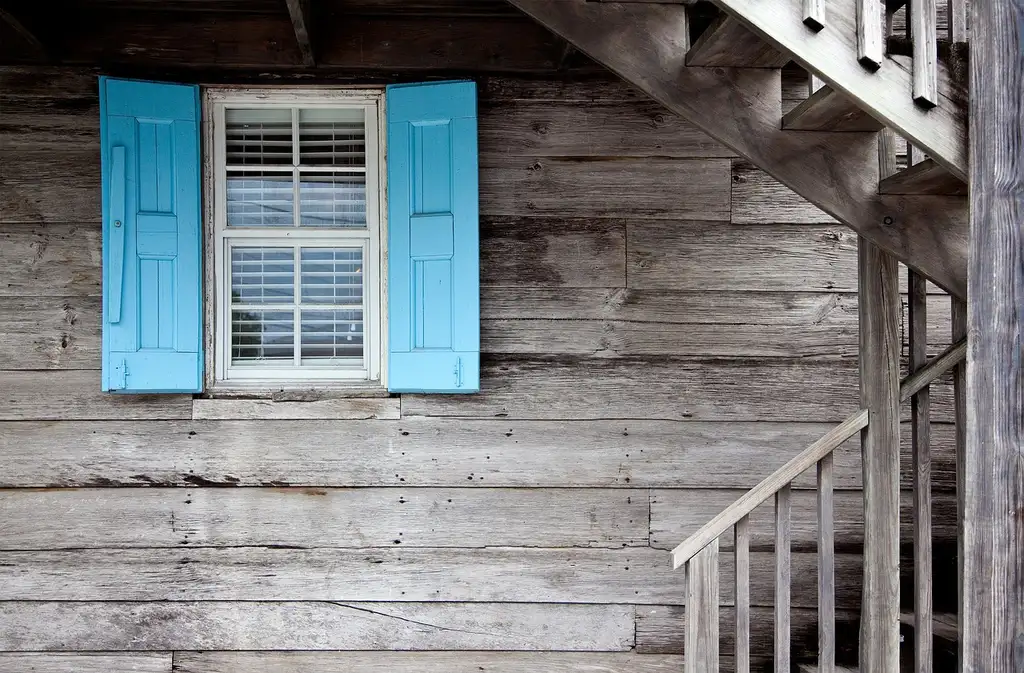
The best match depends on where the sun hits hardest, what color you want, how close you are to salt air, and how much maintenance you can accept. Use the house condition, not just the product label, to make the call.
Full-sun west wall
If one wall gets all-day or late-day sun, fiber cement or coated metal is usually the safer choice. Both handle heat movement better than standard vinyl. On a west wall, finish durability matters as much as core material strength.
Dark color plan
For a dark siding color, start with a factory-finished product that has a strong UV warranty and clear manufacturer guidance for your climate zone. Dark colors absorb more heat, so they narrow the margin for error on vinyl and can increase finish stress on any material.
Coastal heat
For coastal heat, metal and fiber cement are often the stronger candidates if the product is specified for that environment. Metal is a good fit for coastal or humid areas when coated properly, and fiber cement is well suited to hot, humid areas. Salt exposure makes seal quality non-negotiable.
Low-maintenance priority
If low maintenance matters most, fiber cement and coated metal usually beat engineered wood over time. Vinyl is also low-maintenance up front, but its long-term heat and fade limits can erase that advantage on the wrong wall or color.
- Check which walls get the strongest afternoon sun.
- Decide whether the finish will be light, medium, or dark.
- Match the material to your climate zone and exposure.
- Review manufacturer guidance for fasteners, clearances, and sealants.
- Plan a maintenance calendar before you buy.
Suppose a one-story home has a broad south wall and a deep overhang on the front, but the rear wall gets full sun and no shade. A homeowner choosing dark vinyl for the rear wall is taking on more fade and warp risk than a fiber cement or coated metal option would create.
Frequently asked questions
What type of siding is the best?
For most hot, sunny homes, fiber cement is the best balance of durability, sun resistance, and maintenance. It handles heat and moisture well, and it gives you more color and finish stability than standard vinyl in severe exposure. Installation quality still has to be right.
What siding is best for hot sunny climates?
Fiber cement is usually the strongest all-around pick, with coated metal close behind for some homes. If you need budget pricing, vinyl can work, but choose UV-resistant products and avoid the hottest, darkest wall exposures when possible. Climate and color both matter.
Is fiber cement good for hot climates?
Yes. Fiber cement is described as durable, moisture-resistant, relatively low maintenance, and well suited to hot, humid areas. It is a strong choice when the home gets steady sun, but it is heavy and needs proper installation. Expect repainting about every 7 to 15 years.
What siding handles UV exposure best?
Coated metal and factory-finished fiber cement usually handle UV exposure well. The key is not just the base material; it is the coating system and how long that finish keeps its color and adhesion. Uncoated or lower-grade finishes lose ground much faster.
Should I choose insulated siding for a hot climate?
Choose insulated siding only if you want its specific benefits, such as a more rigid feel or some added wall comfort. It does not solve fade risk, and it does not remove heat movement concerns on a badly exposed wall. For many hot climates, finish quality matters more.
Sponsored / affiliate links. As an Amazon Associate I earn from qualifying purchases. I may earn additional commission from eligible campaigns.