Vinyl vs. Fiber Cement Siding: Which Fits Your House?
Choose vinyl if you want the lower-cost, lower-maintenance option on a dry, fairly simple exterior. Choose fiber cement if your house gets strong sun, wind, or fire concern, and you want a longer repaint cycle. Pick the wrong siding and you can face early repairs, warped panels, or higher lifetime costs. This guide compares cost, durability, maintenance, and house-fit factors so you can choose the right material.
Vinyl vs. fiber cement siding: the house-fit trade-off
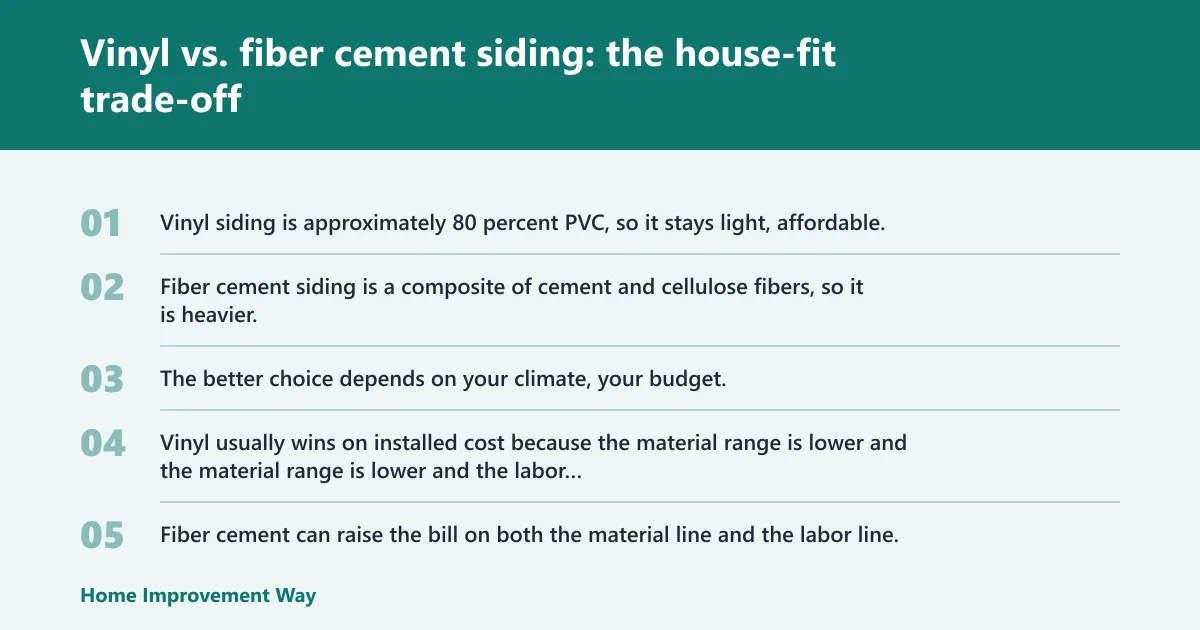
Vinyl siding is approximately 80 percent PVC, so it stays light, affordable, and easy to install. Fiber cement siding is a composite of cement and cellulose fibers, so it is heavier, more durable, and more fire-resistant. The better choice depends on your climate, your budget, and how long you plan to keep the house.
| Decision factor | Vinyl | Fiber cement siding: which fits your house | Winner |
|---|---|---|---|
| Upfront cost | About $3 to $12 per square foot | About $5 to $14 per square foot | Vinyl |
| Installation difficulty | Relatively easy to install | Harder to carry, maneuver, and install; often needs specialized tools and PPE | Vinyl |
| Maintenance | Usually needs less upkeep | May need caulking and exterior paint if not precolored | Vinyl |
| Fire resistance | Lower than fiber cement | More fire-resistant | Fiber cement siding: which fits your house |
| Hot sun and weather exposure | Moisture-resistant exterior shell | Resists moisture, frost, temperature fluctuations, and ultraviolet radiation | Fiber cement siding: which fits your house |
Upfront cost and labor
Vinyl usually wins on installed cost because the material range is lower and the labor is simpler. Fiber cement can raise the bill on both the material line and the labor line, especially when crews need special cutting tools, dust control, and more handling time.
That gap matters most on large houses and full replacements. A small quote difference can become much larger once trim, corners, and labor hours are added.
Maintenance and repainting
Vinyl is ready for use as soon as it is installed, and that is part of its appeal. Fiber cement often needs caulking and exterior paint if it is not precolored, so the house can ask for more upkeep over time.
Precolored fiber cement can reduce repainting needs, but it does not remove the need to inspect joints and sealant. If you want a surface that asks for less attention, vinyl has the edge.
Durability, weather, and fire
Fiber cement is the tougher material. It generally handles moisture, frost, temperature swings, and ultraviolet radiation better than vinyl, and it also offers better fire resistance.
Vinyl still provides moisture resistance and exterior protection, but it can be a weaker fit where sun exposure is intense or where the wall assembly may see impact, heat stress, or recurring movement.
Style and finish
Vinyl offers a wide range of styles and colors, which helps when you want quick color selection and a lower-cost finish. Fiber cement also comes in many looks, but finish planning matters more because painted products can need a repaint cycle later.
For a simple update, vinyl often meets the style need without adding much complexity. For a more traditional or higher-end appearance, fiber cement may fit the design goal better.
📊 Vinyl siding is approximately 80 percent PVC. Source: Fiber Cement Siding vs. Vinyl Siding: What’s the Difference?.
What is vinyl siding, and where does it fit best?
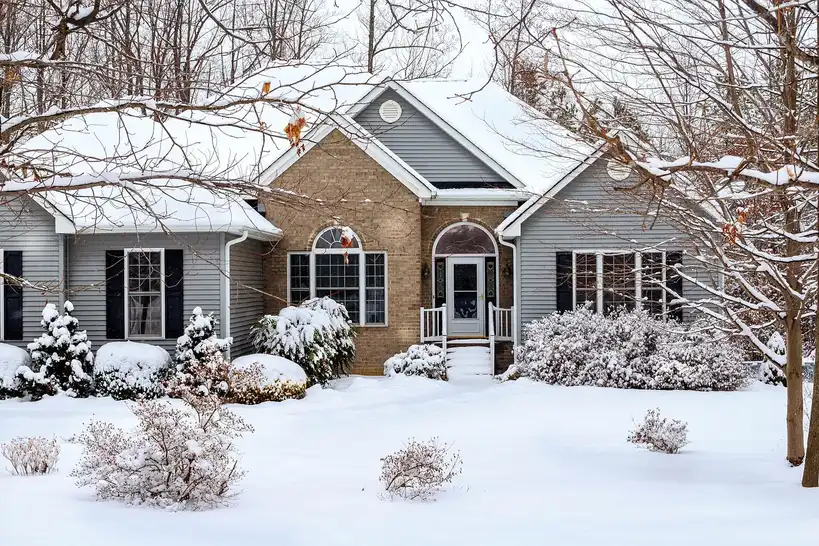
Vinyl siding is a PVC-based exterior cladding that is lightweight, low-cost, and low-maintenance. It fits best on houses where budget control and simple installation matter more than maximum fire resistance or the longest possible repaint cycle.
Material basics
Vinyl is approximately 80 percent PVC and is described as a fairly durable and lightweight material. It is also moisture-resistant, which helps it perform as a practical exterior shell on many homes.
Strengths for budget-focused projects
Vinyl is often the straightforward answer for a replacement on a tight budget. It is cheaper to buy, easier to install, and usually faster to finish, which can keep total project cost in check.
Limits in heat and impact-prone spots
Vinyl can be a weaker fit on walls that get strong afternoon sun or rough exposure. A common first-timer mistake is assuming low maintenance means no planning; poor fastening, bad flashing, or heat-related movement can still create gaps, waviness, or early repairs.

What is fiber cement siding, and where does it fit best?
Fiber cement siding is made from cement plus cellulose fibers and other components. It fits best when you want stronger durability, better fire resistance, and better performance across a wide range of climates, even if that means higher install effort and some ongoing maintenance.
Material basics and why it costs more
Fiber cement is heavier than even insulated vinyl siding, and that weight affects transport, cutting, fastening, and crew time. Those factors help explain why it usually costs more to install.
Strengths for durability and fire resistance
Fiber cement is more durable than vinyl and is also more fire-resistant. That makes it a sensible pick for houses where longevity, exterior toughness, or code-driven concerns sit high on the list.
Limits around weight, cutting, and repainting
Fiber cement is more difficult to carry, maneuver, and install, so the job can demand more skill and more labor. If it is not precolored, it needs caulking and exterior paint, which means you should plan for future upkeep rather than treating it like a finish-it-once material.
Which siding is easier to install?
Vinyl is easier to install than fiber cement, and that difference can matter as much as the product price itself. Fiber cement is heavier, harder to cut and fasten, and often calls for specialized tools, PPE, and skilled handling, which can add labor cost and slow the job.
Why vinyl is usually simpler for DIY or faster crews
Vinyl panels are lighter and more forgiving to move on ladders and scaffolding. Because vinyl is ready for use as soon as it is installed, the finishing step is simpler, which can help DIYers and smaller crews keep momentum.
Why fiber cement adds labor, tools, and PPE needs
Fiber cement takes more effort to carry and maneuver, and safe installation requires the right tools and protective gear. That matters because cutting and fastening mistakes can affect fit, moisture control, and finish quality.
How installation complexity affects total project cost
When labor availability is tight, fiber cement can widen the price gap beyond the published material range. Ask whether the quote includes trim, flashing, caulking, paint, waste disposal, and any extra time needed for handling heavy boards.
How do cost, maintenance, and lifespan compare?
Vinyl usually costs less upfront and needs less maintenance, while fiber cement usually asks for more labor and some repainting or recaulking over time. The cheaper material on day one is not always the cheaper wall over 15 or 20 years, especially if appearance, paint cycles, and local labor rates matter.
Installed cost ranges per square foot
Vinyl siding costs range between $3 and $12 per square foot. Fiber cement siding costs about $5 to $14 per square foot. The overlap means a simple house with easy access can narrow the gap, while a complex facade can widen it.
Upkeep over the first 10 to 20 years
Vinyl usually stays on a lower-maintenance path. Fiber cement may need caulking and exterior paint, though precolored products can stretch the time between repainting jobs.
How paint, caulk, and replacement parts change the bill
Small maintenance tasks add up when you have many joints, trim transitions, or sun-exposed walls. If you expect to repaint anyway, fiber cement may still fit your plan; if you want fewer recurring tasks, vinyl tends to stay simpler.
Which siding works best in your climate?
Fiber cement is the stronger climate match in many harsher conditions because it resists moisture, frost, temperature fluctuations, and ultraviolet radiation. Vinyl can still work well, especially where moisture resistance and a lower-cost exterior shell are the main goals, but climate details should drive the choice.
Hot, sunny, or high-UV exposure
Fiber cement usually has the advantage in strong sun because it handles ultraviolet radiation better. Vinyl can still perform, but hot exposure raises the importance of installation quality, fastening method, and color choice.
Wet, humid, or freeze-thaw exposure
Fiber cement is a stronger fit where walls see repeated wetting, frost, and temperature swings. Vinyl offers moisture resistance, but it depends more on proper flashing, drainage, and detailing at seams and penetrations.
Moisture detailing around joints, trim, and penetrations
Neither material excuses bad detailing. Water around windows, doors, corners, and utility penetrations can cause trouble if flashing and sealant are ignored, and that is where many failures begin.
House-fit decision matrix: which material wins in each scenario?
This matrix treats the choice as a house-fit decision rather than a universal ranking. The scores below use a 1-to-5 scale, with 5 indicating the strongest fit in that scenario.
| Scenario | Material | Cost | Maintenance | Durability | Fire resistance | Install complexity | Winner |
|---|---|---|---|---|---|---|---|
| Budget repaint | Vinyl | 5 | 5 | 3 | 2 | 5 | Vinyl |
| Budget repaint | Fiber cement siding: which fits your house | 3 | 3 | 4 | 4 | 2 | Vinyl |
| Long-term resale | Vinyl | 4 | 4 | 3 | 2 | 5 | Fiber cement siding: which fits your house |
| Long-term resale | Fiber cement siding: which fits your house | 3 | 3 | 5 | 5 | 2 | Fiber cement siding: which fits your house |
| Hot, sunny exposure | Vinyl | 4 | 4 | 3 | 2 | 5 | Fiber cement siding: which fits your house |
| Hot, sunny exposure | Fiber cement siding: which fits your house | 3 | 3 | 5 | 4 | 2 | Fiber cement siding: which fits your house |
| Wet, freeze-thaw exposure | Vinyl | 4 | 4 | 3 | 2 | 5 | Fiber cement siding: which fits your house |
| Wet, freeze-thaw exposure | Fiber cement siding: which fits your house | 3 | 3 | 5 | 4 | 2 | Fiber cement siding: which fits your house |
| DIY replacement | Vinyl | 5 | 5 | 3 | 2 | 5 | Vinyl |
| DIY replacement | Fiber cement siding: which fits your house | 2 | 3 | 5 | 4 | 1 | Vinyl |
Budget repaint scenario
Vinyl wins when the job is driven by budget and speed. It costs less, installs more easily, and avoids the repaint cycle that fiber cement can bring if you choose an unpainted product.
Long-term resale scenario
Fiber cement tends to win when resale value and buyer confidence matter more than the initial check. Buyers often respond well to a material that signals durability, fire resistance, and lower risk of visible wear over time.
Hot and sunny exposure scenario
Fiber cement is the stronger fit for walls that see strong sun for much of the day. Vinyl can work, but heat and UV exposure make detailing and product choice more important.
Wet and freeze-thaw exposure scenario
Fiber cement usually suits this scenario better because it is resistant to moisture, frost, temperature fluctuations, and ultraviolet radiation. That advantage matters most when the wall assembly is exposed to repeated weather stress.
DIY replacement scenario
Vinyl is the safer and simpler DIY path for most homeowners. Fiber cement can be done by a capable DIYer, but the weight, tool needs, and PPE demands make it a tougher first project.
Choose vinyl if… / Choose fiber cement siding: which fits your house if…
Choose vinyl if your priorities are lower upfront cost, simpler installation, and less routine maintenance. It is also the more practical choice for a straightforward exterior, a short ownership horizon, or a project where labor quotes vary widely and you need to keep the scope tight.
Choose fiber cement siding: which fits your house if your priorities are durability, fire resistance, and long-term performance. It is a better match for hot sun, wet or freeze-thaw weather, older homes that need a sturdier finish, and neighborhoods where a more permanent-looking exterior matters.
Neither material is ideal without good flashing, correct trim details, and solid installation. Vinyl can warp or look uneven if heat and fastening are poorly managed, and fiber cement can become expensive if repainting, caulking, and labor are ignored in the budget.
- A practical approach is to get two or three written quotes that separate material, labor, trim, caulking, paint, and disposal.
- Ask whether the fiber cement quote includes specialized tools, PPE, and dust control.
- Check what the warranty covers: finish, cracking, fading, and installation work are often different items.
- Confirm whether the installer has local availability for repairs or matching trim later.
- Match the siding to the wall exposure, not just the catalog photo.
Frequently asked questions
Which is better for my house: vinyl or fiber cement siding?
Vinyl is usually better for a budget-conscious house with simpler exposure and a shorter maintenance list. Fiber cement is usually better when the house needs stronger fire resistance, better performance in sun or harsh weather, or a finish that supports long-term resale goals.
How much more does fiber cement cost than vinyl siding?
Fiber cement siding costs about $5 to $14 per square foot, while vinyl siding costs range between $3 and $12 per square foot. The gap can be modest on a simple house, but labor, trim, and paint can widen it on a larger or more detailed exterior.
Is fiber cement siding more durable than vinyl siding?
Yes. Fiber cement is generally more durable than vinyl and is also more resistant to fire. It is a stronger choice where long-term weather exposure, impact, or repeated repaint cycles are part of the ownership plan.
Which siding is easier to install, vinyl or fiber cement?
Vinyl is easier to install. Fiber cement is heavier than even insulated vinyl siding, more difficult to carry and maneuver, and often requires specialized tools, PPE, and more skilled labor, which can increase total project cost.
Which siding is better for fire resistance?
Fiber cement is better for fire resistance. Vinyl is a PVC-based plastic product, while fiber cement is made from cement plus cellulose fibers and other components, which makes it the stronger option when fire concern is part of the decision.
Which siding needs less maintenance over time?
Vinyl usually needs less maintenance over time. Fiber cement may need caulking and exterior paint if it is not precolored, though precolored fiber cement can reduce repainting needs. The lower-maintenance choice is often the better fit for busy homeowners.
Which siding works best in different climates?
Fiber cement works best across a wider range of climates because it resists moisture, frost, temperature fluctuations, and ultraviolet radiation. Vinyl still provides moisture resistance and a protective exterior shell, but it is more dependent on careful detailing in demanding climates.
Is vinyl siding or fiber cement siding more eco-friendly?
Fiber cement is often the more eco-friendly choice at a basic material level because it uses natural and sustainable raw materials. Vinyl is PVC-based plastic, so homeowners who weigh material origin and composition may prefer fiber cement, though installation waste and repaint cycles also matter.
Sponsored / affiliate links. As an Amazon Associate I earn from qualifying purchases. I may earn additional commission from eligible campaigns.