What Siding Works Best on Older Homes? Fiber Cement or Wood
For many older homes, fiber cement is often a strong all-around siding choice because it is durable and tends to hold paint well; choose wood when you need the closest match to original trim and profiles. Bad siding can trap moisture, distort details, and trigger costly rot repairs. This guide explains which siding materials fit older houses, what to avoid, and how to choose around existing framing, flashing, and trim.
Older-home siding basics
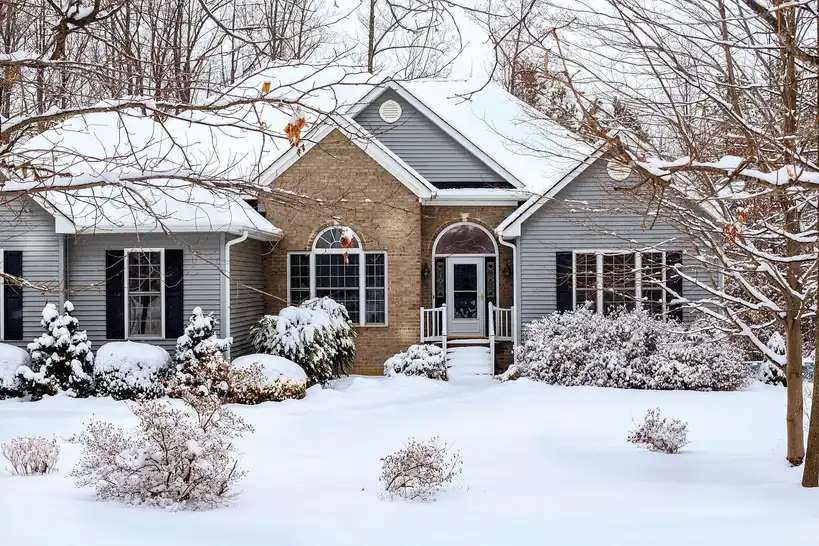
Older houses are different because the wall is often not perfectly flat, square, or uniform. The right siding has to work with that reality, not hide it with extra caulk. You also need enough trim depth, a clear drainage path, and a plan for any hidden rot before new material goes up. On homes in a historic district or under preservation rules, the siding choice may also be limited by local code, required profiles, or review requirements.
Why old framing changes the choice
Out-of-square framing changes how siding lays at corners, windows, and soffits. A material that looks fine on a straight new wall can telegraph waves, gaps, or misaligned reveals on an older one. That is why the best siding for a house depends on the condition of the wall beneath it, not on one fixed product.
What a siding system has to cover
A siding system on an older home has to cover more than the face of the wall. It needs to bridge minor irregularities, connect cleanly to window and door trim, and protect the sheathing without trapping moisture. If the wall assembly is weak, the best-looking siding can still fail early.
Where older homes fail first
Common failure points are window heads, corners, board joints, and places where previous repairs left mixed materials behind. Concealed rot often shows up after tear-off, not before. That is why wall condition, not just appearance, should drive the siding choice.
Best siding by older-home condition
Match the material to the wall problem in front of you. The best siding by older-home condition is the one that fits the structure, keeps moisture moving the right direction, and preserves the house’s proportions without forcing the wall to be rebuilt more than necessary.
| Older-home condition | Recommended siding type | Required prep | Red flags |
|---|---|---|---|
| Historic preservation | Wood siding | Match reveal, trim profile, corner treatment, and board width; repair substrate before install | Thick modern profiles that change proportions; vinyl trim that flattens details |
| Uneven walls | Fiber cement siding | Shim, level, and replace bad sheathing so the wall plane is as true as possible | Trying to float major waves with sealant or furring alone |
| Hidden rot | Fiber cement or wood after repair | Tear off, inspect framing and sheathing, replace damaged sections, then reinstall with proper flashing | Overlaying new siding over soft substrate or blackened sheathing |
| Humid climate | Fiber cement or composite siding | Use a drainage plane, correct flashing, and moisture-tolerant wrap or barrier layer | Trapping water behind an overlay; relying on caulk at every joint |
| Low-maintenance priority | Vinyl siding or composite siding | Check flatness, add backing where needed, and plan for trim transitions | Choosing hollow profiles for a badly warped wall |
| Budget rebuild | Vinyl siding | Repair only what is unsafe, then level the worst areas and replace failed flashing | Installing over hidden damage to save labor |
Which siding hides uneven walls best?
Fiber cement can look more forgiving than rigid wood lap or thin vinyl panels on a wall with minor irregularities, but no product can hide major wall waves well. If the wall is far out of plane, prep matters more than the siding brand.
Why flatness matters more than product marketing
Older walls often vary at studs, rim boards, and corner assemblies. That makes reveal lines drift and corner joints look sloppy. A siding board can be strong and still look wrong if the substrate bows underneath it.
How panel width and profile affect alignment
Profile, lighting, and wall prep all affect how visible irregularities are. Some wider lap profiles can soften the look of small imperfections, but they do not remove them, and they will not correct a wall that is out of plane. Flat panels, by contrast, make waves easier to see.
If the wall is so uneven that trim lines wander or fasteners will not hold, shimming alone will not solve it. Tear-off becomes the better option when you find soft sheathing, missing sheathing, or repeated repairs stacked over one another. A common first-timer mistake is to install new siding over a wall that still moves.
How do you match new siding to an older house?
Match new siding by preserving the house’s trim depth, reveal dimensions, and overall proportions. The best visual match usually comes from a profile that fits the era of the home, not from the most modern-looking product. Corners, window casings, and band boards should stay consistent with the original design.
Preserving trim profiles and reveal dimensions
Older homes often depend on shadow lines. If you bury those lines under oversized trim, the front of the house looks thinner and flatter. Keep reveal sizes consistent from one elevation to another so the siding does not look patched together.
Choosing a profile that fits the home’s era
Wood is the closest match for many historic homes because it can be painted or stained and shaped to follow original details. Fiber cement can also fit older houses well when the profile and trim are chosen carefully. Vinyl can work on some older homes, but it can change the depth and crispness of the original architecture.
Keeping proportions consistent at corners and openings
Window and door trim should not shrink when the new siding goes up. If the added thickness changes the opening proportions, the house can look heavier or less original. That is especially noticeable on narrow facades and houses with deep, decorative casings.
Wood, fiber cement, vinyl, and composite
These four materials solve different problems. Wood gives the closest period look, fiber cement balances durability and appearance, vinyl lowers routine maintenance, and composite siding adds moisture resistance and dimension stability at a higher cost. In this article, composite siding refers to products marketed as composite, but performance can vary by product type, including engineered wood and polymer-based options. The right choice depends on the wall beneath it as much as the finish you want.
Wood siding
Wood siding offers a traditional look and is paintable or stainable, which makes it strong for historic work. It also needs regular maintenance and is susceptible to rot and insect damage if water gets behind it. On an older home, that means attention to flashing, end cuts, and paint upkeep matters a lot.
Fiber cement siding
Fiber cement is popular on older homes because it is durable, fire resistant, and stable across long runs. It is heavier than vinyl, so installation labor matters more. Paint finish lifespan is usually better than with wood, but the wall still needs proper prep or the finish will not save a bad substrate.
Vinyl siding
Vinyl siding is low maintenance and often the lowest-cost option, with price commonly discussed by the square in contractor estimates. Insulated versions are available, and the material can work on uneven walls if the installer accounts for warping and trim transitions. On a visibly historic facade, though, vinyl may flatten the original proportions.
Composite siding
Composite siding resists moisture well and holds its dimension better than many traditional materials. It usually costs more than vinyl and often more than basic wood work, but it can offer several appearance options that suit older homes. It is a useful middle ground when moisture resistance matters and you still want a refined look.
Suppose a 1920s bungalow has slight wall waviness, tired paint, and no major rot. Fiber cement can keep the facade looking orderly without making the house look modern. Now suppose the same bungalow has deep window casings and original board widths that define its style; wood may be the better match even though it will need more upkeep.
What prep do old walls need?
Older walls need more prep than a simple re-skin. You have to check for rot, test the sheathing, and decide whether the framing is stable enough to support the new siding. Special preparation is often the difference between a clean remodel and a trapped-moisture repair.
Checking for rot and moisture damage
Look for soft wood, dark staining, swollen edges, and failed paint that keeps returning in the same spots. Open up problem areas rather than covering them. If water has reached framing members, the repair has to stop the source before new siding goes on.
Assessing sheathing and framing condition
Good siding cannot compensate for bad substrate. Check whether the sheathing is sound, whether studs are straight enough to hold fasteners, and whether old patches create a different plane from the surrounding wall. Mixed substrates need a plan, not a guess.
Leveling, shimming, and substrate repair
Installation labor on older homes often includes leveling, shimming, and selective replacement of damaged sheathing. A tear-off gives the best chance to see what is really there, while an overlay only makes sense when the existing wall is dry, firm, and close to flat. Fastener spacing should follow the siding maker’s instructions, but the substrate has to be secure first.
Flashing and moisture management
Moisture control matters as much as the siding itself. Windows, trim, corners, and joints need flashing that directs water out and away, not into the wall. Caulk helps at specific joints, but it cannot replace a drainage path or a sound barrier layer.
Window and trim integration
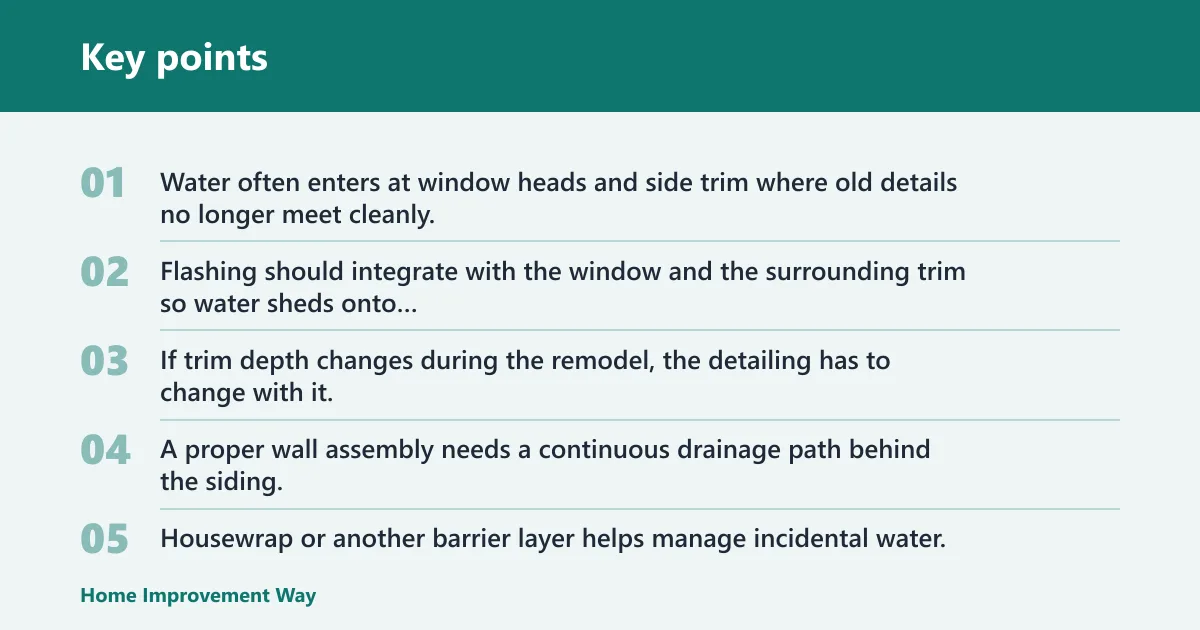
Water often enters at window heads and side trim where old details no longer meet cleanly. Flashing should integrate with the window and the surrounding trim so water sheds onto the face of the siding, not behind it. If trim depth changes during the remodel, the detailing has to change with it.
Drainage path and housewrap layer
A proper wall assembly needs a continuous drainage path behind the siding. Housewrap or another barrier layer helps manage incidental water, but it only works if flashing and laps are installed in the right order. Older homes with mixed repairs may need wall-specific retrofit detailing rather than a generic wrap approach where the existing construction is not standard.
Where caulk can help, and where it cannot
Caulk is useful at limited joints and trim interfaces. It is not a fix for rot, warped framing, or a missing flashing detail. If you are depending on sealant to keep water out of a wall cavity, the detail is already wrong.
A common first-timer mistake is sealing every seam on an older house and assuming the wall is protected. That can trap moisture behind the siding and keep the wall from drying after rain. The better approach is to seal joints where needed and leave the assembly able to drain.
Frequently asked questions
What’s the best siding for a house?
The best siding for a house depends on wall condition, climate, maintenance goals, and architecture. For a typical older home, fiber cement is often the best all-around choice because it holds paint well and works with a repaired wall assembly. If you need the closest historic match, wood is usually the better fit.
What is the best house siding?
There is no single best house siding for every older home. The right material is the one that fits the existing wall, accepts proper flashing, and keeps the house’s original proportions intact. Fiber cement is a strong general answer; wood is better for exact period detail.
What siding works best on older homes?
Older homes usually do best with siding that can tolerate some wall irregularity and still look right at trim and openings. Fiber cement is a strong all-around option. Wood is best when architectural match matters most. Vinyl can work when the wall is reasonably flat and budget is the main concern.
Is vinyl siding a bad choice for an older house?
Vinyl siding is not always a bad choice for an older house, but it is not ideal for every one. It works best when the framing is fairly even and the trim can handle the added thickness without hurting the home’s proportions. It is weaker as a preservation choice, especially where historic-district rules or original trim details matter.
Does older wood framing need special siding preparation?
Yes. Older wood framing often needs more inspection, more shimming, and more substrate repair than newer construction. You need to check for rot, warped members, and mixed repairs before the new siding goes on. If the wall is not sound, the siding choice will not solve the problem.
What siding lasts longest on a historic home?
On a historic home, the longest-lasting siding is usually the one installed over a dry, repaired substrate with correct flashing. Material choice matters, but the wall assembly matters more. Fiber cement can last well, yet wood may still be the best option if preservation requires a closer visual match.
Sponsored / affiliate links. As an Amazon Associate I earn from qualifying purchases. I may earn additional commission from eligible campaigns.