Best Exterior Siding for a Modern House
For many modern houses, fiber cement is often a strong exterior siding choice. Use smooth panels or board-and-batten for a restrained facade, and choose metal cladding for very plain forms or severe weather exposure. Wrong siding choices can warp, stain, date fast, or drive up repainting and repair costs. This guide matches siding material, orientation, finish, climate, and maintenance tolerance to modern substyles.
What makes siding look modern?

Modern siding looks modern when the facade stays simple and the edges read clearly. Smooth surfaces matter more than decorative texture, and the best choices usually keep trim plain, joints even, and colors limited. Large openings, thin reveals, and a small material palette do more than ornament ever will.
Panel size, reveal width, and orientation change the whole read of a facade. Big panels feel calmer and more current; narrower boards create more shadow and a busier surface. Vertical orientation can add height, while horizontal runs can make a house feel longer and more grounded.
Why trim and windows matter
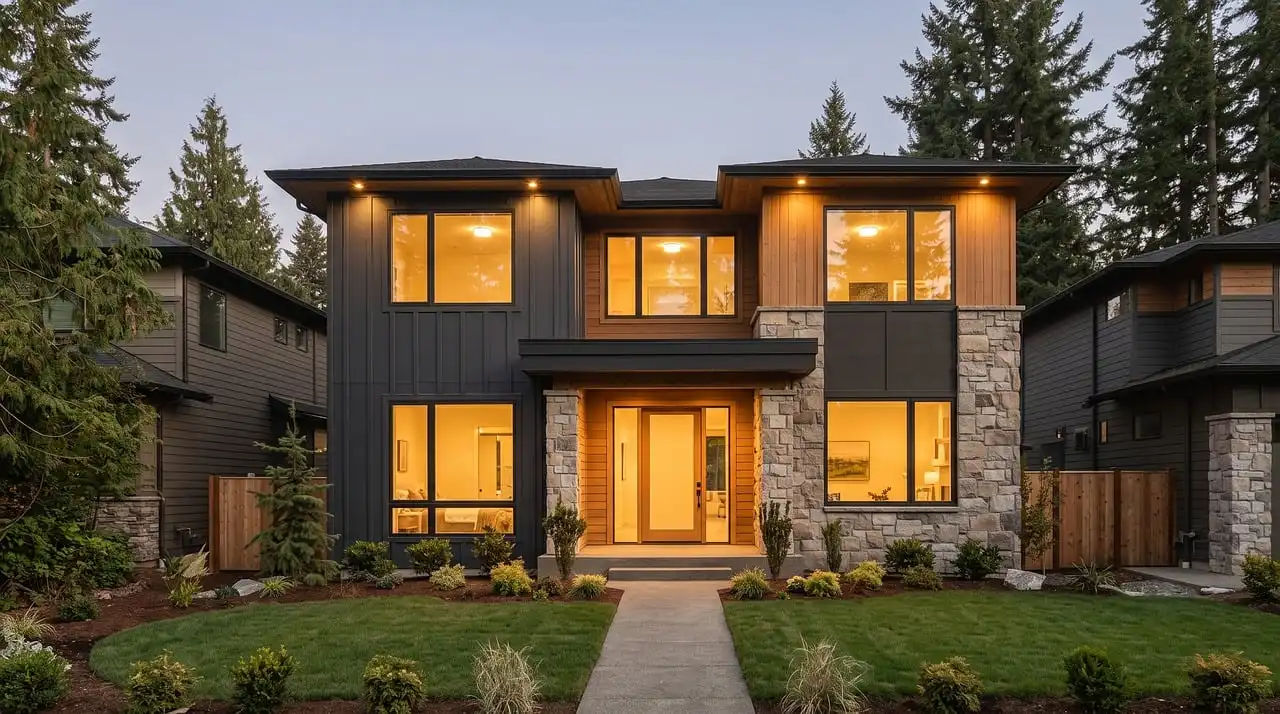
Window placement and trim contrast can make or break the result. Large glass openings and wood details are common on modern home exteriors, and siding should frame them rather than compete with them. White trim can sharpen dark siding, while dark trim can make openings disappear for a more monolithic look.
A common first-timer mistake is mixing too many textures at once. One smooth primary siding, one accent material, and one trim color is often enough.
Modern siding comparison table
| Setup | Best use case | Visual effect | Maintenance level | Common failure mode | What to avoid |
|---|---|---|---|---|---|
| Fiber cement panel | True modern homes that need smooth planes and a disciplined facade | Flat, quiet, and precise; works well with large glass | Low to moderate | Visible joints, chipping at cuts, paint wear at edges | Overly small panel sizes, sloppy caulk lines, and mixed trim colors that break the clean look |
| Vertical metal | Ultra-contemporary or exposed sites with wind, rain, or salt air concerns | Sleek, sharp, and shadow-rich; black metal reads especially bold | Low | Oil-canning, thermal movement, finish scratches, denting | Wide unsupported spans, poor expansion detailing, and dark panels with weak fastening layout |
| Cedar or wood accent | Accent bands, entries, soffits, or warm contrast on minimalist facades | Natural grain, warmth, and softer contrast against smooth siding | Moderate to high | Checking, cupping, finish breakdown, weathering mismatch | Using too much wood on low-maintenance projects or mixing stains without a tight palette |
| Board and batten | Modern farmhouse and contemporary homes that need height and rhythm | Strong vertical lines with depth from the battens | Low to moderate | Batts telegraphing uneven framing, joint movement, paint wear at seams | Overly narrow boards, too many transitions, or using it everywhere on a boxy facade |
| Horizontal lap | Homes that need a restrained, widely appealing modern look | Uniform and streamlined, especially with sharp trim contrast | Low to moderate | Shadow-line inconsistency, exposed joints, dirt buildup on ledges | Deep profiles that read rustic, or trim that is too ornate for the architecture |
| Mixed-material facade | Modern designs that need depth, contrast, or a warmer entry zone | Layered and deliberate when the palette stays tight | Moderate | Visual clutter, mismatched sheens, awkward transitions | Too many materials, too many colors, or random transitions without a clear massing plan |
What is the best exterior siding for a modern house?
For a modern house, the best siding is usually fiber cement because it can mimic wood while staying resistant to fire, rot, and pests. Smooth panels suit true modern forms, while board-and-batten and lap profiles fit contemporary and modern farmhouse homes that need more texture without losing a clean read.
That said, the best choice depends on substyle and tolerance for upkeep. A low-maintenance owner with a boxy house in a wet climate may prefer metal. A homeowner who wants warmth near the entry may choose cedar only as an accent, not as the entire shell.
Fiber cement in the right format
Fiber cement is not one single look. Lap, plank, and large-format panel systems create different detailing, labor, and cost outcomes. Panels usually look more modern and can cost more to install because the layout, joints, and trim need more precision.
Fiber cement is often sold in smooth, textured, and woodgrain finishes. That range lets you tune the facade to the house rather than force one style everywhere.
Common tradeoffs to keep in mind
Factory finish and installation quality matter a lot. Poor flashing, rough cuts, or visible caulk can make even a good product look cheap. On the maintenance side, fiber cement is a low-maintenance option that holds color for years, but repainting intervals still depend on sun exposure, finish quality, and local weather.
Is fiber cement or metal siding better for a modern exterior?
Fiber cement is usually the better all-around choice for broad curb appeal, while metal is better when the goal is a sharper contemporary read with very low routine upkeep. Fiber cement gives more design flexibility. Metal gives a lighter, sleeker profile and often feels more architectural on simple forms.
Choose fiber cement if you want wood-like character, more finish options, and a safer fit for mixed neighborhoods. Choose metal if the house is already minimalist, if the massing is simple, or if the climate puts a premium on weather resistance and low maintenance.
Where metal wins
Metal siding is often chosen for modern exteriors because it is lightweight and low maintenance. It can work as vertical corrugated or horizontal lap panels, and corrugated profiles are known for the shadow they cast. Black metal siding is a bold choice for contemporary architecture.
Where fiber cement wins
Fiber cement usually wins on versatility and resale-friendly familiarity. It can read modern without feeling severe, and it can support board and batten, lap, or panel layouts on the same project. That matters when you want a current look without pushing the facade too far into a niche style.
Climate and failure modes
Metal needs proper expansion detailing, especially on long runs and dark colors, because movement can telegraph through the surface. Oil-canning can show up when the panel profile, fasteners, or substrate are not coordinated well. In hail-prone areas, dents become part of the risk profile.
In freeze-thaw climates, avoid details that trap water behind laps or at trim returns. High humidity calls for careful flashing, ventilation, and sealed cut edges, especially with wood and fiber cement. Near the coast, salt exposure pushes the balance toward metal or well-detailed fiber cement over unprotected wood.
Can you mix siding materials on a modern home exterior?
Yes, and many modern houses look better when you do. A mixed-material facade can combine smooth panels with wood or stone to add contrast and depth, but the layout has to stay disciplined. The best versions feel intentional, not decorative for its own sake.
Keep the palette tight. Two siding materials and one trim color are often enough for a simple, cohesive look. If you add a third material, it should have a clear job, such as grounding the base, framing the entry, or softening a large expanse of wall.
How to combine materials without overdoing it
Place the heaviest-looking material lower or at a base volume, then use smoother siding above. Wood works well at entries or recessed sections because it brings warmth and grain, which pairs naturally with large glass openings and clean metal or fiber cement planes.
Suppose a two-story box has a street-facing garage, a recessed front door, and a tall stair window. Smooth fiber cement on the main plane, cedar at the entry, and dark trim around the window can create depth without adding clutter.
Where mixed facades go wrong
The usual mistake is changing materials at random corners. Another is mixing sheens, colors, and board sizes until the facade loses its hierarchy. A cohesive color palette and deliberate transition lines matter more than the number of products used.
Which siding colors work best?
Dark exterior colors work especially well on modern houses. Charcoal, slate, black, and midnight blue all support strong geometry and can create a bold modern look, especially with white trim or wood accents. They are strongest on simple forms with limited ornament.
Dark finishes can also expose dirt, wash marks, and weathering more clearly on some surfaces. That is most noticeable on large flat panels, where inconsistent cleaning or uneven fading stands out quickly.
How to control contrast
Use white trim when you want openings to read sharply against dark siding. Use wood when you want warmth and a softer transition. If the roof is dark, avoid stacking too many black or charcoal elements unless the house has enough glass and strong massing to keep it from feeling heavy.
Color choice by substyle
True modern homes usually tolerate the darkest palettes best. Modern farmhouse homes often look better with softer whites, warm grays, or muted dark accents. Scandinavian-modern designs often rely on restrained neutrals and wood, while mid-century modern homes can handle deeper contrast with cleaner trim lines.
How much does modern siding cost?
Typical installed costs vary by material, region, labor, and finish quality, but a practical planning range helps. Fiber cement siding often falls around $8 to $15 per square foot installed for lap-style work, with large panel systems commonly costing more. Metal siding often lands around $10 to $20 per square foot installed. Wood siding can range from roughly $10 to $25 per square foot installed, depending on species and finish.
Board and batten with fiber cement often tracks near the middle of that fiber cement range, while mixed-material facades can move higher because transitions, trim, and layout work add labor. Local labor and finish quality can change final pricing more than the material sticker alone.
What changes price most
- Panel size: larger panels usually need more precision and more careful layout.
- Trim detail: more corners, returns, and transitions increase labor.
- Finish type: factory-finished products often cost more up front but may reduce field finishing work.
- Substrate condition: poor framing or uneven walls can raise installation cost fast.
- Climate details: coastal, freeze-thaw, and high-humidity projects need better flashing and fastening choices.
Say your home has a simple two-story rectangular form in a cold climate with lots of street-facing glass. Smooth fiber cement panels with dark trim may give the cleanest modern read at a moderate cost, while also avoiding the extra movement details that long dark metal runs can demand.
Where spending more changes the result
Spending more usually matters most on panel systems, trim quality, and installation. A better-finished, better-detailed facade can look sharper for years, while a cheaper job often shows joint visibility, uneven lines, and patchy caulk long before the material itself fails.
How modern siding choices affect curb appeal and resale?
Modern siding choices affect curb appeal most when they match the house type instead of fighting it. Buyers usually respond well to clean geometry, restrained color, and materials that look intentional. A current look can help resale, but a style that feels too niche can narrow appeal.
Fiber cement and horizontal lap often offer the broadest buyer comfort. Vertical siding and board and batten can add height and presence, which helps on boxy homes. Metal, mixed facades, and very dark color schemes can read premium, but they need strong execution to avoid looking severe or dated.
When design helps resale
Design helps resale when the facade feels updated without being hard to maintain. Simple trim, consistent joints, and a limited palette matter more than novelty. A house that looks modern because of proportion and detail tends to age better than one that depends on a trendy color alone.
Frequently asked questions
What siding looks modern but still stays low maintenance?
Smooth fiber cement and metal siding both fit that goal. Fiber cement gives a modern look with more finish options, while metal stays lightweight and low maintenance. For many homeowners, the best compromise is fiber cement panels or horizontal lap in a restrained color with simple trim.
What siding colors work best on modern houses?
Charcoal, slate, black, and midnight blue are strong modern choices. They pair well with white trim or wood accents and create a bold look. Just keep in mind that dark finishes can show dirt and weathering more clearly on some materials, especially large flat panels.
Does vertical siding make a house look more modern?
Often, yes. Vertical siding creates height and shadow lines, which suits boxy or rectangular homes and many industrial or contemporary designs. It can also help a low, wide facade feel taller. The effect is strongest when the board size, trim, and windows stay simple.
Sponsored / affiliate links. As an Amazon Associate I earn from qualifying purchases. I may earn additional commission from eligible campaigns.