Best Exterior Siding for a Farmhouse Look
For a farmhouse look, smooth 5- to 7-inch horizontal lap is often a strong choice for the main walls, with board-and-batten often used on gables or accent bays, and wide trim to keep proportions clean. Pick the wrong profile and the house can read busy, too tall, or oddly modern, while money goes into siding that fights the structure. This guide shows how to match siding profile, texture, trim width, and material to your house shape and budget.
What makes siding read as farmhouse?
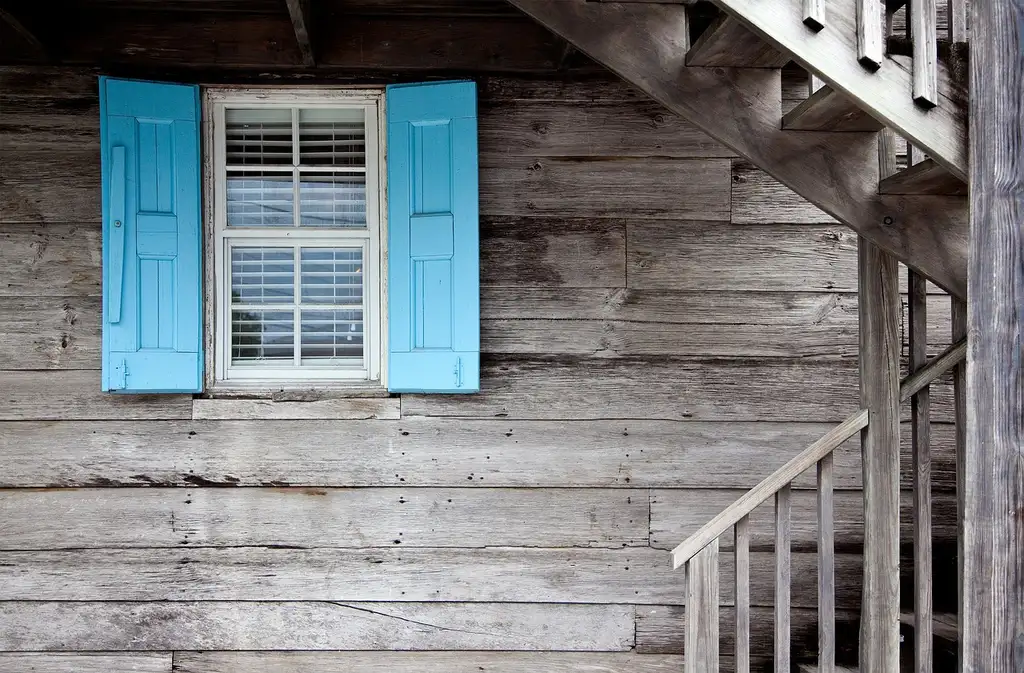
Farmhouse style comes from how siding lines, shadow depth, and trim proportions hit the eye from the street. Horizontal lap reads calmer and more familiar. Vertical board-and-batten reads taller and more rural. Panel siding reads cleaner and more utilitarian, which can fit a barn-like or modern farmhouse exterior when the house shape supports it.
Why vertical, horizontal, and panel profiles read differently
Board-and-batten is an Architectural Vertical Siding System with raised battens that create deeper shadow lines. That shadow is part of the farmhouse signal. Horizontal lap, by contrast, spreads the eye across the wall and usually feels more residential. Vertical panel siding has fewer visible joints and cleaner lines, so it reads more like a shed, barn, or studio wall skin when installed in qualifying applications.
The siding profile changes the wall’s apparent height and width. A tall wall with narrow vertical lines can look even taller. A low, broad house with horizontal lap usually feels more grounded. The same color can look farmhouse on one elevation and plain on another if the profile does not fit the massing.
How shadow lines and trim width change the look
Shadow depth matters as much as color. Wider battens and deeper reveals throw stronger shadows, which read more like traditional outbuildings and older farm structures. Thin battens and tight spacing can look busy on a small wall. Trim width also changes the effect: wider corner boards, window trim, door trim, and fascia give the house a finished frame instead of making the siding do all the work.
A farmhouse exterior usually needs visible trim breaks. Without them, even a good siding profile can look flat and generic. With them, the wall reads as architecture, not just cladding.
When a style looks farmhouse versus simply modern
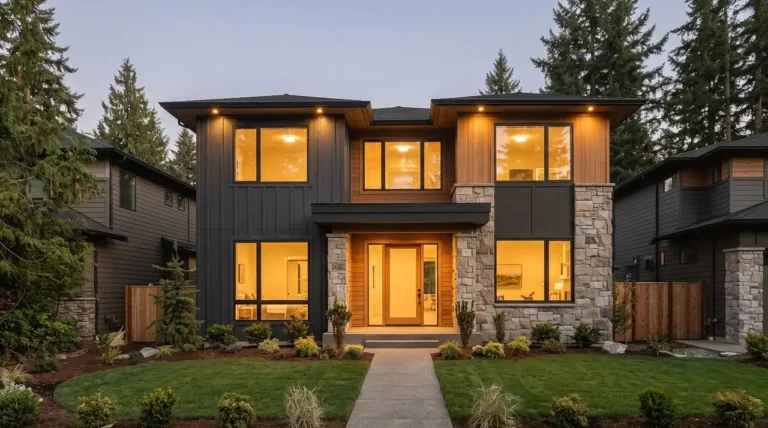
A style reads farmhouse when the profile, trim, and proportions fit the building shape. It reads merely modern when the siding is too flat, the trim too thin, or the contrast too severe for the house form. White siding with black trim is a classic combination, but color alone does not create the look. The lines have to support it.
Board-and-batten siding for farmhouse exteriors
Board-and-batten is one of the strongest farmhouse profiles because the vertical battens and deeper shadow lines read clearly from the street. It works best on gables, upper-story sections, porch ends, studios, barns, and accent bays where the wall shape can carry the vertical emphasis. On the wrong elevation, it can make a house feel too tall or too busy.
Where board-and-batten fits best
Board-and-batten often fits cottages, studios, pool houses, and barns because those forms naturally accept strong vertical rhythm. On a farmhouse, it works especially well on upper gables or smaller wall planes where the profile adds character without taking over the whole exterior. It can also pair well with lap siding below a porch rail or on a main level.
For a full-house treatment, the architecture needs enough breaks, roof mass, or porch structure to keep the vertical siding from dominating. If the house is a narrow two-story box, full-height board-and-batten can stretch the wall visually in the wrong direction.
How batten spacing and proportions affect the result
Batten spacing should match the scale of the elevation. Too close together and the wall looks striped. Too wide apart and the pattern can feel sparse or out of proportion. The battens also need enough visual weight to register at a distance. Thin battens can disappear, especially on a larger façade or from the street.
Say your one-story gable front is about 24 feet wide. Tight battens across the whole face can make the wall feel taller and narrower than it is. A better approach is to keep board-and-batten on the gable field and use broader trim and simpler siding below.
Common mistakes that make it look too tall or too busy
- Running board-and-batten over every wall, including long side elevations.
- Using narrow battens on a large façade, where the pattern disappears from a distance.
- Pairing busy vertical siding with thin trim, which removes the visual frame.
- Using the same vertical profile on a low, wide ranch, where it can fight the shape.
Which siding works best for your house shape?
The best profile depends on massing first and style second. Simple gables can take stronger vertical treatment. Boxier two-story homes usually need calmer horizontal lines. Porches change the visual scale and can support mixed profiles. Modern farmhouse exteriors often combine lap siding with selective vertical panels or board-and-batten to keep the look crisp.
Simple gable homes
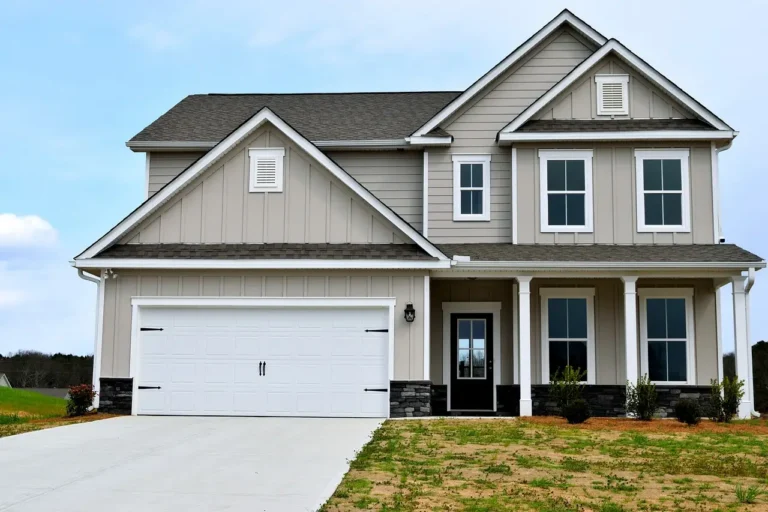
Simple gable homes often look good with board-and-batten in the gable fields and horizontal lap on the main walls. The roof shape gives you a natural place for the vertical rhythm without making the whole exterior feel tall. If the home is small, keep the siding texture restrained and the trim wide enough to frame the openings clearly.
Two-story box homes
Two-story box homes often benefit from horizontal lap on most walls. That choice shortens the visual height and feels more conventional. Board-and-batten can still work as an accent on a centered gable, porch bay, or top-story dormer, but a full-height vertical treatment can make the box feel even more upright.
Wraparound porch homes
Wraparound porch homes can support more mixed siding because the porch breaks up the wall mass. Horizontal lap on the main body with board-and-batten in gables or porch ends often looks balanced. The porch columns and railings already add visual rhythm, so the siding should complement that structure rather than compete with it.
Modern farmhouse homes
Modern farmhouse exteriors usually do best with a cleaner mix: lap siding on the main body, board-and-batten or vertical panel in selected fields, and limited color contrast. The goal is sharp lines, not visual clutter. Too many siding transitions can make a modern farmhouse feel assembled from samples instead of designed as one form.
Farmhouse siding decision matrix
This table gives a practical starting point. It separates common house shapes by profile, trim width, contrast, maintenance, and the mistakes most likely to spoil the look. Use it to match the siding to the building before you choose a color palette.
| House type | Best siding profile | Trim width | Recommended color contrast | Maintenance level | Common mistakes to avoid |
|---|---|---|---|---|---|
| Simple gable | Board-and-batten on the gable, lap below | Wide corner boards and window trim | White siding with black trim, or muted white with dark accents | Moderate | Too many batten lines across the whole façade; trim that is too thin |
| Two-story box | Horizontal lap on most walls | Moderate-to-wide trim for definition | Gray and white, or soft white with restrained black trim | Low to moderate | Full-height vertical siding that makes the box feel taller; busy color contrast |
| Wraparound porch | Lap on the body, board-and-batten on porch ends or gables | Wide porch trim, coordinated fascia, strong window surrounds | White and black with wood accents, or muted farmhouse tones | Moderate | Overusing vertical siding where the porch already adds visual rhythm |
| Modern farmhouse | Lap with selective vertical panel or board-and-batten accents | Clean, medium-to-wide trim with crisp edges | White and black, gray and white, or warm neutral with natural wood accents | Low to moderate | Too many materials, oversized contrast, or trim that looks too delicate |
Can vinyl siding look like a farmhouse?
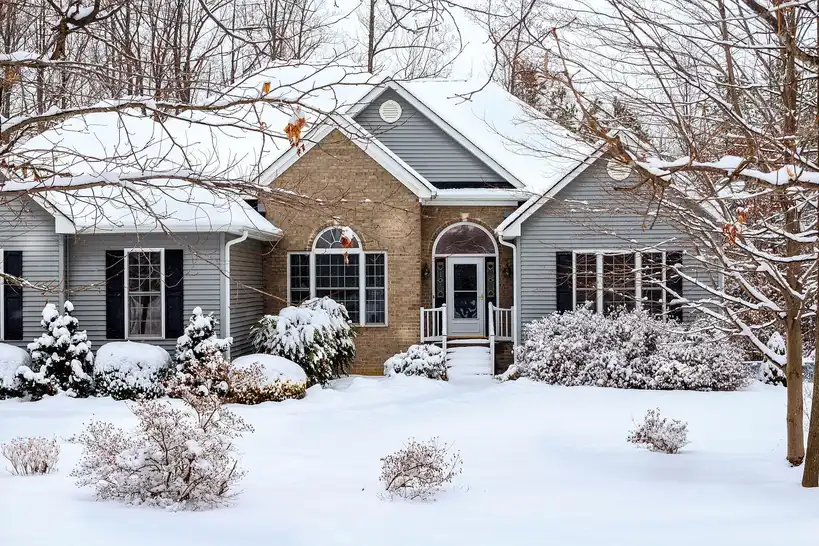
Yes, vinyl siding can work on a farmhouse exterior, especially in horizontal lap styling on a conventionally sided home. It is often described as a low-routine-maintenance option and can fit the style when the profile, trim, and color are right. It looks less convincing when the wall plane is large and plain, or when the trim is too thin to frame the façade.
Where vinyl lap siding fits well
Vinyl lap siding fits best when you want a calmer farmhouse look and lower upkeep. It works especially well on straightforward homes with clear wall breaks, modest rooflines, and decent trim proportions. Georgia-Pacific Forest Ridge Vinyl Lap Siding is presented as Low-Maintenance Horizontal Cladding, which fits the kind of look many homeowners want for a practical farmhouse exterior.
Vinyl can read as farmhouse when the profile is restrained and the wall assembly is prepared correctly. It is less convincing when the home needs a deeper architectural frame or when the siding surface is the only design element doing the work.
What to check in prepared wall assemblies
Applied siding systems can use full 1/2-inch exterior-grade plywood behind the finish where required. That backing matters because the finished siding depends on the wall assembly underneath. When the assembly is prepared correctly, the siding sits straighter and the trim details hold up better. That is especially important with applied systems that rely on clean lines.
Vinyl should be installed over a proper wall assembly, not treated as a stand-alone style choice. If the wall structure, trim depth, or flashing details are weak, the siding will not read as finished farmhouse architecture.
When vinyl looks too generic for the house
Vinyl starts to look generic when the house shape needs stronger trim, deeper shadow, or a more textured surface than the material provides. A simple lap profile can still fit, but the result may feel conventional rather than distinctly farmhouse. If the goal is a more authentic barn or early farmhouse look, engineered wood or a wood-look product usually gives more character.
Do trim and color matter as much as siding?
Yes. Trim and color matter as much as the siding surface, and sometimes more. Exterior trim includes Corner boards, door trim, window trim, fascia, and those pieces define the edges of the house. White and black is classic, gray and white is calmer, and natural wood accents can warm up the exterior without overwhelming it.
Corner boards, window trim, door trim, and fascia
Corner boards give the wall a crisp edge. Window trim and door trim frame openings so the siding does not blur into one flat field. Fascia helps finish the roof line, which matters on farmhouse exteriors because the roof edge is often highly visible. If these pieces are too narrow, the siding can feel unfinished.
Factory-finish colors can help when you are using engineered trim products. They allow the trim and siding to coordinate without relying on field-applied paint for every piece. That is useful when you want a cohesive farmhouse appearance with less repainting pressure.
White and black contrast
White siding with black trim remains the clearest farmhouse signal for many homes. It works because the contrast is simple and legible from the street. That said, it works best when the siding profile already suits the architecture. White board-and-batten on the wrong elevation can still feel too tall or too busy, even with black trim.
Gray and white contrast
Gray and white can soften the look while keeping the farmhouse character. It is a good fit for homes that want less contrast than a black-and-white scheme. On a boxier house, gray lap siding with white trim often feels more settled than a bright vertical treatment.
Natural wood accents and muted tones
Natural wood accents bring warmth, especially on porch posts, gable details, or entry surrounds. Muted farmhouse tones work well when the house shape is already strong and you want the materials to stay quiet. Engineered wood siding is useful here because it comes in board-and-batten, panel, and lap profiles, and it is treated for resistance to termites and fungal decay.
Engineered wood is also helpful when you want wood character without depending on untreated natural trim. LP SmartSide Lap Siding is described as Premium Horizontal Engineered Wood, and LP SmartSide Vertical Panel can form the continuous exterior wall skin in qualifying installations. Those product types give you more ways to match the siding to the house shape instead of forcing one profile everywhere.
Frequently asked questions
What siding looks best on a farmhouse house?
Horizontal lap siding on the main walls is usually the safest starting point, especially on conventional farmhouses and two-story boxes. Board-and-batten works best as an accent on gables, porch ends, or smaller masses. The best result comes from matching the siding profile to the house shape, then finishing with wider trim and a clear color contrast.
Is board and batten siding the best for a farmhouse look?
It is one of the strongest farmhouse profiles, but not the best choice for every house. Board-and-batten reads clearly because of the vertical battens and deeper shadow lines. It works best where the wall plane can support that vertical emphasis. On tall, plain façades, it can make the house feel narrower or busier than intended.
What siding colors work for a farmhouse exterior?
White and black is the classic combination, but gray and white also works well. Muted farmhouse tones can fit better on larger homes or modern farmhouse designs, especially when paired with natural wood accents. Color alone will not make the look work. The siding profile and trim proportions still have to suit the architecture.
What is the difference between vertical panel and board-and-batten siding?
Vertical panel siding has cleaner lines and fewer visible joints, so it reads more like a barn, shed, or studio wall skin in the right installation. Board-and-batten uses raised battens over the field, which creates more shadow and a stronger farmhouse signal. They are related, but they do not read the same on the wall.
Which siding is best for a modern farmhouse exterior?
A modern farmhouse usually looks best with horizontal lap on the main body and selective vertical accents in gables or entry sections. That mix keeps the exterior crisp without making it too busy. Limit the color palette, keep trim clean and purposeful, and use vertical siding where the house massing can support it.
Sponsored / affiliate links. As an Amazon Associate I earn from qualifying purchases. I may earn additional commission from eligible campaigns.