4 Best Tools for Handling Firewood (2026): We Compared
For firewood handling, buy by task: a maul for splitting rounds, tongs for gripping logs, a cart for moving loads, and gloves for abrasion and grip; the wrong tool slows work and raises the chance of drops, splinters, and strain. Bad matches waste time and make stacking or loading harder than it should be. This guide compares tools by the job they handle best, the details that matter at purchase, and the cases where one tool can stand in for another.
Quick comparison
| Product | Badge | Best for | Price | ||
|---|---|---|---|---|---|
 |
Estwing 8 lb Wood Splitting Maul with 36-Inch HickoryEstwing | Our pick | 8 lb · 36-inch · Hickory Handle | $51.04
Price as of 22 Oct 2026
|
View |
 |
18 Inch Heavy Duty Log Lifting Tongs with 2 Serrated ClawQINGDFAFA | Also great | 18-inch · Heavy-Duty · Serrated Claw Hooks | $36.99
Price as of 22 Oct 2026
|
View |
 |
Foldable Firewood Log Cart,a Movable firewood Rack withBghdas | Budget pick | Foldable · Steel Frame · Wheeled Cart | $47.99
Price as of 22 Oct 2026
|
View |
 |
Kebada Impact Protection Gloves, ANSI A2 Cut Resistant,Kebada | Pair with it | ANSI A2 · Nitrile Coated · Impact Protection | $12.99
Price as of 22 Oct 2026
|
View |
This comparison is about fit, not brand loyalty. The best setup depends on if you are splitting at the pile, carrying a few pieces inside, or loading a stove where hot surfaces change the job.
How we chose
We compared tools by task fit, not by general usefulness. A good firewood kit should cover splitting, moving, stacking, and stove loading without making one tool do every job badly.
We also looked for concrete buying criteria that matter in daily use: head weight and handle material for mauls, jaw opening and length for tongs, payload and wheel size for carts, and grip, abrasion resistance, and heat resistance for gloves.
Finally, we weighed where each tool fails. A tong that grabs well can still be awkward indoors. A thick glove can protect better and still make stacking slow if it kills dexterity.
Firewood handling tool selector
This selector matches the tool to the task, distance moved, and safety need. It is the fastest way to avoid buying a good tool for the wrong job.
| Task | Best tool | Why it wins | Common failure mode | Must-have spec |
|---|---|---|---|---|
| Splitting rounds | Maul | Delivers mass and control for round stock; better control than a light axe on stubborn wood | Too-light head stalls in dense rounds; poor stance raises miss risk | Head weight matched to control, secure handle, eye protection, and safe footing |
| Moving logs outdoors | Tongs | Lets you grab one log or round without bending as much; useful for awkward shapes | Long handles get clumsy near walls, trailers, or steps | Jaw opening that matches the log diameter and a length you can control |
| Carrying wood indoors | Cart | Moves more wood per trip with less hand strain than repeated arm carries | Small wheels catch on thresholds and rough ground | Terrain-matched wheel size, stable bed, and handle height that fits your push posture |
| Loading the stove | Tongs plus heat-resistant gloves | Helps place a hot or awkward piece without bare-hand contact | Standard work gloves do not solve heat exposure | Long enough tongs for safe reach and hearth gloves with long gauntlet cuffs |
| Wet weather handling | Nitrile-coated gloves or treated leather | Better grip on damp bark and wet splits than plain cloth | Slick palms and soaked fabric reduce control fast | Water-resistant treatment, grip texture, and a fit that still bends |
| Knotty hardwood | Maul with splitting wedge | Extra force and wedge action help break twisted grain | Trying to brute-force every round with one swing tool wastes energy | Wedge, hammering control, and eye protection |
Maul: best for splitting rounds
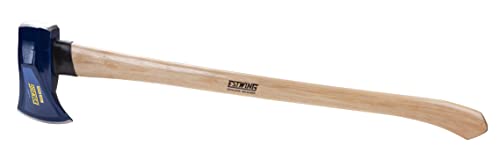
The Estwing 8 lb Wood Splitting Maul fits readers who split seasoned rounds and want a heavy driver with a long 36-inch handle. The weight helps carry force into the cut, and the hickory handle works well when you want traditional shock-tolerant wood rather than a hollow or flex-prone feel.
Based on the listed specs, this is the clearest choice when the main job is opening rounds rather than trimming small kindling. Its forged head hardened to 50–55 HRC should suit hard use, but 8 lb is not the easiest starting point if you have less swing control or are splitting lots of smaller pieces.
A maul beats a splitting axe when the wood is large, stubborn, or knotty. A splitting axe can feel quicker on smaller, cleaner rounds because it is lighter and easier to accelerate, but the maul brings more mass to the strike and is the better default for mixed firewood piles.
When a maul beats a splitting axe
Use the maul when rounds are wide, fibrous, or irregular. Weight matters because it improves swing control through the strike, but only if you can keep a stable stance and aim consistently. For safe splitting, eye protection and safe footwear matter more than arm protection alone.
Do not treat the maul as a universal answer. If the rounds are small and straight-grained, a splitting axe may feel faster and less tiring. If the rounds are knotty or frozen, the maul becomes the better base tool because the extra mass helps start the crack.
Why weight and handle material matter
Maul weight changes both power and control. Heavier heads drive deeper, but they also punish sloppy form. A lighter maul is easier to place accurately, though it may bounce or stall on tougher pieces.
Handle material changes how much shock reaches your hands and how durable the tool feels over time. Wood handles, like hickory, are traditional and replaceable. Fiberglass and composite handles often resist weathering better and can manage vibration differently, but some users prefer the feel of wood for swing feedback.
When wedges should be part of the setup
Wedges belong in the kit for knotty or frozen wood. The maul can start the split, then a splitting wedge can widen it where grain resists the head alone. This is the right place to use controlled hammering, not wild force.
Say your round opens a few inches and then locks on a knot. That is the time to stop forcing repeated swings into the same line and switch to a wedge. Keep eye protection on, because missed strikes and metal-on-metal rebounds are the main hazard.
Firewood tongs: best for grabbing individual pieces
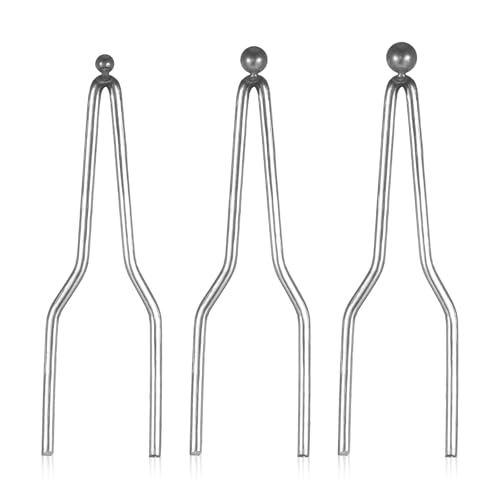
The QINGDFAFA 18-inch log lifting tongs are for moving single logs or rounds, especially pieces that are hot, awkward, or dirty enough that hand carrying is clumsy. The serrated claw hooks are meant to bite into wood, which helps when the log shape would slip in a bare grip.
The honest drawback is that tongs are a helper, not a primary lifting tool. They work best for one piece at a time and can become awkward if you try to move more wood than the jaws and your grip can control.
What jaw opening and length to look
Jaw opening should match the log diameter you expect to move most often. If the opening is too small, the tong will not seat securely. If it is too large, bite can feel uncertain on thinner pieces.
Length is a tradeoff. Longer tongs keep your hands farther from hot or rough wood, but they also reduce control and can feel awkward near a stove, doorway, or narrow stack. An 18-inch tool is easier to manage indoors than a very long pair, though it gives up some reach.
When tongs help and when they get awkward
Tongs are most useful for moving a single round from the pile to a splitter, from the rack to a cart, or from a floor to a stove alcove. They help with odd-shaped pieces that do not sit well in the hand.
They get awkward when the space is tight or the piece is small enough that a quick glove grip is simpler. They also get awkward if you try to drag multiple logs at once. That turns a helper into a control problem.
Why tongs are a helper, not the main lifter
Use tongs to reduce bending and improve control, not to replace a cart or tote. They are best for grabbing, repositioning, and short transfers. For longer hauling, a cart or carrier is more efficient and less tiring.
Firewood cart: best for hauling loads
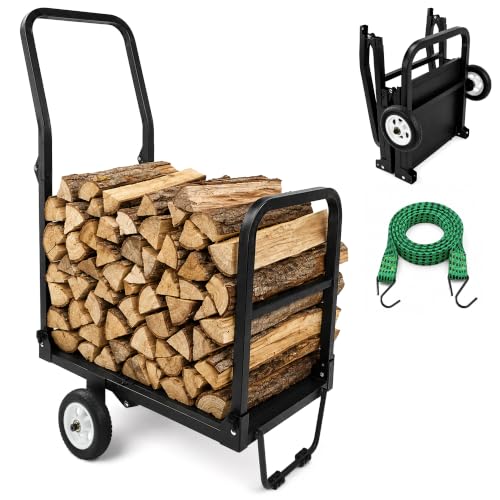
The Bghdas foldable firewood log cart suits indoor-to-outdoor hauling because it moves more wood per trip and folds down for storage. The steel frame adds support, and the wheeled design is the right choice when repeated carrying would be slower and harder on your hands.
The drawback is that a wheeled cart depends on the surface. If the wheels are too small for your path, the cart becomes harder to push than the load is worth. That is why wheel size and terrain fit matter more than the word “heavy-duty” on the box.
Wheel size and terrain fit
Choose wheel size for where the cart actually rolls. Smooth floors, pavers, and compacted paths are forgiving. Uneven gravel, muddy strips, and thresholds punish tiny wheels quickly.
For indoor-to-outdoor hauling, wheel clearance and rolling resistance matter as much as frame strength. If the path crosses steps or rough ground, the cart must stay stable when loaded and still be easy to steer with one hand.
Load capacity and bed size
Capacity should match the number of splits you want to move at once. If the bed is too small, the cart becomes a long series of partial loads. If it is too large, you may overload it or make it hard to maneuver through doors and tight corners.
A good cart balances volume with control. The right size lets you reduce trips without turning each trip into a wrestling match. For firewood, that balance matters more than a large number on a label by itself.
Handle height and push comfort
Handle height affects posture. Too low and you hunch. Too high and the cart feels vague or hard to steer.
Look for a handle that lets you push with your shoulders relaxed and your wrists neutral. Good ergonomics matter because hauling wood is repetitive work. A foldable cart can be excellent for storage, but folding should not make the push position awkward.
Gloves: best for grip and protection
The Kebada impact protection gloves make sense for general firewood handling when you want a grippy palm, cut resistance, and some shock protection around rough stock and tools. The sandy nitrile coating should help with control on barky pieces and damp surfaces, which is useful for stacking and hauling.
The main drawback is that no general work glove covers every firewood job. It helps with abrasion and grip, but it is not a substitute for dedicated heat protection near a stove, and a heavier glove can cost dexterity when you need quick finger control.
Leather versus nitrile-coated knit
Leather gloves usually give solid abrasion resistance and decent bark protection. They are a common choice when the work is rough and repeated. Nitrile-coated knit gloves usually feel more nimble and often grip better on wet or barky surfaces.
The tradeoff is simple. Leather often favors durability. Nitrile-coated knit often favors dexterity and tactile control. For firewood, the better choice depends on whether you are splitting, carrying, or stacking.
Wet-weather grip and water-resistant finishes
Wet conditions change glove performance fast. Plain fabric can get slick, and soaked palms lose control on rough bark or split ends. A water-resistant treatment or coated palm helps preserve grip when the wood is damp.
That does not mean every “water-resistant” glove is ideal in rain or snow. Some finishes repel moisture for a while but still become clumsy if the back of the glove soaks through. Grip on the palm and control through the fingers still matter most.
Fit, dexterity, and heat resistance
Fit matters as much as material. A glove that is too loose makes small pieces harder to control. A glove that is too tight reduces circulation and finger flexibility. Good dexterity helps when stacking, separating splits, and gripping a log by the end.
Heat resistance is different from general work-glove protection. Loading an active stove calls for heat-resistant hearth gloves with long gauntlet cuffs, not standard work gloves. Chimney Insight says firewood gloves need grip, splinter, and heat protection, but it also separates tasks because no single glove is best for every one of them.
- Match the tool to the task before you match it to the brand.
- Use a maul for rounds, wedges for hard or frozen wood, and tongs for grabbing individual pieces.
- Choose a cart when the job becomes repeated hauling, especially between outdoors and indoors.
- Pick gloves for the surface in front of you: dry bark, wet splits, rough stack edges, or stove heat.
- Keep eye protection on for splitting and wedge work, and wear safe footwear with stable footing.
Which one should you buy?
Start with the tool that removes the biggest bottleneck. If splitting is slowing the whole process, buy the maul first. If you already split enough wood but waste time moving it, a cart gives the biggest payoff. If you mainly need to grab odd pieces or work near a stove, tongs and the right gloves matter more.
Best setup for splitting at the pile
Buy the maul first, then add wedges if you split knotty or frozen rounds. If your wood is mostly straight-grained and smaller, a splitting axe can be the better choice. For heavy rounds, the maul stays the more dependable default.
A common first-timer mistake is buying gloves before buying a splitting tool. That can help comfort, but it does not fix poor splitting workflow. The tool that changes the job fastest is the one that matches the wood.
Best setup for moving wood indoors
Choose a cart for the main load and gloves for grip. Add tongs only if you need to grab a single awkward piece off the pile or out of the rack. For indoor paths, wheel size and handle height matter more than decorative features.
Suppose you are carrying four splits at a time by hand from a porch to a hearth across a doorway and two rugs. A cart cuts the trips, while a pair of nitrile-coated gloves keeps your grip steadier if bark dust makes the wood slippery.
Best setup for loading a stove
Use heat-resistant hearth gloves with long gauntlet cuffs and tongs for the hot or awkward piece. Standard work gloves do not solve heat exposure. The safer setup is the one that keeps your hands away from the firebox opening and lets you place the log accurately.
Best setup for rough bark or wet weather
Choose gloves with better abrasion resistance and wet grip, such as leather or nitrile-coated knit with a water-resistant finish. If the wood is damp and barky, a grippy palm matters more than extra bulk. A soft carrier can also help reduce repeated trips when the wood is light enough to tote.
For smaller loads, a log carrier or tote is worth considering. It is the soft-carry option for split wood, and it helps reduce repeated trips. Pick material that resists bark abrasion so the carry does not wear out fast on rough edges.
Firewood handling tool selector guide
This section turns the table into buying logic. Use it when you want to trim the kit down to the few tools that solve your actual work.
For splitting rounds and knotty wood
Choose the maul as the primary tool. Add a splitting wedge if the wood is twisted, frozen, or too dense to open cleanly. Keep eye protection on and stand on stable ground with safe footwear.
For moving logs and rounds one at a time
Choose tongs when the piece is hot, awkward, or too dirty for a clean hand grip. Keep the length short enough for control. If the space is tight, shorter tongs are easier to manage than long handles that swing wide.
For hauling split wood over distance
Choose the cart. If the route includes thresholds, gravel, or outdoor dirt, wheel size becomes a buying spec, not a bonus feature. Handle height should let you push without hunching.
For grip, splinters, and bark abrasion
Choose gloves by surface and task. Leather brings durable abrasion protection. Nitrile-coated knit often gives better wet grip and more dexterity. A water-resistant finish helps, but it does not replace fit.
Frequently asked questions
What tools do I need to handle firewood safely?
At minimum, you need the right tool for the task and the right protection for the hazard. That usually means a maul for splitting, tongs for grabbing individual pieces, a cart or tote for hauling, and gloves for grip and abrasion. For splitting and wedge work, add eye protection and safe footwear.
Should I use a maul or a splitting axe for firewood?
Use a maul for large, stubborn, or knotty rounds. Use a splitting axe when the wood is smaller, straighter, and easier to open with a lighter head. The maul gives more mass and control through the strike; the axe usually feels quicker on smaller stock.
Are firewood tongs worth it for moving logs?
Yes, if you move single logs or hot rounds often. Tongs reduce bending and help with awkward shapes, but they are not the best choice for bulk hauling. If you need to move many pieces or cover a longer distance, a cart will usually do the job better.
What kind of cart is best for hauling firewood indoors and outdoors?
Pick a cart with wheels that match your terrain, enough payload for a useful load, and a handle height that keeps pushing comfortable. A foldable frame helps storage, but wheel size and stability matter more when you cross thresholds, gravel, or rough ground.
What gloves are best for handling split firewood and rough bark?
Look for gloves with abrasion resistance, good grip, and enough dexterity to hold split ends securely. Leather is durable and tough. Nitrile-coated knit often grips better in damp or barky conditions. A water-resistant treatment can help, but fit still matters more than thickness alone.
Can I use regular work gloves for firewood handling?
Regular work gloves can be fine for stacking, hauling, and general cleanup if they fit well and grip the wood. They are not enough for stove loading, and they may be too light for repeated splitting work. For firewood, the task matters more than the label on the glove.
Sponsored / affiliate links. As an Amazon Associate I earn from qualifying purchases. I may earn additional commission from eligible campaigns.