Drywall Patch Kit vs Repair Kit: What’s the Difference?
A drywall patch kit bridges a hole or missing section with a patch, while a repair kit packages the steps and materials for restoring a specific defect type, such as dents, nail pops, or cracks. Pick the wrong one, and the repair can telegraph, crack again, or fail to cover the damage. This guide explains the difference by damage shape, what each kit includes, and how to pick the right one.
| Decision factor | patch kit | repair kit | Winner |
|---|---|---|---|
| Core job | Bridges a void with a pre-sized patch or patching material. | Covers a fuller workflow for a known defect type. | repair kit |
| Best damage shape | Small holes and dents that still allow a simple bridge. | Cracks, torn paper, anchor damage, and mixed surface defects. | repair kit |
| Typical contents | Patch, mesh, adhesive, or a small backing piece. | Patch plus filler, compound, putty knife, and sanding aid. | repair kit |
| Finish quality | Usually still needs compound and sanding to disappear. | More likely to include the finishing steps in one box. | repair kit |
| Best fit for a quick buy | When the damage is small and the opening is stable. | When you need a fuller fix and fewer separate purchases. | tie |
Patch kit vs repair kit
The key difference is geometry. A patch kit spans a hole or damaged spot. A repair kit often covers backing, filling, and finishing for a specific kind of drywall damage.
That split matters because drywall repair usually needs more than one step. Gypsum drywall became prevalent in North America in the mid-20th century, and the common repair pattern still follows the same logic: clean the opening, support it if needed, fill, sand, then paint.
What each kit category usually includes
A patch kit often centers on the bridge itself: a pre-sized patch, mesh, adhesive, or a patching material that spans the opening. You still usually need joint compound or another filler to cover the repair and feather the edges.
A repair kit is broader. It may bundle patching, filling, finishing, and basic tools such as a putty knife or sandpaper. Some bundles are really just filler-and-sandpaper sets, so read the contents before assuming you are getting backing support or a patch panel.
Why repair geometry matters more than branding
Small dents and nail holes do not need the same structure as a torn face paper area or a 3-inch opening. If the material has nothing solid to bridge, a patch kit alone can sink into the cavity or leave a weak spot that shows through paint.
Say your wall has a clean nail hole in a hallway. A small filler is enough. Say the damage is an anchor hole with shredded edges. That same approach may leave loose paper visible after sanding, which is why the repair category matters more than the label on the box.
Where the overlap starts and ends
Both product types can land in the same cart for minor interior wall repair. Both usually lead to compound, sanding, and paint. The overlap ends when the damage needs backing support, edge cleanup, or a finish system that the kit does not include.
How to choose by damage size
Start with the opening size and edge condition. Nail holes and tiny dents are usually filler jobs. Anchor holes, torn paper, and about 2–4 inch openings often need reinforcement or backing before any finish material goes on.
Nail holes and tiny dents
Spackle is usually the fastest fit here. It is made for small defects like nail holes and tiny dents, and it often sands more easily than heavier compounds. A patch kit is usually more than you need unless the surrounding paper is damaged too.
Anchor holes and loose paper
Anchor holes often have ragged edges or loose paper around the opening. That is where a utility knife helps square the damaged drywall and remove weak material before patching. If the face paper is torn, a repair kit with filler and finishing material is usually the safer buy.
2–4 inch holes that need backing
Once the hole is large enough that filler can fall into the cavity, you need backing support. That may be a wood strip, a patch panel, or an adhesive-backed support. A simple patch kit stops being enough when the opening is too wide to stay bridged during filling and sanding.
Cracks and torn paper
Cracks and torn paper need a product that deals with movement and surface damage, not just a hole cover. Mesh patch or repair kit materials can help, but only if the damaged paper is cleaned up first and the finish coats are built back slowly.
What is usually in the box?
Box contents tell you more than the product name does. A patch kit may include a patch, mesh, backing piece, or adhesive. A repair kit often adds compound, spackle, a scraper, or a sanding aid so you can move from fill to finish without buying each part separately.
Patch, mesh, or backing support
Mesh patch uses a self-adhesive backing that sticks over the damaged area. The mesh should be larger than the hole so the patch can grip solid drywall around it. It still needs mud over the mesh; the mesh is support, not the finished surface.
Backing support is different. A wood strip, patch panel, or adhesive backing prevents compound from falling into the cavity. That is the right move when the opening is too large for filler alone.
Compound, spackle, or filler
Joint compound is the standard finish material for seams and fastener heads, and it comes in setting and premixed forms. Spackle dries faster and is common for small defects, but it is less suitable for larger repairs or deeper fills. If the box has only a light filler, expect to need separate finishing supplies.
Putty knife, sanding sponge, and extras
A putty knife helps spread compound smoothly and feather the edges. Sandpaper or a sanding sponge levels dried compound, and grit choice affects finish quality. Over-sanding can expose paper or mesh, which makes the repair more visible instead of less.
When is compound enough?
Compound is enough when the defect is shallow, stable, and already supported by intact drywall. For seams, screw heads, tiny dents, and small filled spots, spackle or joint compound can complete the repair without a patch panel.
Spackle for fast, small repairs
Spackle is the faster-drying choice for nail holes and tiny dents. It is convenient because it often sands cleanly, but that convenience drops off as the opening gets larger. Once the repair needs real buildup or bridging, spackle alone becomes the wrong tool.
Joint compound for seams and larger fills
Joint compound is the better fit when you need to blend a repair into the wall plane. It is used to finish seams and cover fastener heads, and it works with mesh or patches. A small patch may get covered with compound in several thin coats before sanding.
When filler alone will fail
If the compound can sink into the cavity, crack at the edge, or telegraph the outline of the hole, you need support, not just more filler. That failure is common when the opening is too large, the edges are ragged, or the paper is torn back beyond the damaged zone.
Drywall repair decision table
| Damage type | Recommended kit type | Must-have contents | Red flags |
|---|---|---|---|
| Nail hole | repair kit or filler-only approach | Spackle or joint compound, putty knife, sanding sponge | If the hole widens or the paper tears, a simple fill is no longer enough. |
| Anchor hole | repair kit | Compound, patching material, utility knife, sanding sponge | Loose paper, crumbly gypsum, or a cavity that will not hold filler. |
| 2–4 inch hole | patch kit with backing support or fuller repair kit | Patch or backing panel, joint compound, knife, sandpaper | If the patch does not bridge solid drywall, you need backing support. |
| Torn paper/crack | repair kit | Utility knife, mesh patch or tape, compound, sanding sponge | Paper fuzz, moving cracks, or visible ridges after the first coat. |
The rule is simple: when the repair needs a bridge, pick a patch kit; when the damage needs cleanup, fill, and finish steps, pick a repair kit. If the hole is too large for a patch to span cleanly, or the face paper is torn enough that filler will not hold, move to backing support or joint compound before you think about paint.
When you need backing support
Backing support keeps compound from dropping into the wall cavity and gives the repair something solid to cling to. It matters most when the hole is large enough that a patch would sag, sink, or leave an edge that shows after sanding.
Why filler drops into a cavity
Filler works on the surface. A cavity gives it nowhere to stop. That is why a repair kit for larger damage often includes a panel, adhesive backing, or some other support layer.
How mesh patches help and where they stop
Mesh patches help with small holes and damaged paper because they reinforce the area and give the compound something to span. They stop being enough when the opening is too wide or the wall edge is too weak to hold the mesh flat. At that point, the mesh can telegraph through the finish or leave an edge that reappears after paint.
Signs the hole is too large for a simple patch kit
If you can see into the cavity through most of the opening, if the edge crumbles when you touch it, or if the patch would have to bridge unsupported space, choose backing support. A simple patch kit stops being enough when the repair is no longer just covering a void but rebuilding the surface.
Textured walls and finish risks
Textured walls are less forgiving than flat ones. Patch edges can telegraph, and even a well-filled repair may stand out if the texture pattern does not match the surrounding wall.
Texture repair after sanding
Sanding only levels the repair. It does not recreate texture. After the compound cures, you may need a texture step before paint, especially on orange peel, knockdown, or hand-applied finishes. If you sand too hard, you can expose paper or mesh and make texture work harder.
Paint matching after the patch cures
Paint matching often decides whether the repair disappears or still reads as a repair. Fresh paint can flash differently than aged wall paint, so color and sheen matter as much as the filler. On textured walls, the finish order is usually repair first, texture second, paint last.
Budget setups
For a small repair, the budget often depends on whether you buy a simple filler or a fuller kit with tools. The product below is one example of a repair-kit style bundle.
| Setup | Typical use | What you get | Price |
|---|---|---|---|
| Starter | Tiny holes and small dents | Spackle, putty knife, sandpaper | $9.99 |
| Mid | Small holes with minor edge cleanup | Patch material, compound, sanding aid | |
| Serious | 2–4 inch holes or torn paper | Backing support, mesh or patch panel, compound, knife |
Must-have
These are the items that do the actual repair work. Without them, a hole may be covered for a day and still fail later.
 As an Amazon Associate we earn from qualifying purchases. Prices and availability are accurate as of the date shown and are subject to change.

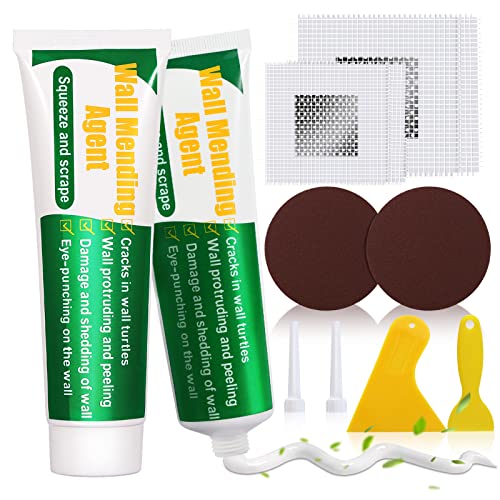
WDSHCR drywall repair kit
This kit includes about 8.5 oz of putty, plus patches and a scraper, so it fits the repair-kit side of the comparison better than a bare patch-only product. Based on the published product details and buyer feedback, the upside is convenience for small wall repairs; the drawback is that 8.5 oz of putty is still a light amount for bigger holes, and you may still need separate sanding and paint-matching supplies.
Nice-to-have
These items help when the repair is larger, the edges are rough, or the wall finish is more visible.
Utility knife
A utility knife is used to square ragged drywall edges and remove loose paper or weak gypsum before patching. That cleanup step matters because patch material sticks better to firm edges than to fuzzed paper. It is especially useful on cracks and torn-face repairs.
Sandpaper or sanding sponge
Sandpaper or a sanding sponge levels dried compound between coats and before paint. Grit choice affects how much material you remove, and over-sanding can expose paper or mesh. On a textured wall, aggressive sanding can also flatten the surrounding finish and make the repair easier to spot.
Consumables and spares
These are the materials you may need more than one pass through the repair. They are easy to underestimate.
Joint compound
Joint compound is the standard finish layer over seams, patches, and fastener heads. It comes in setting and premixed forms, and it usually needs sanding after drying. Even when a kit includes a patch, compound is often still required to bury the repair and blend it into the wall.
Spackle
Spackle is best for fast fixes on nail holes and tiny dents. It is less suitable for larger openings because it does not provide the same structure as a patch or backing support. It often sands more easily than heavier compounds, which is why it is popular for quick touch-ups.
Choose patch kit if… / Choose repair kit if…
Choose patch kit if the damage is a small hole that needs a bridge, the edges are stable, and you are prepared to add compound and sanding yourself. Choose repair kit if the damage includes torn paper, cracks, anchor damage, or a hole that needs filling plus finishing in one workflow.
- Choose patch kit if the opening is small, the wall face is intact, and you already have compound and sanding supplies.
- Choose patch kit if the hole is shallow enough that a self-adhesive mesh or small patch can span it cleanly.
- Choose repair kit if you need backing, filler, and finish material together.
- Choose repair kit if the wall has torn paper, cracks, or a larger defect that needs a more complete workflow.
A common first-timer mistake is buying only a patch for a hole that still needs backing. Another is using too much pressure while sanding and exposing the mesh or paper, which makes the fix more visible after paint.
Frequently asked questions
What is the difference between a drywall patch kit and a repair kit?
A drywall patch kit is centered on bridging a hole or missing section with a patch, mesh, or backing material. A repair kit is broader and may include filling, finishing, and basic tools for a specific damage type. The right choice depends on whether you need only coverage or a fuller workflow.
Which kit should I use for a small hole in drywall?
For a small hole, start with the damage shape. A clean nail hole or tiny dent usually only needs spackle or joint compound, while a small opening with loose edges may need a patch kit or a repair kit. If the hole will not hold filler, you need support, not just more putty.
Do patch kits already include mesh or a backing panel?
Sometimes, but not always. Some patch kits include self-adhesive mesh, a small backing piece, or an adhesive patch, while others are just the patch material itself. Read the contents closely, because a box that says “patch” may still require separate joint compound, sanding, and paint.
When is joint compound enough instead of a kit?
Joint compound is enough when the defect is shallow and the drywall around it is sound. That includes fastener heads, minor dents, and some seams. If the repair needs a bridge across open space, or if the paper is torn and unstable, a kit with patching or backing is the better starting point.
Can I use a repair kit on a crack or torn paper?
Yes, a repair kit is often the better match for cracks and torn paper because it can include filler, mesh, and finishing tools. The important step is cleaning the area first. Loose paper, fuzzy gypsum, or an active crack line can make any repair fail if you skip preparation.
Which kit is better for textured walls?
A repair kit is usually the safer choice for textured walls because the finish challenge is bigger than the hole itself. Texture repair and paint matching often decide whether the patch disappears. A patch kit can still work, but only if you are ready to rebuild texture after the repair cures.
Sponsored / affiliate links. As an Amazon Associate I earn from qualifying purchases. I may earn additional commission from eligible campaigns.