How to Use Mesh Tape vs Paper Tape for Drywall Repair
Use mesh tape for small repairs, patches, and joints that may move. Use paper tape for flat seams, inside corners, and any joint where crack resistance matters most; pair mesh with setting-type compound, and paper with joint compound. Pick the wrong tape, and you can end up with cracks, visible seams, or a repair you have to redo. This guide compares tape choice by damage type, joint movement, and compound match.
| Decision factor | mesh tape | paper tape | Winner |
|---|---|---|---|
| Small repairs and patches | Self-adhesive, fast to place, useful for quick fixes | Needs embedding in wet compound and more setup time | mesh tape |
| Inside corners | Can work, but it is finicky and often needs a corner applicator | Factory crease folds cleanly and is the usual choice | paper tape |
| Flat seams | Works when paired with the right compound and careful finish work | Common choice for a cleaner finish and crack control | paper tape |
| Butt joints | Can telegraph or show through more easily if the finish is thin | Commonly preferred for this higher-stress joint | paper tape |
| Moisture-prone repairs | More resistant to moisture, but standard drywall mesh is not for wet tile assemblies | Less moisture resistant than mesh | mesh tape |
What changes the choice: repair type, movement, and compound
The tape choice changes with the damage, not with a generic brand pick. A flat seam, inside corner, small patch, butt joint, and moisture-prone repair all need different handling, and the wrong compound can cancel out the advantage of the tape you chose.
Paper tape is non-adhesive and must be embedded in wet joint compound. Mesh tape has a tacky backing and sticks to the wall on its own, which makes it faster on a flat stretch of wall and useful for quick fixes. That speed does not mean a better finish.
Mesh vs paper tape by repair type
| Damage type | Recommended tape | Recommended compound | Risk level | Common failure to avoid |
|---|---|---|---|---|
| Flat seam | paper tape | joint compound | medium | Telegraphing the seam under raking light |
| Inside corner | paper tape | joint compound | medium | Bubbling or wrinkling from poor folding |
| Small patch | mesh tape | setting-type compound | low to medium | Mesh showing through after sanding |
| Butt joint | paper tape | joint compound | high | Leaving the crown visible because the feathering is too narrow |
| Moisture-prone repair | mesh tape | setting-type compound, or the assembly’s specified system | high | Using standard drywall tape where a wet-area system is required |
What does each tape need from the compound?
Paper tape and joint compound
Paper tape needs to be embedded in joint compound, with the first coat doing the work of bedding the tape and removing air pockets. If the coat is too dry or too thin, the tape can bubble or loosen at the edges, and that defect often shows up later as a visible seam.
Paper tape depends on full contact. The compound must wet both sides of the tape so the fold can sit flat and the bond can cure without voids.
Mesh tape and setting-type compound
Mesh tape should be used with a setting mud for extra strength. Common bag labels include 20, 45, or 90 minutes, but actual working time is often shorter in warm conditions, so mix only what you can place before it starts to set. (Familyhandyman)
That pairing matters because mesh has an open-weave structure. If you cover it with the wrong product or leave it too thin, the mesh can show through after sanding or the repair can crack at the joint line.
When a regular air-dry coat can still work
A regular air-dry joint compound can still be used over the first coat in some repairs, especially once the tape is already embedded and set in place. That works best when the joint is stable and the finish coat is only doing cosmetic leveling.
It is a poor fit when the joint moves, when the patch is stressed, or when you are relying on the compound to give mesh tape its extra strength. In those cases, setting-type compound is the safer pairing.
Which tape fits each repair type?
Flat seams
Flat seams are a common use case for either tape, but the finish decides the outcome. If the seam is poorly feathered, it can telegraph under raking light even when the tape itself is installed correctly.
Paper tape is commonly preferred because it beds cleanly and gives you a straighter line to finish. Mesh can work on a flat seam when speed matters and the compound choice is right, but the result is less forgiving if the coat is thin.
Inside corners
Inside corners usually favor paper tape because the factory crease folds cleanly and helps the tape sit into the angle. Paper tape is the top choice for inside corners for that reason, especially when the corner already has movement or slight irregularity.
Mesh tape is finicky in corners. If you use it there, a corner applicator often helps, and even then you need careful finishing to avoid ridges, gaps, or a crunchy edge.
Small patches
Mesh tape is useful for small patches and quick fixes because it is self-adhesive and generally easier to handle. That makes it a good fit when the damaged area is small enough that speed matters more than a long bedding process.
Say your repair is a long horizontal seam crack above a doorway where the drywall is still firmly attached but the joint paper has started to lift. Mesh tape can save time there. If the damage is only a pinhole or anchor hole, though, you usually do not need tape at all; simple filling is the right move.
Butt joints
Butt joints are a higher-stress area because the two board edges meet without a tapered edge. Paper tape is especially good for butt joints, but the real challenge is hiding the crown, which takes careful feathering on both sides.
A common first-timer mistake is to stop the mud too close to the joint. That leaves a ridge that catches light later. Mesh can seem faster here, but it often gives you less margin for hiding the profile.
Moisture-prone repairs
Mesh tape is more resistant to moisture than paper tape, so it is the better fit for damp areas where the assembly calls for a mesh-and-setting-compound approach. That advantage matters on some moisture-prone repairs, but it does not make standard mesh the right answer for every wet location.
Do not confuse standard fiberglass mesh drywall tape with alkali-resistant mesh used with cement board and tile transitions. Those assemblies often require a different system, typically alkali-resistant mesh embedded in thinset mortar, not standard drywall compound. If the wall is part of a rated wet-area build, follow that system instead of choosing tape by habit.
How do corners and seams change the choice?
Inside corners and the factory crease
The factory crease in paper tape is the detail that makes it work so well in corners. It lets you fold the tape to a clean 90-degree line without fighting the material, which reduces wrinkles and the chance of trapped air.
Mesh has no built-in crease. That makes it more likely to wrinkle, lift, or need extra coaxing in a corner, especially when the framing is not perfectly straight.
Tapered flats, crown control, and feathering
Flat seams usually sit in a tapered joint, which gives you room to blend the repair into the board face. Paper tape tends to work well there because it beds flat and takes finish coats in a way that is easier to feather out.
Butt joints are different. Because there is no taper, you need wide feathering to hide the crown. If you keep the mud too narrow, the joint stays visible even after sanding.
Why poor prep makes both tapes fail
Both tapes fail when dust, loose paper, or old joint compound is left under the repair. The bond weakens, bubbles appear, and the finish becomes harder to flatten.
That is why the repair-first workflow matters. Clean the joint, choose the tape that fits the movement and shape, then match the compound to the tape instead of forcing one material to do every job.
Choose paper tape if… / Choose mesh tape if…
Choose paper tape if the repair is a flat seam, inside corner, or butt joint; if crack resistance matters more than speed; or if you want the most reliable finish on a joint that will be visible under bright side light. Choose mesh tape if the repair is small, speed matters, and you can pair it with setting-type compound or the correct wet-area system.
Choose neither tape if the damage is a simple pinhole or anchor hole that only needs filling. Choose the assembly specified for the job if you are dealing with cement board, tile transitions, or another moisture-rated build where standard drywall tape is not the right material.


Frequently asked questions
Mesh tape vs paper tape for drywall repair
Use mesh tape for small repairs, patches, and joints that may move. Use paper tape for flat seams, inside corners, and higher-stress joints. The real choice depends on the repair shape and the compound pairing, not on a blanket preference. Mesh is faster, paper is usually more forgiving in the finish.
Is it better to use mesh or paper drywall tape?
Neither tape wins every time. Paper tape is the safer default for flat seams, inside corners, and butt joints, while mesh is a good fit for quick patches and small repairs when you use the right compound. If the joint moves or the finish must stay flat under side light, paper usually has the edge.
Is paper or mesh tape better for drywall?
Paper tape is better for most drywall seams and corners where finish quality and crack control matter most. Mesh tape is better when speed matters and the repair is small enough that a faster application helps more than a highly controlled finish. The compound choice can swing the result either way.
When should I use mesh tape instead of paper tape?
Use mesh tape when you need a fast repair on a small patch or a short section of wall, and when you can pair it with setting-type compound. It is also useful where a little movement is expected and the joint is not an inside corner. Do not use it as a default for every seam.
Can I use mesh tape on inside corners?
You can, but it is usually a harder route than paper tape. Mesh tape is finicky in inside corners because it does not fold with a factory crease, so it can wrinkle or lift unless you use a corner applicator and careful mud work. Paper tape is usually the cleaner choice there.
Do I need hot mud with mesh tape?
Setting-type compound, often called hot mud, is the preferred match for mesh tape because it gives the repair the strength mesh needs. Common labels are 20, 45, or 90 minutes, but actual working time is often shorter in warm conditions. A regular air-dry coat can finish the repair, but it should not be the main strength layer.
Which tape is better for small drywall patches?
Mesh tape is usually the faster choice for small drywall patches because it is self-adhesive and simpler to handle. It works well when the patch is small, the board is stable, and you can use setting-type compound. If the damaged area is only a tiny hole, though, filling without tape is often the right fix.
Sponsored / affiliate links. As an Amazon Associate I earn from qualifying purchases. I may earn additional commission from eligible campaigns.
 Drywall Repair Kit, Wall Mending Agent, Wall Patch Repair Kit with Scraper, Simple Filling of Wall Holes&Efficient Crack Repair
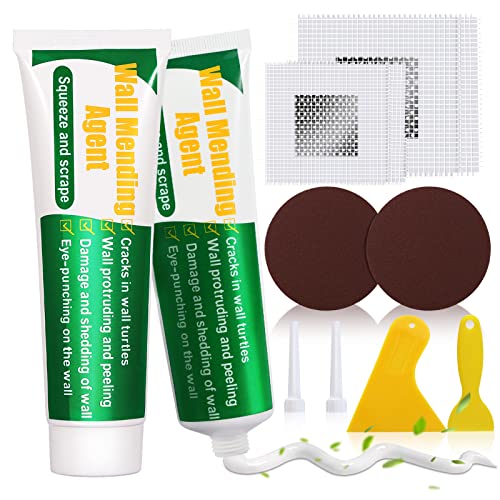 Drywall Repair Kit, 2 Pack Spackle Wall Repair Patch Kit with Scraper, Wall Mending Agent Large Hole Drywall Patch, Easy to Fill Holes in Home Wall and Quick Repair Crack, Plaster Wall Repair