Best LED Strip Lights for Bedrooms (2026): Research Shows
For bedrooms, the best all-around pick here is the Wefomey 16.4ft COB strip, because it pairs tunable white, CRI 90+, and a common bedroom-length run with a dot-free look that works for both ambient light and hidden accent installs. Poor choices can create glare, sleep-disrupting blue-heavy light, visible hotspots, or sticky installs that fail early. This guide shows how to choose by sleep use, visibility, dimming behavior, and placement, then what features to check before you buy.
Quick comparison
| Product | Badge | Best for | Price | ||
|---|---|---|---|---|---|
 |
Pandery COB LED Strip Lights Warm White,24V Dimmable ledPandery | Our pick | 9.84ft · Ra>90 · 2700K | $18.99
Price as of 23 Oct 2026
|
View |
 |
PAUTIX 44ft COB LED Strip Lights,RGB+CCT 2700K-6500K WhitePAUTIX | Upgrade pick | 44ft · RGB+CCT · 24V | $131.51
Price as of 23 Oct 2026
|
View |
 |
16.4ft COB LED Strip Lights with APP Dimmable 2700K-6500KWefomey | Also great | 16.4ft · CRI 90+ · 8mm | $25.19
Price as of 23 Oct 2026
|
View |
Use this as a bedroom-first filter, not a color-effects ranking. The right strip depends on where it sits, how low it dims, and if you need sleep-friendly white light or decorative color output.
📊 This Old House lists DAYBETTER LED Strip Lights at 100 feet. Source: The 5 Best LED Lights (2026 Review).
How we chose
We compared the listed products against bedroom-specific needs: color temperature, CRI, dimming behavior, LED density, and install position. Also check which strips fit hidden accent use, visible use, or smart-control use without pushing the wrong tradeoff.
Two details matter more than brand names. Low-end dimming has to stay smooth at 1-5%, and visible installs need denser output than hidden ones.
Length matters too. A 6.6-foot kit can fit a small headboard, while 16.4 feet is a common bedroom run and longer kits suit wraparound accents or larger rooms.
Wefomey 16.4ft COB strip: best for sleep-friendly ambient light
This is the strongest match for a bedroom that needs steady ambient light, not color effects. Based on the published specs, it gives you CRI 90+, 2700K to 6500K tunable white, 16.4 feet of coverage, and a high-density COB build that reduces visible dots.
That combination matters when the strip is on a headboard, behind a mirror, or along a shelf where the light source may be partly visible. Tunable white also lets you shift from warmer evening light to a slightly cooler daytime setting without changing strips.
The main drawback is that it is a white-light strip, not an RGB effect strip. If you want multiple colors at once or music-synced decor lighting, this is the wrong category.
Pandery COB strip: best for warm under-bed and wardrobe glow
This strip fits a bedroom that wants warm light only. It is listed at 2700K with Ra>90, and its COB construction is a good fit where the strip may be seen through a gap, under a bed frame, or inside a wardrobe edge.
The 24V setup and dimmable control are useful for low-light bedside use. A warm 2700K tone is close to the evening range most bedroom buyers should start with, especially if the goal is a softer floor wash rather than a bright room fill.
The drawback is flexibility. With a fixed warm-white output and a shorter 9.84-foot run, it is less adaptable than tunable-white options for rooms that need both relaxation light and brighter daytime use.
PAUTIX 44ft COB RGB+CCT strip: best for large rooms and color control
This is the option for people who want white light and color effects in one long run.
It is better suited to larger bedrooms, gaming setups, or decor-heavy rooms where segment effects matter. The long continuous run also helps when you need to cover several zones without joining multiple short kits.
The drawback is simple: RGB+CCT is not the same as a sleep-first bedroom strip. It can do warm white, but the feature set leans decorative, and the price is much higher than a basic white-light kit.
What should you look for in a bedroom strip?
Start with the kind of light you actually need. For most bedrooms, the target is warm white, smooth dimming, and enough output for ambiance without glare. If the strip is visible, density and diffusion matter more than color effects.
Color temperature and CRI
For evening use, 2200K-2700K is the safer range. If the strip is your main ambient bedroom light, 2700K-3000K usually works better, and tunable white is the most flexible choice because it lets you move between those zones without changing hardware.
CRI matters more than many product pages admit. A 90+ target is a smart minimum, and 95+ is worth calling out on premium strips because it affects skin, fabric, and decor color accuracy. The best LED strip lights in 2026 deliver CRI ratings above 95.
Brightness and LED density
Bedroom accent lighting usually sits in the 200-500 lumens per meter range. If the strip is doing more of the room-fill work, 400-800 lumens per meter is the better target, while one bright strip model is cited at 1,400 lumens as a useful reference point.
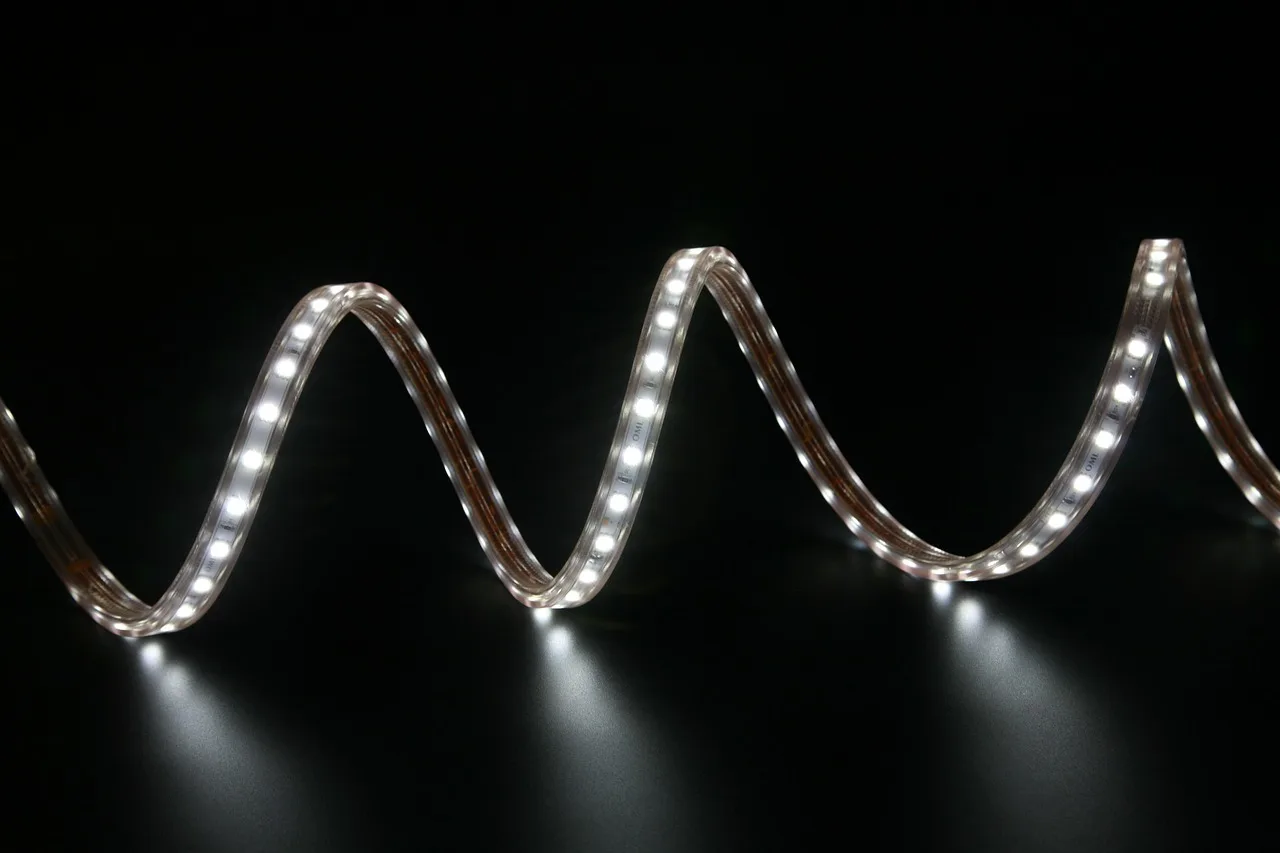
Density changes how the light looks. For bedroom use, 60-120 LEDs per meter is a practical range, and 120+ LEDs per meter is better for visible applications because it reduces hot spots. COB strips go a step further by packing chips so the output reads as a continuous line.
Dimming and smart control
Good bedroom lighting should dim smoothly to 1-5% for late-night use. The 2026 benchmark cited for top strips goes down to 0.1%, and low-brightness control matters because many cheap strips flicker or step unevenly at the bottom of the range.
If you want app control, prioritize Matter compatibility, Zigbee support, Alexa, Google Home, or HomeKit support. Smart features only help when the app is stable and the strip responds reliably at bedtime, not just when it is bright.
Bedroom strip buyer checklist
This table separates bedroom use cases because under-bed glow, headboard backlight, shelf accent, and closet lighting do not need the same strip. A hidden install can tolerate different output than a visible one.
| Use case | Recommended CCT | CRI target | LED density | Brightness range | Dimming requirement | Installation location | Red-flag failure modes |
|---|---|---|---|---|---|---|---|
| Under-bed glow | 2200K-2700K | 90+ | 60-120 LEDs/m | 200-400 lumens/m | Smooth to 1-5%, flicker-free at low output | Inward-facing under frame, hidden from direct view | Visible hotspots, adhesive failure from dust, cable pinch points |
| Headboard backlight | 2200K-2700K or tunable white | 95+ preferred | 120+ LEDs/m | 200-500 lumens/m | Fine dimming with stable low-end output | Behind headboard or along wall wash line | Glare, uneven wall wash, heat buildup behind upholstered panels |
| Shelf accent | 2700K-3000K or tunable white | 90+ | 120+ LEDs/m if visible | 200-500 lumens/m | Useful down to 1-5% | Under shelf lip, inside open shelving, or behind trim | Dotting, poor color rendering on decor, exposed adhesive edges |
| Closet lighting | 2700K-3000K | 95+ preferred | 60-120 LEDs/m | 400-800 lumens/m | Responsive on/off with usable low dim | Top rail, door frame, or interior side wall | Shadowing, low color accuracy on clothes, heat near stored items |
Tunable white strips: best for sleep-friendly ambient light

Tunable white is the best middle ground for most bedrooms because it lets you keep evening light warm while still having a brighter, cleaner setting when needed.
When warm white matters most
Warm white matters when the strip sits in your line of sight or lights the wall behind the bed. A cooler beam can feel harsher in that setup. For that reason, warm white is usually the better default for reading, winding down, and pre-sleep use.
What brightness range to target
For accent work, 200-500 lumens per meter is enough in many bedrooms. If the strip has to light more of the room, move toward 400-800 lumens per meter. Brightness should come with dimming control, not instead of it.
What to check before buying
Check for 90+ CRI, tunable white, and smooth low-end dimming. If the listing mentions 1-5% flicker-free dimming or a 1000Hz+ PWM frequency, that is a better sign than vague claims about “soft light.”
Say your bedroom is 12 by 14 feet and the strip runs behind the headboard.
COB strips: best for visible installs
COB strips are the right choice when the strip can be seen. The denser chip packing creates a dot-free continuous glow, which matters on headboards, shelf edges, and open bedroom shelving where a standard LED pattern would show through.
Why dot-free output matters
Visible installs need a smoother line of light because the eye notices gaps at close range. A frosted diffuser can help, but a COB strip starts with a cleaner source. That usually makes the finished look better with less hardware.
When higher density beats color effects
If the goal is sleep-friendly room light, higher density beats flashy effects. RGBIC can split into multiple colors at once, but that adds visual activity that does not help bedtime lighting. For a bedroom, density and dimming usually matter first.
When to use an aluminum channel
An aluminum channel helps with straight runs, protects the strip, and supports a frosted diffuser. It also gives adhesive a better mounting surface than bare paint in many cases. Use it when the strip is visible or when heat buildup could be a concern.
Suppose you want a strip above a wardrobe mirror. A COB strip in an aluminum channel will usually look cleaner than a bare RGB strip taped to the frame, because the diffuser and dense emitters reduce hotspots at eye level.
RGBIC strips: best for color effects
RGBIC is the right category when you want multiple colors at once, segment-level effects, or music-sync decor lighting. It is not the first choice for sleep-first lighting, because the design goal is visual effect, not low-distraction evening illumination.
When segment effects make sense
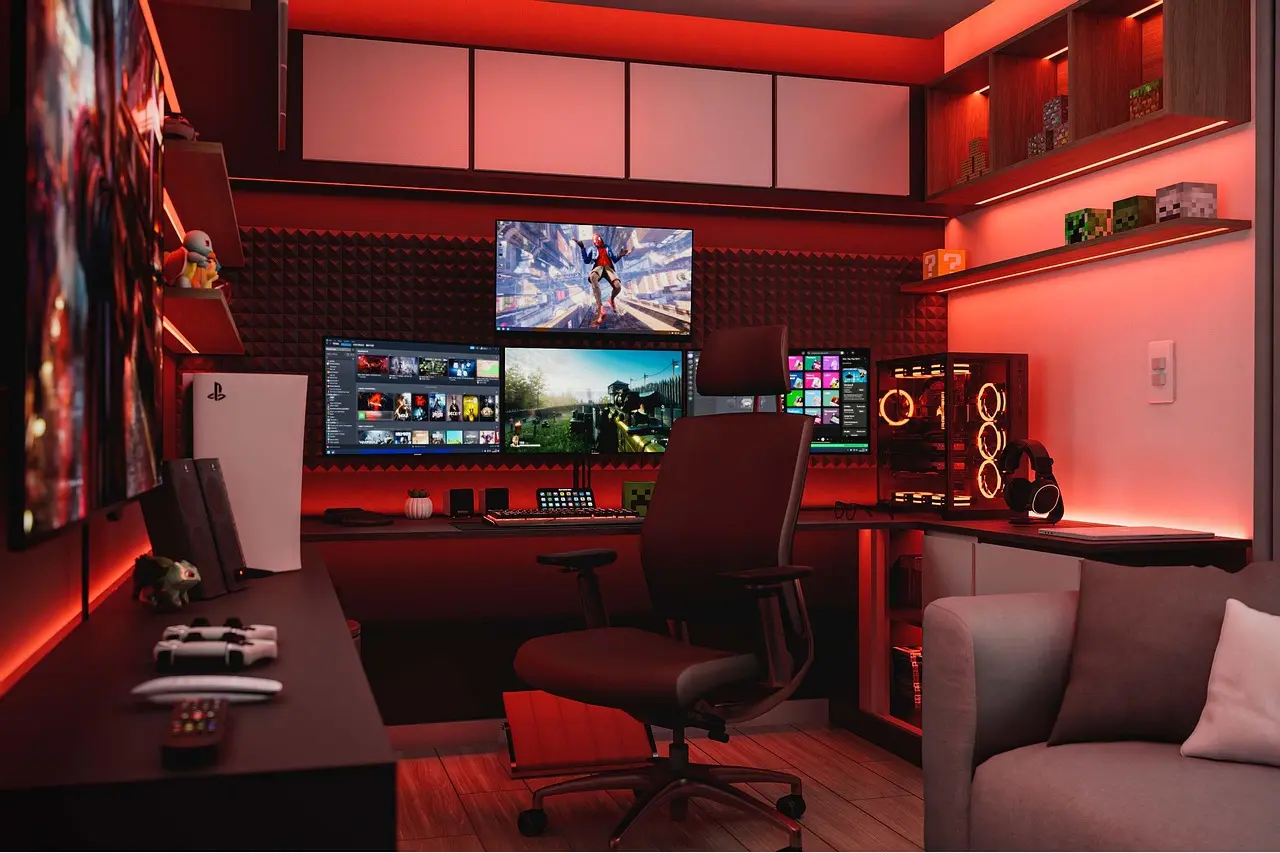
Segment effects make sense behind a gaming desk, along a media wall, or in a room where the strip is part of the decor. They make less sense above a pillow or behind a headboard, where a stable warm tone is usually the better fit.
Music sync and decor use
Music sync is a selling point for bedroom atmosphere, but it is best treated as an occasional feature rather than the main reason to buy. If the strip will stay on for reading, getting dressed, or winding down, white-light quality still matters more.
Why RGBIC is a poor sleep-first choice
RGBIC can produce blue-heavy or rapidly changing light, both of which work against a sleep-first goal. If your priority is a relaxing bedroom atmosphere, a warm tunable-white strip is usually the better buy. RGBIC belongs in a decorative role, not the primary lighting role.
Are warm white LED strips better for bedrooms?
Yes, warm white is usually better for bedrooms because it is easier on the eyes at night and fits pre-sleep routines better than cooler light.
Tunable white is better than fixed warm white when you want one strip to handle both bedtime and daytime use. Cool white still makes sense in a closet, a dressing area, or a work zone where color accuracy and visibility matter more than relaxation.
Do you need dimmable LED strip lights?
Yes. Dimming is one of the most important bedroom features because the room rarely needs full output at night. Look for smooth dimming down to 1-5%, and better yet a listed low-end benchmark near 0.1% if you want very fine control.
Low-end behavior matters as much as the dimming range. Cheap strips often flicker, jump, or shut off too early at the bottom end. If a product mentions 1000Hz+ PWM or flicker-free low brightness, that is more useful than a vague “dimmable” claim.
What smart controls should support
Smart controls should do more than add an app. For bedroom use, Matter, Zigbee, Alexa, Google Home, and HomeKit are the features worth checking because they affect reliability, voice use, and scheduling. Stable control is better than extra lighting modes you will never use.
Which one should you buy?
If you want the best overall bedroom choice, start with the Wefomey 16.4ft COB strip. It has the right mix of tunable white, 90+ CRI, and a common bedroom length, which makes it the most balanced option for sleep-friendly ambient light.
If your strip will be visible, the Pandery COB warm white strip is the cleaner pick for a simple, warm look. If you want color effects, music sync, or a long run for a large room, the PAUTIX RGB+CCT strip fits that job better, though it is less sleep-first by design.
For tight budgets, a shorter warm-white COB strip is usually smarter than paying for color effects you will not use. For a room with shelves, mirrors, or an exposed edge, spend more on density and diffusion before spending on app effects.
One common first-timer mistake is buying a bright RGB strip for a bedroom because it looks impressive on the box. In practice, the room often needs 2700K warm light and smooth dimming more than it needs animated color scenes.
Frequently asked questions
What should I look for in LED strip lights for a bedroom?
Start with 90+ CRI, warm or tunable white, and smooth dimming to 1-5%. Then match brightness and LED density to the install position. Hidden accent runs can use less density than visible ones, while visible strips benefit from COB construction or 120+ LEDs per meter.
How bright should bedroom LED strip lights be?
For accent lighting, 200-500 lumens per meter is a useful range. For stronger ambient light, 400-800 lumens per meter is more appropriate. A brighter strip can still work, but it should dim cleanly so it does not feel harsh at night.
Should I choose COB or RGBIC LED strip lights for a bedroom?
Choose COB if the strip will be visible and you want a smooth, dot-free glow. Choose RGBIC only if you want multiple colors at once, segment effects, or music-sync decor lighting. For sleep-first use, COB and white light usually make more sense.
Do I need dimmable LED strip lights for a bedroom?
Yes, because bedrooms often need very low light. Look for smooth dimming to 1-5% and, if possible, mention of flicker-free low brightness or 1000Hz+ PWM. Poor low-end dimming can make a strip annoying even if the top-end output looks good.
What is the best LED strip light length for a bedroom?
A 16.4-foot kit is a common bedroom length and covers many standard accent runs. Smaller jobs can work with a 6.6-foot base kit, while larger rooms may need 32 feet or 33 feet of extension. Measure the actual install path before buying.
Sponsored / affiliate links. As an Amazon Associate I earn from qualifying purchases. I may earn additional commission from eligible campaigns.