Basement Waterproofing Paint: When It Helps and Fails
Use basement waterproofing paint only on damp walls, hairline seepage, or after drainage fixes; it fails on active leaks, bowing walls, and hydrostatic pressure. Miss that distinction and you can trap moisture, peel the coating, and hide a fixable water problem until damage spreads. This guide shows where the paint helps, where it fails, and which basement conditions predict success or peeling.
Proper uses and limitations of waterproofing paint

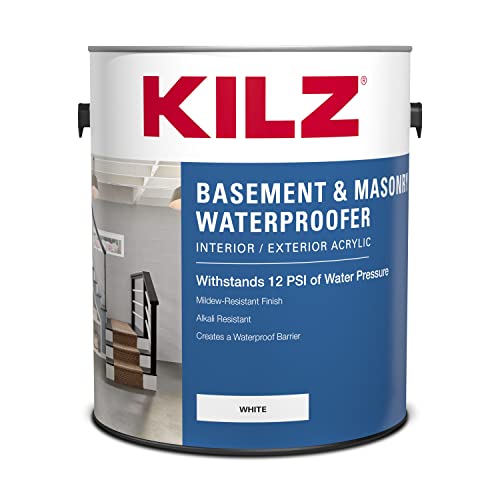

Basement waterproofing paint can help with minor dampness, vapor transfer, and staining on sound concrete or masonry. It is an interior-use coating, usually applied in multiple coats, and it works best on porous, dry surfaces that are clean enough for good adhesion. It is not a fix for liquid water entering under pressure.
Vapor control on porous masonry
Concrete basement wall surfaces are porous. Moisture can move through them by capillary action, even when you do not see standing water. A coating can slow that vapor movement and cut damp-looking patches, especially on walls with no active seepage and no loose material.
Minor dampness and stained walls
Paint can be reasonable when the wall feels cool or slightly damp but stays intact, with no dripping, no puddling, and no recurring wet spots after storms. It may also improve the look of walls marked by old water staining, provided the substrate is dry enough for the coating to bond.
Why it is not a leak fix
Waterproofing paint is a moisture-control layer, not a substitute for drainage repair. If water is entering from behind the wall, the coating can blister, peel, or fail in sheets. That is why active leaks, saturated masonry, and hydrostatic pressure need a different fix.
When does waterproofing paint fail?
It fails when water pressure, wall movement, or poor substrate conditions defeat adhesion. Active seepage, saturated masonry, and cracks that move with seasonal changes often push moisture behind the coating. Once that happens, the film becomes a weak layer that can lift, bubble, or flake off.
Active seepage and wet walls
If water is visibly weeping through a wall, coating the surface only hides the symptom. Fresh seepage often means the wall is still wet in depth, not just on the face. Paint applied over that condition rarely holds because the moisture load keeps coming from behind.
Hydrostatic pressure from behind the wall
Hydrostatic pressure is the force of water in saturated soil pushing against the basement wall or floor. That pressure can force water through pores, joints, and cracks from the outside in. A coating on the inside cannot block that pressure for long if the drainage problem remains unchanged.
Moving cracks and saturated masonry
Hairline cracks can sometimes be filled before coating, but cracks that open and close, step through block joints, or widen after wet weather are generally treated as a different issue. Those cracks need structural evaluation, not just paint. Saturated masonry also holds moisture long enough to defeat adhesion and cause peeling.
Basement waterproofing paint decision matrix
This matrix gives a quick read on when the coating is reasonable and when it is the wrong tool. The failure note matters as much as the yes or no, because the same wall can look “mostly dry” while still holding enough moisture to peel paint later.
| Basement condition | Is waterproofing paint appropriate? | Next best fix | Failure-reason note |
|---|---|---|---|
| Minor dampness on sound concrete | Yes, often | Clean, dry, then apply multiple coats | Works best when moisture is low and the wall stays porous, clean, and dry enough for bond |
| Efflorescence on masonry | Only after removal and drying | Brush off salts, dry the wall, then coat | White mineral salts show moisture migration and can block adhesion if left on the surface |
| Hairline cracks that do not move | Yes, with prep | Fill with crack repair filler, then coat | Unfilled cracks create a direct path for moisture and can telegraph through the finish |
| Seasonal wetting after heavy rain | Maybe, only if the wall stays dry between events | Improve grading, gutters, and downspouts first | Recurring wetting usually points to water outside the wall, not a coating problem alone |
| Painted masonry with a powdery old finish | No, not without stripping loose paint | Remove loose coating, then use a compatible sealer or paint system | Powdery or failing paint blocks bond and causes new coating layers to peel with it |
| Active seepage at the base of the wall | No | Interior drain system, sump pump, and exterior water control | Liquid water entry from behind the wall overwhelms surface coatings |
| Hydrostatic pressure present | No | Drainage repair, interior drain system, and sump pump | Pressure can push water through pores and joints from behind the coating |
| Older mixed-material wall with patch repairs | Maybe, after testing adhesion on each surface | Repair loose mortar, patch joints, then choose a compatible coating | Different materials absorb moisture differently, so one coat may fail at weak spots |
| Damp but no visible leak | Yes, often | Dry the wall, seal small defects, and coat | Vapor control can help, but only if the wall is not carrying hidden liquid water |
| Efflorescence with recurring basement humidity | Sometimes, after moisture source control | Pair surface prep with a dehumidifier after repairs | Humidity control helps the room, but salts mean moisture is still moving through the wall |
| Movement crack in block or poured wall | No | Structural evaluation and crack repair designed for movement | A rigid coating cannot bridge active movement without failing |
| Concrete wall with a chalky surface and dust | No until cleaned | Remove dust, laitance, and loose material before any coating | Dust and weak surface paste prevent adhesion and lead to early peeling |
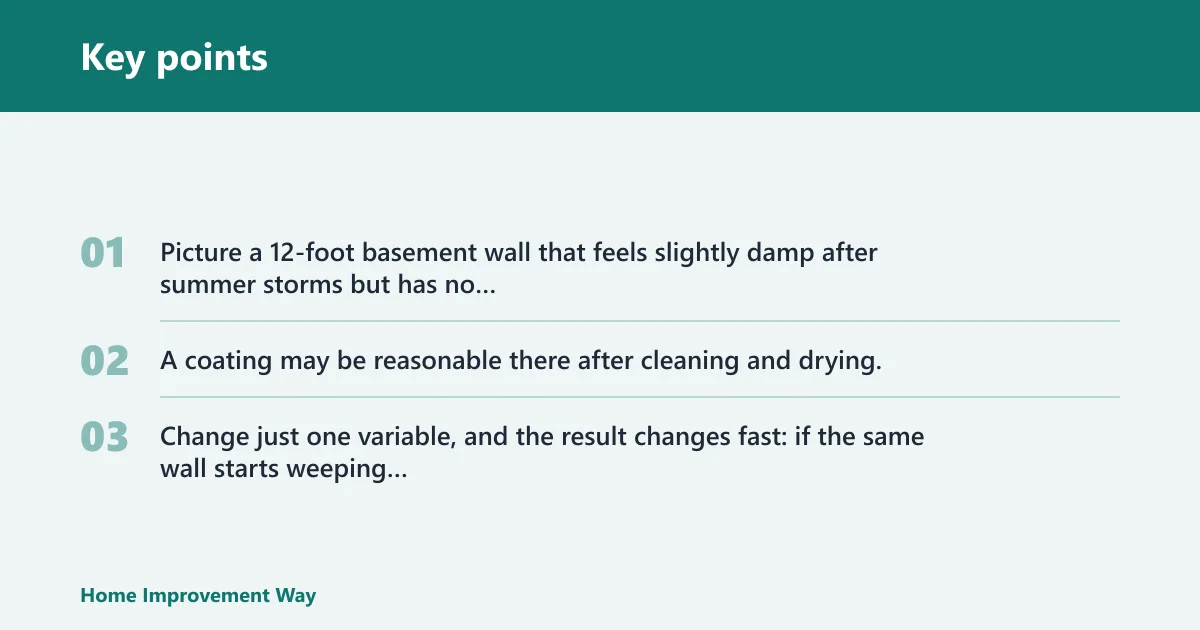
Picture a 12-foot basement wall that feels slightly damp after summer storms but has no wet streaks and no puddles at the floor joint. A coating may be reasonable there after cleaning and drying. Change just one variable, and the result changes fast: if the same wall starts weeping at the cove joint, the coating is the wrong answer.
How should you prep the wall first?
Prep decides whether the coating bonds or fails early. You need a clean, sound, dry surface, plus repair of small defects before any paint goes on. If the wall is dusty, salty, or damp enough to bead water, stop and correct the cause before coating.
Cleaning and loose material removal
Brush off dirt, loose paint, and efflorescence until you reach solid material. On concrete basement walls, any weak surface layer can break the bond. If the wall is previously painted, scrape or sand back anything that is powdery, peeling, or glossy enough to resist adhesion.
Drying limits before coating
A wall can look dry and still carry moisture inside. That matters because vapor can move through the wall after the coating goes on. Manufacturers often require a dry surface before application, and a simple practical rule is this: if the wall darkens again after cleaning or feels persistently cool and damp, more drying time is needed.
Crack repair filler versus structural repair
Use crack repair filler for non-moving hairline cracks before coating. It is a patch, not a cure for a shifting wall. Movement cracks, stair-step block cracks, or widening gaps need structural evaluation because the coating cannot hold a joint that keeps opening.
- Check the wall for active seepage, loose paint, dust, and salts.
- Remove efflorescence and any friable material.
- Repair non-moving hairline cracks with a suitable filler.
- Let the wall dry fully before coating.
- Apply the number of coats the product requires, usually more than one.
- Watch the surface after the next heavy rain for new damp spots or peeling.
What causes peeling or blistering?

Peeling usually means moisture is still moving through or behind the coating, or the wall was not ready for paint. Efflorescence, alkali contamination, dust, and old paint all reduce bond. If the coating blisters soon after a rain, the wall may have a drainage problem, not a product problem.
Moisture behind the coating
Water pressure or hidden dampness can lift the film from the substrate. This is the most common reason a basement coating fails on walls that seem only slightly wet. The coating may hold for a while, then bubble or flake once the moisture load builds.
Efflorescence and alkali contamination
Efflorescence is commonly described as a white mineral salt deposit left by moisture migration through masonry. It is a warning sign, not just a cosmetic issue. If you paint over it, the salts can interfere with adhesion and can keep drawing moisture toward the surface.
Poor adhesion on painted or dusty surfaces
A powdery coating, dusty concrete, or oily patch prevents proper grab. Older basements often have several repairs layered over each other, which makes this problem worse. A new coating can fail on the weakest layer, then peel in strips when humidity or seepage returns.
Do you need drainage before paint?
Yes, if the basement has repeated wetting, seepage at the floor joint, or signs of pressure behind the wall. Gutters, grading, and downspouts should come first when the problem starts outside. If water is still pushing through the wall, an interior drain system is often the better fix.
When gutters and grading come first
Downspouts that dump water near the foundation, soil that slopes toward the house, and clogged gutters all add water to the soil beside the wall. Fixing those conditions may reduce the wetting enough that a coating can do its job. Paint alone will not correct a bad site slope.
When an interior drain system is the better fix
If seepage is persistent, a drain system at the inside perimeter usually handles the problem better than coating the wall. It intercepts water and sends it to a sump instead of letting pressure build behind the finish. That is the right direction when hydrostatic pressure is part of the problem.
Where a sump pump fits
A sump pump is the discharge side of the system. It moves collected water out of the basement after an interior drain gathers it. The pump does not stop wall entry by itself, but it becomes essential once the drainage plan includes a perimeter drain.
Suppose an older block wall shows white salts in one corner every spring, but stays dry the rest of the year. A coating may seem tempting. If the salts return after each storm, the better move is to control outside water first, then decide whether the wall is dry enough for paint.
What are better fixes for leaks?
Better fixes depend on the source. Masonry sealer may help with mild dampness, crack injection may suit a specific crack, and a dehumidifier can help after the water source is controlled. None of those should be treated as a shortcut around drainage problems or hydrostatic pressure.
Masonry sealer versus waterproofing paint
Masonry sealer is usually a lower-build film than waterproofing paint. It may reduce dusting or mild dampness, but it is not the same product and it is not designed to stop leaks. Use sealer for light moisture control, not for active water intrusion.
Crack injection for specific cracks
If one crack is the entry point and the rest of the wall is sound, injection can be the right repair. That approach targets the defect itself instead of coating the whole surface and hoping for the best. It is especially useful when the crack is stable and clearly defined.
Dehumidifier use after water control
A dehumidifier helps lower basement humidity after sealing and drainage work. It can reduce musty air, slow mildew growth, and help painted surfaces cure in drier conditions. It does not stop liquid water entry, so it should be viewed as a finishing tool, not a leak repair.
Frequently asked questions
Does basement waterproofing paint actually work?
Yes, but only in the right conditions. It works best on dry, porous concrete or masonry with minor dampness, vapor transfer, or small non-moving cracks that have been repaired. It does not work as a stand-alone fix for active seepage, hydrostatic pressure, or walls that keep getting wet from behind.
When should I use basement waterproofing paint instead of sealant?
Use waterproofing paint when you want a thicker moisture-control coating on clean, sound masonry that stays only slightly damp. Use a masonry sealer when the wall needs a lighter film for dust control or mild dampness. Neither one should be used as a fix for active leaks.
Will waterproofing paint stop active basement leaks?
No. Active leaks mean liquid water is entering the basement, often because of pressure or a drainage defect. A surface coating can fail quickly in that situation. The better fix is usually drainage work, crack repair, or an interior drain system, depending on where the water is coming from.
Can I paint over damp concrete basement walls?
Only if the dampness is light, the wall is sound, and there is no active seepage or pressure behind it. Clean the wall first, remove efflorescence, and let it dry as much as possible before coating. If the dampness returns quickly, the wall likely needs water-source repair first.
How many coats of basement waterproofing paint do I need?
Most products require multiple coats, and the exact number comes from the label. A single coat is rarely enough for a basement wall because porous concrete can absorb the first pass. Apply each coat only after the previous one has dried as directed, or adhesion and coverage can suffer.
What causes basement waterproofing paint to peel or fail?
Peeling usually comes from moisture behind the coating, efflorescence, dust, loose paint, or wall movement. If the surface was not cleaned and dried well, the coating may lose bond early. Persistent seepage and hydrostatic pressure are common reasons the finish blisters, then flakes away in sheets.
Is waterproofing paint good for older basement walls?
Sometimes, but older walls need closer inspection. Mixed materials, patch repairs, chalky old coatings, and recurring seasonal seepage can all reduce adhesion. An older wall can be a good candidate only if it is sound, dry enough, and free of movement cracks or repeated wetting.
Do I need to fix drainage before using waterproofing paint?
Yes, if the basement has recurring leaks, wet floor joints, or signs of hydrostatic pressure. Fixing gutters, grading, and downspouts may reduce the moisture load enough for a coating to help. If seepage continues, an interior drain system should come before any finish coat.
Sponsored / affiliate links. As an Amazon Associate I earn from qualifying purchases. I may earn additional commission from eligible campaigns.