How to Patch a Small Drywall Dent the Right Way
Patch a small drywall dent by first checking whether the paper is torn; if it’s only a shallow dent, a thin coat of lightweight spackle or joint compound is enough, but torn paper needs sealing before filling. Overfilling or sanding too hard can leave a visible bump, ghosting, or fuzz that shows under paint. This guide shows how to judge the damage, choose the lightest repair that will disappear, and finish it cleanly.
Quick dent check
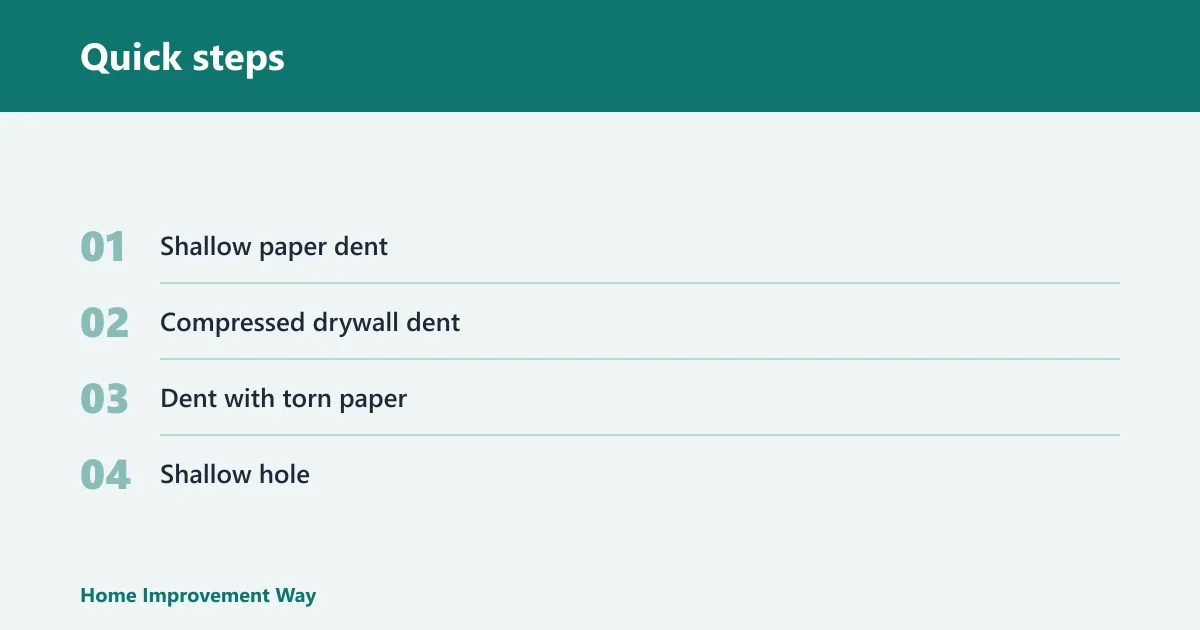


Start by separating a true dent from a paper scuff or a shallow hole. WikiHow treats small wall dents as 1/2 inch wide or less, but width alone is not the whole decision. If the paper face is intact and the gypsum is only compressed, you can usually fill and blend it. If the paper is torn, the repair needs extra prep first.
Use this rule: if the surface feels firm but sits low, it is usually a simple fill. If fibers are loose, fuzzy, or ragged, you need to stabilize the paper before any skim coat. A deeper void, a hole with broken edges, or a spot that keeps shrinking after filling often needs more than a basic dent repair.
What to look
- Shallow paper dent: the surface is dented, but the paper is not torn.
- Compressed drywall dent: the face is pushed in and may need one or two thin coats.
- Dent with torn paper: the paper is fuzzy, lifted, or split and needs sealing before filling.
- Shallow hole: the damage is open, not just indented, so a simple dent fix may not be enough.
What you’ll need
- Lightweight spackling compound for very small dents, scratches, and nail holes
- Joint compound for small drywall dents that need wider feathering or a second skim coat
- 4- to 6-inch putty knife
- Fine-grit sandpaper, such as 100- or 120-grit for smoothing, or 120-150 grit for finish sanding
- Primer for the patched area
- Clean cloth or vacuum with brush attachment
- Optional self-adhesive mesh patch for medium holes, not tiny dents
- Optional drywall tape for larger seams or reinforced repairs
- Optional drywall patch kit for dents or holes that exceed simple filling
Can you use spackle or joint compound?
Yes. Use spackle for very small dents, scratches, and nail holes, especially when you want a fast, thin fill. Use joint compound when the dent needs better feathering or when a second skim coat may be necessary to erase the depression. Both work, but the repair size should decide the material.
Lightweight spackling is the better match for tiny damage because it is meant for small surface defects and dries before sanding. Joint compound is a better choice when the repair has to blend farther into the wall. If the first coat still sits low after drying, add a second skim coat instead of piling on one thick layer.
Use the smallest repair that will disappear
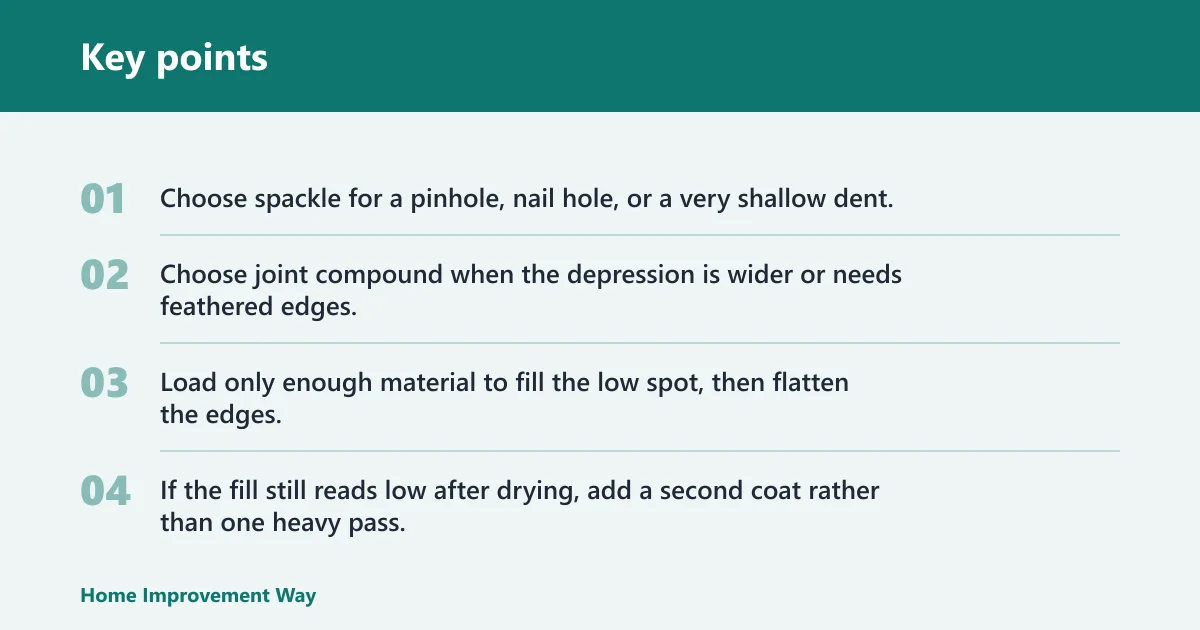
- Choose spackle for a pinhole, nail hole, or a very shallow dent.
- Choose joint compound when the depression is wider or needs feathered edges.
- Load only enough material to fill the low spot, then flatten the edges.
- If the fill still reads low after drying, add a second coat rather than one heavy pass.
How to let it dry and sand it
Let the repair dry fully before sanding. WikiHow says dry repair compound usually takes about 24 hours to dry, and sanding early can pull filler out of the dent. If the patch is still soft underneath, you will sand a hollow spot and have to fill it again. (Wikihow)
Use fine-grit sandpaper after full dry time. WikiHow recommends 100- or 120-grit sandpaper, and James Alexander recommends 120-150 grit for smoothing patches. Sand lightly and stop as soon as the repair is flush with the wall. You want flat, not polished through.
Stop and reassess
- If you see a witness line, add a thin skim coat and feather wider.
- If the edge feels raised, sand only the ridge, not the whole patch.
- If the filler shrinks back into the dent, apply another thin coat after full dry time.
- If fuzz shows through, seal the paper area before more filling.
Drywall dent decision checklist
| Dent type | Recommended filler depth | Finish steps | Redo if |
|---|---|---|---|
| Shallow paper dent | Thin coat, roughly 1/16 inch or less | One light finish pass, sand after full dry time, then prime | Witness lines still show after sanding |
| Compressed drywall dent | Thin fill, then a second skim coat if needed | Feather wider, sand flush, prime, then paint | Edge ridges remain or the spot still reads low |
| Dent plus torn paper | Seal or stabilize first, then thin fill | Feather carefully, sand after cure, prime before paint | Fuzz, shrink-back, or flashing appears after drying |
When is the dent too large for a simple patch?
If the damage is wider than a true small dent or has broken edges, move beyond basic filler. James Alexander treats holes up to 2 inches in diameter as medium-sized, and that is the point where a self-adhesive mesh patch or a patch kit starts to make more sense. A self-adhesive mesh patch is for medium holes, not tiny dents.
Use a drywall patch kit when the damage exceeds simple filling or needs structural support. Drywall tape is better for reinforcing larger seams and layered repairs, and it is normally used with joint compound. Timothy’s Toolbox lists 4-inch by 4-inch, 6-inch by 6-inch, and 8-inch by 8-inch repair patches for bigger jobs. If the spot is still shallow but wide, a wider skim may solve it; if it is open or unstable, switch methods.
When to change methods
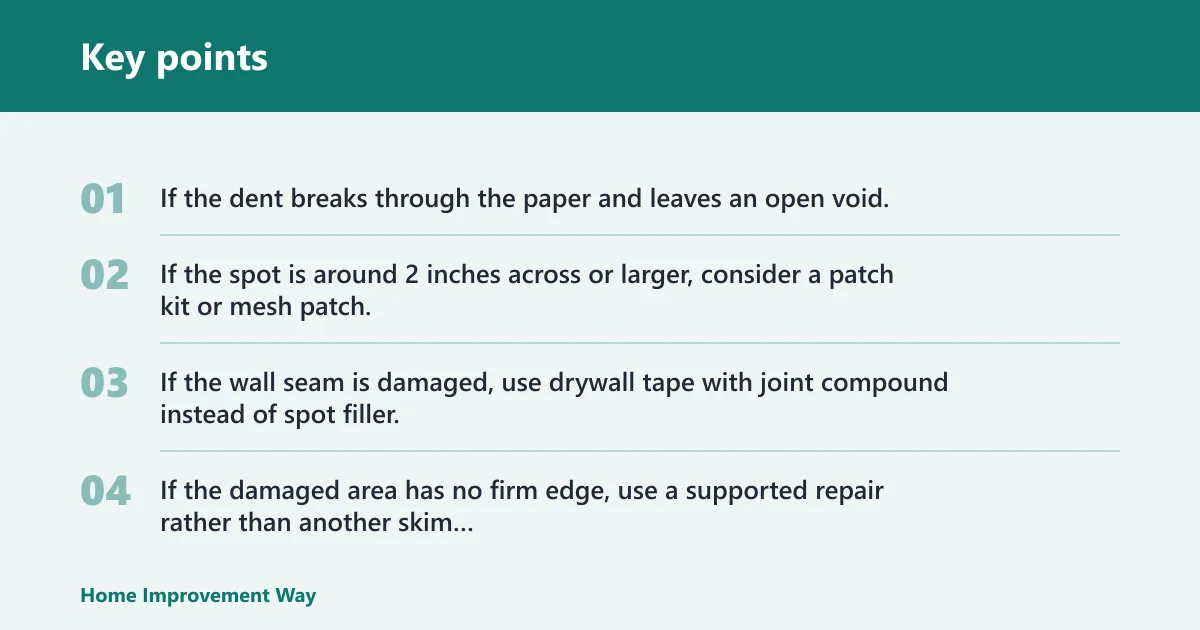
- If the dent breaks through the paper and leaves an open void, stop using simple spackle alone.
- If the spot is around 2 inches across or larger, consider a patch kit or mesh patch.
- If the wall seam is damaged, use drywall tape with joint compound instead of spot filler.
- If the damaged area has no firm edge, use a supported repair rather than another skim coat.
Common mistakes
Overfilling is the biggest reason a small patch shows after paint. A thick blob often sands to a hump, and the hump catches light. Keep coats thin and build only as needed.
Do not sand before the compound is dry through the full depth. Do not skip primer after sanding, because primer seals the patched area and helps the finish match the surrounding wall. On textured walls, blend the texture too, or the repair can still telegraph even when the patch is flush.
Say your dent is on a lightly orange-peel textured hallway wall. A flush fill alone may still leave a visible smooth spot after paint, so the texture needs matching before priming. Suppose a 1/2 inch dent still looks low after the first coat dries. Add a second skim coat instead of pressing on a thick third pass.
Frequently asked questions
How do I fix a dent in drywall?
Check whether the paper is torn, then fill the dent with a thin coat of spackle or joint compound if the surface is intact.
How do I repair a dent in drywall?
Clean loose dust, apply a thin coat with a 4- to 6-inch putty knife, and feather the edges wider than the dent. If the repair still sits low after drying, add a second skim coat rather than a thick fill. Prime the sanded spot before the wall color goes on.
How do I fix dented drywall without making it worse?
Do not sand early and do not press on a heavy coat. Fill only enough to level the depression, let it dry completely, and sand lightly with fine-grit paper. If the surface still shows witness lines or a ridge, stop and reassess before adding more compound.
What’s the right way to patch a small drywall dent?
Use the lightest repair that will still disappear under paint. For a shallow, intact dent, a thin coat of lightweight spackle is often enough. For a dent that needs more blending, use joint compound, feather the edge, sand after cure, and prime the repair before painting.
Can I use spackle or joint compound for a small drywall dent?
Yes, but choose based on the damage. Spackle is best for very small dents, scratches, and nail holes. Joint compound is better when the dent needs feathering or a second coat to erase the depression. Both should be applied thinly and sanded only after full dry time.
How long should drywall repair compound dry before sanding?
Wait until it is fully dry; wikiHow says dry repair compound usually takes about 24 hours. If the patch is still cool, soft, or gummy, wait longer. Sanding too early can pull filler from the dent and force you to refill the spot.
What grit sandpaper should I use on a small drywall patch?
Use fine-grit sandpaper. Choose the finer end when the patch is already close to flush, and sand lightly so you do not cut through the feathered edge.
Do I need primer after patching a small drywall dent?
Yes. Primer seals the patched area before paint and helps the finish match the surrounding wall. Without primer, the patch can flash through the topcoat as a dull or shiny spot. Sand first, remove dust, then prime the repair before painting.
How do I properly patch drywall so it doesn’t show through paint?
Keep the fill thin, feather the edges wide, sand only after full dry time, and prime before paint. If the wall has texture, match the texture before priming. If the spot still shows after sanding, add a thin skim coat instead of trying to bury it with one heavy layer.
When is a drywall dent too large for a simple patch?
When the damage is open, broken, or large enough that filler alone will not stay flat. James Alexander treats holes up to 2 inches in diameter as medium-sized, which is where a mesh patch or patch kit starts to make sense. Use tape and compound when reinforcement is needed.
Sponsored / affiliate links. As an Amazon Associate I earn from qualifying purchases. I may earn additional commission from eligible campaigns.
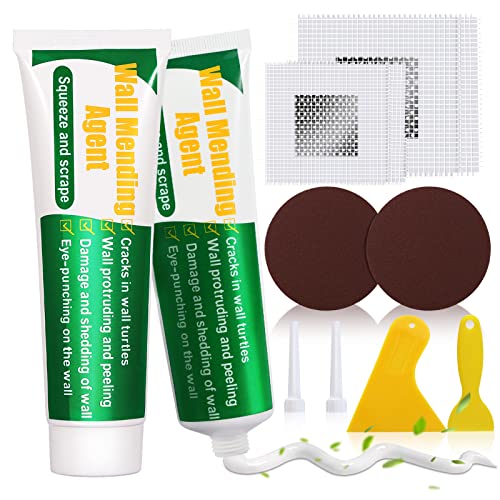 Drywall Repair Kit, 2 Pack Spackle Wall Repair Patch Kit with Scraper, Wall Mending Agent Large Hole Drywall Patch, Easy to Fill Holes in Home Wall and Quick Repair Crack, Plaster Wall Repair
 Drywall Repair Kit, Wall Mending Agent, Wall Patch Repair Kit with Scraper, Simple Filling of Wall Holes&Efficient Crack Repair