Gutter Outlet Sizes Explained: Match Parts Before You Buy
Match the outlet to your gutter profile and measured cutout, then match the outlet size to the downspout size or an adapter; many residential outlets are made for 2×3 or 3×4 downspouts. A poor fit can leak, slow drainage, and leave parts that will not connect. This guide shows how to measure the opening, identify the gutter shape, and confirm adapter compatibility before you buy.
What a gutter outlet does


The outlet is the transition point between the gutter and the downspout. Its opening shape and size control how water leaves the gutter, so the cutout, the outlet body, and the downspout connection all have to fit together.
If the opening is too small, water can back up in heavy rain. If it is too large for the outlet body or adapter, the joint may leak or leave thin metal around the cutout that bends and corrodes faster.
Outlet opening versus downspout connection
Do not treat the downspout size as the only number that matters. A 2×3 downspout, for example, needs an outlet made for that connection and a gutter opening that matches the outlet’s seat and flange. The nominal size on the part label does not always equal the actual cutout.
That is why replacement work starts with the opening already in the gutter, not with the box on the shelf.
Which outlet size fits your gutter?

Start with the gutter profile, then match the outlet to the downspout size. Common residential pairings include 2×3, 3×4, and 4×5 rectangular systems, plus round equivalents. The outlet must fit the profile and the measured cutout, or the joint will not seal correctly.
A 5-inch K-style gutter often uses a 2×3 outlet for smaller roof areas and a 3×4 outlet where drainage demand is higher. That does not mean either part fits every 5-inch gutter without checking the cutout and adapter direction.
Common pairings
| Gutter profile | Existing cutout width/height | Nominal outlet size | Compatible downspout size | Adapter needed | Fastener count | Sealant note |
|---|---|---|---|---|---|---|
| 5-inch K-style | 2 5/8 in x 3 1/8 in | 2×3 | 2×3 rectangular or round equivalent | No, if same shape and fit | 4 to 6 screws or rivets | Continuous bead around flange and cut edge |
| 5-inch K-style | 3 1/2 in x 4 1/8 in | 3×4 | 3×4 rectangular or round equivalent | No, if same shape and fit | 4 to 6 screws or rivets | Seal both flange edges before fastening |
| 6-inch K-style | 3 1/2 in x 4 1/8 in | 3×4 | 3×4 rectangular or round equivalent | Sometimes, for round or larger transitions | 4 to 8 screws or rivets | Use gutter sealant at all contact lines |
| Half-round | Varies by maker; measure opening | Round outlet or formed adapter | Round downspout or matched adapter size | Often yes | 4 to 6 screws or rivets | Sealant must bridge curved contact areas |
| Box or fascia | Measure the formed opening | Rectangular outlet sized to opening | 2×3, 3×4, or larger per design | Often, for standard downspout sizes | 6 to 8 screws or rivets | Use sealant approved for metal-to-metal joints |
Why nominal size is not the same as the actual opening
Nominal size describes the part family, not every dimension of the opening. Two outlets labeled “3×4” can still differ in flange shape, lip depth, or the way they seat against the gutter wall. That is why you need the cutout width, cutout height, and the thickness of the metal the outlet sits against.
How do I measure a gutter outlet before buying parts?
Measure the cutout opening itself, not the old outlet body. Record the width, height, and the edge thickness or lip the outlet seats against. Then inspect the opening for bends, corrosion, or odd shapes that could change the true fit even if the label on the old part looks standard.
Measure the opening correctly
- Remove the old outlet if possible.
- Measure the cutout width at the widest straight section.
- Measure the cutout height from top edge to bottom edge.
- Measure the gutter wall or lip thickness where the flange sits.
- Check whether the opening is rectangular, rounded, or custom formed.
- Compare those numbers with the new outlet’s stated opening and flange dimensions.
Check for damage before you reorder
Corrosion can thin the metal around the opening. Warped bottoms can make a good outlet sit crooked. Older gutters may also have hand-cut openings that vary from one end to the other, so one side should not be used to guess the fit for another.
Say your old 2×3 outlet has a clean rectangular opening, but the surrounding gutter metal has puckered from rust. A new outlet may still fit the label size, yet the flange may not sit flat enough to seal without repair or reinforcement.
How gutter profile changes fit
Profile matters because the outlet has to match the gutter’s front and back shape as well as the cutout. K-style, half-round, and box or fascia gutters use different outlet forms, and the wrong shape can leave gaps even when the nominal size looks close.
K-style outlets
K-style gutters usually use rectangular outlets that seat against a flat back and a formed bottom. The outlet should match the gutter’s depth and wall shape so the flange can seal without forcing the metal to bend.
Half-round outlets
Half-round gutters often use round outlets or a formed transition piece. A rectangular outlet may not sit correctly on a curved trough unless a purpose-made adapter is designed for that profile and opening.
Box and fascia gutter considerations
Box and fascia gutters vary more than standard K-style systems. Older commercial or custom residential gutters may use wider openings, thicker metal, or a different fastening pattern. Check the actual cutout and the sheet-metal thickness, because a thin residential outlet may not clamp well to heavier stock.
Do outlet adapters solve size mismatches?
Adapters can solve a size mismatch only when the opening, outlet, and downspout geometry still line up. A reducer steps down to a smaller downspout, and an increaser goes the other way. The adapter also has to fit the male and female ends in the right direction and accept the same sealant and fastener method.
Reducer and increaser basics
A reducer is used when the outlet is larger than the downspout run you want to attach. An increaser is used when the outlet is smaller than the downspout system you are trying to join. Neither one fixes a cutout that is too small, misshaped, or badly corroded.
Male and female fit, seal, and fasteners
Many adapters are directional. One end slips inside another part, while the other wraps outside it. That overlap has to face the water path correctly so the joint sheds water, not catches it. Sealant and fasteners still matter; a loose adapter can drip even when the size label sounds right.
Picture a 5-inch K-style gutter with a 3×4 outlet opening but a 2×3 downspout below it. A reducer adapter may work if the opening is sound and the outlet flange sits flat. If the outlet is already cracked or bent, a new adapter will not fix the failed joint.
Outlet matching worksheet
Use this worksheet before you buy. If any entry is uncertain, measure again at the gutter, not at the old label.
| Gutter profile | Existing cutout width/height | Nominal outlet size | Compatible downspout size | Adapter needed | Fastener count | Sealant note |
|---|---|---|---|---|---|---|
| K-style, 5 in | 2 5/8 in x 3 1/8 in | 2×3 | 2×3 or round equivalent | No, if direct fit | 4 to 6 | Seal flange perimeter and cut edge |
| K-style, 5 in | 3 1/2 in x 4 1/8 in | 3×4 | 3×4 or round equivalent | Maybe, for round transition | 4 to 6 | Use continuous gutter sealant |
| Half-round | Measure actual opening | Round or formed outlet | Round equivalent or matched adapter | Often yes | 4 to 6 | Seal curved contact line fully |
| Box or fascia | Measure actual opening | Rectangular outlet | 2×3, 3×4, or larger | Often | 6 to 8 | Use corrosion-resistant fasteners and sealant |
Decision rule: If the opening is smaller than the outlet flange, do not force the part. If the opening is nonstandard, warped, or rusted thin, replace the outlet and repair the opening only if the new part can sit flat with a watertight seal. If the opening is larger, use an adapter only when the flange still fully covers the cutout.
Replacement is straightforward when the fit is right. You need a drill, a hole saw or jigsaw for the opening, a deburring tool, sheet-metal screws or rivets, and gutter sealant. The goal is a flat, watertight joint that resists corrosion.
Tools and cutout prep
- Mark the opening from the new outlet, not from guesswork.
- Drill a starter hole if using a jigsaw.
- Cut slowly and keep the opening within the marked lines.
- Deburr all sharp edges so the flange can sit flat.
- Dry-fit the outlet before applying sealant.
Fasteners and sealant basics
Use sheet-metal screws or rivets that resist corrosion in the same material family as the gutter, such as aluminum, galvanized steel, vinyl-compatible hardware where specified, or copper-compatible fasteners where required. Sealant is not optional on a replacement joint. The seam must be sealed before fastening, then checked after tightening.
Do not overdrive the fasteners. That can bow the flange and open a path for leaks.
When is the outlet too small?
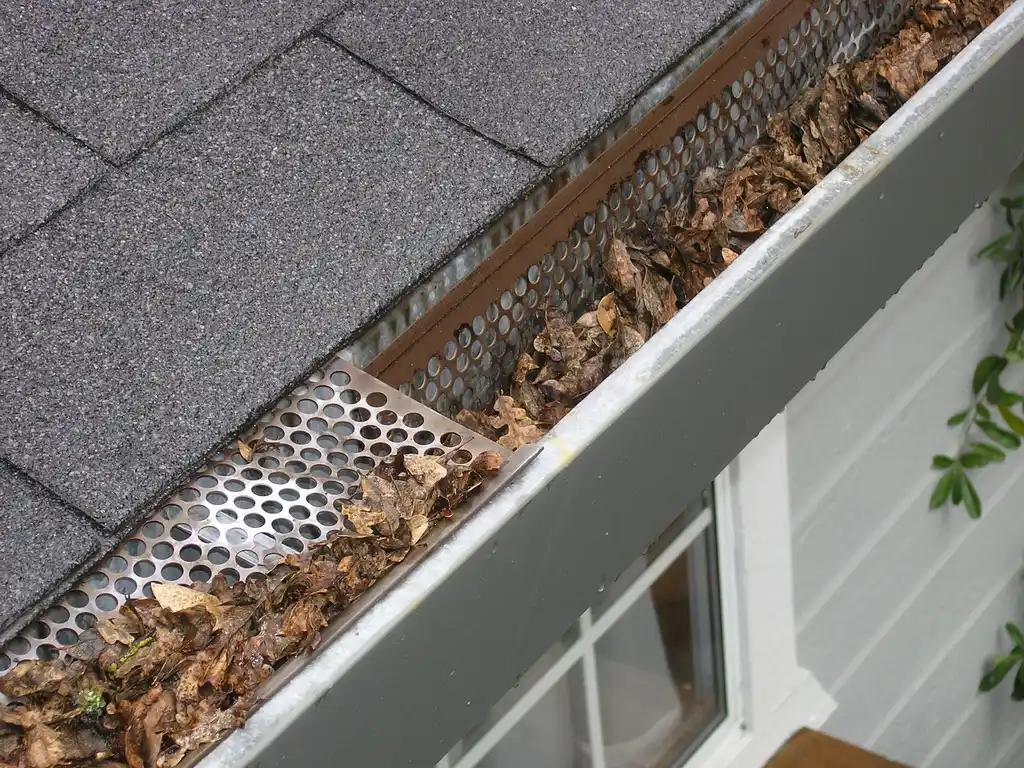
The outlet is too small when water backs up at the opening during normal rain, splashes back at the mouth, or leaves streaks below the outlet after storms. Long roof runs, steep roof planes, and heavy rainfall all raise the drainage demand, so a size that worked on a short run may fail on a larger one.
Drainage capacity and mismatch signs
Undersized outlets often show overflow at the gutter corner, standing water near the opening, or debris collecting at the bottleneck. A larger outlet can help if the rest of the run and the downspout path can carry the flow. It cannot fix a clogged elbow or a crushed vertical pipe.
A common first-timer mistake is replacing a 2×3 outlet with the same size after the home gets a longer roof run on that side. If the new run drains more roof area, the same outlet may still overflow during hard rain, even though the part matches the old label.
When a larger outlet is acceptable
A larger outlet can be acceptable when the gutter profile, opening size, and flange coverage all support it. It is not acceptable if the larger cutout leaves too little metal around the hole, weakens the gutter bottom, or forces an adapter that cannot seal to the existing downspout path.
Frequently asked questions
What size gutter outlet do I need for my gutters?
You need an outlet that matches the gutter profile, the measured cutout, and the downspout plan. Most residential systems use 2×3 or 3×4 parts, but half-round and box gutters often need a different form. Measure the opening first, then confirm the adapter and fastener layout.
Are gutter outlet sizes standard across brands?
No. Nominal sizes like 2×3 and 3×4 are common, but flange shape, lip depth, and the way the outlet seats can vary by brand and gutter style. Two parts with the same label may still need different cutouts or adapters, especially on older or custom gutters.
What size downspout fits a 2×3 gutter outlet?
A 2×3 outlet is made for a 2×3 rectangular downspout or a round equivalent that the outlet and adapter support. Do not assume every 2×3 outlet accepts every 2×3 downspout without checking the male and female fit, seam direction, and profile of the gutter system.
What size adapter do I need for a 5-inch gutter system?
A 5-inch gutter system often pairs with a 2×3 outlet, and sometimes a 3×4 outlet on larger roof sections. The adapter size depends on the outlet and downspout, not just the gutter width. Check whether you need a reducer or increaser, then verify the opening shape.
What happens if the outlet and downspout size do not match?
A mismatch can cause leaks, loose joints, restricted flow, splashback, and overflow at the gutter edge. If the outlet is too small, drainage can bottleneck. If the opening or adapter is too loose, water may run behind the joint and stain or corrode the gutter bottom.
Sponsored / affiliate links. As an Amazon Associate I earn from qualifying purchases. I may earn additional commission from eligible campaigns.