Gutter splash blocks vs. downspout extensions: which is better?
Use a splash block for short, open runoff runs; choose a longer extension when water must move farther; use buried drainage when you must cross a walkway or protect a foundation. Poor drainage can soak the footing, rot siding, and wash out soil near the house. This guide shows how to choose based on where water lands, how long it stays wet, and what obstacle it must avoid.
Gutter splash blocks vs. downspout extensions: the core trade-off

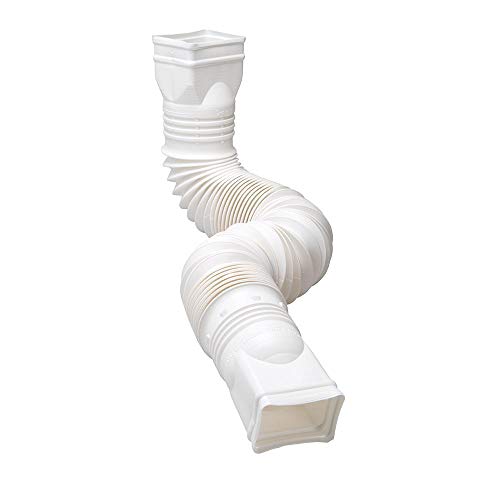
Splash blocks and extensions both move water away, but they do not solve the same drainage problem. The right choice depends on how much roof runoff is coming down, how close the foundation is to the discharge point, and whether the water has to cross a path, patio, or side yard.
| Decision factor | Gutter splash blocks | Downspout extensions | Winner |
|---|---|---|---|
| Foundation protection | Good for modest runoff and good grade | Better when water must move farther before it reaches the ground surface | Downspout extensions |
| Cost and installation | Simple, visible, and easy to place | More parts and fit checks, often with an adapter | Gutter splash blocks |
| Maintenance and freeze risk | Easy to inspect, but can shift, crack, or float in runoff | More clog points and more places for ice or debris to collect | Gutter splash blocks |
| Crossing walks or tight side yards | Poor fit if water has to travel across an obstacle | Can bridge farther, but may still need buried drainage for safe routing | Downspout extensions |
| Long-term site protection | Limited if soil stays wet or grade is flat | Stronger visible option, but still not enough on some yards | Downspout extensions |
Foundation protection
A splash block helps stop a downspout from dumping water straight into the soil, but it works best when the water can keep moving by slope and into absorbent ground. Extensions do better when the area near the foundation stays damp or when runoff needs to travel farther before dispersing.
Cost and installation
Splash blocks are simple, visible, and easy to place. Extensions add fit decisions, connection points, and routing choices, so they take more attention during installation.
Maintenance and failure risk
Splash blocks can crack, shift, or float in runoff if they are light or poorly supported. Extensions can leak at loose fits, clog where debris collects, or become a tripping or mower hazard if they cross a travel path.
How far should water travel from the house?
Water should move far enough away that it does not pool near the foundation. That distance changes with grading, soil type, roof runoff volume, and local conditions, so there is no universal length that fits every yard.
Foundation drainage distance and site conditions
When a yard slopes away well, a short visible discharge can be enough. When grade is flat, clay soil drains slowly, or roof runoff volume is high, the same short outlet can leave the foundation area wet and may need a longer extension or buried pipe.
How to spot pooling near the foundation
- Check the discharge point after a steady rain.
- Look for puddles, soft soil, or dark damp bands near the wall.
- Watch whether water lingers after the rest of the yard dries.
- Note any settling, erosion, or staining near the downspout.
If the ground near the foundation stays wet, the drainage problem may run deeper than the accessory you picked. At that point, you need drainage work, grading work, or both.
When is a gutter splash block enough?
A splash block is enough when runoff is modest, the yard has good slope, and the outlet does not need to cross an obstacle. It is also practical on hardscape or short runouts where the goal is mainly to stop concentrated discharge from striking bare soil.
Good slope and short runout conditions
On a sloped lot, water can leave the block and keep moving away from the house. This is where a splash block can be a simple, low-maintenance choice rather than a false economy.
Flat hardscape and material choices
On concrete, pavers, or another hard surface, a splash block can still work if the water has a safe route after it leaves the block. Concrete versions are heavy and stable. Plastic and polymer or rubber options are lighter and easier to place, but they may move more easily and are more likely to crack, shift, or float if runoff is strong.
Suppose a 2×3 downspout dumps onto a short concrete strip beside a garage, and the slab slopes away from the house. A splash block may be enough because the discharge point is open, the surface is hard, and the water can keep moving without soaking the foundation line.
When is a downspout extension the better choice?
A downspout extension is the better choice when water needs to travel farther, the discharge area stays damp, or the runoff would hit a walkway or patio. It gives you more control over where water lands, which matters when the outlet sits close to the house.
Wet yards and foundation-adjacent discharge
Extensions help when the area near the foundation stays damp, because they move water farther before it reaches the ground surface. That extra reach can be the difference between a dry edge and a chronically wet foundation zone.
Crossing walks, steps, or tight side yards
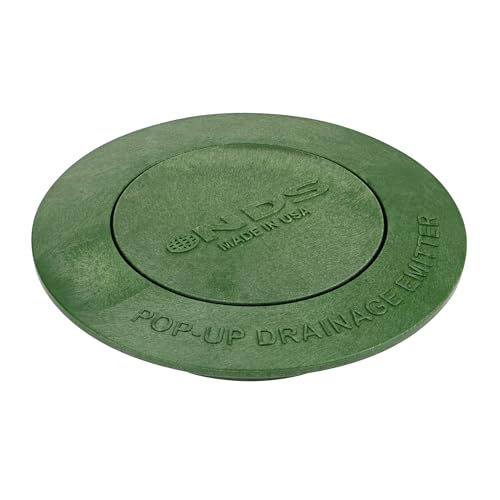
If runoff has to cross a walkway, steps, or a narrow side yard, a splash block is usually not enough. An extension can route water beyond the obstacle, but if the route creates a trip hazard or crosses a neighbor-facing lot line, buried drainage or a pop-up emitter may be the safer next step.
Adapter fit for 2×3 and 3×4 systems
Downspout adapters match the outlet to the extension size, often in common downspout sizes. They also help prevent leaks and loose fits, and they may convert between round and rectangular systems. A sloppy connection can separate in heavy runoff, so fit matters as much as length.
Choose gutter splash blocks if… / choose downspout extensions if…
Use a splash block when runoff is short, the yard slopes away, and the discharge point is already in an open area that dries reasonably well. Choose an extension when the ground stays wet, the downspout sits close to the house, or water must move past a walk, step, or tight side yard. If neither visible option keeps the area dry, move to buried drainage or grading correction.
Choose gutter splash blocks if…
- The downspout empties onto a short, open runout.
- The yard slopes away from the foundation.
- You need a simple, low-cost way to stop soil splash and erosion.
- The discharge point is not near a walkway, step, or lot line.
Choose downspout extensions if…
- The foundation stays damp after rain.
- Water must travel farther than a splash block can manage on its own.
- The outlet would otherwise dump onto a patio, path, or problem area.
- You need a better first defense before installing a buried line.
When to add a drain pipe or pop-up emitter
If the area still stays wet after the visible discharge is improved, drain pipe or a pop-up emitter becomes a smarter next step. That is especially true when the extension would have to cross a hard surface, when the yard is flat, or when the discharge point would otherwise cause staining, ice, or runoff onto neighboring property.
Decision matrix: four real-world runoff scenarios
This one-page matrix compares the two options in the conditions homeowners actually face. The winner changes with slope, wetness, and obstacles, which is why a cheap fix can be wrong in one yard and right in another.
| Scenario | Gutter splash blocks | Downspout extensions | Winner |
|---|---|---|---|
| Good slope | Protection: good; Cost: low; Maintenance: low; Failure risk: moderate if it shifts | Protection: very good; Cost: moderate; Maintenance: moderate; Failure risk: moderate if the fit loosens | Gutter splash blocks |
| Flat yard | Protection: weak; Cost: low; Maintenance: low; Failure risk: high from standing water | Protection: better; Cost: moderate; Maintenance: moderate; Failure risk: moderate until drainage is corrected | Downspout extensions |
| Foundation-adjacent discharge | Protection: limited; Cost: low; Maintenance: low; Failure risk: high near the wall | Protection: strong; Cost: moderate; Maintenance: moderate; Failure risk: moderate if it still drains too close | Downspout extensions |
| Obstacle avoidance | Protection: poor across a walk or step; Cost: low; Maintenance: low; Failure risk: high for splashback and misrouting | Protection: better for rerouting; Cost: moderate; Maintenance: moderate; Failure risk: moderate if it crosses traffic | Downspout extensions |
Good slope
On a sloped yard, a splash block can be enough because gravity helps the water keep moving away. Extensions still work, but they are usually more than you need if the discharge area is already draining well.
Flat yard
On flat grade, a splash block may be insufficient because water has nowhere to go after it leaves the block. An extension usually performs better, but if the ground stays wet, buried drainage or regrading may be the real fix.
Foundation-adjacent discharge
When the discharge point is close to the house, moving the water farther matters more than simple deflection. That is where extensions are usually the better visible option, with buried drainage next if the soil still holds water near the wall.
Obstacle avoidance
If runoff has to cross a walkway or steps, a splash block does not solve the routing problem. An extension can bridge the distance, but it should end where water can spread safely without creating ice, staining, or a neighbor runoff issue.
What should I buy first for a short downspout drain issue?
Start with the least complicated fix that fits the site. For a short, open runoff problem, a splash block is usually the first buy; for a damp foundation or an outlet that needs more reach, start with a downspout extension and the adapter that matches the outlet size.
Check the gutter system before the accessory
Before blaming the discharge piece, confirm that the gutter is not overflowing, the downspout is not clogged, and the outlet is not leaking. If the gutter itself is failing, no accessory at the end of the line will fully solve the problem.
What gutter accessories help move water farther from the house?
The main accessories are splash blocks, downspout extensions, downspout adapters, drain pipe, and pop-up emitters. For many homes, the best sequence is adapter first for a tight fit, extension second for more reach, and buried drainage when visible discharge still leaves the ground wet.
Downspout termination options
Downspout termination is the end point of water discharge. It can be an open splash block, an extended outlet, a drain pipe, or a pop-up emitter. Poor placement can send water onto a walkway, stain siding or concrete, freeze into ice, or run toward a neighboring lot.
Maintenance, freeze risk, and mower durability
Splash blocks are easier to inspect and reset, but light materials may move during runoff or freeze-thaw cycles. Extensions can be harder on lawn equipment and can collect debris where elbows or joints create hang-ups, so they need more checking through the season.
Are gutter splash blocks better than downspout extensions?
No single option is better in every yard. Splash blocks are better for short, open, low-risk runoff paths with good slope. Downspout extensions are better when you need more reach, the foundation area stays damp, or the discharge has to clear a walkway or other obstacle.
Where each option wins
Choose the splash block when the soil drains well and the outlet already points away from the house. Choose the extension when water must travel farther, when the foundation is too close to the discharge point, or when runoff would otherwise collect near the wall.
How far should downspout extensions carry water from the house?
They should carry water far enough to avoid pooling near the foundation, but the right distance will vary from yard to yard. The needed length depends on grade, soil, roof runoff volume, and whether the water is crossing a hard surface or entering a zone that stays wet.
When a longer run is justified
If water still settles near the house after a short extension, increase the distance or change the discharge method. A longer visible run is often a reasonable step before buried drainage, especially when the issue is still limited to one downspout.
When is a splash block enough for runoff control?
A splash block is enough when the runoff is modest, the ground slopes away, and the outlet is not fighting standing water or an obstacle. It is a practical answer for short, visible runoff runs, especially on hardscape or other areas that do not stay saturated.
Common limits
A splash block becomes a false economy when the yard is flat, the soil stays wet, or the downspout is close to the foundation. In those conditions, it may move water a few feet and still leave the real problem untouched.
Will a downspout extension work on every yard and foundation?
No. Extensions work well in many yards, but they are not a cure-all for flat grade, clay soil, or foundation-adjacent discharge. If the area still stays wet after using an extension, buried drainage or grading correction is the more appropriate next step.
Fit and routing limits
Extensions also have practical limits. They need a stable adapter, a safe termination point, and a path that does not create tripping, icing, or mower damage. Those issues matter as much as the extra reach.
Can I use splash blocks and extensions together?
Yes. That combination is common when you need the extension to move water out from the wall and the splash block to spread the discharge at the end. It can be a useful intermediate setup when the yard needs more reach, but not yet a buried line.
When the combination makes sense
Use both when the downspout outlet is too close to the house for a bare splash block, yet the discharge point is still visible and open. If the outlet still crosses a path or the soil remains wet, the next step should be drainage work, not more surface pieces.
Sponsored / affiliate links. As an Amazon Associate I earn from qualifying purchases. I may earn additional commission from eligible campaigns.