Interior basement waterproofing vs exterior drainage guide
Choose interior basement waterproofing when water enters at the floor joint, shows up as seepage after rain, or tracks along wall cracks that stay damp. Choose exterior drainage when grading, gutters, downspouts, or saturated soil keep loading the foundation with water. Pick the wrong fix, and water comes back, finishes fail, and repair costs rise. This guide matches common leak patterns to the right system, explains when a hybrid approach makes sense, and compares cost and maintenance.
| Decision factor | Interior basement waterproofing | Exterior drainage | Winner |
|---|---|---|---|
| Where it acts | Manages water after it enters the basement | Keeps water away from the foundation before it reaches the wall | Exterior drainage |
| Best fit | Recurring seepage, floor-joint leaks, and spots that are hard to excavate | Repeated leaks tied to poor grading, downspouts, and saturated soil | Tie |
| Invasiveness | Usually less disruptive inside the basement | Often requires excavation around the foundation | Interior basement waterproofing |
| Maintenance | Needs sump pump testing, drain cleaning, and backup power planning | Lower indoor maintenance, but exterior grading and drains still need upkeep | Exterior drainage |
| Source control | Controls moisture after it has entered | Addresses the source by moving water away from the foundation | Exterior drainage |
| Cost and disruption | Often easier to fit into a limited budget or a finished yard | Usually more expensive and invasive | Interior basement waterproofing |
Interior basement waterproofing vs exterior drainage: the core trade-off
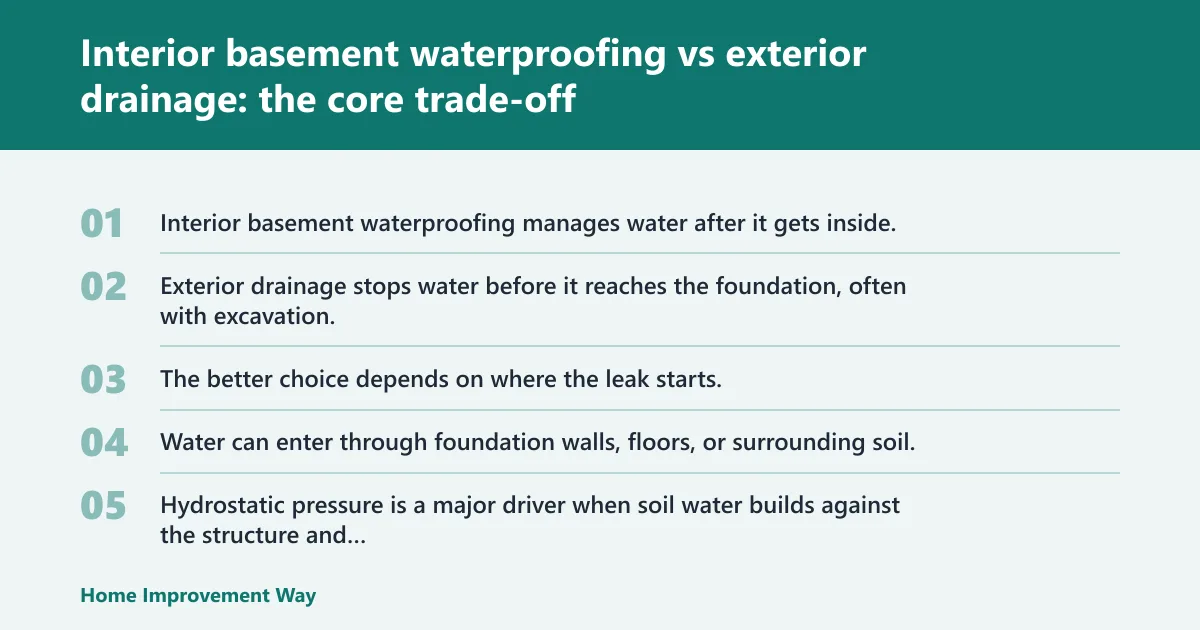
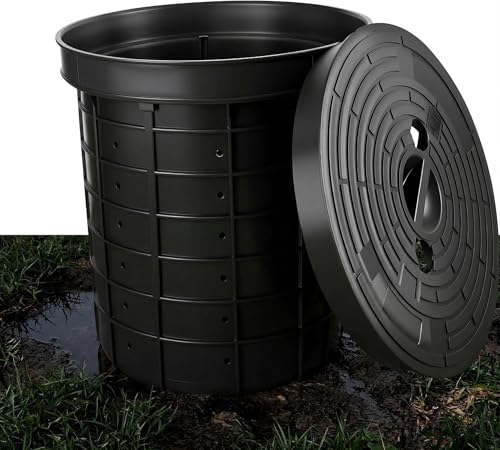
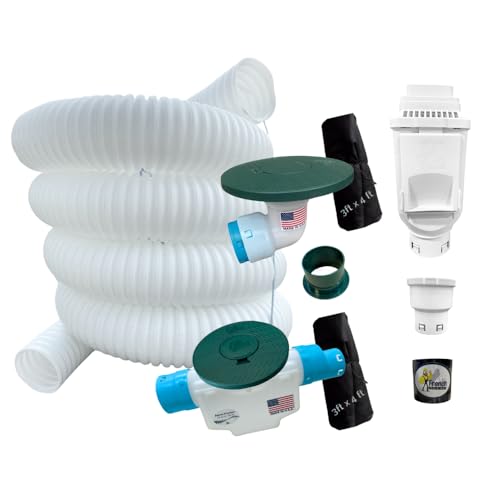

Interior basement waterproofing manages water after it gets inside, often using interior drains and a sump pump. Exterior drainage stops water before it reaches the foundation, often with excavation, a waterproof membrane, French drains, and grading work. The better choice depends on where the leak starts, how much groundwater pressure is present, and whether the site can be dug.
Water can enter through foundation walls, floors, or surrounding soil. Hydrostatic pressure is a major driver when soil water builds against the structure and pushes through concrete walls and floors. That means the leak pattern matters more than a generic label like “wet basement.” (thisoldhouse.com)
How the table should guide the choice
Use the leak path, not the stain, as the clue. Wall seepage after rain often points to outside water management problems, while floor or wall-to-floor joint leaks often point to pressure from below or beside the slab. When the site is hard to excavate, interior control may be the practical answer even if exterior work would solve the root cause more directly.
How to read basement leak symptoms
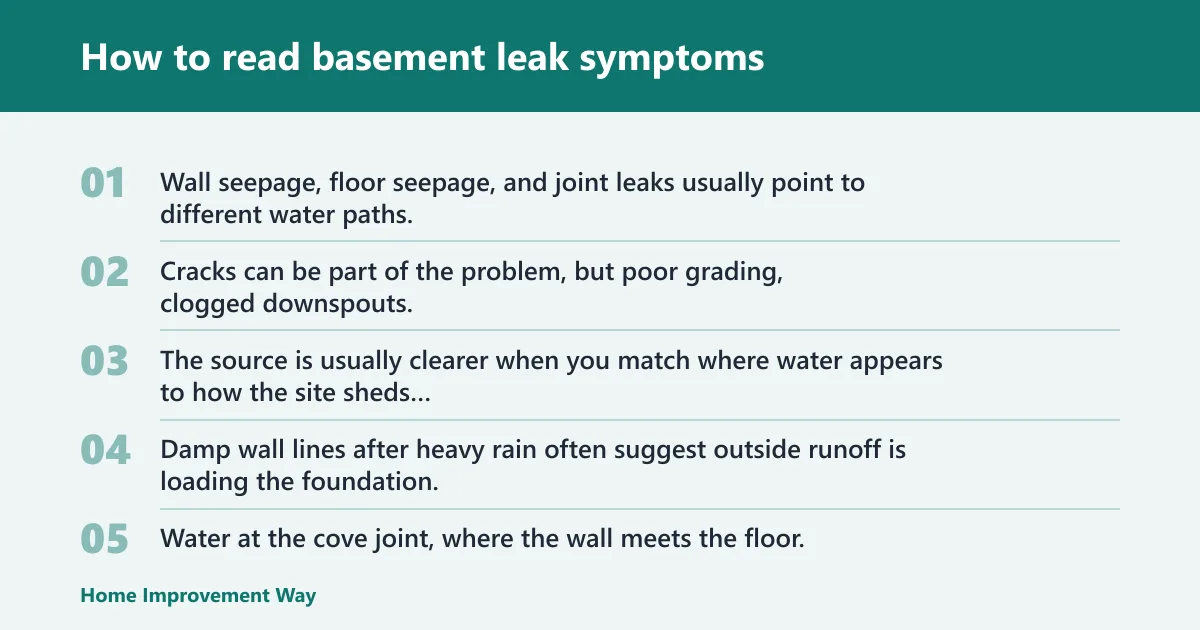
Wall seepage, floor seepage, and joint leaks usually point to different water paths. Cracks can be part of the problem, but poor grading, clogged downspouts, high groundwater, and hydrostatic pressure often matter just as much. The source is usually clearer when you match where water appears to how the site sheds water outside.
What common symptoms suggest
Damp wall lines after heavy rain often suggest outside runoff is loading the foundation. Water at the cove joint, where the wall meets the floor, often suggests pressure under the slab or along the footing. Water that shows up far from a crack can still come through a crack, but it can also move through porous concrete or along hidden pathways.
Why hydrostatic pressure changes the decision
Hydrostatic pressure can force soil water through tiny openings that are easy to miss. That is why a basement with a hairline wall crack may still flood at the floor edge when groundwater rises. If pressure is the driver, sealing one visible crack rarely solves the pattern by itself.
Hypothetical examples
Say your 1,200-square-foot basement gets a wet stripe along one block wall only after stormy weeks. If the gutters overflow and the soil slopes toward the house, exterior drainage and grading are the first things to correct.
Suppose your basement stays dry on the walls but seeps at the floor joint every spring. That pattern usually points to water being driven under or beside the slab, which makes an interior drain and sump system a stronger fit.
What exterior drainage does better
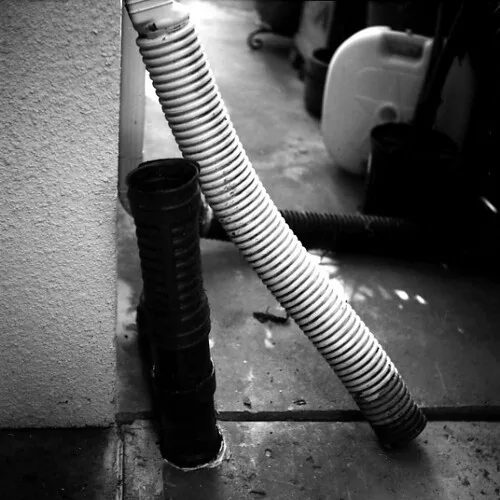
Exterior drainage is the stronger source fix when water is loading the foundation from outside. It often requires excavation around the foundation, and a complete system can include waterproof membranes, French drains, and proper grading. That setup aims to stop soil water from reaching the wall at all.
Why exterior work is stronger at the source
Exterior waterproofing aims to prevent water from reaching the foundation. That matters when recurring leaks come from saturated soil, poor surface runoff, or steady groundwater pressure. If the outside water path is corrected, the basement may never have to manage that load indoors.
What the exterior system usually includes
A full exterior approach often combines a waterproof membrane on the wall, a French drain at the footing, and grading that slopes water away from the structure. Grading and downspouts are often the first-line fix before major excavation, because surface water control can reduce the load on everything below grade.
When exterior work is the better answer
Choose exterior drainage when leaks are frequent, the soil stays saturated, or the foundation gets hit by runoff from roof water and yard drainage. Exterior methods are described as more effective for severe water issues, but they are also more disruptive and often costlier than inside-only solutions.
What interior basement waterproofing does better
Interior basement waterproofing is a water-management system for moisture that has already found a way in. Interior drains collect water at the perimeter, and a sump pump moves it out. That makes this approach useful when excavation is impractical, when the budget is limited, or when the goal is to control seepage without disturbing the yard.
Where interior systems fit best
Interior control is often the practical choice for finished lots, tight side yards, patios, or older homes where digging around the foundation is difficult. It also works when the leak pattern is recurring but limited to seepage, not major structural movement. It is a management strategy, not a source fix.
Maintenance tradeoffs you should expect
Interior systems usually need routine care, such as checking the sump pump, cleaning drains, and planning for backup power. Sump pump testing, drain cleaning, and backup power planning matter because a pump failure can turn a controlled leak into a basement flood. If you choose interior control, plan for inspection and maintenance, not a set-it-and-forget-it solution.
Why that tradeoff can still be smart
Interior drainage can be the smartest move when the alternative is excavation that is too invasive, too expensive, or not realistic for the site layout. It is especially useful when the main goal is protecting the basement from recurring seepage and surface water that has already gotten past the shell.
Symptom-to-source decision table
This table turns leak location into a practical next step. It does not replace an inspection, but it helps separate outside water-loading problems from water-management problems inside the basement. Use the red flags column to decide when the issue is too broad for a simple DIY fix.
| Leak location | Likely cause | Best method | Red flags that mean you need a professional assessment |
|---|---|---|---|
| Wall seepage after rain | Poor grading, clogged downspouts, or saturated soil against the wall | Exterior drainage | Water keeps returning after basic grading fixes, or the wall shows movement |
| Floor seepage near the perimeter | Hydrostatic pressure pushing water up from below | Interior basement waterproofing | Widespread seepage, pumping sounds, or rising groundwater after storms |
| Wall-to-floor joint leaks | Pressure at the footing, poor exterior drainage, or high groundwater | Hybrid system | Leaks on multiple walls, repeat flooding, or a finished basement at risk |
| Dampness at one crack | Concrete crack, shrinkage crack, or a path from outside runoff | Depends on site conditions; often exterior if runoff is obvious | Crack widens, shifts, or appears with doors sticking or wall bowing |
| Wetness during snowmelt or spring thaw | Groundwater rise and hydrostatic pressure | Hybrid system | Seasonal flooding, pump overload, or water at several entry points |
Choose interior basement waterproofing if… / Choose exterior drainage if…
Choose interior basement waterproofing if the water is already inside the basement, the leak is mainly seepage or a floor-joint problem, or excavation is not practical. Choose exterior drainage if surface water, poor grading, downspouts, or saturated soil are the clear drivers and you want to fix the source rather than manage the symptom.
Choose interior basement waterproofing if…
Pick interior control when you need a less disruptive fix, when the yard leaves no room for excavation, or when the basement needs immediate water management before finishes are damaged. It is also a sound choice when the leak pattern is limited and a sump pump can reliably move water out.
Choose exterior drainage if…
Pick exterior drainage when water pressure is building against the foundation, when the site can be excavated, and when you want the strongest source control. It is often the better long-term answer for repeated wall seepage, bad drainage around the house, and homes that stay wet because the soil never gets a chance to drain away.
When a hybrid system is the smartest fix
Use a hybrid system when water enters through both walls and floors, or when a high-water-table site keeps pushing water from every direction. A common first-time mistake is trying only one side of the problem while ignoring the other. Interior drains can collect what gets in, while exterior work reduces the load that gets there.
How does hydrostatic pressure affect basement leaks?
Hydrostatic pressure builds when soil water presses against the basement walls and floor. That force can push water through concrete, cracks, and joints, especially during heavy rain or when groundwater stays high. The stronger the pressure, the less likely a simple patch will hold on its own.
Why pressure changes the fix
Pressure explains why a basement can leak far from a visible crack. It also explains why wall repairs sometimes fail when the real issue is water loading from outside or below the slab. Once pressure is part of the problem, the fix usually needs drainage, not just sealing.
What causes basement water problems besides foundation cracks?
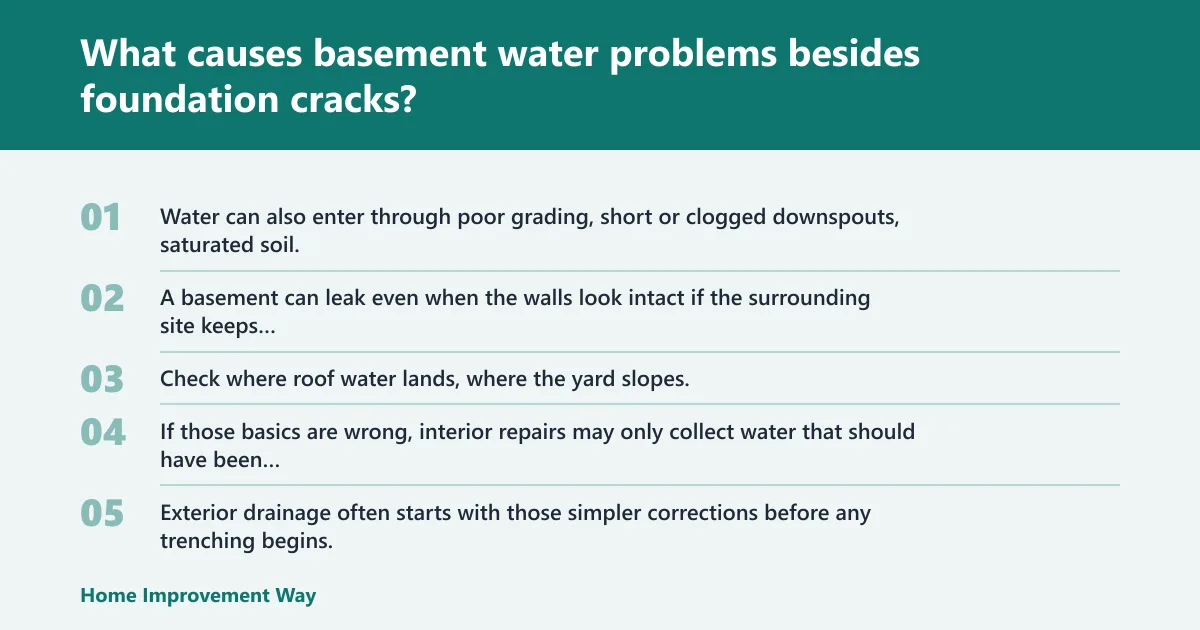
Cracks are only one entry point. Water can also enter through poor grading, short or clogged downspouts, saturated soil, high groundwater, joints, and porous concrete. A basement can leak even when the walls look intact if the surrounding site keeps feeding water toward the foundation.
Start with the outside water path
Check where roof water lands, where the yard slopes, and whether downspouts discharge close to the house. If those basics are wrong, interior repairs may only collect water that should have been sent away earlier. Exterior drainage often starts with those simpler corrections before any trenching begins.
Is exterior basement waterproofing worth the extra cost?
It can be worth it when the leak pattern points to outside water loading and the foundation can be excavated. Exterior methods are usually more expensive and invasive, but they address the source rather than the symptom. They are often the stronger long-term choice for severe water issues.
When the extra cost pays off
If water keeps returning after storm cycles, if the basement is unfinished but vulnerable, or if you want to protect the structure rather than simply pump out water, exterior work can be the better investment. A complete exterior system can include waterproof membranes, French drains, and proper grading to cut off the water path.
When exterior work is a poor fit
Exterior drainage is not always practical for every lot, budget, or foundation layout. Tight setbacks, patios, mature landscaping, and hardscaped areas can make excavation a major project. In those cases, interior control may be the more realistic way to stabilize the basement.
Can I waterproof a basement without digging?
Yes, if the goal is to manage water inside the basement rather than stop every drop before it reaches the foundation. Interior drains and a sump pump can control seepage without excavation. That said, water entry from poor grading or bad downspouts should still be corrected outside whenever possible.
What no-dig solutions can and cannot do
No-dig solutions can relieve water after it gets in, but they do not stop groundwater from loading the foundation wall. They work best when the leak pattern is manageable and the site makes exterior excavation unrealistic. If water is severe, no-dig alone may not be enough.
Do I need a professional to waterproof my basement?
Yes when the source is unclear, the water is heavy or recurring, or structural movement may be involved. A professional assessment can help determine whether the source is outside or inside before you spend money on the wrong method. It is especially useful for older homes and high-water-table sites.
When assessment matters most
Get professional help if water appears at several entry points, if a wall bows, or if cracks seem to be widening, or if a sump pump seems to be struggling to keep up. Those signs can point to more than one cause, which is where hybrid solutions and site-specific drainage plans become important.
Frequently asked questions
Which is better: interior basement waterproofing or exterior drainage?
Exterior drainage is better when outside water is the main driver and the foundation can be excavated. Interior basement waterproofing is better when the goal is to manage water after it enters, especially with seepage, floor-joint leaks, or a site that makes excavation unrealistic. The leak pattern decides the winner.
When is interior basement waterproofing enough?
Interior basement waterproofing is often enough when leaks are limited to seepage or minor recurring water entry and the foundation itself is stable. It works well when you need water control without digging, but it should be paired with sump pump maintenance and basic outside drainage corrections whenever possible.
When do I need exterior drainage instead of an interior system?
You need exterior drainage when poor grading, bad downspouts, saturated soil, or persistent hydrostatic pressure are driving the leaks. If water keeps hitting the foundation from the outside, exterior work is the better source fix. It is also the better choice for severe water issues when excavation is feasible.
Does interior waterproofing stop water from coming through basement floors?
Interior waterproofing can intercept water that comes through floor edges and perimeter joints, and it can collect seepage before it spreads across the slab. It does not stop groundwater from pressing upward in the soil, though. That is why floor leaks often point to a larger pressure problem.
Sponsored / affiliate links. As an Amazon Associate I earn from qualifying purchases. I may earn additional commission from eligible campaigns.