Foundation waterproofing vs damp proofing: what changes
Foundation waterproofing typically goes beyond damp proofing by adding a membrane, crack sealing, and exterior drainage details. If water pressure or active leaks exist, those three changes matter more than coating alone. Skip that upgrade, and you can keep paying for mold cleanup, ruined finishes, and repeat seepage after every storm. This guide explains what each change does, how it stops leaks and hydrostatic pressure, and where damp proofing still falls short.
| Decision factor | Foundation waterproofing | damp proofing: what changes | Winner |
|---|---|---|---|
| Water control | Stops water entry with a membrane, crack treatment, and drainage details | Limits moisture on the wall surface | Foundation waterproofing |
| Hydrostatic pressure resistance | Reduces pressure at the wall with exterior drainage and relief paths | Does not block water under pressure | Foundation waterproofing |
| Best use case | Chronic leaks, severe moisture, or repeated seepage at walls and floors | Dryer sites with limited moisture exposure | Foundation waterproofing |
| Up-front scope | More labor, often excavation, drainage work, and wall prep | Less scope and lower cost at the start | damp proofing: what changes |
| Long-term reliability | Better long-term solution when the system includes drainage and proper exterior work | Less effective long term | Foundation waterproofing |
What changes between damp proofing and waterproofing?
How each system handles moisture, seepage, and pressure
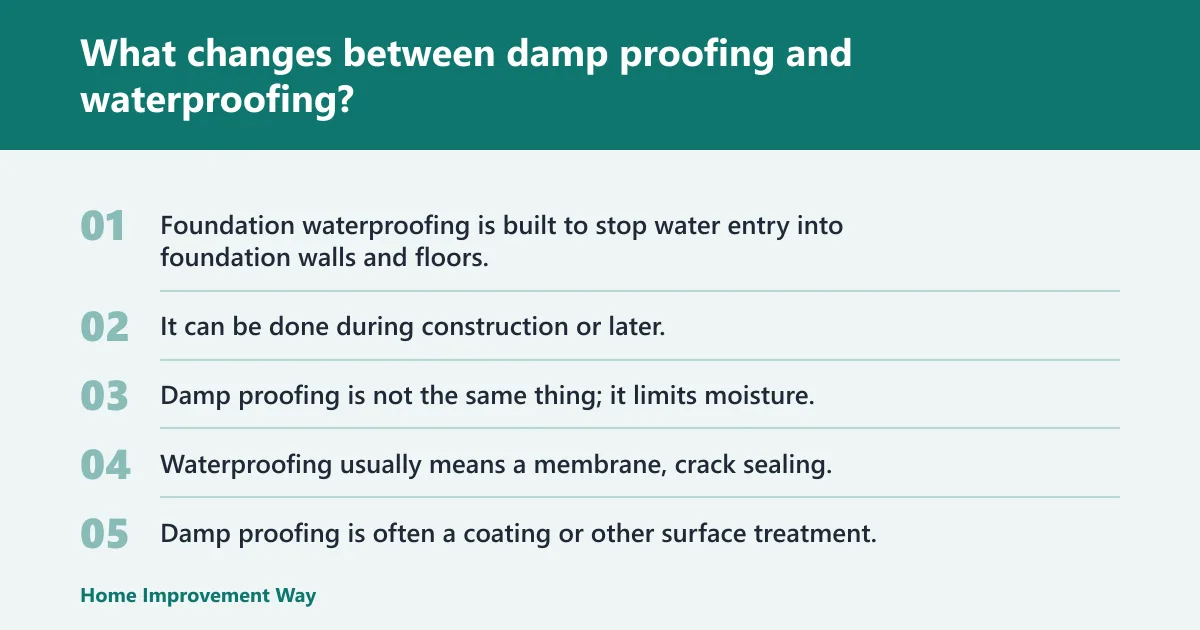
Foundation waterproofing is built to stop water entry into foundation walls and floors. It can be done during construction or later, and it is the better long-term solution when moisture is chronic or severe. Damp proofing is not the same thing; it limits moisture, but it does not stop water under pressure.
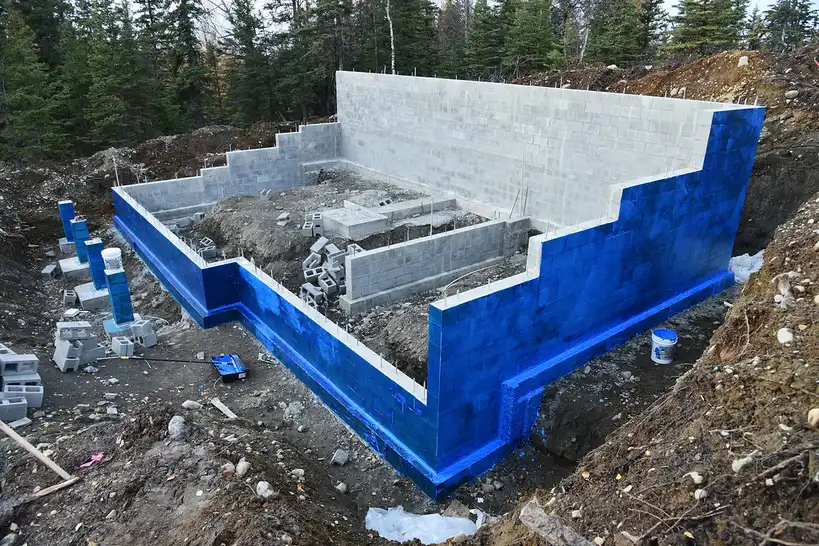
The practical difference is system depth. Waterproofing usually means a membrane, crack sealing, some form of drainage board or similar protection, and a drainage path that directs water away from the wall. Damp proofing is often a coating or other surface treatment. That coating may slow dampness, but it does not change how the foundation handles pressure from wet soil.
Why a coating is not the same as a waterproofing assembly
A coating can only work as well as the wall behind it. If water is being pushed through the foundation by hydrostatic pressure, a surface layer alone is the weak point. Once the wall stays wet or the floor joint is under pressure, the system needs drainage relief, not only a skin on the concrete.
That is why code-era language and contractor scope matter. A proposal that says “damp proofed wall” may mean the exterior was coated, but not drained, not crack-sealed, and not protected from runoff. A true waterproofing scope names the membrane, footing drain, and related drainage work.
What parts of the foundation system actually change
The upgrade is not one product. It is a set of changes: a membrane on the wall, crack repair where needed, a drainage layer, a footing drain or equivalent path, proper soil grading, downspout extensions, and interior drainage only where exterior access or wall conditions call for it. Each part handles a different failure mode.
Why damp proofing fails first
Surface dampness versus active seepage
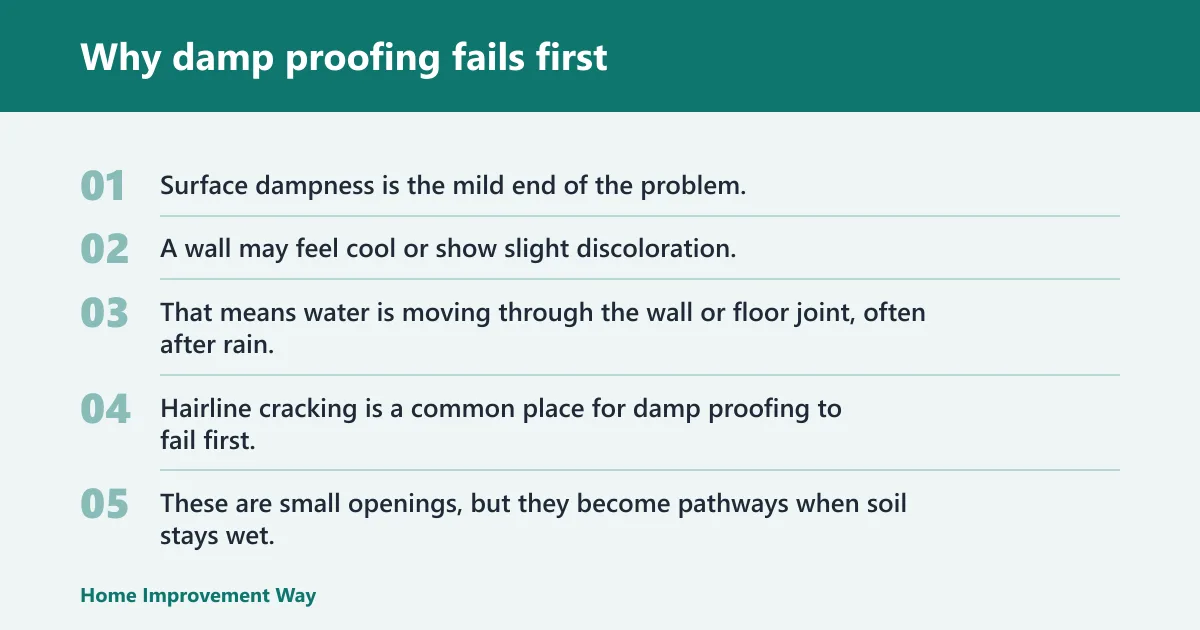
Surface dampness is the mild end of the problem. A wall may feel cool or show slight discoloration, but no water is entering in visible amounts. Active seepage is different. That means water is moving through the wall or floor joint, often after rain, and a simple coating usually will not hold it back.
Hairline cracks and weak points in concrete and masonry
Hairline cracking is a common place for damp proofing to fail first, especially at mortar joints, shrinkage cracks, and wall-floor transitions. These are small openings, but they become pathways when soil stays wet. Epoxy or polyurethane injection is used for minor isolated leaks, not for wide-area damp proofing failure.
Suppose a 20-foot poured wall has one thin crack near a window well. Injection may make sense there. If the whole wall is weeping after storms, crack filling alone misses the larger problem: water is loading the wall system from the outside.
Hydrostatic pressure as the main cause of wall and floor leaks
Hydrostatic pressure is water pressure in saturated soil that can push moisture through walls and floors. It is the main driver of basement leaks. Heavy rain and flooding push water toward the foundation, and poor grading can send runoff back to the house.
When pressure is the cause, damp proofing fails early. The coating may look intact, but water still finds joints, cracks, or the wall base. That is why the real fix often includes drainage, exterior membrane work, or an interior collection system that takes water after it enters.
Which upgrade matches which problem?

Surface dampness: when damp proofing may be enough
Light surface dampness on a wall with no seepage, no cracks, and no recurring storm-related wetting can sometimes be managed with damp proofing. That is the narrow case where it may be acceptable. Even then, correct grading and roof runoff first, because moisture load should not keep hitting the wall.
Hairline cracking: when epoxy or polyurethane injection makes sense
For a small, isolated crack, epoxy or polyurethane injection can seal the path. This is best when the leak is localized and the rest of the wall is sound. It is not a fix for a wall that is broadly under pressure or for a damp proofing job that never included real drainage.
Active seepage and hydrostatic pressure: when exterior waterproofing or interior drainage is needed
Active seepage points to a system problem. If the wall is wet after storms, or if the floor edge leaks when the ground is saturated, the upgrade usually has to manage water at a larger scale. Exterior waterproofing is the better choice when you need to lower pressure at the wall. Interior waterproofing is used when water must be managed after it enters.
When should you choose exterior waterproofing?
Membranes, footing drains, and drainage boards
Exterior waterproofing uses membranes on the outside wall. It often adds a drainage layer and a footing drain so water is carried away before it loads the wall. That setup is the main reason it lowers hydrostatic pressure instead of merely resisting it.
How exterior work reduces pressure at the wall
By moving water away from the foundation face, exterior work prevents the soil from staying saturated against the wall. That matters because the pressure itself is often what drives water through concrete and masonry. If the site repeatedly gets heavy rain or drainage stays poor, relief at the wall is the point of the repair.
Why it is usually the better choice for chronic or severe water issues
Exterior waterproofing is best for extreme or chronic water issues. It is usually the more complete fix when the outside of the foundation is accessible and the goal is to stop water before it reaches the wall. It costs more up front because scope, labor, and excavation are greater than a coating-only job.
When does interior waterproofing make more sense?
Interior drainage systems and sump pumps
Interior waterproofing manages water that already entered the foundation. It does not stop entry at the wall. Instead, it collects water with interior drainage, sends it to a sump pump, and keeps it from spreading across the slab or up the wall base.
Vapor barriers and wall management
Interior systems often include vapor barriers. These help control wall moisture and reduce interior humidity load, but they do not block hydrostatic pressure at the outside wall. That makes them useful with drainage, not as a substitute for exterior pressure relief.
Limits of interior systems when wall pressure is the problem
Interior waterproofing is a management strategy, not a wall-stop strategy. It can perform well where exterior access is limited, or where the objective is to keep the basement usable while water is redirected inside. If the wall is failing broadly, though, the pressure source still needs attention.
What drainage fixes should happen before or with either system?
Proper soil grading
Proper soil grading should slope water away from the house. This is one of the first things to correct because poor grading is a common cause of foundation water problems. If the yard sends runoff to the foundation, no wall system gets an easy job.
Downspout extensions
Downspout extensions carry roof runoff away from the foundation. That keeps a large amount of water from dumping right next to the wall during storms. For many homes, this is a low-cost fix that should happen before a contractor quotes wall work.
French drains and where they fit in the system
French drains move water away from the foundation and fit where surface or perimeter drainage is the problem. They can be part of an exterior plan, or they can supplement a site that sheds water poorly. They do not replace wall membrane work when the wall itself is leaking under pressure.
- Check grading first.
- Extend downspouts away from the foundation.
- Add perimeter drainage where runoff concentrates.
- Repair cracks that are isolated and clearly defined.
- Choose exterior or interior waterproofing based on access, pressure, and leak pattern.
Proof table: what changes, what does not
The point of the upgrade is not just “more coating.” The point is to change the water path, the pressure at the wall, and the foundation’s weak points. Use the map below to match the failure to the repair.
| Failure mode | Required upgrade | What changes | What does not change | Best fit |
|---|---|---|---|---|
| Surface dampness | Damp proofing may be enough if drainage is already corrected | Surface moisture control | No pressure relief at the wall | Light moisture only |
| Hairline cracking | Epoxy or polyurethane injection | Seals a small, isolated path | Does not solve broad wall saturation | Minor isolated leaks |
| Active seepage | Exterior waterproofing or interior drainage, depending on access | Membrane, drainage, and water control path | Coating alone is not enough | Recurring leaks after storms |
| Hydrostatic pressure | Exterior waterproofing with drainage relief | Lowers pressure at the wall | Interior coating does not stop pressure at source | Chronic or severe water issues |
Scope checklist for homeowners
What changes: continuous membrane, crack sealing where needed, exterior drainage board or similar layer, footing drain, corrected grading, and downspout extensions. Interior systems add drainage, sump pumps, and vapor barriers when water must be managed from inside.
What does not change: a coating-only job, ignored runoff, or a plan that leaves hydrostatic pressure in place. A contractor should explain whether the proposal stops water entry or only manages water after entry.
Questions to ask a contractor before signing
- Will the repair reduce hydrostatic pressure or only cover the wall?
- Is the scope exterior, interior, or both?
- What happens to footing drainage and roof runoff?
- Are cracks being injected, and if so, are they isolated or part of a wider wall problem?
- Does the proposal include grading corrections or downspout extensions?
What is the difference between foundation waterproofing and damp proofing?
Foundation waterproofing stops water entry into foundation walls and floors, usually with membranes, drainage, and crack treatment. Damp proofing only limits moisture and does not block water under pressure. The difference is not wording; it is the system’s ability to handle seepage and hydrostatic pressure.
Is damp proofing enough for a wet basement wall?
Usually no, if the wall is actively wet or leaking after storms. Damp proofing can be acceptable for very light surface moisture, but a wet wall signals either seepage, pressure, or both. Once water is moving through the wall, drainage and crack repair become part of the fix.
Which is better for hydrostatic pressure, waterproofing or damp proofing?
Foundation waterproofing is better for hydrostatic pressure because it is designed to lower pressure at the wall and stop water entry. Damp proofing does not block water under pressure, so it fails first when the soil around the foundation stays saturated. That is the key technical divide.
Can damp proofing stop water from coming through concrete walls?
Not reliably when water is under pressure. A damp proofing coating may slow surface moisture, but concrete walls can still pass water through cracks, joints, or porous sections. If the wall is taking on water, you need a repair that addresses the path and the source of pressure.
When should exterior waterproofing be used instead of interior systems?
Use exterior waterproofing when the goal is to stop water before it reaches the wall, especially with chronic or severe water issues. It is the better fit when the outside can be excavated and pressure reduction at the wall matters. Interior systems are for water that must be managed after entry.
What signs show I need waterproofing instead of damp proofing?
Recurring stains, efflorescence, bubbling walls or peeling paint, active seepage, and leaks that return after rain point toward waterproofing. Hairline cracks plus repeated wetting also signal that damp proofing is not enough. The more the problem follows storms or wet soil, the stronger the case for a real waterproofing assembly.
Does waterproofing work better on older homes?
Older homes can benefit from waterproofing, but age alone does not decide the fix. Leak type, wall condition, and site drainage matter more than construction date. A newer wall with severe pressure may need more work than an older wall with a small isolated crack.
Can crack injection fix damp proofing failures?
Crack injection can fix a small, isolated leak, but it does not repair a wide-area damp proofing failure. Epoxy or polyurethane injection seals a specific path in the wall. If the wall is broadly wet or pressure-loaded, drainage and membrane work still need to be addressed.
How long does foundation waterproofing last compared with damp proofing?
Foundation waterproofing is generally the better long-term solution because it combines membrane protection with drainage and pressure relief. Damp proofing is less effective long term because it does not stop water under pressure. Longevity depends on drainage, material type, and whether the wall stays under load.
Verdict
Choose foundation waterproofing if you have active seepage, chronic wet walls, floor-edge leaks, or hydrostatic pressure. Choose damp proofing only when moisture is light, drainage is already corrected, and there is no sign of water under pressure. If the wall leaks after storms, the upgrade needs to change the system, not just the coating.
Sponsored / affiliate links. As an Amazon Associate I earn from qualifying purchases. I may earn additional commission from eligible campaigns.
 TrailBlaze High-Quality Roof Underlayment Sheet for Home Improvement - Durable & Reliable Material - Easy Install - Color: Gray, Size: 17.72 x 73.23 in
 KINJOEK Paint Brush 14 Packs 1 Inch, Home Wall Trim House Chip Paintbrush Set, Professional Multi-Purpose Home Repair Tools for DIY Paint Stains Varnishes Glues Acrylics Cabinet Deck Fence Edge Door