How Much Do Lighting Fixtures Cost to Install in a Remodel?
Lighting fixtures usually cost $150 to $500 each to install in a remodel, with simple replacements near $100 to $250, retrofit installs around $200 to $700, and new wiring or no-existing-wiring jobs often $300 to $1,500 per fixture. Poor planning can turn a lighting line item into a budget overrun from hidden electrical, drywall, and permit costs. This guide breaks the bill down line by line and separates simple replacement, retrofit, and no-existing-wiring scenarios.
Lighting cost matrix
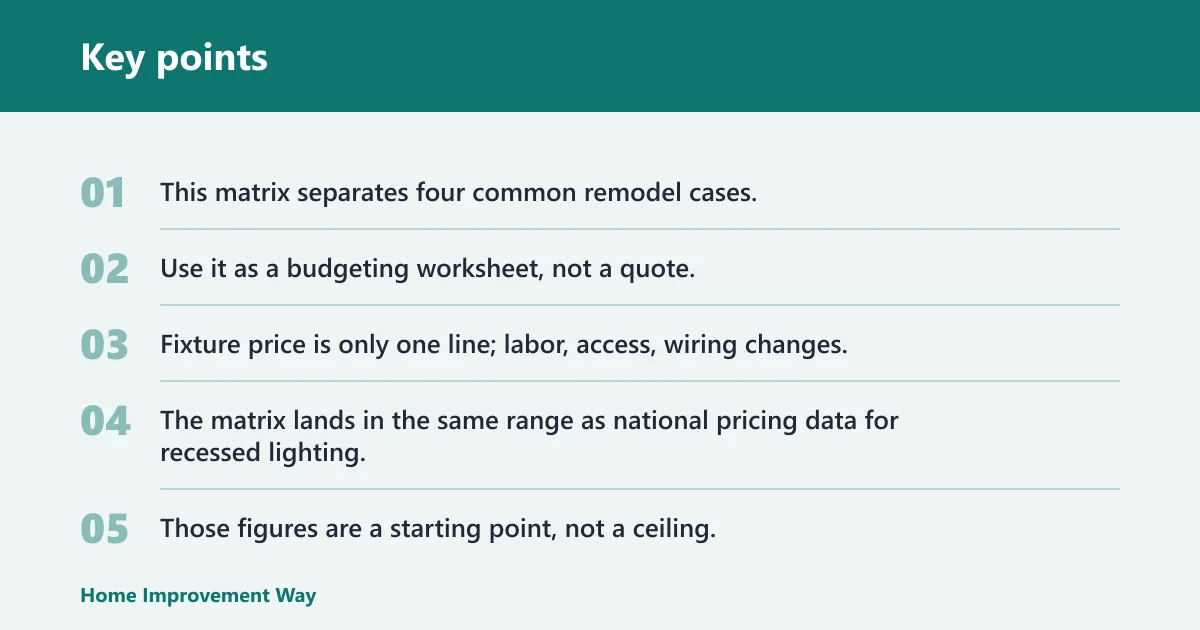


This matrix separates four common remodel cases. Use it as a budgeting worksheet, not a quote. Fixture price is only one line; labor, access, wiring changes, and drywall repair can move the total quickly, especially in finished ceilings.
| Scenario | Fixture cost | Labor cost | Permit / wiring adders | Drywall repair | Realistic total per light | Project total for 3 | Project total for 6 | Project total for 10 |
|---|---|---|---|---|---|---|---|---|
| Simple swap | $40–$150 | $60–$120 | $0–$25 | $0 | $100–$250 | $300–$750 | $600–$1,500 | $1,000–$2,500 |
| Retrofit with attic access | $50–$180 | $100–$180 | $0–$50 | $0–$75 | $200–$485 | $600–$1,455 | $1,200–$2,910 | $2,000–$4,850 |
| Retrofit with finished ceiling | $50–$180 | $180–$360 | $25–$75 | $75–$250 | $305–$865 | $915–$2,595 | $1,830–$5,190 | $3,050–$8,650 |
| No existing wiring | $50–$180 | $250–$600 | $100–$400 | $75–$250 | $475–$1,430 | $1,425–$4,290 | $2,850–$8,580 | $4,750–$14,300 |
The matrix lands in the same range as national pricing data for recessed lighting, which typically runs $130 to $300 per fixture, with a median of $180 per fixture. Those figures are a starting point, not a ceiling, because a simple swap and a finished-ceiling retrofit are very different jobs.
What drives the price?
Fixture type, wiring condition, ceiling access, and labor pricing do most of the work here. A light that replaces an existing box in an open ceiling can be a short visit. A fixture that needs wire fishing, patching, and a new circuit is a different budget line entirely.
Fixture type and finish
A basic flush-mount fixture usually costs less to install than a chandelier, and replacing simple canned or recessed lights costs less than changing to a chandelier. Recessed lighting itself commonly runs $125 to $300 per light installed, so even within “lighting,” the hardware choice changes the bill.
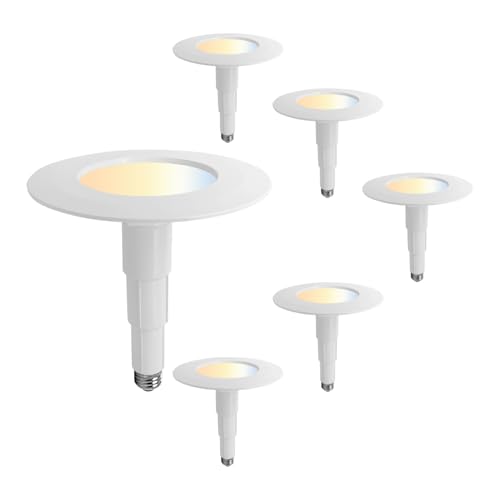
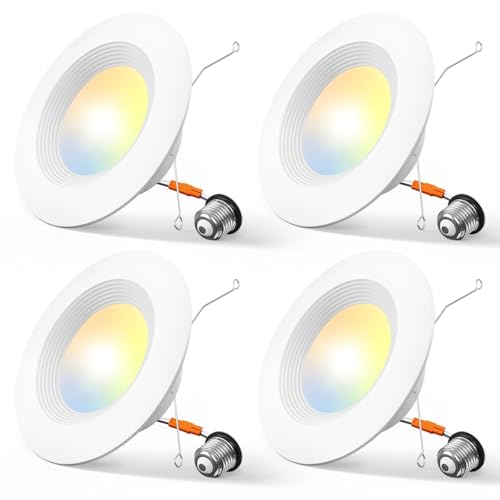
Canless LED retrofit fixtures often cost $100 to $200 per light, which helps on materials, but they do not erase labor. Traditional can lights may need more depth, more framing clearance, or more work around insulation and ceiling structure.
Existing wiring and box
An existing junction box reduces labor because the electrician can connect the new fixture without building a new mount point. If there is no box, the job takes longer and may require extra framing or box installation before the fixture goes up.
That difference matters most in remodels. A move from one light style to another is usually faster than adding a light where the ceiling never had wiring at all.
Ceiling access and patching
Open attics or unfinished basement ceilings can mean 1–2 hours per fixture. Finished ceilings without attic access can triple installation time and costs. That is why the same fixture can cost far more in a closed ceiling than in an accessible one.
Wire fishing through finished ceilings adds labor. Drywall repair and repainting can also appear as separate lines, especially when the electrician has to cut access holes.
Labor rate and service minimums
Electricians charge $50–$100 per hour in most markets, and metro areas like New York or San Francisco can reach $120–$150 per hour. Many electricians also price a service-call minimum, which means a small job may cost more than the hourly math suggests.
Licensed electrical work can also carry overhead for scheduling, insurance, truck stock, and inspection coordination. That overhead is part of why the invoice can exceed the bare hourly rate.
How much does it cost to replace a light fixture?
Replacing a light fixture averages $199, with a typical range of $112 to $287. If the existing box is sound and the wiring is already there, replacement is usually the cheapest lighting remodel task. A dimmer or a heavier fixture can push the total higher.
Standard fixture swap
A standard swap often fits the lower end of the range because the electrician is not adding a new circuit or cutting into finished drywall. A ceiling with a good box, a straightforward fixture, and accessible wiring may take 30–60 minutes per fixture.
Junction box present
If a junction box is already in place, the labor side stays simpler. That box gives the installer a legal, secure location for splices and support, which cuts down on extra work compared with opening a ceiling and creating a new mounting point.
Dimmer add-on
A dimmer switch is a common extra in lighting remodels. Plan on extra installed cost for the switch itself and the labor to change it, especially if the existing control is not LED-compatible. LED fixtures and LED-compatible dimmers need to match or flicker and buzzing can follow.
Say your hallway has four older flush mounts on a good box and you are replacing them with new fixtures only. That job usually stays near the lower end of the replacement range. Add a dimmer and the project still remains manageable, but the switch line appears on the invoice.
Why recessed lights cost more
Recessed lights cost more when the ceiling is closed, when the fixture must be IC-rated for insulation contact, or when the layout needs multiple cutouts and a dimmer. The same room can move from a modest retrofit to a higher-cost electrical project once access gets tight.
Canless LED vs traditional can
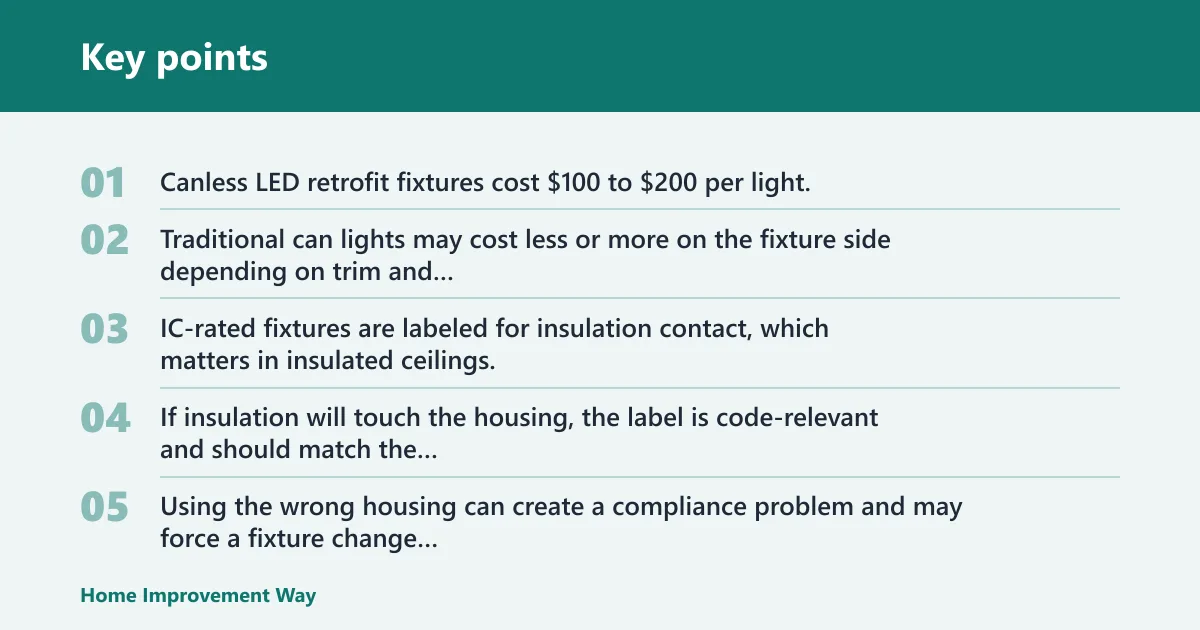
Canless LED retrofit fixtures cost $100 to $200 per light, and they are often used where depth is limited. Traditional can lights may cost less or more on the fixture side depending on trim and housing, but they can add installation complexity if framing or insulation limits space above the ceiling.
IC rating for insulated ceilings
IC-rated fixtures are labeled for insulation contact, which matters in insulated ceilings. If insulation will touch the housing, the label is code-relevant and should match the ceiling condition. Using the wrong housing can create a compliance problem and may force a fixture change before the work is approved.
Kitchen and living room totals
A typical room with 6–8 lights runs $1,000 to $2,400. Kitchens often sit toward the higher end because they need careful spacing, multiple switches, and frequent dimmer use. Living rooms vary more, especially if the ceiling is finished and the run from the panel is long.
Picture a 12-by-14 kitchen with six recessed lights and one dimmer circuit. If the attic is open above it, the project can stay near the low-to-middle end of a retrofit budget. If the ceiling is finished and the electrician has to fish wire and patch drywall, the total climbs quickly.
What does electrician labor add?
Electrician labor often sets the floor for the job. Service-call pricing can also create a minimum charge even on a small fixture swap.
Hourly rate ranges
Hourly pricing is only part of the bill. A licensed electrician may charge for setup, troubleshooting, permit coordination, and cleanup time, especially on remodel work where old wiring or cramped access adds uncertainty.
Service-call pricing
Many contractors bill a service-call minimum for the first visit. That minimum can cover an hour or two of labor before the meter turns to straight hourly billing. For a single simple fixture, this can make the total feel high compared with the actual hands-on time.
Regional variation
Local market matters. Suburban areas with lower overhead usually price below major coastal metros, while dense cities with higher insurance and labor costs push rates up. The same install may differ by hundreds of dollars depending on where the home sits.
Licensed work and permits
Some remodel lighting work needs a permit, especially when you add a new circuit, move a fixture, or change the scope beyond a like-for-like replacement. Licensed work also matters for inspection and insurance reasons; a permit line can be small, but it still belongs in the budget.
No wiring, no box: what changes
If there is no existing wiring and no junction box, the project stops being a simple fixture install. You are now paying for a new electrical path, likely a new box, and possibly a new circuit. That is why these jobs often land in the highest cost tier.
New circuit needs
A new circuit may be required when the existing one is full, the load is too high, or the layout needs dedicated control. Panel capacity matters because the electrician must confirm that the electrical panel can handle the added load safely and legally.
Fishing wire through finished ceilings
Fishing wire through finished ceilings is slow work. The electrician has to find a route, avoid framing obstacles, and minimize cuts. That extra labor is the reason finished-ceiling retrofits can take 2–3 hours per light, compared with the 30–60 minutes typical of accessible ceilings.
Drywall repair and repainting
Once ceiling cuts are made, drywall repair can become its own line item. Paint touch-up may be enough for small holes, but larger access cuts can require a finisher and a painter. That is the hidden cost many remodel budgets miss.
How much does it cost to add recessed lights in a kitchen?
Kitchen recessed lighting usually lands in the middle to higher end of the remodel range because kitchens often need multiple fixtures, a dimmer, and careful placement around cabinets and work zones. A modest kitchen with six to eight lights often totals $1,000 to $2,400, depending on access and wiring.
Layout and switch planning
Kitchens often need more than one control zone. That can mean extra switch work, dimmer upgrades, or a new circuit if the existing layout is already crowded. If the ceiling is finished, the labor side of the budget can rise faster than the fixture side.
Common first-timer mistake
A common first-timer mistake is budgeting only for the can lights and forgetting the switch, patching, and wiring run. In a kitchen remodel, those “small” lines are often what separate a tidy project from a surprise overrun.
DIY or hire an electrician
DIY can make sense for a simple fixture swap on an existing box, but pro help is the safer call when the job involves new wiring, a new circuit, a finished ceiling, or a permit. The cost savings from DIY shrink fast once you factor in code compliance and the risk of opening drywall twice.
Where DIY can fit
If the circuit is off, the box is sound, and the fixture is a like-for-like replacement, a careful DIYer may handle the work. Even then, the fixture weight, wire connections, and switch compatibility need attention.
Where a pro is the safer call
Call a licensed electrician when the ceiling is closed, when no box exists, when you need a new circuit, or when insulation contact is involved. Those jobs are more likely to need inspection, patching, or troubleshooting that goes beyond a basic fixture swap.
Cost tradeoff
The main DIY tradeoff is upfront savings versus risk. A low-cost self-install can become more expensive if the work needs correction, if the ceiling has to be reopened, or if a permit issue appears after the fact.
Frequently asked questions
How much does it cost to install a light fixture in a remodel?
Most remodel installs land between $150 and $500 per fixture once you account for fixture cost, labor, and any small adders. Simple replacements cost less, while finished-ceiling retrofits and no-wiring jobs cost more because they need more labor, more access work, and sometimes drywall repair.
Why does recessed lighting cost more in a finished ceiling?
Finished ceilings cost more because the electrician has to fish wire, work around framing, and often cut and patch drywall. That can triple installation time and cost compared with an accessible ceiling, especially when there is no attic access above the room.
What does an electrician charge to install a light fixture?
Small jobs may still carry a service-call minimum, so a simple fixture swap can cost more than the hourly rate suggests if the contractor has to make a separate trip.
Do I need IC-rated fixtures for insulated ceilings?
If insulation will touch the fixture housing, IC-rated fixtures are the safer and code-relevant choice. The label means the fixture is intended for insulation contact, which matters in many insulated ceilings and can affect both approval and long-term safety.
Can I install a light fixture with no existing wiring?
You can, but it is no longer a simple fixture change. No existing wiring usually means a new circuit, a new box, and fishing wire through walls or ceilings. That adds cost, and panel capacity must be checked before the electrician adds load.
Should I DIY a light fixture install or hire an electrician?
DIY is most reasonable for a straight replacement on a sound existing box. Hire a licensed electrician for recessed lighting, finished ceilings, missing boxes, new circuits, or anything that needs a permit. The pro option costs more upfront, but it reduces code and repair risk.
Sponsored / affiliate links. As an Amazon Associate I earn from qualifying purchases. I may earn additional commission from eligible campaigns.