How to Install Masonry Anchors in Brick and Block
Use a masonry anchor that matches the base material: sleeve or wedge-style anchors for solid brick, and sleeve, toggle, or other hollow-masonry fasteners for block with voids; drill the correct-sized hole, then set the anchor without overtightening. Pick the wrong one and the fastener can pull out, crack the masonry, or spin in the hole, ruining the mount and the wall. This guide shows how to identify brick versus block, pick the right anchor, drill and set it, and avoid pull-out, cracking, and spinning.
What you’ll need


- Hammer drill for masonry drilling
- Masonry bit sized for the anchor system, not just the screw diameter
- Chosen masonry anchor and matching fastener
- Vacuum or blow bulb for dust removal
- Stiff brush or hole-cleaning brush
- Silicone caulk for select exterior or moisture-prone installs
- Setting tool if the anchor type requires one
- Level, tape measure, pencil, and masking tape for layout
- Safety glasses and hearing protection
Which anchor works for brick versus block?
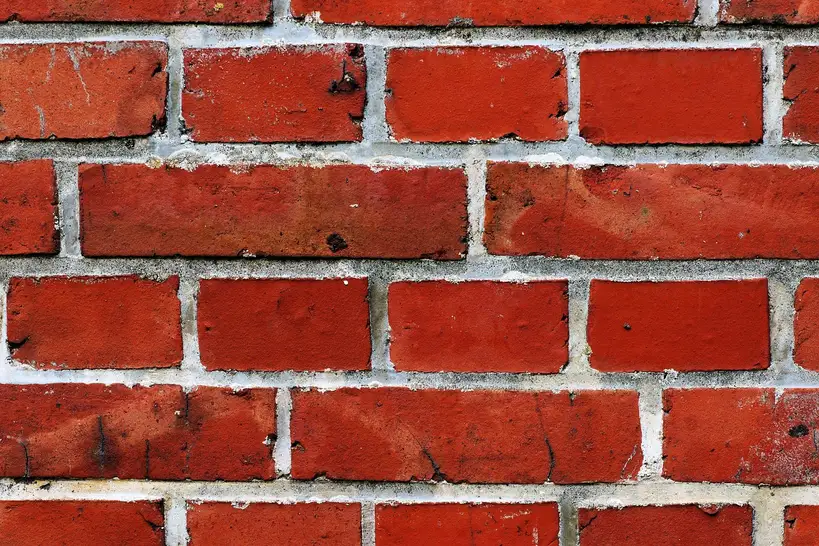
Use the anchor system the manufacturer lists for the actual substrate, not just the wall’s general category. Solid brick usually accepts masonry screws, sleeve anchors, or other expansion-style anchors; hollow block often needs a hollow-masonry fastener that can span the void. Final hole diameter, embedment, spacing, and edge distance always depend on the specific model and its instructions, not on a generic anchor family. (See manufacturer instructions and ICC-ES/ACI installation criteria.)
Brick is the stronger drilling target. Mortar joints are weaker, so reserve them for light-duty work or for a hidden joint location when there is no better option. For heavier fixtures, drill the brick face instead of the mortar unless the anchor maker says otherwise. That guidance aligns with common masonry trade practice and published anchor installation notes that require the substrate to meet the anchor’s listed use conditions.
Solid brick and dense face brick
Use a hammer drill and the anchor system the fixture calls for. For heavier loads, expansion anchors and sleeve anchors are common choices because they grip the drilled hole with controlled expansion. Masonry screws can work for lighter to moderate fixtures if the hole size matches the screw system exactly. Use only the hole diameter, embedment depth, and edge-distance values in the anchor’s instructions or code listing.
Hollow or solid concrete block
Do not assume block behaves like brick. Hollow block has voids, so the anchor must bridge or grip the wall correctly, often with a sleeve, toggle, or other hollow-masonry design. Solid-core block gives better holding power, but the hole still needs the right diameter and depth, and the fastener maker must approve that substrate. Hollow-block anchors have clear load limits and use conditions in manufacturer data; if the wall is hollow and the anchor is not listed for that use, do not improvise.
Light-duty fixtures versus heavier fixtures
Light décor, cable clips, and small brackets can use smaller masonry screws or lighter-duty anchors when the hole is precise. Shelves, TVs, handrails, and awnings need a more secure system and better edge distance. For a heavy fixture, choose the anchor family first, then match the bit, depth, and spacing to that system. For any load-bearing mount, rely on the product’s published load tables and installation limits rather than broad anchor-category rules.
Masonry anchor decision table

| Wall and load | Anchor family | Drill-bit logic | Embedment depth check | Failure symptom to watch for |
|---|---|---|---|---|
| Dense brick, light décor | Masonry screw or light sleeve anchor | Use the maker’s bit size, not the screw diameter alone | Anchor must reach the listed embedment after dust clearance | Spins in the hole |
| Solid brick, shelf or bracket | Sleeve anchor or expansion anchor | Bit diameter must match the anchor sleeve or body spec | Mark the required depth and add room for dust at the bottom | Pull-out under load |
| Brick near an edge, light load only | Smaller masonry screw, if approved | Follow the exact pilot-hole size for that screw system | Use only the embedment listed by the maker | Face crack or spall |
| Hollow concrete block, moderate load | Hollow-masonry sleeve or toggle-style fastener | Hole size must suit the specific hollow-wall system | Confirm the anchor seats across the wall thickness correctly | Anchor will not tighten or grabs unevenly |
| Solid-core block, heavier fixture | Approved sleeve or expansion anchor | Use the listed hole size for that model | Check full embedment before tightening hardware | Anchor rotates or feels loose |
| Solid concrete only | Drop-in anchor | Each diameter needs a specific setting tool; thread standard is National Coarse | Set flush to the required depth before using the bolt | Will not set, or threads are damaged |
The matrix above is a starting point only. Final bit size, minimum embedment, spacing, and edge-distance requirements depend on the exact anchor model, the base material, and the manufacturer’s published installation instructions or code evaluation report. For drop-in anchors, the concrete-only limitation and setting-tool requirement are part of the product’s intended use, not optional guidance.
How to drill the hole
Drill in the right spot, use the correct bit size, and keep the hole square to the wall. For dense masonry, a hammer drill is usually the right tool because it cuts through brick and block more cleanly than a standard drill. Final hole diameter and depth still come from the anchor manufacturer, and those values can vary even within the same anchor family.
- Mark the mounting point and confirm that the hole stays away from edges and corners.
- Measure the anchor’s listed hole diameter and depth, then mark the bit with tape.
- Fit the masonry bit in a hammer drill and drill square to the wall.
- Stop at the marked depth and withdraw the bit to avoid enlarging the hole.
- Vacuum or brush out dust until the hole is clear.
Say your bracket needs two anchors in a brick pier near a corner. Moving the hole farther from the edge lowers crack risk far more than forcing a larger anchor into a weak spot. A clean, properly sized hole usually holds better than a larger hole drilled too fast. That is especially true where the anchor’s listed edge distance or minimum spacing is tight.
How deep should you drill?
Drill to the embedment depth listed for the anchor, then leave some extra room for dust at the bottom. If the hole ends too shallow, the anchor may bottom out before it can grip. If it is too deep, some anchors can sit poorly or lose part of their holding range. Embedment works this way because the manufacturer’s published capacity assumes a specific depth, substrate, and installation method.
Use the anchor maker’s depth spec as the target, then add a small dust allowance. For many installs, a clear depth mark on the bit is the simplest check. Recheck before setting hardware, because a hole that looks deep enough can still be packed with dust. If the package calls for a minimum embedment, treat that as mandatory, not a guideline.
Depth check before setting
Insert the anchor dry, without forcing it, to confirm that it seats to the needed depth. If it stops early, clear the hole again rather than driving harder. A masonry anchor needs the right hole geometry, not just force. If the anchor’s body does not reach the listed embedment, the published load rating no longer applies.
Dust clearance and fit
Dust left in the hole can make the anchor seem tight at first and loose later. Brush, vacuum, or blow out the hole until it is clean. That step matters more in brick, where a thin layer of debris can reduce bite and make spinning more likely. Follow the manufacturer’s cleaning instructions if they specify a particular order or number of passes.
How do you set and tighten the anchor?
Insert the anchor without forcing it, then tighten only until the fixture is secure. If the system calls for a setting tool, use that tool for that diameter. Do not swap in a random punch or bolt; drop-in anchors need the correct setter, and each diameter requires its own setting tool. Final torque, installation sequence, and usable bolt length depend on the exact anchor model and its instructions.
- Slide or tap the anchor into the clean hole until it seats.
- Use the proper setting tool if the anchor type requires one.
- Mount the fixture and start the fastener by hand.
- Tighten gradually until the fixture stops moving.
- Stop as soon as the hardware feels secure; do not chase extra turn after extra turn.
Silicone caulk can be used at some exterior penetrations after the anchor is set, especially where water can reach the hole. Use a thin bead around the fixture opening, not inside the anchor body. That helps limit water intrusion without interfering with the fastener. For damp or exposed installations, follow the anchor maker’s guidance on sealant compatibility.
Common mistakes
A common failure is using the wrong hole diameter. A bit that is even slightly off can make an anchor spin, sit loose, or split the face. The next mistake is drilling too close to an edge or corner, where brick is more likely to crack. Another recurring issue is ignoring the specific anchor instructions and treating every masonry fastener as interchangeable.
Overtightening is another problem. Many anchors need only enough torque to clamp the fixture, not to crush the hole. If a fastener spins, pulls out, or cracks the masonry face, stop and move to a fresh hole with the correct anchor family. If the anchor or fixture load exceeds the product’s listed capacity for that substrate, switch products rather than “making it work.”
A common first-timer mistake is treating mortar like brick for a heavy shelf. The joint may hold a light hook, but it can crumble under a heavier bracket. If the mount is important, move to the brick face and use the correct anchor system.
If the anchor spins or pulls out
Remove the hardware, inspect the hole, and move to a new location if the hole is enlarged or damaged. A reused hole often has less grip. If the original anchor family was too small or wrong for the substrate, choose a better match instead of forcing the same piece back into service. Confirm the new anchor’s listed diameter, embedment, and substrate rating before drilling again.
If the brick face cracks
Stop tightening immediately. Cracking usually means the hole was too close to an edge, the bit was too large, or the anchor was too aggressive for the masonry. Shift the location farther from the edge and choose a gentler anchor family if the load allows it. If the product instructions require a larger edge distance or different hole size, follow that first.
If the hole feels loose from the start
Do not pack the hole with scraps or make up the gap with caulk. That only hides a sizing problem. Re-drill the hole to the exact spec for the anchor, clean out the dust, and retest the fit before loading the fixture. A loose fit usually means the hole diameter or substrate choice is wrong for the anchor model.
When should you use a setting tool or expansion anchor instead?
Use a setting tool whenever the anchor design calls for one, especially with drop-in anchors. Use an expansion or sleeve anchor when the fixture is heavier and the wall material supports that style of grip. Drop-in anchors are for solid concrete only, never for brick or cinder block, and each diameter needs its own setting tool. This is a hard material limit, not a preference, and it comes from the anchor’s intended-use instructions.
Drop-in anchors come in 1/4 inch, 3/8 inch, 1/2 inch, 5/8 inch, and 3/4 inch diameters, and the thread standard is National Coarse. That matters because the tool, bolt, and hole all have to match. For brick and block, choose a different anchor family unless the manufacturer specifically approves the application. Always check the package or evaluation report for the exact model’s approved substrate and minimum embedment.
Frequently asked questions
Where should I drill in brick, the brick face or mortar joint?
Drill the brick face for anything beyond light-duty work. Mortar can work for minor fixtures where appearance or layout makes it the better option, but it is weaker and more likely to crumble. For shelves, brackets, or awnings, choose the brick itself. If you have to choose near a corner or seam, follow the anchor’s edge-distance requirement first.
What size drill bit do I need for masonry anchors?
Use the exact bit size listed for the anchor system you bought. Do not size the hole only from the screw diameter, because many masonry anchors need a specific tolerance to expand or grip correctly. Check the package or manufacturer listing before drilling. The correct bit size can vary by model even when the anchors look similar.
Can I use the same anchor in brick and block?
Usually no. Brick and concrete block behave differently, especially hollow block. A fastener that works in solid brick may not hold in a voided block core, so the anchor family must match the substrate. Confirm whether the block is hollow or solid before you buy, and verify the model is approved for that exact wall type.
How deep should I drill for a masonry anchor?
Drill to the listed embedment depth, then add room for dust at the bottom of the hole. If the anchor bottoms out early, it cannot grip as designed. Mark the bit before drilling and recheck the depth after clearing dust. The listed embedment is the anchor’s minimum useful depth, not an estimate.
Do I need a hammer drill for brick anchors?
For dense brick, yes in most cases. A hammer drill helps make cleaner holes and reduces the strain that a standard drill can feel in masonry. A regular drill may work slowly in soft material, but it often struggles in harder brick. If the anchor manufacturer specifies rotary-only or no-impact drilling, follow that instruction instead.
Which masonry anchors are best for heavy loads in brick?
For heavy loads in brick, sleeve anchors or other expansion-style anchors are common choices when the maker approves the brick and the hole is sized correctly. Solid brick gives the best chance of a reliable hold. Keep the hole away from edges and corners, and verify the product’s published load rating for that exact substrate and embedment depth.
Sponsored / affiliate links. As an Amazon Associate I earn from qualifying purchases. I may earn additional commission from eligible campaigns.