How to Install Concrete Screws in Masonry Fast
Use concrete screws in masonry by matching the screw to the base material, drilling the bit size listed on the package, and cleaning the hole before you drive it. Skip any one of those steps, and the screw can bind, strip, or fail to hold the load. This guide covers material checks, bit matching, hole cleaning, and the point where you should switch to anchors instead.
What concrete screws do
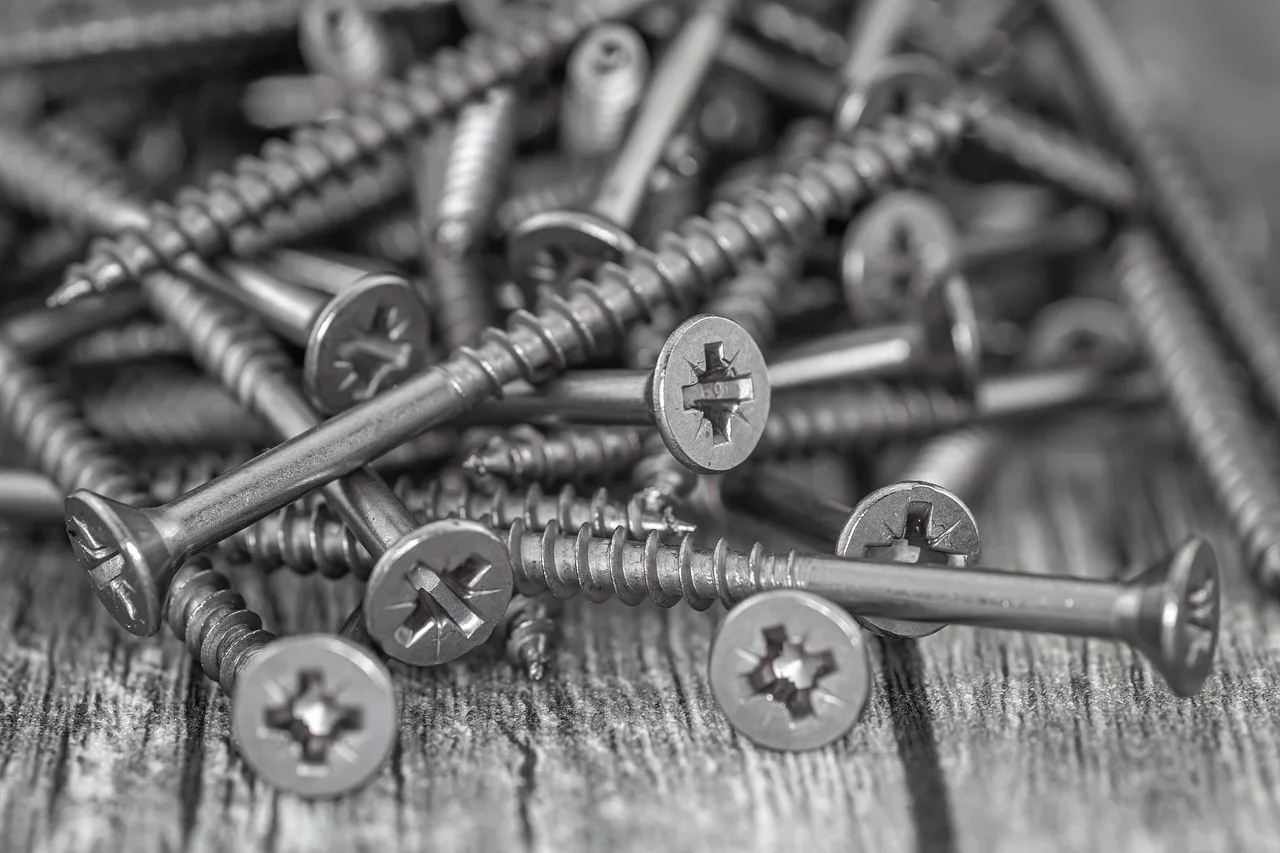


Concrete screws are direct-fastening masonry fasteners for concrete, brick, and block. They cut their own threads into a correctly sized pilot hole, so the hole diameter, substrate condition, and screw length all matter. They are generally suitable only in sound masonry, not in crumbly mortar or damaged hollow material.
Concrete, solid brick, and concrete block do not behave the same. Poured concrete usually gives the most predictable bite. Solid brick can hold well if the brick itself is sound. Hollow block can work only when the screw threads engage solid webs, not an empty cavity.
When concrete screws are the wrong choice
If the hole lands in soft mortar, a crumbling edge, or a hollow section that does not appear able to support threads, use a different fastener. Anchors are the better choice when the masonry is damaged, weak, or too inconsistent for direct fastening. That avoids stripped holes and loose fixtures.
What you’ll need
- Hammer drill for drilling the pilot hole
- Masonry drill bit with the diameter listed for the screw
- Impact driver or drill driver for fastening
- Vacuum, hand blower, or hole brush
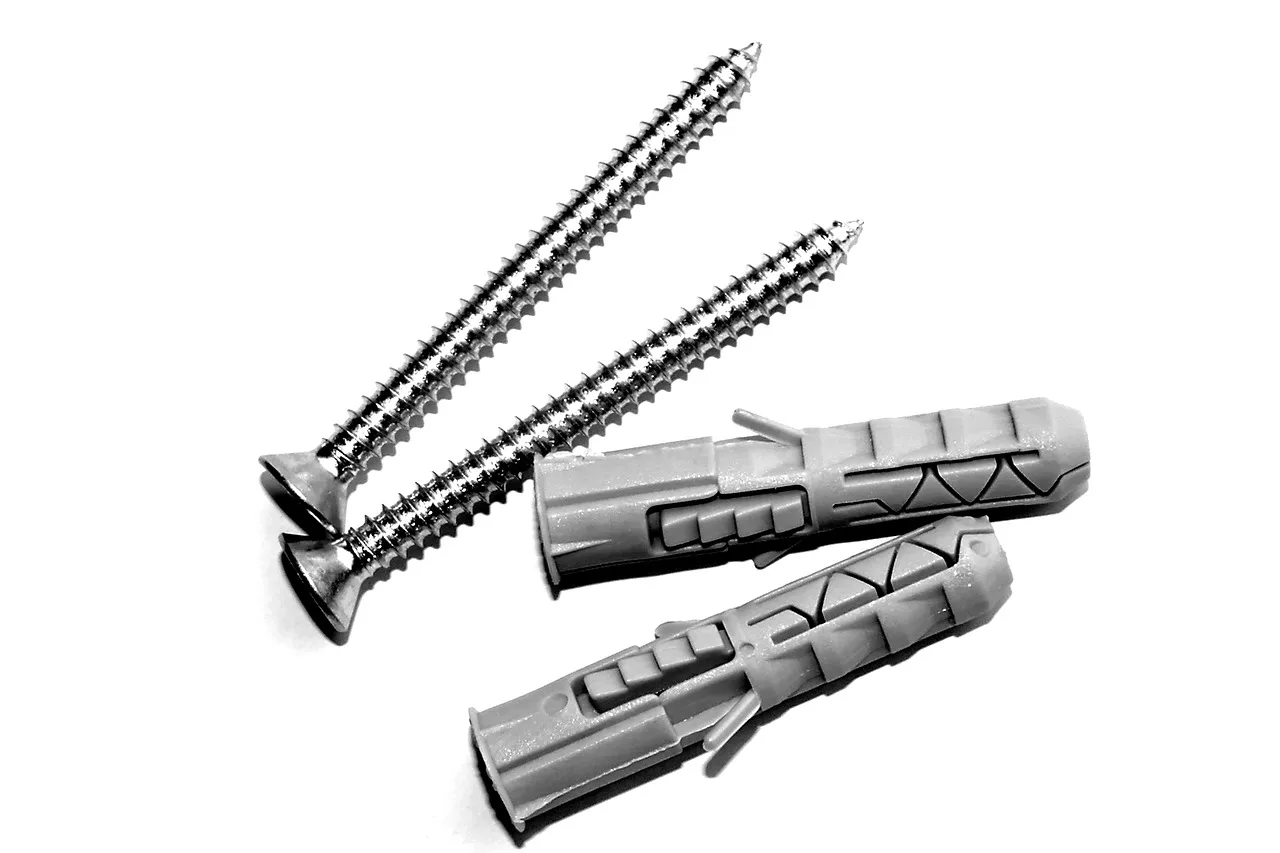
- Concrete screws in the diameter and length required
- Nut driver or bit extension if the head style needs it
- Marker and tape measure for layout
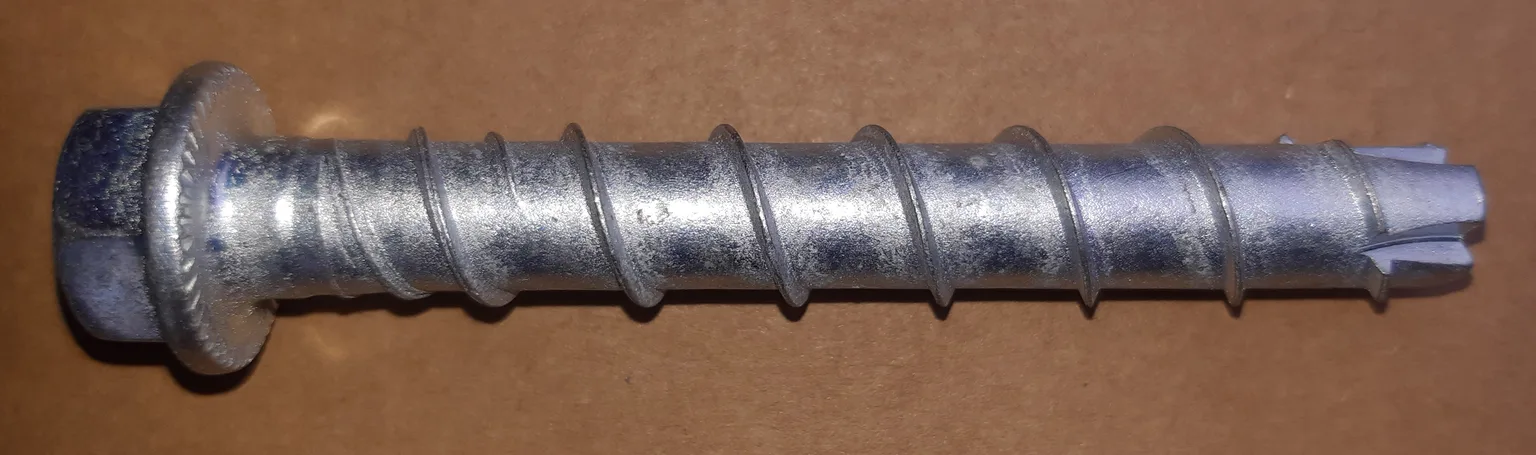
How do you choose the right screw?
Choose the screw by checking the masonry type, then matching diameter and length to the job. The screw diameter should match the pilot-hole spec, and the length should cover the fixture thickness plus enough embedment to grip the substrate. Too-short screws reduce pull-out resistance.
For example, a 1/2-inch bracket on a 1-inch fixture usually needs a longer screw than the same bracket on bare masonry. The fixture thickness uses part of the fastener length, so do not size the screw by hole depth alone.
- Check whether the base is solid concrete, solid brick, or concrete block.
- Read the fastener package for the required pilot-hole diameter.
- Choose screw length from fixture thickness plus the embedment called for by the package.
- Use a longer screw only if the added length still fits the base without bottoming out.
How do you drill the pilot hole?
Drill the pilot hole with a hammer drill and the matched masonry bit. The hole diameter must match the screw spec, and the depth should exceed the planned embedment so the screw can seat fully without bottoming out. Keep the hole straight so the threads engage evenly.
A common first-timer mistake is tilting the drill to “correct” a mark at the last second. That can widen the hole and reduce thread engagement, especially in soft brick or block.
- Mark the hole location on the fixture and transfer it to the masonry.
- Set tape on the bit for the required depth, plus a little extra for dust.
- Use a hammer drill for concrete, brick, or block; the impact action speeds cutting through masonry.
- Drill straight in until the tape mark reaches the surface.
How do you drive the screw without stripping it?
Clean the hole first, then drive the screw with controlled torque. Start the screw by hand if the head style and access allow it, because that helps the threads catch before power driving begins. Stop as soon as the head seats flush; overdriving strips heads and can damage brittle masonry.
Use an impact driver or drill driver only after drilling, not for drilling the hole itself. An impact driver delivers twisting force for fastening, while the hammer drill is the tool for the pilot hole.
- Blow or brush dust out of the hole before inserting the screw.
- Set the driver to a low torque range if the tool has one.
- Drive the screw until the fixture is snug and the head is seated.
- Add only another 1/8 turn if the fixture needs a final snug fit, then stop.
Common mistakes
Most rework comes from four avoidable errors: oversized pilot holes, dust left in the hole, stripped heads, and using concrete screws where the masonry cannot hold threads. Each one creates a different failure mode, so the symptom tells you what to fix next.
Suppose a shelf bracket is mounted to solid brick and one fastener spins after half a turn. That usually points to a hole that is too large, dust packed in the hole, or brick that is too soft at that location. The fix changes with the symptom.
Hole cleaning matters
Dust reduces thread engagement. If the hole is full of powder, the screw can feel tight early and still hold poorly. Blow out the hole, brush the sides, then blow again before fastening. If the screw still spins, move to a fresh hole or a different fastener type.
When to switch to anchors
Switch to anchors when the base is hollow, crumbly, or damaged enough that the screw cannot cut a stable thread. Concrete screws are direct-fastening screws, so they need sound masonry. Anchors spread load differently and work better in weak material.
Concrete screw troubleshooting matrix
| Masonry type | Symptom during install | Fix |
|---|---|---|
| Solid concrete | Screw starts hard, then seats firmly | Keep the matched hole size, clean the dust, and stop at seating |
| Solid brick | Threads bite, but the head resists at the end | Use lower torque and confirm the hole is not in mortar |
| Hollow block | Screw spins or never tightens | Move to a solid web or switch to anchors |
| Crumbly mortar | Hole enlarges and the screw will not hold | Relocate into sound masonry; do not fasten in mortar |
| Oversized pilot hole | Screw turns without resistance | Redrill in a new location with the correct bit size |
| Dusty hole | Screw feels loose or bottoms out early | Vacuum, brush, and blow out the hole before reinstalling |
| Stripped head | Driver cam-outs and can no longer turn the screw | Stop, remove what you can, and replace the screw with better torque control |
| Spinning screw | Fastener turns but never tightens | Hole is too large, dusty, or in weak masonry; move or change fastener type |
Frequently asked questions
How do you use concrete screws?
Mark the location, drill a pilot hole with the matched masonry bit, clean out the dust, then drive the screw with controlled torque. The screw should match the masonry type and the hole size listed on the package. Stop when the head seats flush.
How to screw into masonry
Use a hammer drill to make the hole, not a standard wood bit or a random drill size. Then blow out the dust and fasten with a driver at low to moderate torque. If the masonry is hollow or crumbly, use anchors instead of a concrete screw.
How do you drill the right hole for concrete screws?
Use the bit diameter printed for the screw size, and drill to a depth deeper than the planned embedment. A tape flag on the bit helps keep the depth consistent. If the hole is too large, the screw will lose holding power.
How deep should you drill for masonry screws?
Drill to the embedment depth plus a little extra for dust, usually by setting a tape mark on the bit. The exact depth depends on the screw and fixture thickness, so follow the package spec. Bottoming out before the screw seats is a common cause of poor hold.
What happens if concrete screws spin in the hole?
Spinning usually means the hole is oversized, dusty, or cut into weak material. Pull the screw, clean the hole, and try once more only if the substrate is sound and the hole size was correct. If it still spins, move to anchors or a new location.
How to screw in concrete screws without stripping them
Use the right bit size, a clean hole, and a driver with controlled torque. Start slowly, then stop as soon as the head seats. If the driver keeps turning after seating, reduce torque or switch tools before the head rounds off.
Sponsored / affiliate links. As an Amazon Associate I earn from qualifying purchases. I may earn additional commission from eligible campaigns.