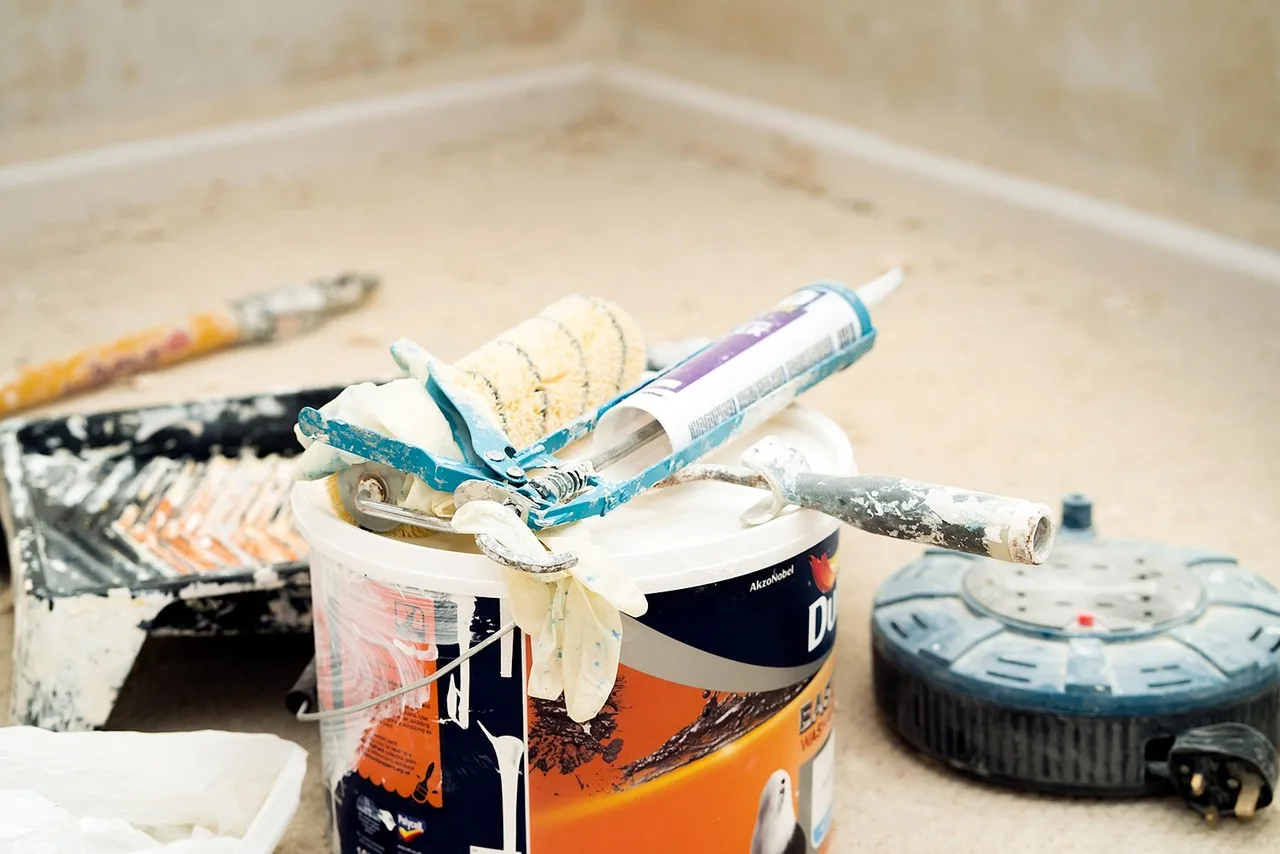
Caulk vs. Sealant vs. Silicone: Where to Use Each
For dry interior gaps of roughly 1/4 inch or less, paintable acrylic caulk is often the practical choice; for joints that move or are exposed to weather, a more flexible sealant is usually better; and for areas with water exposure or glass-to-metal bonds, silicone is often used. Pick the wrong one, and you get cracks, leaks, peeling paint, and repeat repairs. This guide shows how to choose by substrate, moisture, movement, and paintability instead of the label on the tube.
Caulk vs. sealant vs. silicone: the core difference
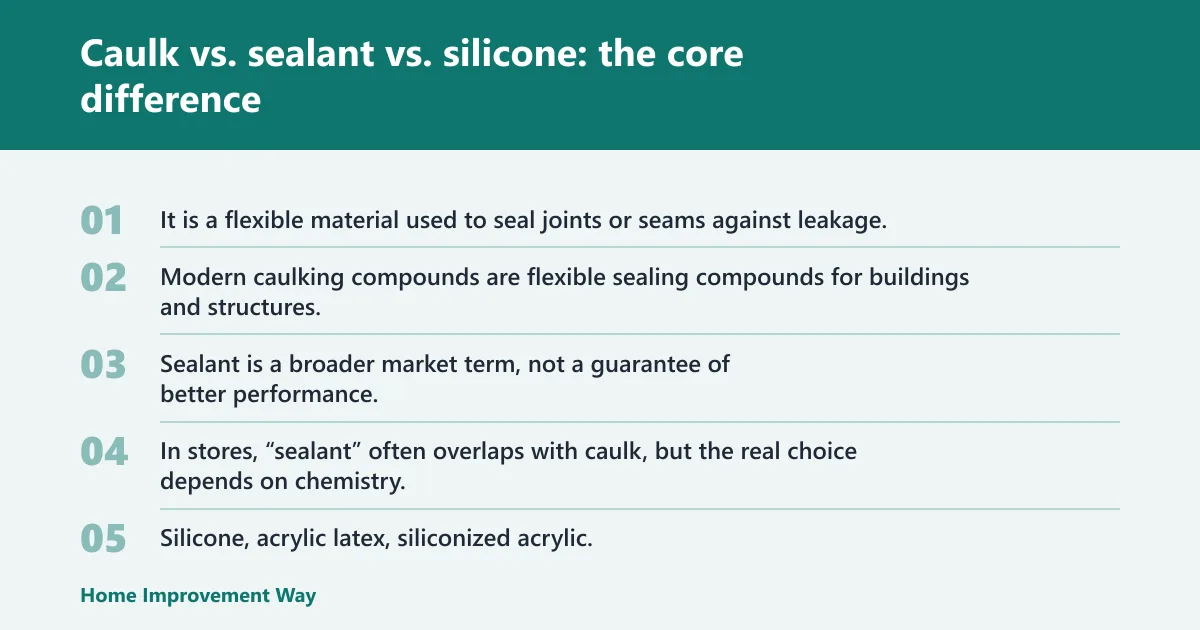


Caulk is the broad job label. It is a flexible material used to seal joints or seams against leakage, and it can block water, air, dust, and insects in buildings. Modern caulking compounds are flexible sealing compounds for buildings and structures, commonly sold in disposable cartridges for use in caulking guns.
Sealant is a broader market term, not a guarantee of better performance. In stores, “sealant” often overlaps with caulk, but the real choice depends on chemistry, movement, moisture exposure, and whether the finished bead must be painted. Silicone, acrylic latex, siliconized acrylic, and polyurethane can all function as sealants.
Silicone is one chemistry within that family. 100% silicone caulk is fully waterproof and highly flexible after curing, which makes it a strong fit for wet zones. Acrylic latex caulk is often the paintable option for dry interior trim. Polyurethane fits more demanding exterior seams where adhesion matters.
How the labels overlap in stores
The shelf label can be misleading. A tube marked “sealant” may be silicone, polyurethane, acrylic, or a blend, and those chemistries do not behave the same way. The joint decides the product, not the wording on the package.
That is why a paintable joint in a bedroom and a constantly wet joint in a tub surround need different products even if both are called sealants. The finish, movement, and moisture load do more work than the label.
Why the joint conditions matter more than the label
Three failure modes matter most: shrinkage, cracking, and adhesion loss. A paintable acrylic bead can crack if the joint moves a lot. Silicone can hold up in wet areas, but it will block paint. Polyurethane can adhere strongly outdoors, but it is not the simple cleanup choice for every room.
Picture a wider gap at a window trim joint that gets sun, rain, and frame movement. Paintable acrylic may split. A better choice is a more durable exterior sealant matched to the substrate and exposure, not a generic “all-purpose” tube.
Use this decision matrix before you buy

Start with the joint, not the aisle. Check what the surfaces are, how often they get wet, how much they move, and whether the finished line must accept paint. Then choose the chemistry that fits those conditions.
| Factor | Caulk | sealant vs. silicone: Which should you use where | Winner |
|---|---|---|---|
| Core role / label | Caulk is the broad job label for a flexible material used to seal joints or seams against leakage and block water, air, dust, and insects. | Sealant is a broader market term; the real choice depends on chemistry, movement, moisture exposure, and paintability. Silicone is one chemistry within that family. | Tie |
| Moisture / water exposure | Paintable acrylic caulk is suited to dry interior gaps; plain acrylic is more likely to fail in wet showers or other true wet areas. | 100% silicone is fully waterproof and is the better fit for constant wet exposure like tubs, showers, and sinks. | sealant vs. silicone: Which should you use where |
| Movement / flexibility | Plain acrylic latex is less flexible and can crack if the joint moves a lot. | Silicone and polyurethane generally handle movement better; a flexible sealant is usually better for joints that move. | sealant vs. silicone: Which should you use where |
| Paintability | Acrylic latex is generally paintable, and that makes it a usual choice for trim, baseboards, and drywall-to-wood transitions. | Silicone is usually not the best choice when the finished joint needs to be painted because paint can peel or fisheye on it. | Caulk |
| Cleanup / application | Water cleanup is easiest with acrylic latex, which is water-based and easier to smooth with water. | Silicone is harder to remove or rework after it cures; all products benefit from a caulking gun and masking for neat lines. | Caulk |
| Best-fit use | Dry interior trim, baseboards, crown molding, small dry gaps, and other stable joints where a neat paintable line is needed. | Wet zones, glass-to-metal bonds, exterior weather-exposed joints, and other places where flexibility or waterproofing matters more than paintability. | Tie |
| Exterior weather exposure | Plain acrylic may split in weather-exposed joints with sun, rain, and frame movement. | Polyurethane or a weather-rated exterior sealant is better for demanding exterior seams; silicone may fit where painting is not needed and water exposure is high. | sealant vs. silicone: Which should you use where |
| Common failure if wrong product is used | Using plain acrylic in a wet shower seam can cause the bead to break down early; using a too-rigid bead on a moving joint can crack fast. | Using silicone where paint is required can cause finish problems; the wrong chemistry can lead to cracks, leaks, peeling paint, and repeat repairs. | sealant vs. silicone: Which should you use where |
| Ease for beginners | Acrylic is often the easier choice for beginners because it is easier to apply smoothly and correct with water. | Silicone is harder to rework after curing, and it is less forgiving when paintability is needed. | Caulk |
Moisture level
Constant wet exposure points to silicone. That includes tubs, showers, and sinks, where the joint sees repeated water contact and a fully waterproof bead matters. Intermittent moisture can be handled by siliconized acrylic in some trim and backsplash locations, but that is not the same as true shower duty.
Movement and expansion
Joints that open and close need more flexibility. Silicone and polyurethane generally handle movement better than plain acrylic latex. If the gap keeps changing width, a rigid paintable bead can crack at the edges or pull away from one side.
Paintability
If the finished joint needs to be painted, silicone is usually not the best choice. Acrylic latex is generally paintable, and siliconized acrylic is often paintable as well. That is why trim, baseboards, and many drywall-to-wood transitions are usually acrylic jobs, not silicone jobs.
Cleanup and application
Acrylic latex is the easiest for cleanup because it is water-based and easier to smooth with water. Silicone is harder to remove or rework after it cures. All of these products are easier to place cleanly if you use a caulking gun with disposable cartridges and mask the edges when the joint demands a neat line.
What fails when you choose the wrong product
Wrong chemistry causes predictable problems. Put paint over silicone and the finish can peel or fisheye. Put plain acrylic in a wet shower seam and the bead can break down early. Use a product with too little flexibility on a moving joint and cracks appear fast.

When should you use silicone instead of acrylic caulk?
Use silicone when water exposure is constant, the joint moves, or paint is not part of the finish. 100% silicone caulk is fully waterproof, highly flexible after curing, and commonly recommended for bathtubs, showers, and sinks. It is also a better choice where glass, metal, or slick surfaces need a dependable water barrier.
Tubs, showers, and sinks
These are true wet areas, not merely damp ones. The bead sees repeated water, soap residue, and movement from use. Silicone belongs here because acrylic latex is more likely to fail when the joint stays wet.
A common first-timer mistake is treating a shower corner like painted trim. A paintable acrylic bead may look fine at first, then open up after repeated wetting and drying. That gap can let water behind tile or along the tub edge.
Exterior joints with standing water or heavy weather exposure
If the joint gets rain, temperature swings, or standing water, silicone may fit well when painting is not needed. Do not assume every exterior joint wants the same chemistry. Exposure on a fascia seam is different from a painted siding trim joint or a masonry crack.
Where paint is not part of the finish
Silicone makes the most sense when the visible bead can remain unpainted. If the finished line must match a wall or trim color, choose a paintable product instead. That simple rule removes a lot of bad tube choices.
When does acrylic latex caulk make more sense?
Acrylic latex caulk is the usual choice for dry interior trim and baseboards because it is inexpensive, easiest to apply smoothly, fully paintable, and cleaner to use with water. It works best on small gaps where the joint is stable and the finish needs paint coverage.
Interior trim and baseboards
Baseboards, casing, crown molding, and similar trim joints usually need a neat paintable line more than a waterproof one. Acrylic latex fits that job because the bead can be tooled easily and then painted to disappear into the finish.
Small dry gaps before painting
Small gaps around nail holes, trim seams, and drywall transitions are classic acrylic territory. The joint should be dry and relatively calm, since plain acrylic is less flexible than silicone. For tiny seams, that trade-off is acceptable and often preferable.
Where easy water cleanup matters
Beginners often prefer acrylic because water cleanup is simple. That makes it easier to correct a messy bead before it cures. If the area is dry and paintable, there is little reason to force silicone into the job.
What does siliconized acrylic caulk do better?
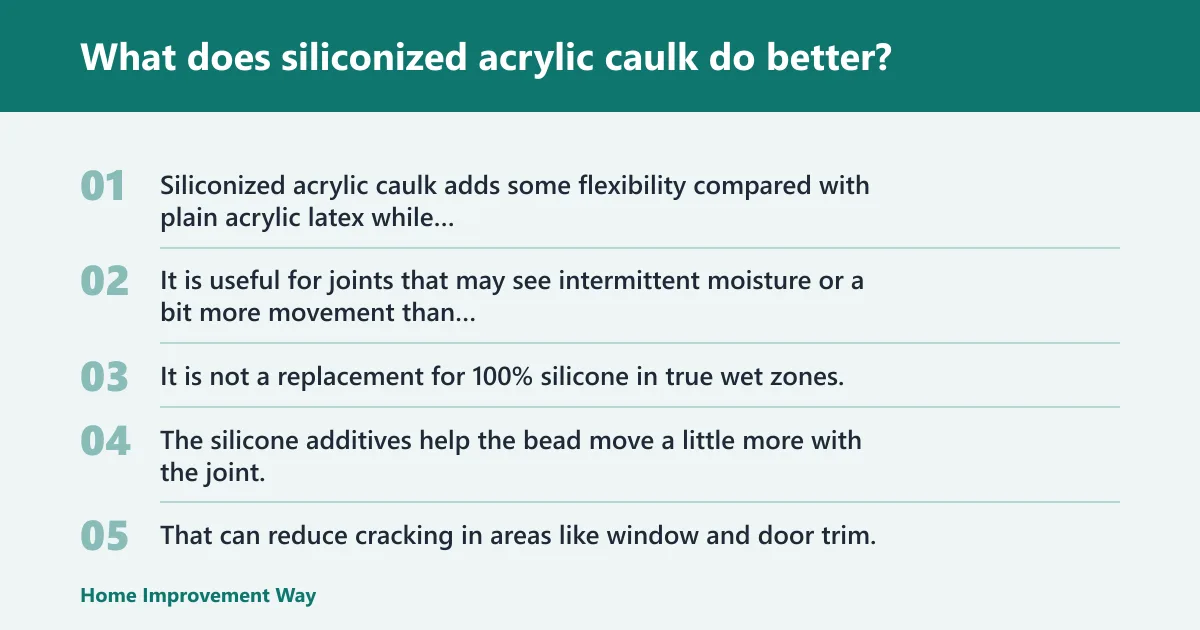
Siliconized acrylic caulk adds some flexibility compared with plain acrylic latex while staying paintable in many trim applications. It is useful for joints that may see intermittent moisture or a bit more movement than straight acrylic can comfortably handle. It is not a replacement for 100% silicone in true wet zones.
More flexibility than plain acrylic latex
The silicone additives help the bead move a little more with the joint. That can reduce cracking in areas like window and door trim, especially where seasonal movement is normal. It still has limits, so it should not be treated as a shower caulk.
Best use cases for intermittent moisture
Think of places that get occasional splash or humidity, not constant water exposure. A backsplash edge, a laundry room trim seam, or a bath vanity joint may fit this middle ground. If the area is truly wet, skip the hybrid and use silicone.
Where does polyurethane caulk fit?
Polyurethane caulk is a durable construction sealant that fits exterior applications and more demanding seams. It is often chosen for its strong adhesion to a range of materials, which makes it useful where a strong bond matters and the joint sees weather and movement.
Exterior construction joints
Use polyurethane when the job is outside and the substrate mix is tough. It belongs on many expansion-type or weather-exposed seams where adhesion and flexibility both matter. Paintability can vary by product, so check the label if the bead will be visible.
Concrete, wood, metal, plastic, and masonry
Mixed-material joints are where polyurethane earns attention. A seam that touches masonry on one side and metal or wood on the other can stress weaker products. Strong adhesion across different surfaces helps reduce edge lift and early separation.
Why adhesion and durability matter outdoors
Outside, sun, water, and temperature changes work against the joint. A bead that sticks poorly will fail even if it starts out neat. That is why “sealant” is not enough information; you need the chemistry that fits the substrate and exposure.
Choose silicone if… / choose caulk if… / choose sealant if…
Choose silicone if the joint stays wet, must resist standing water, or sits at a tub, shower, or sink edge. Choose paintable acrylic or siliconized acrylic if the joint is dry or only intermittently damp and must take paint. Choose polyurethane if the seam is outdoors or needs stronger adhesion across mixed substrates.
Choose silicone if the joint stays wet
Use 100% silicone for tubs, showers, sinks, and other water-exposed seams. It is the right call when waterproofing and flexibility matter more than easy cleanup or paintability. Do not try to force it into a painted finish.
Choose caulk if the joint must be painted
For interior trim, baseboards, casing, and other dry seams, acrylic latex is the common choice. Siliconized acrylic is a good middle option when you want a little more movement tolerance but still need paint. These are the products that usually fit finishing work.
Choose sealant if the joint needs exterior-grade adhesion
For exterior construction seams, use a sealant chosen for the substrate and exposure, often polyurethane. The word “sealant” by itself is not the decision. The chemistry and the joint conditions decide whether the bead will hold up.
How do you choose a caulk based on moisture and movement?
Match the product to the wetness of the joint and how much it moves. Constant wet exposure points to silicone. Dry painted trim points to acrylic latex. Exterior joints and mixed substrates often point to polyurethane. A joint that is wide or deep may also need backer rod to support the bead and control depth.
Use backer rod for wider gaps
Backer rod is foam material placed behind caulking. It can reduce the amount of caulk needed, help form an hour-glass shape, and help prevent three-sided bonding. That matters because a bead that bonds to too many surfaces can tear instead of flexing.
Prepare the joint before you caulk
Clean out dust, loose paint, old residue, and anything that prevents adhesion. Let the surface dry when the product calls for it. If the old bead is failing, remove it instead of covering it with a fresh line that will fail the same way.
- Identify the substrate: tile, drywall, wood, metal, masonry, or plastic.
- Decide whether the joint is wet, damp, or dry.
- Check whether the finished bead must be painted.
- Estimate movement and gap width.
- Choose silicone, acrylic latex, siliconized acrylic, or polyurethane based on those conditions.
- Add backer rod when the gap is wider or deeper than a simple surface bead should fill.
Choose Caulk if… / Choose sealant vs. silicone if…
Choose caulk if you need a general sealing compound for interior gaps, dust control, or paintable trim work. Choose sealant vs. silicone if the job demands a specific chemistry: silicone for wet, nonpainted joints; acrylic or siliconized acrylic for paintable dry seams; polyurethane for demanding exterior adhesion.
| Decision factor | Caulk | Sealant vs. silicone | Winner |
|---|---|---|---|
| Wet-zone performance | Varies by chemistry | Silicone clearly leads in true wet areas | Sealant vs. silicone |
| Paintability | Acrylic latex is fully paintable | Silicone is not paintable; some sealants are | Caulk |
| Exterior substrate adhesion | Depends on product type | Polyurethane has strong adhesion to many surfaces | Sealant vs. silicone |
| Cleanup and rework | Acrylic latex is easiest with water | Silicone is harder to remove or rework | Caulk |
| Best-fit use case | Dry interior trim and small paintable gaps | Wet areas and exterior seams | Tie |
Wet-zone performance
Silicone wins where water is the main issue. The table separates “caulk” as a broad label from the silicone and polyurethane chemistries that solve specific jobs. That distinction matters because a dry-room caulk can fail quickly in a shower, while silicone is built for that kind of exposure.
Paintability
Paintability pushes the decision toward acrylic latex or siliconized acrylic. Silicone’s water resistance comes with a trade-off: it does not accept paint. If the bead must disappear under a painted finish, choose a paintable caulk instead.
Exterior substrate adhesion
Polyurethane wins when the joint touches concrete, wood, metal, plastic, or masonry and outdoor exposure is part of the job. The broad “sealant” label is not enough by itself, but the polyurethane chemistry often is. This is where product selection should track the material, not the aisle sign.
Cleanup and rework
Acrylic latex is the easiest to clean with water and simplest to smooth for many homeowners. Silicone is far less forgiving once cured. If you want a finish you can touch up, repaint, or revise easily, acrylic keeps the job simpler.
Best-fit use case
There is no universal winner. Caulk wins for dry, paintable interior seams. Silicone wins for wet zones. Sealant wins only when the chemistry is matched to exterior movement, adhesion, and exposure. That is the useful way to read the tube.
Frequently asked questions
What is the difference between caulk, sealant, and silicone?
Caulk is the broad term for a flexible material used to seal joints or seams. Sealant is often a wider market label for products chosen by chemistry and job conditions. Silicone is one type of sealant, known for high flexibility and waterproof performance in wet areas.
When should I use silicone instead of acrylic caulk?
Use silicone where water exposure is constant or heavy, such as tubs, showers, sinks, and some exterior seams. Acrylic caulk is better for dry interior trim and any joint that must be painted. The key split is moisture resistance versus paintability.
Can you paint over silicone caulk?
No, silicone caulk is not paintable. If the finished joint needs paint, choose acrylic latex or a paintable siliconized acrylic instead. Silicone is the better choice only when waterproofing and flexibility matter more than matching the wall color.
What is siliconized acrylic caulk used for?
Siliconized acrylic caulk is used where you want more flexibility than plain acrylic but still need paintability. It fits many trim, casing, and intermittent-moisture jobs. It is a middle-ground product, not a substitute for true silicone in showers or other constant wet zones.
Which caulk should I use around tubs, showers, and sinks?
Use 100% silicone around tubs, showers, and sinks. Those joints see frequent or constant water and need a fully waterproof, highly flexible bead. Acrylic products are more suited to dry, painted trim and are not the right pick for true wet areas.
Which product is best for interior trim and baseboards?
Acrylic latex caulk is usually the best fit for interior trim and baseboards because it is paintable, easy to smooth, and simple to clean with water. If the trim joint moves a bit more or sees occasional moisture, siliconized acrylic can be a better middle option.
Is sealant always better than caulk for exterior joints?
No. Sealant is a broad label, not an automatic upgrade. Exterior joints need the right chemistry for the substrate and exposure, often polyurethane or a weather-rated exterior product. A paintable acrylic that works indoors may fail outside, while a well-matched sealant can hold up much longer.
How do I choose a caulk based on moisture and movement?
Start with moisture, then movement, then paintability. Use silicone for wet joints, acrylic latex for dry paintable seams, siliconized acrylic for paintable joints with a little more movement, and polyurethane for exterior seams that need stronger adhesion. Add backer rod when the gap is wide or deep.
Sponsored / affiliate links. As an Amazon Associate I earn from qualifying purchases. I may earn additional commission from eligible campaigns.