Best Caulk for Concrete Cracks (2026): based on specs and reviews
For exterior concrete cracks and expansion joints, a self-leveling polyurethane or polyurea sealant is often used for horizontal joints that are wider, while a non-sag flexible concrete crack filler is commonly used for vertical or narrow cracks. Bad matches let water in, which can widen cracks, loosen edges, and create freeze-thaw damage. This guide shows which sealant fits each joint type, width, slope, and leak risk.
Quick comparison
| Product | Badge | Best for | Price | ||
|---|---|---|---|---|---|
 |
SIKA Sikaflex-1A Joint Sealant, Limestone, for Green andSIKA | Budget pick | Limestone polyurethane, 10.1 fl oz cartridge | $14.47
Price as of 14 Oct 2026
|
View |
 |
Quikrete Gray Polyurethane Self Leveling Concrete CrackQuikrete | Also great | Gray polyurethane, self‑leveling, 10.1 oz | $43.69
Price as of 14 Oct 2026
|
View |
 |
12 Pack Dap 18370 3.0 Advanced Self-Leveling ConcreteDAP | Upgrade pick | Advanced self‑leveling, 9‑oz cartridge, 12 pack | $156.33
Price as of 14 Oct 2026
|
View |
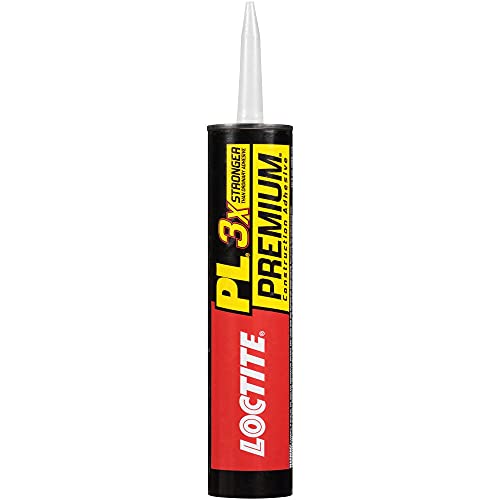 |
Loctite PL Premium Polyurethane Construction Adhesive, 10Loctite | Budget pick | Polyurethane construction adhesive, 10 fl oz | $6.48
Price as of 14 Oct 2026
|
View |
 |
Tremco Vulkem 116 Polyurethane Sealant 10 oz, Gray, Pack ofAWF PRO | Our pick | View |
Use the joint shape first, then the product type. Long, flat driveway joints usually point to self-leveling sealant, while small cracks, sloped edges, and wall cracks usually call for non-sag caulk.
Concrete moves with temperature changes, so the filler must stay flexible. Ordinary interior caulk is not made for exterior concrete, and it fails too quickly in weather exposure.
How we chose
The main filters were joint geometry, joint width, slope, and movement risk. Leak control mattered too, because self-leveling products can run out of open gaps if the joint is not blocked.
We also favored flexible polymer-based concrete sealant, including polyurethane and similar exterior-grade formulas, because rough concrete needs a product that bonds well and keeps moving through hot and cold cycles.
Finally, the list accounts for ease of use. Non-sag products are often more forgiving for homeowner repairs, while self-leveling products fit longer, flatter joints where a clean flow matters more than hand tooling.

Self-leveling concrete caulk: best for wide, flat joints

Self-leveling caulk is the right fit for long, horizontal expansion joints in driveways, sidewalks, patios, and garage slabs. It is thin and runny, so it flows evenly into the joint and leaves a smoother surface with less tooling.
This type is best where the joint is flat and uniform, because it can travel along the crack line and settle on its own. It is a good match for larger jobs with long, consistent joints, especially when the goal is fast coverage rather than a hand-shaped bead.
The downside is leak risk. Self-leveling caulk needs sealing or damming at open ends, voids, and low spots, or it can drain away before curing. If the joint is deep or irregular, you often need backer rod or another block to control depth and stop runoff.
Where self-leveling works best
Use it on horizontal expansion joints, especially wide ones that run in straight lines. Expansion joints are built to allow movement, so the filler must remain flexible as the slab opens and closes through seasonal expansion and contraction.
It also makes sense for long cracks that stay flat and open at a fairly uniform width. The material’s flow helps it settle into the joint without heavy tooling.
Why it needs damming or blocking
Because the formula is thin and runny, it can escape through hidden voids, edge breaks, and open ends. That is why damming matters more with self-leveling than with thicker caulk.
Backer rod is useful here. It blocks deep gaps, helps control joint depth, and gives the sealant a base so it does not pour into empty space.
When backer rod is part of the setup
Use backer rod when the joint is deeper than it should be for a surface seal, or when the cavity is irregular. It helps create the right shape for the bead and reduces material waste.
Suppose a driveway joint is 3/8 inch wide on top but opens into a much deeper void below. Without backer rod, the self-leveling sealant can disappear into the gap and leave the top underfilled.
Non-sag concrete caulk: best for small cracks and vertical surfaces
Non-sag caulk stays where you put it and won’t run through small gaps. That makes it better for small cracks, vertical surfaces, and sloped areas where a runny product would slump or drip before curing.
This is the more forgiving choice for most homeowner jobs. It gives you more control during application, and it is easier to place on a narrow crack line without fighting gravity.
The drawback is finish work. Non-sag caulk must be tooled by hand, so the bead needs shaping after placement. If the bead is rushed or left too proud, it can collect dirt or look uneven at the surface.
Why hand tooling matters
Non-sag products do not self-level into a smooth line. You have to press and shape the bead so it bonds to both sides of the crack and sheds water instead of sitting like a ridge.
A thin, neat finish also matters on exposed slabs, where tires, foot traffic, and UV exposure can punish a sloppy bead.
Using soapy water for a cleaner finish
Soapy-water tooling can help smooth non-sag caulk and reduce sticking on the tool or finger used to shape the bead. That usually makes it easier to form a cleaner surface without tearing the fresh sealant.
Keep the bead continuous. Gaps in the seal invite water entry, and water in a concrete crack can trigger freeze-thaw cycling that widens the damage over time.
Which one should you buy for your repair?
Start with the joint orientation, then look at width and movement. Long, flat joints point to self-leveling. Small cracks, vertical surfaces, and sloped edges point to non-sag. If the joint is deep, irregular, or open-ended, backer rod or blocking becomes part of the decision.
Flat driveway or patio joints
Choose self-leveling concrete caulk for long, flat expansion joints. It covers straight horizontal joints cleanly and is a strong fit for wider openings where a flowing bead saves time.
If the joint is open at the ends, use temporary blocking or a backer rod setup so the material does not drain out.
Vertical foundation cracks
Choose non-sag concrete caulk for vertical cracks. It stays in place, which matters on wall repairs where self-leveling sealant would slump or run.
For rough concrete surfaces, a flexible exterior polymer-based concrete sealant is the better family of products than ordinary interior caulk. It is built for temperature swings and exterior exposure.
Narrow control joints
Control joints are crack-line management points in slabs, and they are often narrower than expansion joints. Many narrow control joints are easier to fill with non-sag sealant because the product is easier to control in a tight space.
If the joint is long, flat, and wide enough to hold flow, self-leveling can still work. Width and slope should drive the choice, not the label alone.
Deep or irregular gaps
Use backer rod first when the joint is deep. It supports the sealant, limits the depth of the fill, and helps prevent self-leveling sealant from disappearing into the void.
A combined method can work well: use non-sag as a dam, then place self-leveling sealant in the main horizontal run. That approach helps where a joint opens into a larger cavity or has a leak-prone edge.
How do you keep caulk from leaking out?
The short answer is to block the path before you pour. Self-leveling sealant leaks when it finds open ends, hidden voids, or cracks that run deeper than the visible surface. Backer rod, temporary end dams, and dry, debris-free concrete all matter.
Use backer rod to control depth
Backer rod sets a predictable depth and stops sealant from dropping too far into the joint. That is especially important on expansion joints with a deep cavity below the surface.
Block open ends before pouring
On self-leveling jobs, seal the ends of the run so the product cannot escape. Even a small gap can drain a lot of sealant.
Check for dust, weeds, and moisture
Cleaning dirt, weeds, and loose debris is recommended before caulking. Dust blocks adhesion, and debris can create channels that let the sealant fail early.
The surface should be dry before application for proper adhesion. Moisture trapped in the joint can weaken the bond and shorten service life.
Let the joint dry before sealing
Drying time matters more after rain, pressure washing, or early-morning dew. If the surface is damp, the bead may not bond as intended and water can get under the repair.
Picture a patio joint that looks dry on top but still holds moisture in the bottom of the crack. The sealant may skin over on the surface while adhesion underneath stays poor.
Concrete joint selection matrix and leak-prevention checklist
This matrix gives a practical rule by width, slope, and movement risk. Use it to match the sealant to the joint, not the other way around.
| Crack or joint size | Surface orientation | Movement risk | Prep needs | Best sealant type |
|---|---|---|---|---|
| Hairline to narrow crack | Vertical or sloped | Moderate | Clean, dry, dust-free | Non-sag concrete caulk |
| Up to 1/4 inch, shallow joint | Vertical or small slope | Moderate | Clean edges, hand tool bead | Non-sag concrete caulk |
| 1/4 inch to 1/2 inch, long joint | Flat horizontal | High | Damming, blocking, dry surface | Self-leveling polyurethane or polyurea |
| Deep cavity, irregular width | Flat or mixed | High | Backer rod, end dams, dry substrate | Self-leveling with backer rod or dammed non-sag setup |
| Control joint with narrow opening | Flat horizontal | Moderate to high | Clean joint line, check depth | Non-sag for control, self-leveling if long and open |
Five-step leak-prevention checklist for self-leveling jobs
- Clear dirt, weeds, and loose debris from the joint.
- Make sure the surface is dry before application.
- Install backer rod if the joint is deep or irregular.
- Block open ends and low exits so the sealant cannot run out.
- Pour a continuous bead and watch for early leaks before the material skins over.
A common first-timer mistake is pouring self-leveling sealant into a 12-foot driveway joint that has an open end near the curb. If that opening is not blocked, the product can drain away and leave the upper section thin or empty.
Can I use regular interior caulk on concrete outdoors?
No. Ordinary interior caulks are not formulated for concrete in exterior conditions, and they do not hold up well against sun, moisture, and temperature swings. Exterior concrete needs a flexible sealant made for rough masonry surfaces and outdoor movement.
That is why polymer-based concrete sealant, polyurethane, and similar exterior-grade formulas are the safer choice. They stay flexible through weather cycling and are better suited to cracks, expansion joints, and slab edges.
What is the best caulk for concrete cracks and expansion joints?
The best choice depends on the joint. Self-leveling polyurethane or polyurea is best for long, flat expansion joints, while non-sag flexible concrete crack filler is better for small cracks, vertical surfaces, and sloped areas. The right product is the one that matches the joint geometry and leak risk.
Expansion joints are different from control joints. Expansion joints are meant to allow movement, so they need a flexible sealant that can stretch and compress. Control joints are narrower crack-management lines and often need a different application strategy.
How long does concrete caulk need to cure before rain?
Follow the product label, because cure time before rain varies by formula, temperature, and joint depth. Many exterior sealants become skin-dry before full cure, but that is not the same as being ready for water exposure.
When weather is uncertain, choose a dry window long enough to let the product set without washout. A deeper joint, cooler air, or high humidity can extend the wait.
Should I use self-leveling or non-sag caulk on concrete?
Use self-leveling on long, flat joints where you want the sealant to flow into place. Use non-sag on vertical cracks, narrow joints, and sloped surfaces where you need the bead to stay put and be shaped by hand.
The general homeowner choice leans toward non-sag because it is more forgiving. Self-leveling is better when the geometry is right and the leak control setup is ready.
Do I need backer rod for concrete expansion joints?
Not every joint needs it, but deep or wide expansion joints often do. Backer rod helps control depth, supports the sealant shape, and prevents self-leveling material from sinking into an open cavity. It is especially useful when the joint depth is more than the surface seal should fill.
If the gap is shallow and uniform, backer rod may not be necessary. If the joint opens deep or has voids below the edge, it is usually part of the fix.
Can I color-match concrete caulk with sand?
Yes, sometimes. Adding similarly colored sand before the caulk sets can help blend the repair with the surrounding concrete. The goal is a less obvious bead, not a perfect slab match.
This works best on textured repairs where the surface already has aggregate or a slightly rough finish. It is less useful on smooth, clean edges where the bead itself remains visible.
Frequently asked questions
What should I use for vertical concrete cracks versus flat joints?
Use non-sag concrete caulk for vertical cracks because it stays in place and gives you control while tooling the bead. Use self-leveling sealant for flat horizontal joints where flow helps fill the crack evenly. The surface angle matters as much as the crack width.
How do I keep caulk from leaking out of a concrete joint?
Block open ends, use backer rod in deep gaps, and make sure the joint is clean and dry before filling. Self-leveling sealant can escape fast through hidden voids, so leak control should be set up before the cartridge is opened.
Sponsored / affiliate links. As an Amazon Associate I earn from qualifying purchases. I may earn additional commission from eligible campaigns.