How to Repair Torn Drywall Paper Without Over-Sanding
Seal torn drywall paper with a problem-surface sealer before adding joint compound, especially when the face paper is fuzzy or peeling. Loose fibers can swell when they meet wet mud, then bubble or flash through paint. The goal is to lock down the damage first, then build the surface back with thin, controlled coats.
Drywall face paper is the outer paper layer on gypsum board, and it needs to stay intact for paint and compound to bond evenly. Once that surface is torn or frayed, it becomes more absorbent. If the gypsum core is exposed, chalky, or water-damaged, the repair may need a stronger sealer, primer, or replacement.
Why does torn drywall paper need a different fix?
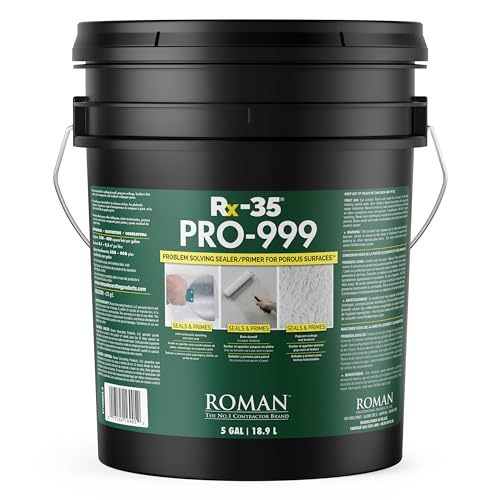

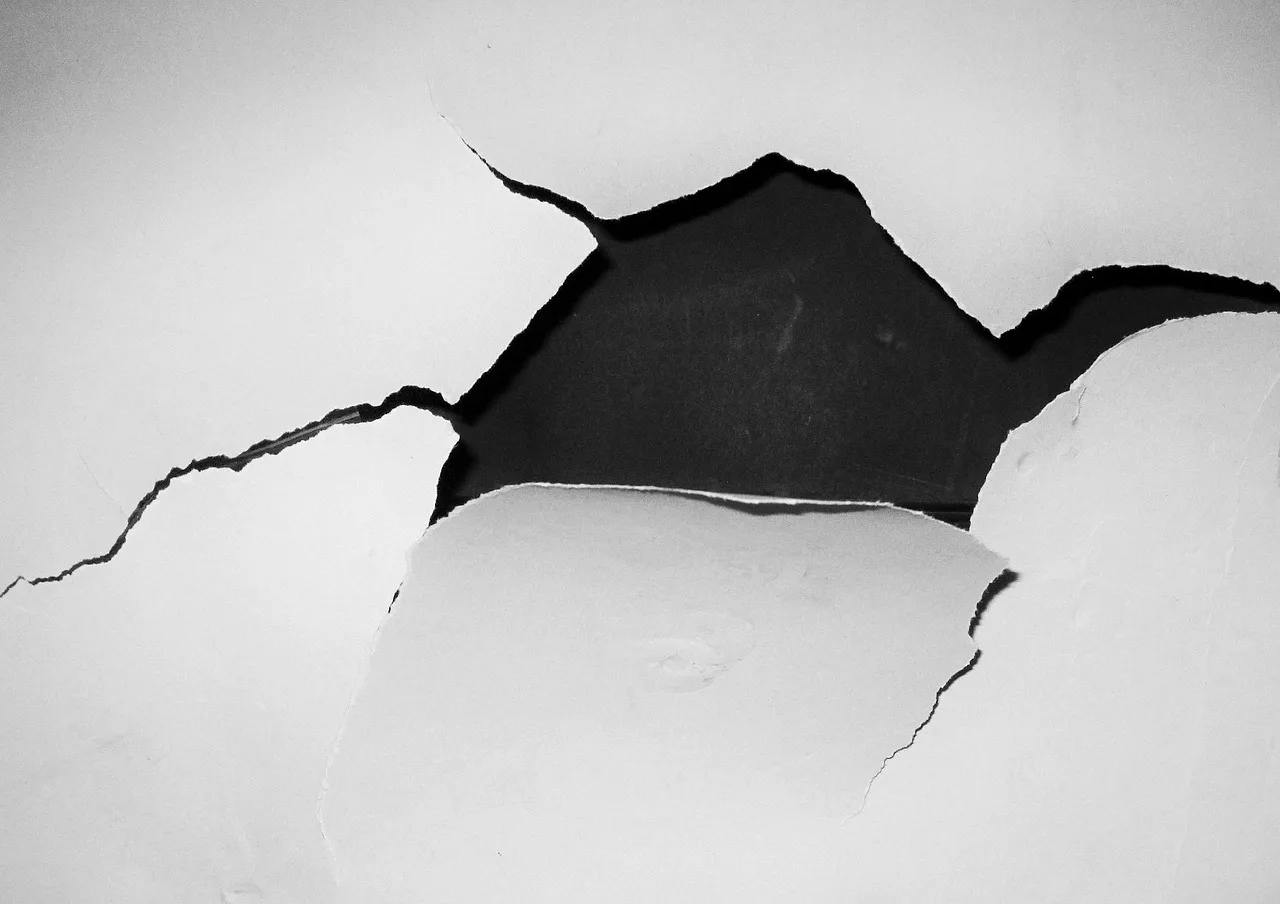
The key mistake is treating torn paper like a normal dent. A dent can usually take compound right away. Torn paper drinks in moisture, so wet mud can swell the edge, loosen fibers, and leave a raised ring after drying. That is why repair starts with stabilization, not aggressive sanding.
How do face paper and gypsum behave?
The paper face should stay intact. If it is fuzzed, peeled, or blistered, it can soak up compound, primer, and paint unevenly. The gypsum core underneath is chalky and weaker than the paper skin, so once it shows, the repair needs more control and a check for crumbling before you move ahead.
Picture a 2-inch scuff from moving furniture. If the paper only looks fuzzy, you can usually lock it down and skim over it. If the tear has a curled flap and chalk shows through, that edge needs trimming, sealing, and a wider feather, or it can keep opening as you sand.
What do you need to repair torn drywall paper?
- Putty knife or drywall knife
- Problem-surface sealer, such as a Gardz-type sealer
- Joint compound for thin coats
- Fine-grit sanding sponge or fine-grit sandpaper
- PVA drywall primer for the final paint-prep coat
- Oil-based primer or shellac-based primer for difficult exposed-gypsum spots
- Texture repair materials if the wall has orange peel or another texture
How do you repair torn drywall paper in 4 steps?
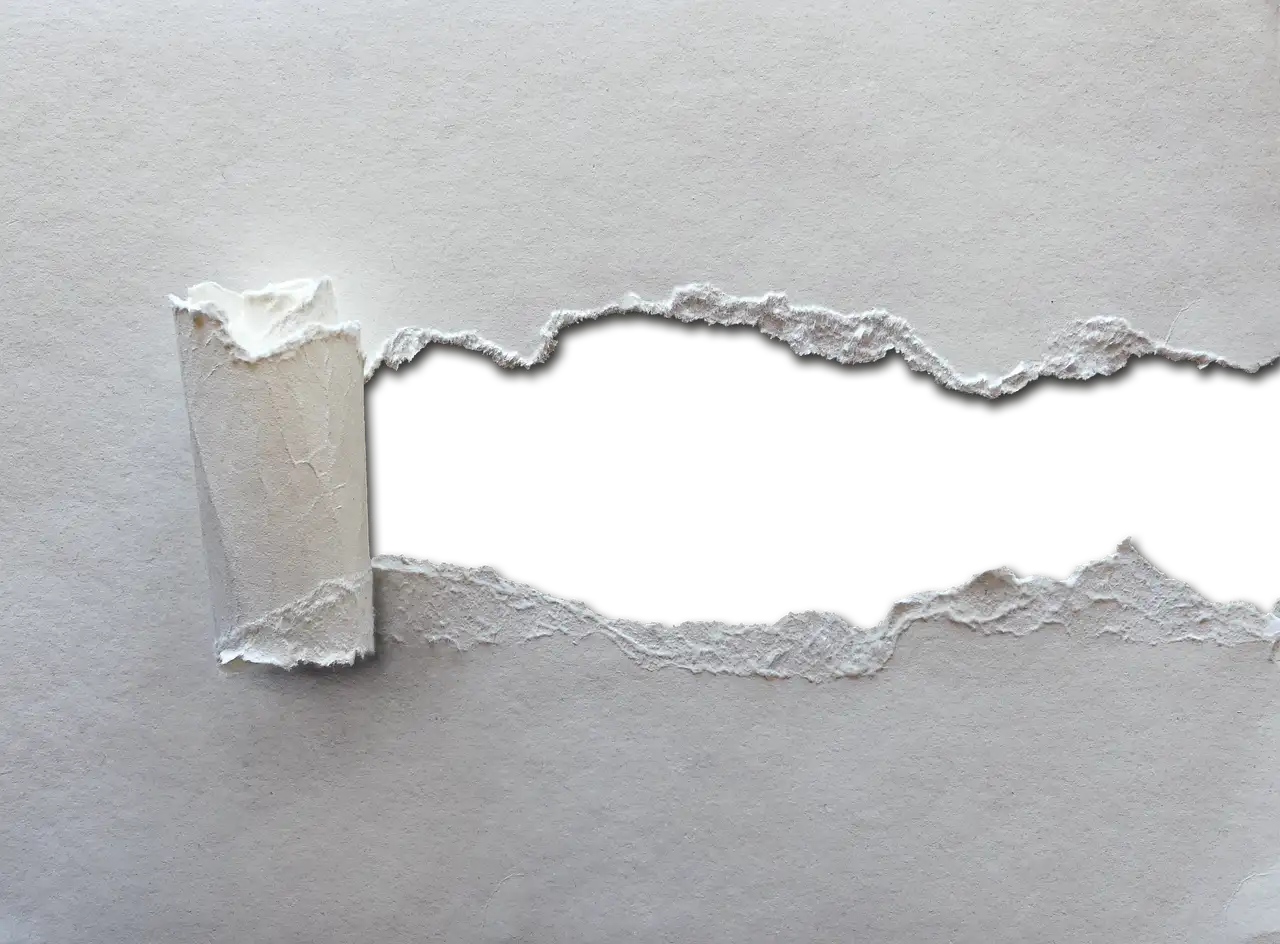
Start by trimming loose paper, then seal the torn fibers before you add compound. Use thin coats, not thick ones, and feather the repair wider than the damage. Light sanding comes after the patch dries. For textured walls, match the finish before final priming so the repair does not telegraph through paint.
- Trim only loose, frayed, or peeling paper with a putty knife, stopping at solid edges. Hold the blade at a shallow angle so you remove the curl, not more face paper.
- Brush on a problem-surface sealer before any compound. Gardz is used to harden torn paper before finishing, and it is applied with a cheap brush. Let it dry fully.
- Apply joint compound in thin layers and feather it wider than the tear. A larger drywall knife held at an angle helps create a gradual transition. If the first coat sinks, add a second coat about 1/16 inch thick after the first dries.
- Sand lightly with fine-grit paper only after the patch is dry. Stop as soon as the ridge is flat enough to feather, then prime for paint with the right primer.
Do not chase perfection with the sander. The goal is to smooth ridges, not expose more paper. If the area feels flat under a drywall knife, leave it alone and move to primer. A large repair needs a wider, shallower slope to blend well, while a small job may only need a narrow skim and very light sanding.
When should you stop sanding and switch to sealing?
Stop sanding the moment the torn edge loses its ridge and the surface feels even under a drywall knife. If the paper starts to fuzz again, or the tear widens, you have gone too far. At that point, stop abrasion, seal the damaged fibers, and rebuild the surface with a thin skim.
If the damaged spot is small, spot sealing is usually enough before a skim coat. If the tear is wider or the edge keeps lifting, switch to a broader feather repair instead of sanding harder. That keeps the surrounding paint edge from turning into a shiny burnished halo.
Do you need to seal torn drywall paper first?
Yes. In most torn-paper repairs, a problem-surface sealer should go on before joint compound so the fuzz does not swell when it meets wet mud. That first coat locks down fibers, reduces bubbling, and gives the compound a firm base instead of a soft, thirsty one. [See also: drywall primer types]
When is a problem-surface sealer the right first move?
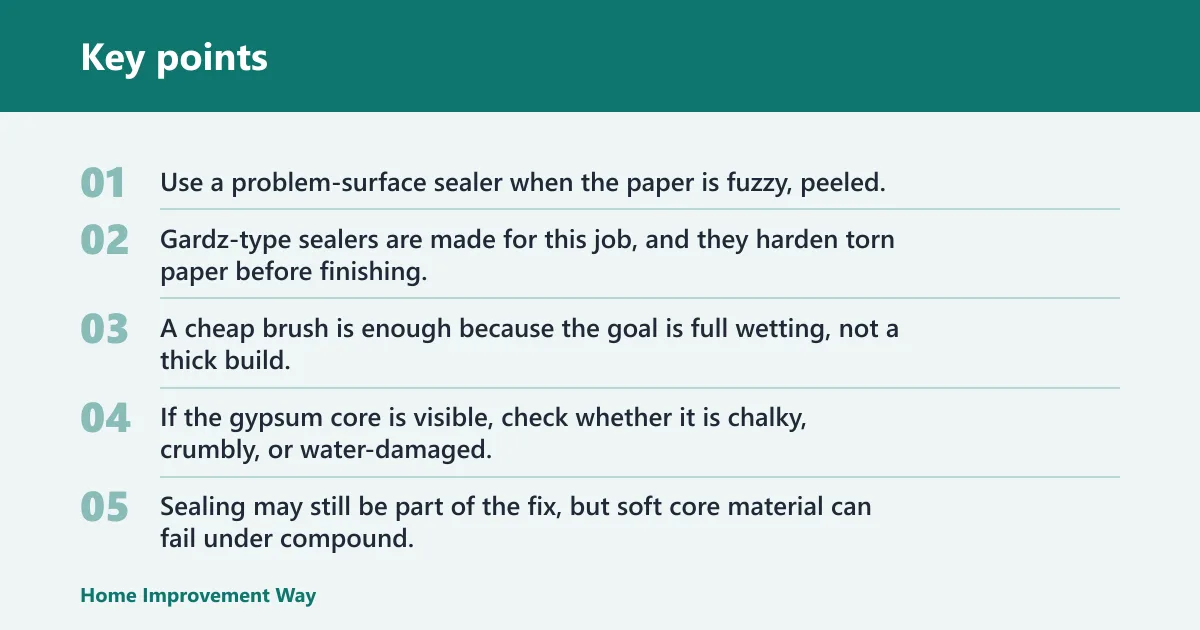
Use a problem-surface sealer when the paper is fuzzy, peeled, or scuffed but still firmly attached. Gardz-type sealers are made for this job, and they harden torn paper before finishing. A cheap brush is enough because the goal is full wetting, not a thick build.
When does exposed gypsum need more than spot compound?
If the gypsum core is visible, check whether it is chalky, crumbly, or water-damaged. Sealing may still be part of the fix, but soft core material can fail under compound. In that case, stabilize the area first, then decide whether a repair will hold or whether replacement is safer.
How do you avoid bubbling from wet mud?
Do not load joint compound onto unsealed torn paper. Wet mud can rehydrate the edge and cause blistering or bubbles under the patch. Thin coats reduce that risk. If the paper looks dry and sealed, the compound is less likely to pull moisture into the tear and lift the fibers again.
What primer should you use on repaired paper?
PVA drywall primer is for sealing repaired drywall before paint, but it is not the same as a problem-surface sealer. Use PVA after the repair is sound and smooth. For difficult torn-paper spots, oil-based primer or shellac-based primer is often preferable on exposed gypsum or persistent bubbles because it can block moisture better before paint.
Where does PVA drywall primer fit?
Use PVA drywall primer after the repair is finished and dry. Its job is to even out paint absorption across the patched area and the surrounding wall. It is the normal next step for a repaired surface, not the first coat on fuzzy or peeled paper. [See also: skim coating]
When is oil-based primer the safer option?
Oil-based primer is often recommended for exposed gypsum or for repairs that still seem sensitive after sealing. It can help reduce moisture reactivation on difficult spots. If the core is lightly exposed and fully stable, it can be a better bridge before paint than a standard water-based primer.
When does shellac-based primer help lock down difficult spots?
Shellac-based primer is a fast-sealing option for stubborn torn-paper areas. It is often used for sealing difficult spots before patching because it blocks moisture quickly. That makes it useful when the repair edge has been hard to calm down with normal drywall products.
Can you paint over fuzzy drywall paper?
No. Fuzzy drywall paper drinks paint unevenly, so the spot usually flashes through the finish even if the color matches. Paint alone will not hide torn fibers, and it can leave a dull, rough patch that stands out under raking light. Seal the paper first, then prime and paint.
Why will paint alone not hide the damage?
Fuzzed paper acts like a sponge. The first coat soaks in fast, which leaves a darker or duller spot than the surrounding wall. If you skip the sealer, the paint can dry with a rough edge, and repeated coats still may not hide the difference.
When does a small scuff still need sealing first?
Even a tiny fuzzy spot usually needs a sealer before primer. If the paper is only lightly scuffed, you may not need a full skim coat, but you still need to lock the fibers down. That one step keeps the paint from flashing and keeps the edge from fraying again.
What does a drywall repair decision matrix look like?
Use the damage level to decide how much to trim, seal, and feather. Start with the least abrasive fix that will hold. The most reliable pattern is simple: stop sanding when the paper stays flat, seal before compound when fibers are exposed, and replace the section if the gypsum will not stay sound.
| Damage level | Exact stop-sanding cue | Paper-removal rule | Sealer choice | Dry-time checkpoint | Feather width | Safe grit range | Replace-vs-repair trigger |
|---|---|---|---|---|---|---|---|
| Fuzzy scuff | The ridge is gone and no fibers are lifting | Do not remove attached paper; trim only fuzz | Problem-surface sealer | Wait until the sealer is fully dry before compound | 2 to 3 inches | 220 to 320 grit | Repair if the paper is stable; replace only if the core is soft or wet |
| Torn paper flap | The loose flap is trimmed back to solid paper | Remove only loose, curled, or peeling paper | Problem-surface sealer, then compound | Wait for full sealer dry time before the first skim coat | 4 to 6 inches | 180 to 220 grit | Repair if the core is firm; replace if the tear keeps extending or the gypsum crumbles |
| Exposed gypsum | Do not keep sanding once the core shows | Stop paper removal at solid edges; do not chase the paper farther | Shellac-based or oil-based primer, then evaluate | Let the stabilizer or primer dry fully before filling | 6 to 8 inches if the core is sound | 150 to 180 grit, used lightly | Replace if the gypsum is soft, crumbling, water-damaged, or keeps bubbling after sealing |
When is the damage too much to repair?
If the gypsum is crumbling, soft, or water-damaged, replacement may be the better call. Large damaged zones also need a wider, shallower slope to blend, and once the paper and core are both failing, patching can take more effort than replacing the section. Small repairs are usually the DIY-friendly ones. [See also: drywall replacement for water damage]
What are the most common mistakes?
- Sanding through the face paper again. Stop at the first flat, featherable surface.
- Using joint compound on unsealed torn paper. Seal the fuzz first or the mud can bubble.
- Leaving loose paper in place. Trim or scrape it back to firm edges before filling.
- Skipping texture repair on textured walls. Match orange peel or similar finishes before primer.
- Using PVA drywall primer as the first fix on raw, fuzzy paper. It is a finishing primer, not a problem-surface sealer.
A common first-timer mistake is trying to feather a torn drywall-paper flap with extra pressure and ending up scuffing the surrounding face paper instead. Say your wall has a 6-inch torn area from tape removal, with a curled edge and chalky center. If you sand harder instead of sealing first, the tear usually grows and the patch becomes larger than it needed to be. [See also: orange-peel texture matching]
If that did not work, what should you do next?
If the patch still bubbles after drying, stop adding mud and let the area dry fully. Then brush on a shellac-based or oil-based primer over the troubled spot, feather the edge lightly, and retry with a thinner coat. If the core still moves, the section may need replacement.
Frequently asked questions
How do you fix torn drywall paper without sanding through it?
Trim loose fibers with a putty knife, seal the torn area with a problem-surface sealer, then apply thin joint compound in a wider feather than the tear. Use fine-grit sanding only after the patch dries, and stop as soon as the ridge is level enough to blend.
Do you need to seal torn drywall paper before joint compound?
Yes. A problem-surface sealer should go on first in most torn-paper repairs because it locks down absorbent fibers and lowers the chance of bubbling. Gardz is commonly used for this job, and it hardens torn paper before finishing.
What primer should you use on torn drywall paper?
Use PVA drywall primer after the repair is finished and dry. For exposed gypsum or stubborn torn-paper spots, oil-based primer or shellac-based primer is often the safer choice because it blocks moisture better before paint. The problem-surface sealer still comes before any of those.
Can you paint over fuzzy drywall paper without repair?
No. Fuzzy paper soaks up paint like a sponge, which leaves a dull or blotchy area that stands out. At minimum, seal the paper first and then prime. If the fuzz is loose or lifted, trim it back before anything else.
How do you stop drywall paper from bubbling after patching?
Use a problem-surface sealer before compound, keep the mud thin, and let each coat dry fully. Bubbling usually starts when wet compound reactivates unsealed paper or when sanding opens fresh fibers. If bubbling appears, stop, dry the area, and reseal before retrying.
When is torn drywall paper too damaged to repair?
If the gypsum core is crumbling, soft, or water-damaged, repair may not hold. Wide delamination, repeated bubbling, or a wall section that will not stay firm are all signs that replacement is safer. Small DIY repairs are usually for stable paper and sound core only.
Sponsored / affiliate links. As an Amazon Associate I earn from qualifying purchases. I may earn additional commission from eligible campaigns.