Basement Sump Pump vs Drain Tile: Which System Handles What?
Use drain tile to catch groundwater near the footing and move it to a sump pump, then use the pump to discharge that water. If water enters through cracks, leaks, or downspout problems, a sump pump alone may miss the source, and flooding can continue during power loss. This guide compares where each system controls water, how hydrostatic pressure changes the choice, and what fails when the power goes out.
| Decision factor | Basement sump pump | drain tile | Winner |
|---|---|---|---|
| Primary job | Moves collected water out of a sump basin | Collects groundwater along the perimeter and routes it away | tie |
| Where it controls water | Lowest point, where water already pooled | Footing, floor perimeter, cove joint, or under-slab edge | drain tile |
| Power-loss risk | Depends on electricity and moving parts; may stop in an outage | Can still collect water, but most interior setups still need pumping to discharge it | drain tile |
| Retrofit complexity | Usually simpler if a basin already exists | Interior retrofits often require jackhammering the slab | Basement sump pump |
| Best fit | Isolated pit water or a low-point collection problem | Recurring seepage from walls, slab edges, or whole-perimeter groundwater pressure | drain tile |
Sump pump vs drain tile: the core trade-off
The trade-off is collection versus removal. A drain tile system is a perforated pipe drainage network that collects groundwater near the basement perimeter and sends it toward a sump basin or outlet, while a sump pump removes the water after it has gathered in the basin. If the water source is spread along the wall-floor seam, collection matters more than pumping alone.
Collection vs removal
A sump pump sits in a sump basin at the lowest point of the basement or crawl space. It uses electricity, a float switch, and moving parts to push water through a discharge line to a safe location. Drain tile can be interior or exterior, and it is the part that intercepts water before it spreads across the floor.
What each system can and cannot stop
A pump can empty a pit. It cannot stop water from entering through the cove joint, wall cracks, or slab seams if the water never reaches the basin in a controlled way. Drain tile can capture that groundwater, but most interior systems still need a sump pump to move it out of the basement.
What each system actually does
Drain tile is not ceramic tile. It is a perforated pipe drainage network, usually placed inside or outside the foundation, that gathers groundwater and directs it to an exit point. A sump pump then takes over and moves the collected water away from the house.
How a sump pump moves water
The pump is installed in a sump basin at the lowest point, where water naturally collects. A float switch starts the pump when the water level rises; tethered, vertical, and pressure switches are commonly used types. Submersible pumps are generally more powerful than pedestal pumps, but both still depend on electricity and a working discharge line. (Familyhandyman)
How drain tile collects groundwater
Interior drain tile is installed beneath the basement floor, usually along the inside perimeter. Exterior drain tile sits outside the foundation at the footing level. In both cases, the goal is the same: intercept groundwater before hydrostatic pressure forces it through cracks, seams, or the cove joint.
Why many basements need both
Many wet basements need both systems because they solve different parts of the problem. Drain tile collects water near the foundation; the sump pump removes it from the basin. Without collection, a pump may chase water after it has already spread. Without pumping, the drainage network needs a gravity outlet or it stalls at the basin.
Where is the water entering?
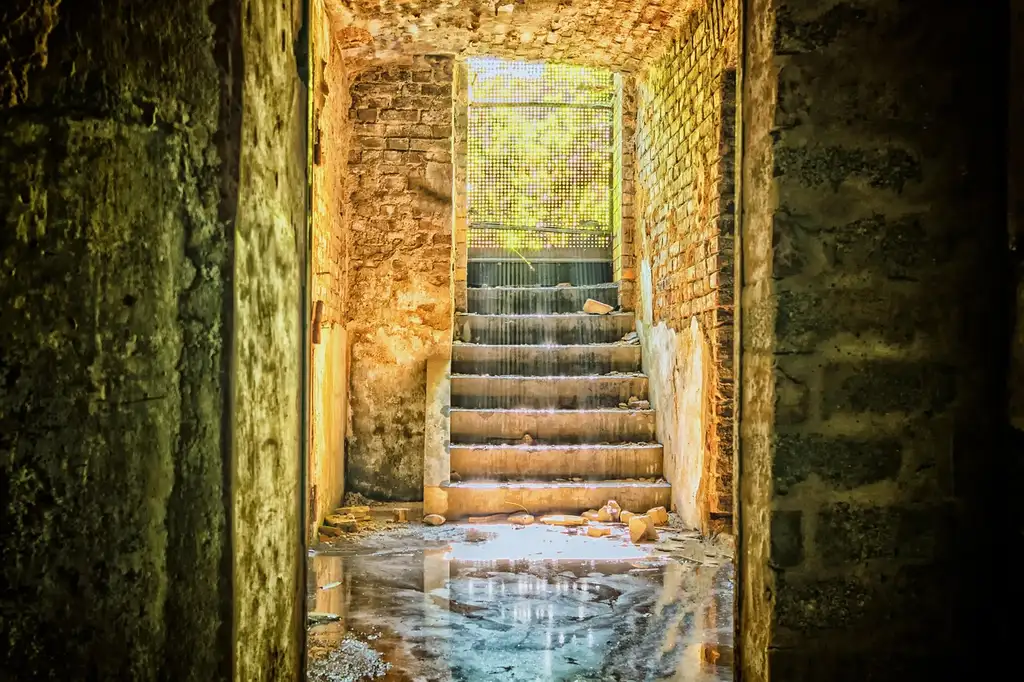
The entry point shows which system is doing the real work. Water at the cove joint points to perimeter collection. Water in a single low spot can point to a basin problem instead. Water that appears after rain, snowmelt, or long wet periods often points to rising groundwater under hydrostatic pressure.
Cove joint seepage
The cove joint is the seam where the basement floor meets the foundation wall. It is a common seepage point because hydrostatic pressure from surrounding soil pushes water into that seam. Interior drain tile is usually the better match because it intercepts water where it enters, rather than waiting for it to pool.
Floor slab seepage
Seepage through the slab often means the water pressure is pushing up from below. A sump pump may still help if the water can be gathered into a basin, but a perimeter drainage path is usually needed when the whole slab edge stays damp or the floor shows recurring wet spots after storms.
Wall cracks and seams
Cracks in basement walls can admit water without creating a deep floor puddle first. That pattern often points to a broader drainage problem around the footing or foundation wall. Drain tile, especially an interior perimeter system, can lower the water load before it reaches the crack.
High groundwater around the footing
When groundwater rises around the footing, the problem is not just one leak. The pressure is acting along the whole perimeter. Exterior drain tile can help at the footing level, while interior drain tile can catch water at the wall-floor junction and move it to a basin.
Suppose a roughly 900-square-foot basement shows a wet line along one wall after spring storms. A sump pump placed in the corner may empty a basin, but it will not stop seepage along the rest of the wall. Drain tile is the better match because the water source is spread out, not isolated.
Basement water decision matrix
This matrix maps the failure mode to the system that fits it best. It also shows where each system falls short and when you need both. Use it to match the fix to the source, not just the visible water.
| Failure mode | Recommended system | Why it fits | Where it fails | When both systems are needed |
|---|---|---|---|---|
| Cove joint seepage | drain tile | Captures water at the wall-floor seam before it spreads across the slab | A pump alone may miss seepage that never reaches the basin | If seepage is heavy, a basin and pump are still needed to discharge collected water |
| Floor slab seepage | drain tile | Relieves pressure along the slab edge and routes water to collection | Surface pumping cannot stop water forced up by hydrostatic pressure | Use both when the slab stays damp after storms or snowmelt |
| Isolated sump pit water | Basement sump pump | Removes water that already collects in one low point | It does not intercept wall, seam, or slab entry by itself | Add drain tile if the pit is being fed by recurring perimeter seepage |
| Whole-perimeter groundwater pressure | drain tile | Collects water around the footing or floor perimeter before it enters the living area | Drainage without discharge can stall unless it drains to a basin or outlet | Most interior systems need a sump pump and often a battery backup sump pump |
Can a sump pump work without drain tile?
Yes, a sump pump can work without drain tile if water already collects in a pit and the source is localized. That can be enough for a single low spot, a groundwater seep that runs to one basin, or a setup that already has gravity-fed water entering the sump basin. It is a weak answer for perimeter seepage.
When a pump-only fix can be reasonable
A pump-only fix can be reasonable when the problem is limited to pit water, not a wet wall line or a damp slab edge. A common case is a basement corner that collects runoff from a stairwell or a single leak point. In that case, the pump removes water effectively because the water source is already concentrated.
Why a pump cannot intercept seepage by itself
The pump does not create the collection path. If water enters through the cove joint, a crack, or a slab seam across the perimeter, the pump may stay idle while water spreads. The pump also depends on a float switch, power, and a clear discharge line, so any of those failures can stop protection.
Float switch, power, and discharge limits
The float switch controls activation by water level or pressure. If it sticks, the pump may not start. If the power goes out, the primary pump stops unless a battery backup sump pump is present. A frozen or blocked discharge line can also send water back toward the basement or force the system to cycle poorly.
Can drain tile work without a sump pump?
Sometimes, but only when the drainage network has a gravity outlet or another safe path that does not require pumping. Most interior systems still need a sump basin and pump because the goal is to move water from the perimeter to a discharge point, and basements usually sit too low for gravity to do that alone.
Gravity-drained outlet setups
Exterior drain tile may drain to daylight, a dry well, or another legal outlet in some sites. That can work when slope and code allow it. In those cases, the pipe network still collects groundwater, but the water leaves the system without a pump.
Why most interior systems still need pumping
Interior basement drainage systems are commonly installed beneath the floor and along the perimeter, and retrofit work usually requires jackhammering. Because the basement floor is below grade, the collected water often has nowhere to go except into a sump basin. A pump is then needed to move it to a discharge line and away from the foundation.
When exterior drainage changes the answer
Exterior drain tile installed at the footing level can sometimes route water to a safe outlet without a pump. That depends on site grading, local rules, and the available discharge path. If the drainage line cannot drain by gravity, pumping becomes part of the system rather than an optional add-on.
Choose Basement sump pump if… / Choose drain tile if…
Choose Basement sump pump if the water is already collected in one low point, the basin exists, and the issue is isolated rather than spread around the perimeter. Choose drain tile if water enters through the cove joint, wall cracks, or slab seams, or if hydrostatic pressure is pushing water up from the footing area. Many homes need both when recurring seepage keeps feeding the basin.
Choose Basement sump pump if…
Choose Basement sump pump if you have a single sump pit that fills, but the walls and slab stay mostly dry. Choose it if your main concern is removing water after collection, not intercepting broad seepage. Choose it cautiously if outages are common, because the pump stops when the power goes out unless you add backup.
Choose drain tile if…
Choose drain tile if the basement shows recurring wet lines at the wall-floor seam, damp slab edges, or water from around the footing after heavy rain or snowmelt. Choose it if hydrostatic pressure is forcing groundwater through seams and joints. Choose a battery backup sump pump too if the drainage path still depends on pumping.
When both systems are needed together
Choose both when the basement has perimeter seepage and a low point where collected water can be moved out. That combination is common in wet basements because drainage handles collection and the pump handles removal. It is also the safer setup when discharge must be routed to a dry well or runoff point where allowed.
Retrofit and power-loss considerations
Interior drainage retrofit work usually means cutting the slab, so it is not a light repair. Exterior drain tile can be more disruptive still because it sits outside the foundation at the footing. In either case, the discharge line must lead to a safe location, and freeze risk should be checked before winter use.
- Find the entry point: cove joint, slab, wall crack, or isolated low spot.
- Check whether water is pooling in one basin or arriving around the whole perimeter.
- Ask whether the current discharge line sends water to a safe location.
- Decide whether pumping alone can remove the water after collection.
- Add drain tile when collection is missing, and add backup power when outages matter.


Frequently asked questions
What is the difference between a sump pump and drain tile?
A sump pump removes water that has already collected in a basin. Drain tile collects groundwater along the perimeter and directs it toward that basin or another exit point. If you need to stop water near the footing or wall-floor seam, drain tile does the collection work; the pump only handles removal.
Do I need both a sump pump and drain tile?
Many wet basements do. You need both when groundwater reaches the basement perimeter and then needs to be pumped away from the house. If the water is only in one low spot, a pump may be enough. If seepage keeps coming through seams or walls, drainage is usually needed too.
Which system stops groundwater under a basement floor?
Drain tile is the better match for groundwater under a basement floor because it intercepts water near the perimeter before it rises through the slab. Interior drain tile beneath the floor can relieve pressure at the edge of the slab. A sump pump can still be part of the system, but it does not stop the upward pressure by itself.
Which system handles wall seepage and cove joint leaks?
Drain tile usually handles that better because the cove joint is the seam where the basement wall meets the floor, and it is a common seepage point under hydrostatic pressure. An interior perimeter system can catch that water where it enters. A pump only helps after the water has been collected.
What basement water problems need more than a sump pump?
You need more than a sump pump when water enters through the cove joint, wall cracks, or a damp slab edge, or when hydrostatic pressure makes the problem recur after every major rain or thaw. Those are collection problems, not just removal problems. Drain tile is usually the missing piece.
Sponsored / affiliate links. As an Amazon Associate I earn from qualifying purchases. I may earn additional commission from eligible campaigns.