Which Gutter Guards Work Best for Leaves, Pine, and Ice?
Micro-mesh guards work best overall for mixed leaves, pine needles, and shingle grit; for homes with pine needles plus freeze-thaw ice, choose a raised micro-mesh model with a solid drip edge, not foam or open-screen guards. Wrong guards clog, overflow, and can add ice dams, rot, and repair bills. This guide ranks guard types by debris size and winter behavior, then gives a simple pick-by-debris rule.
This guide is part of our Gutter accessories guide series.
Which gutter guard works best for your debris and climate?
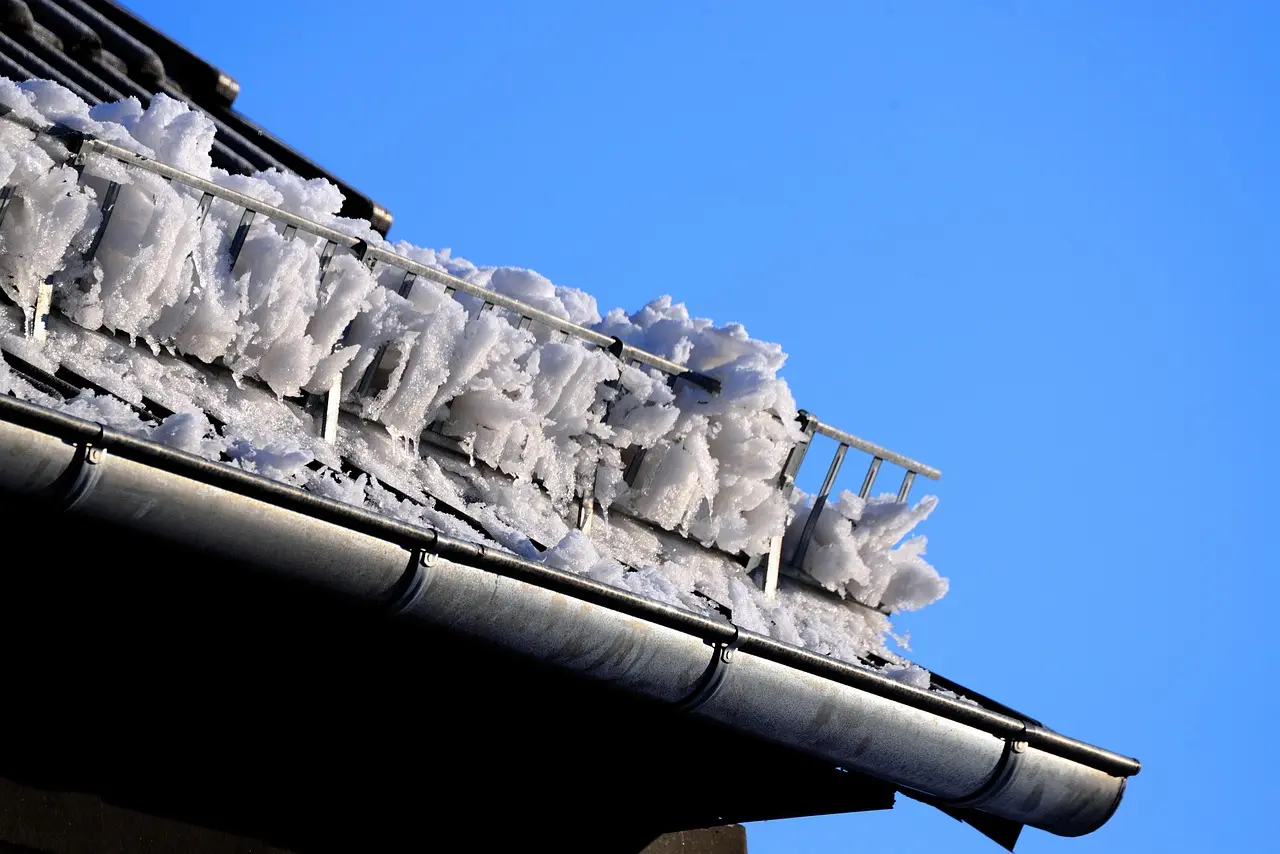

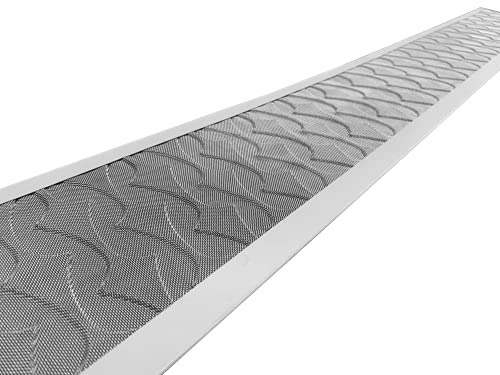

Leaves and pine needles create different filtering problems. Large leaves need a guard that sheds bulk debris; pine needles need fine openings that stop slender strands and grit without loading up. Cold weather changes the ranking again, because meltwater can refreeze at the roof edge and force water back under the guard.
Leaves vs. pine needles: why the best answer changes
Broadleaf litter usually sits on top of a guard and can slide off if the roof pitch and water flow are right. Pine needles behave differently. They are narrow enough to slip through wider screens, mat together in corners, and trap shingle grit. That is why a guard that looks fine for oak leaves can fail in a conifer yard.
Freeze-thaw roofs: why winter changes the ranking
Ice shifts the job from simple debris blocking to water management. A good guard still needs to pass snowmelt, keep the outlet area open, and avoid creating a shelf where ice builds at the eave. In snow country, gutter guards help with debris control, but they do not stop ice dams by themselves.
How to read the comparison table
Use the table below to match debris type, roof climate, and installation style. The “do not buy” column matters as much as the “best” column, because many failures come from choosing a guard for the wrong debris size or winter load.
| Guard type | Best at blocking | Weak point | Typical install style | Do not buy if… |
|---|---|---|---|---|
| Micro-mesh gutter guards | Pine needles, shingle grit, seed pods, fine debris | Can clog with heavy organic loading if not maintained | Professional and DIY versions | You want an open, low-maintenance leaf shed for only big leaves |
| Reverse-curve gutter guards | Large leaves | Fine needles and grit can pass or accumulate near the edge | Usually professional | Your yard has pine needles or shingle grit loading |
| Brush gutter guards | Simple retrofit on straight runs | Pine needles and small debris lodge in the bristles | Easy DIY fit | You need real fine-debris filtration |
| Foam gutter guards | Temporary coverage at low upfront cost | Clogging, breakdown, and trapped debris | DIY insert | You face needles, seed pods, or freeze-thaw ice |
📊 Pine needles caused clogs for 31% of 1,000 homeowners surveyed. Source: Best Gutter Guards for Pine Needles of 2026 (Tested).
Micro-mesh vs reverse-curve vs brush vs foam
The main trade-off is simple: finer filtration gives better needle control, but it can need more attention for surface loading and winter drainage. Coarser systems shed leaves more easily, yet they give up control over pine needles and grit.
Micro-mesh gutter guards: fine-debris filtration and stainless steel mesh
Micro-mesh systems use stainless steel mesh, and some premium products are rated around 275 microns. That size is fine enough to stop pine needles and shingle grit far better than wide slots or open screens. Stainless steel also resists corrosion, which matters in wet, snowy climates where freeze and thaw repeat all season.
LeafFilter is described with a 275-micron stainless steel micro-mesh and a built-in pitch to shed debris. Honest Brand Reviews describes a 275-micron surgical-grade stainless steel micromesh that stops pine needles and shingle grit. Gutterglove offers DIY and professional versions, and Raptor Gutter Guard is a DIY pick built from 304-grade stainless steel micromesh.
Reverse-curve gutter guards: leaf shedding and its limits
Reverse-curve, or hood-style, guards are good at redirecting rain into the gutter while encouraging larger leaves to slide off the front edge. Their trade-off is clear: the same shape that helps with leaf shedding can work against fine-debris exclusion. Pine needles, shingle grit, and small seed pods are the common stress points.
A common first-timer mistake is to buy a reverse-curve system for a pine-heavy yard because it looks self-cleaning. It may move leaves well on a simple roof, but it is the wrong first pick where fine debris dominates.
Brush gutter guards: easy fit, weak needle control
Brush guards are cylindrical bristle inserts that sit in the gutter. They are easy to fit on existing gutters and can be a quick DIY option. They are also a weak choice for fine needles and small debris, because those particles settle into the bristles and stay there.
Foam gutter guards: budget insert, clogging and breakdown risk
Foam inserts are the budget choice. They slide into the gutter channel and can be simple to install, but they tend to clog, hold moisture, and break down faster than stainless steel systems. In cold climates, trapped debris and water can freeze inside the foam, which adds weight and cleanup work.
Which gutter guards are best for leaves and pine needles?
Micro-mesh is the best all-around pick when leaves and pine needles mix. Reverse-curve is better when broadleaf litter is the main problem and needles are rare. Brush and foam guards are poor fits for pine-heavy properties because they do not filter fine debris well enough for long-term use.
Best for broadleaf litter
If your gutters mainly collect maple, oak, or other large leaves, reverse-curve guards can be a reasonable match. They are built to shed larger debris and can reduce the amount that sits in the trough. They work best when the roof pitch and water flow help move debris off the surface.
Best for pine needles and shingle grit
If pine needles are the main issue, micro-mesh belongs at the top of the list. The page cited here says micro-mesh guards are the only effective type for pine needles. That is a strong claim, but the practical point stands: fine filtration is the core requirement when needles and grit are the load.
Do not buy: coarse openings, brush inserts, and foam in needle-heavy yards
Do not buy coarse screens for pine needles. Do not buy brush inserts if fine needles or seed pods are common. Do not buy foam as a long-term fix in a yard with conifers, because it can trap debris, hold moisture, and fail early under repeated freeze-thaw cycles.
Will gutter guards prevent ice dams and freezing?
No gutter guard stops ice dams on its own. Guards can keep gutters cleaner and help water move through the system, but ice dams form from heat loss, snowmelt, refreezing, and poor drainage conditions. In snow country, gutter guards are one part of a larger roof and attic moisture strategy.
What guards can and cannot do in freeze-thaw weather
In freeze-thaw weather, water melts higher on the roof, runs down to colder eaves, and refreezes. A guard that sheds debris may still ice over if the roof edge stays cold. Better drainage helps, but the guard cannot fix attic heat loss, poor insulation, or weak roof ventilation.
Meltwater routing, edge icing, and drainage
Look for a design that keeps the intake area open and avoids a flat shelf where water can sit. Raised micro-mesh systems can help keep the mesh above pooled debris. A solid drip edge can also help route meltwater into the gutter instead of behind it, where edge icing can lead to rot.
When to pair guards with attic air sealing, ventilation, or heat cable
Use attic air sealing and insulation when heat is escaping into the roof deck. Use roof ventilation when the attic design calls for it. Add heat cable only where a contractor or building pro says it is appropriate for problem eaves or valleys; heat cable is a targeted aid, not a substitute for roof fixes.
Decision matrix: debris type, roof climate, and installation style
Use this matrix as a simple rule set. Match the debris first, then the winter condition, then the install method. The wrong pairing is where most failures happen.
| Debris type | Roof climate | Installation style | Best guard category | Do not buy |
|---|---|---|---|---|
| Broadleaf litter | Mild or moderate | Professional install | Reverse-curve | Foam if you want a long-term solution |
| Pine needles | Any climate, especially snowy | Professional or DIY micro-mesh | Stainless steel micro-mesh | Coarse screens, brush guards, open-slot guards |
| Shingle grit and seed pods | Freeze-thaw or windy | Professional preferred | Fine micro-mesh | Reverse-curve without fine-debris control |
| Mixed leaves plus needles | Snow country | Raised micro-mesh with drip edge | Micro-mesh with stainless steel frame | Brush and foam in maintenance-light roofs |
DIY versus professional install
DIY options exist, but premium systems are not always easy to fit on existing gutters. Gutterglove offers DIY and professional versions, and Raptor Gutter Guard is a DIY pick built from 304-grade stainless steel micromesh. Professional install is often the safer route on complex roofs, steep pitches, and long runs with many seams.
Cost context for installed pricing
Installed gutter guard pricing varies widely. That cited cost range for 200 linear feet works out to roughly $8 to $17 per linear foot. The top-rated providers averaged $11.67 per linear foot, while LeafFilter’s average price was $41.72 per linear foot. That gap shows why quotes matter. (thisoldhouse.com)
Choose micro-mesh if… / choose reverse-curve if…
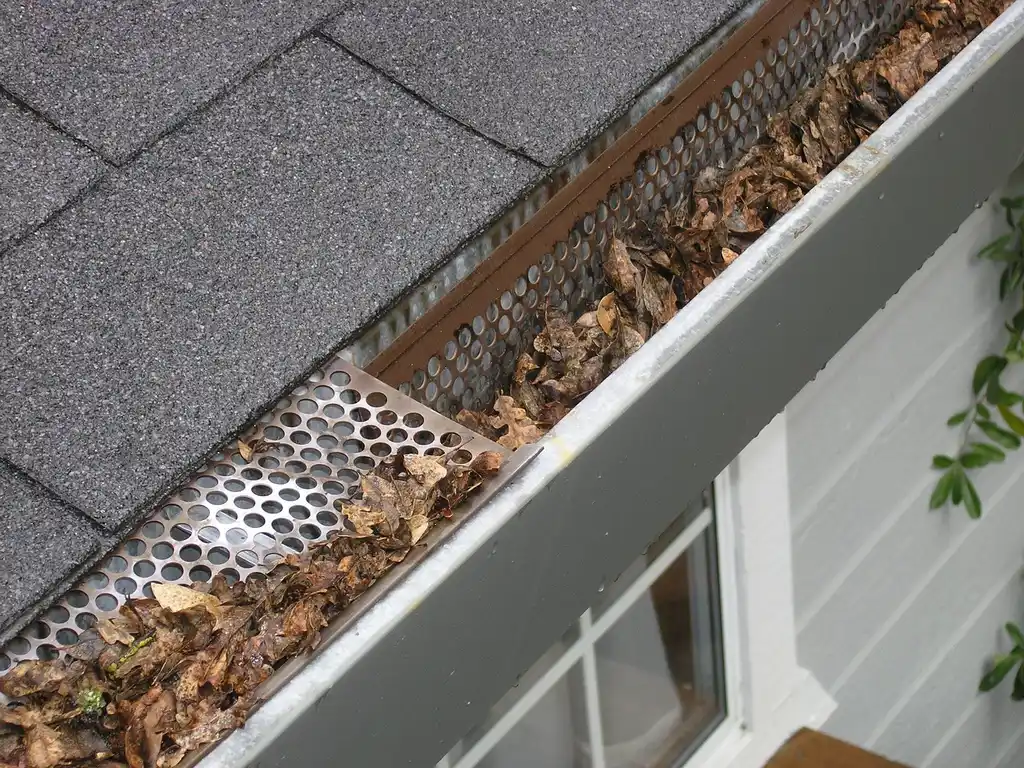
Choose micro-mesh if you have pine needles, shingle grit, seed pods, or mixed debris and want the best fine-filtration option. Choose reverse-curve if your main problem is large leaves and your roof geometry helps debris shed cleanly. Choose brush or foam only as short-term or low-demand options.
Choose micro-mesh if…
Choose micro-mesh if the yard has conifers near the roofline, if gutters collect grit from asphalt shingles, or if you want one system that handles mixed debris better than coarse guards. In snowy climates, choose a raised model with stainless steel mesh and a drip edge, then confirm how meltwater drains at the eaves.
Choose reverse-curve if…
Choose reverse-curve if broadleaf debris is the main issue and pine needles are rare. It can be a good fit for homes under large deciduous trees where the goal is leaf shedding, not fine filtration. Avoid it if you already know needles, grit, or small seed pods are clogging the gutters.
Choose brush or foam only as short-term or low-demand options
Choose brush or foam only if the roof is low-risk, the debris load is light, and you are treating the guard as a temporary measure. They can be easy to install, but they are not the right answer for a needle-heavy yard or for a roof that sees repeated freeze-thaw icing.
Say your home has maples on one side and three mature pines on the other. A micro-mesh system usually makes more sense than a leaf-first guard, because the pine side will decide how the gutters behave after the first windy storm.
Suppose a 2,000-square-foot roof in a snowy climate sheds meltwater into a shaded north-side gutter. A reverse-curve guard may move leaves well, but a raised stainless steel micro-mesh model is the safer bet if shingle grit and refreezing are part of the problem.
Frequently asked questions
Do micro-mesh gutter guards work better than reverse-curve guards?
For pine needles and shingle grit, yes. Micro-mesh works better because it filters smaller debris instead of asking it to slide off the guard surface. Reverse-curve is still useful for broadleaf litter, but it trades away fine-debris control in exchange for better leaf shedding.
Which guard type is easiest to install on existing gutters?
Brush and foam inserts are often among the easiest to fit on existing gutters because they sit inside the gutter channel. That convenience comes with trade-offs: they clog more easily, and they are poor choices for pine needles, shingle grit, and freeze-thaw conditions.
Are brush or foam gutter guards a bad choice for pine needles?
Yes, for most homes. Brush guards let needles lodge in the bristles, and foam can trap fine debris and moisture. Both options are easier to install, but they are weak when the yard has conifers, seed pods, or shingle grit that needs finer filtration.
How much do professional gutter guards cost per linear foot?
The cited figures here show a wide spread. The article’s 200-linear-foot cost range of $1,565 to $3,476 equals about $7.83 to $17.38 per linear foot, while the top-rated providers averaged $11.67 per linear foot. LeafFilter’s average price was $41.72 per linear foot.
What gutter guard material lasts longest in snowy climates?
Stainless steel mesh is the strongest long-term material choice in snowy climates because it resists corrosion and holds up better than foam inserts or plastic-heavy designs. A fine stainless steel micro-mesh also gives you the filtering needed for pine needles and shingle grit.
Can gutter guards still clog with shingle grit and seed pods?
Yes. Any guard can clog if the debris load is heavy enough.specially where shingles shed grit or trees drop fine seed pods. Micro-mesh handles those materials better than coarse openings, but it still needs inspection and cleaning when the roof sheds a lot of fine debris.
What should I choose if I have pine trees near the house?
Choose micro-mesh first. Pine needles are slender enough to pass through wider openings and they often mix with grit and small organic debris. A stainless steel micro-mesh system, especially a raised design with a drip edge, is the most practical match for pine-heavy roofs.
Sponsored / affiliate links. As an Amazon Associate I earn from qualifying purchases. I may earn additional commission from eligible campaigns.