Gutter Accessories Guide
A gutter accessories guide starts with one rule: fix the symptom first, verify gutter and downspout size and profile second, then buy the fewest compatible parts needed for each trouble spot. I have seen plenty of bad repairs start with a guess at the gutter shape, and that guess leads straight to leaks, clogs, overflow, or parts that simply do not fit. This guide covers problem-based accessory choices, how to confirm sizes and shapes, and how to avoid compatibility mistakes.
For most houses, the first three accessories to verify or buy are gutter hangers, the correct outlet or drop tube, and the downspout drainage piece that controls discharge at the ground. I check them in that order because those are the failures that spread fastest: sagging runs, poor water entry into the downspout, and water dumping too close to the foundation.
What gutter accessories do I actually need first?
Start with support, then drainage entry, then discharge control. For most homeowners, that means checking hangers first, confirming the outlet or drop connection second, and choosing an extension, splash block, drain, or diverter third. Buy by symptom, not by bundle, because one wrong accessory can create new fit and leak problems.
Buy by symptom before buying by category
Gutter parts and accessories cover the pieces that hold sections up, close off open ends, turn corners, start the drop into the downspout, join one section to another, or fasten everything to wood, trim, or masonry. In practice, that means items like end caps, outlets, miters, wedges, hangers, screws, rivets, straps, elbows, and gutter flashing. They are the small parts that let a gutter system go together correctly or let you repair one failure without rebuilding the whole run.
The buying order should be simpler than the aisle label. Match the part to the failure:
- Leak at the end or corner: inspect end caps, inside miters, outside miters, join seams, and sealant.
- Sagging run: inspect hangers, screws, fascia condition, and mounting style.
- Overflow at one spot: inspect outlet opening, clog points, pitch, valley flow, and guard interference.
- Splashback or wet soil below: inspect the last elbow, extension, splash block, or drain connection.
- Awkward routing around trim: inspect elbows and offsets, then confirm downspout shape before ordering.
The smallest correct parts set often wins. A leaking outside corner may need one matched miter, rivets, and the right sealant. It does not need guards, new brackets, and a diverter added out of guesswork.
Must-have support, closure, and drain-start parts
Support parts come first because water-filled gutters get heavy fast. Hangers support the gutter run against the fascia or roof edge, and they must match profile, size, and mounting style.
Closure parts include end caps, inside miters, outside miters, and section joiners. End caps close off the open left or right end of a gutter run so water stays in the channel instead of pouring out the side. Miters handle corner transitions. Joiners connect sections on systems that are not one continuous piece.
Drain-start parts include outlets, drop outlets, and drop tubes. If the opening shape or size is wrong, the downspout can never perform correctly, even with good elbows below it.
Discharge-control parts fix the damage people notice first
Downspout routing components include elbows, offsets, downspout extensions, and diverters. Splash blocks and rain drains work at ground level. Choose those by symptom: short discharge, splashback on siding, pooling at the foundation, or washout in mulch beds.
For corners around trim and ledges, offsets matter. Offsets may be rectangular, round, ledge-jumper, or field-built sets. The downspout size and the offset relief are separate measurements, so a piece can fit the pipe but still miss the projection it must clear.
Choosing Gutter Guards by Debris Type and Winter Climate
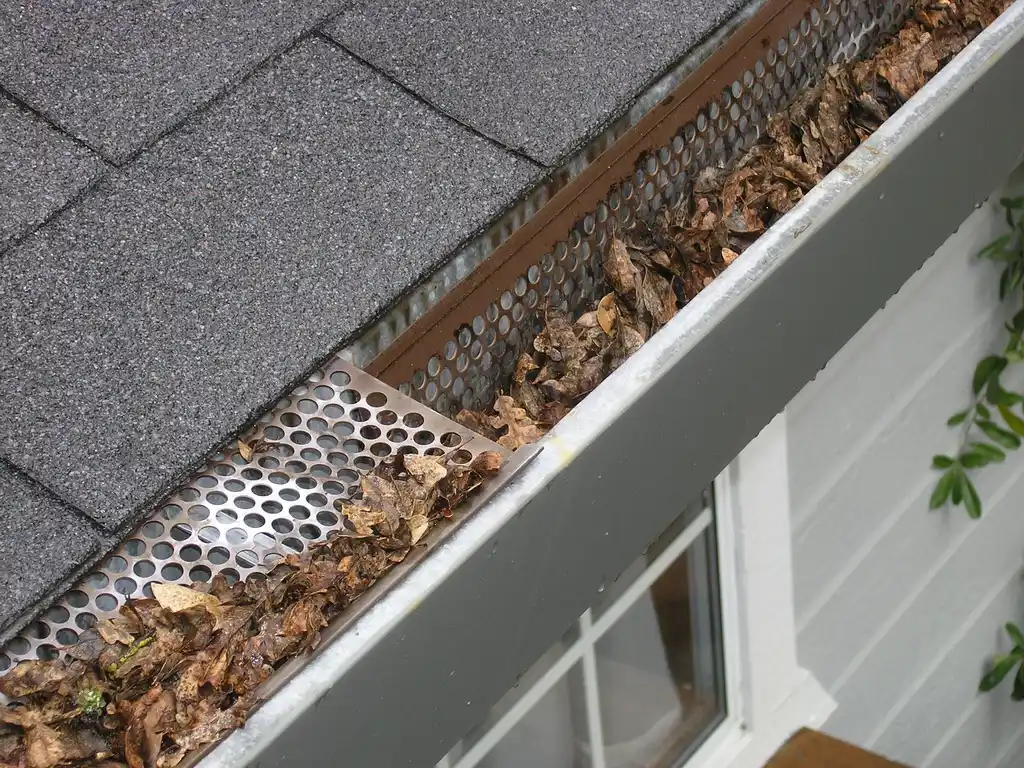
Micro-mesh guards handle mixed debris—broad leaves, pine needles, and shingle grit—better than foam, brush, or open-screen designs. If your roof sees freeze-thaw cycles alongside pine needles, a raised micro-mesh model with a solid drip edge prevents the clogs and overflow that contribute to ice dams, fascia rot, and expensive repairs.
The wrong guard type traps water and accelerates winter damage instead of preventing it. A detailed breakdown ranks each guard style by particle size and cold-weather behavior, then applies a simple pick-by-debris rule so you can match the right product to your specific roofline. Use this gutter guard selection guide to compare micro-mesh, reverse-curve, brush, and foam options before buying materials for your installation.
Which gutter parts have to match my gutter size and profile?
Fit-critical accessories must match the gutter profile and size exactly. Hangers, end caps, miters, outlets, connectors, and most guards are the first parts to reject if the gutter shape is wrong. A 5-inch K-style end cap, hanger, or miter does not fit a 5-inch half round gutter.
Profile match comes before finish match
K-style, half-round, box, fascia, and round systems use different edges, bead shapes, and wall geometry. That affects how hangers hook in, how end caps seat, and how miters meet at corners. A finish-matched white part that fits the wrong profile is still the wrong part.
Common homeowner mistake: matching only the front width. A front lip that looks close can still miss the bead, hem, or back edge the hanger or cap is designed to grab.
Size match points that matter most
Confirm these checkpoints before ordering: identify the exact gutter shape, verify the labeled size sold for that shape, check whether the downspout is rectangular or round, measure or confirm the outlet opening it starts from, note how the system mounts to the house, and match the metal or vinyl so the repair parts and consumables belong on the same system.
- Gutter profile: K-style, half-round, box, fascia, or round.
- Gutter size: the labeled system size sold for that profile.
- Downspout shape: rectangular or round.
- Outlet opening: the exact opening type and size the downspout starts from.
- Mounting type: fascia-mounted, rafter-tail, roof-edge, or wall/masonry support.
- Material: aluminum, galvanized steel, copper, or vinyl.
Outlets, elbows, offsets, adapters, brackets, straps, extensions, splash blocks, and drains all depend on the downspout shape and the outlet opening. A plain round elbow should not automatically be used on round corrugated pipe. A tile adapter connects the lower downspout to compatible drainage pipe, so brackets and straps are never substitutes for that transition part.
Homeowner compatibility checklist
Use this table before buying anything. Read across one row for the trouble spot, then confirm every column on the house before putting a part in the cart. It catches the common errors: wrong profile, wrong outlet opening, wrong mount, and wrong metal for the consumables that seal or fasten the repair.
| Gutter profile | Gutter size | Downspout shape | Outlet opening | Mounting type | Material | Exact accessory type to buy first |
|---|---|---|---|---|---|---|
| K-style | 5-inch | Rectangular | Rectangular drop outlet matched to downspout opening | Fascia hidden hanger | Aluminum | Hidden hanger matched to 5-inch K-style |
| K-style | 6-inch | Rectangular | 3×4-style rectangular outlet opening if present on the system | Fascia hidden hanger | Aluminum | 6-inch K-style hidden hanger |
| Half-round | 5-inch | Round | Round outlet sized to the existing drop | Bracket or external hanger | Copper | Half-round end cap or half-round hanger, depending on symptom |
| Half-round | 6-inch | Round | Round outlet matched to conductor head or drop tube | Rafter-tail bracket | Galvanized steel | Half-round bracket matched to bead and size |
| Box | System-specific | Rectangular | Box outlet opening matched to drop size | Roof-edge or fascia bracket | Steel | Outlet or scupper transition matched to the box profile |
| Fascia | System-specific | Rectangular | Manufacturer-specific outlet opening | Integrated fascia mount | Aluminum | Manufacturer-matched hanger or bracket, not a generic K-style part |
| Round | System-specific | Round | Round outlet opening | External bracket | Copper | Round elbow or round offset matched to the outlet and pipe |
What can cross over, and what usually cannot
Ground-level parts have the most flexibility. A splash block or a surface drain at the discharge point can work with different systems if the downspout above lands in the right place. That does not mean the outlet, elbow, or adapter above it is interchangeable.
Support and closure parts are the least forgiving. Hangers, end caps, miters, and joiners are profile-specific first and size-specific second. Guards also need caution. Some mesh products can be trimmed, but they still need to sit correctly on the gutter front and under the roof edge without choking water flow.

What is the difference between gutter hangers, brackets, and fasteners?
Hangers support the gutter run itself. Brackets and straps secure the downspout to the wall. Fasteners are the screws, rivets, and similar hardware that attach either one. These are related parts, but they are not interchangeable, and the mounting surface often decides what hardware pattern and material will work.
Hangers support the run against the house
Hidden hangers, spikes with ferrules, roof straps, and bracket-style supports all aim to hold the gutter in line and in pitch. The correct choice depends on the gutter profile, the system size, and whether the mounting point is fascia, roof edge, or exposed rafter tails.
When a section sags in the middle, start here. A new end cap will not fix a gutter that has pulled forward and lost slope.
Brackets and straps secure the downspout
Downspout brackets, bands, straps, hooks, and clips are support components. They keep rectangular or round downspouts tight to siding, masonry, or trim. They do not route water, and they do not replace a tile adapter, offset, elbow, or lower drain transition.
Rectangular downspout elbows use A-style and B-style bend orientations. A-style and B-style describe the plane of the bend, not the material or exact angle. That matters when a homeowner is trying to turn from the outlet to the wall, then from the wall to the ground, without twisting the whole run.
Fasteners, rivets, screws, and material risk
Fasteners close the loop. They hold hangers to fascia, straps to the wall, elbows to downspouts, and miters or end caps to the gutter body. Hole pattern matters because old holes in soft aluminum can strip out, and mismatched screw heads can keep a strap from sitting flat.
Material compatibility matters here. Aluminum systems usually do best with aluminum-compatible screws or rivets. Copper systems need copper-compatible consumables. Galvanized steel can react badly if paired with the wrong metal in a wet environment. Vinyl needs care because over-tightened fasteners can crack the part long before rain tests it.
Must-have

Bulder Quick-Screw 6-inch gutter hangers
Based on specs and reviews, this is the first buy for a sagging 6-inch K-style run. The pre-assembled hidden hanger format speeds repair, and the included screws cut down on hunting for matching hardware. The drawback is clear: it is a profile-and-size-specific part, so it is a bad pick for 5-inch, half-round, or fascia systems.
What to check first: confirm a 6-inch K-style gutter, confirm hidden-hanger mounting is appropriate for the fascia condition, and inspect the wood behind the gutter. A hanger will not fix rotten backing.

Rsoise 90-degree downspout elbow
Based on specs and reviews, this elbow makes sense when the outlet-to-wall turn or wall-to-ground turn is the actual failure point. The listed fit is a rectangular 3×4-style aluminum elbow, which is useful for larger rectangular downspouts. The drawback is that one elbow rarely solves a routing problem by itself; many runs need matching orientation and a second bend.
Check elbow orientation before ordering. Rectangular elbows use A-style and B-style bend orientations, and buying the wrong plane of bend is a common homeowner miss.

Rodnsurw flexible downspout extensions
Based on specs and reviews, this is a practical discharge-control part for splashback, wet mulch beds, and short discharge near the foundation. The flexible body helps route around planting beds or walks. The drawback is that flexible extensions can trap debris, look bulky at the base of the wall, and are a poor answer if the clog is higher up in the system.
Use an extension when the downspout is working but water ends too close to the house. If the area stays muddy or the extension gets crushed, a splash block or buried drain entry may be the better next step.
Nice-to-have

VEVOR 6-inch aluminum gutter guard with stainless micro mesh
Based on specs and reviews, this guard fits the homeowner who already has a working 6-inch K-style system and wants debris reduction in a high-leaf area. The listing calls out 6-inch K-style use, stainless micro mesh, and a 100-foot package. The drawback is simple: guards reduce debris entry, but they do not fix bad pitch, undersized outlets, crushed elbows, or a short downspout run.
Use guards after support and discharge are restored. On valley-fed sections or steep roof edges, check that the guard style can accept fast water without skating it over the gutter front.

PEFECOP aluminum gutter guard mesh roll
Based on specs and reviews, this lower-cost mesh roll is useful for a basic 5-inch guard retrofit where the goal is larger debris reduction, not a full micro-mesh setup. The cut-to-size format helps with short trouble sections. The drawback is fit control: roll mesh can be easier to deform, and improvised installs can interfere with water entry on roof sections that dump hard.
Use this type on calmer roof sections, away from big valley discharge, unless the install method keeps the mesh secure and open. For mixed materials, confirm the mesh and any fasteners are suitable for the gutter metal.
Overflow helpers for valleys and steep roof sections
Localized trouble calls for localized parts. A diverter can help where a roof valley slams water over the gutter edge or where a metal roof sends water in a fast sheet. Gutterglove Pro offers a 20-inch perforated rainwater diverter, and the diverter is described as easy to install along the edge of the roofline.
A diverter is a targeted tool. It is for moving roof runoff sideways before it overshoots one section. It is not a substitute for a blocked outlet, missing hangers, or a downspout that cannot accept the flow.
Metal roofs need extra caution. Sliding snow, thermal movement, and a slick runoff path can stress guards, straps, and roof-edge add-ons. Avoid relying on sealant alone where mechanical fastening is required by the accessory design.
Consumables and spares
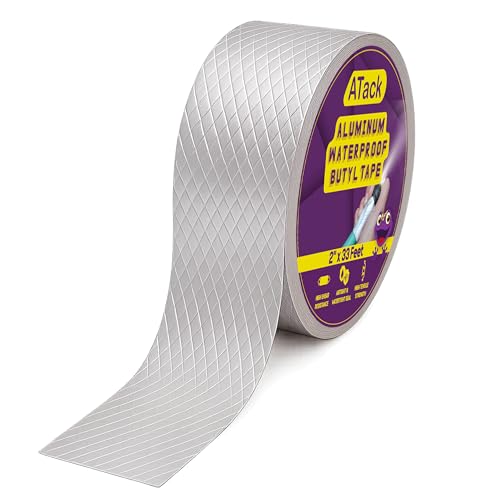
ATack aluminum butyl tape
Based on specs and reviews, butyl tape is best treated as a patch or reinforcement material for the right substrates, not a universal cure. This product suits quick sealing work on compatible metal areas and can help with temporary gutter patching. The drawback is that tape can hide movement or corrosion underneath, and it is a poor substitute for a failed miter, loose outlet, or missing fastener.
Consumables need metal awareness. Sealants, solder, flux, and fasteners are not universally interchangeable across systems. Aluminum, galvanized steel, copper, and vinyl each have failure points when the wrong product touches them. Copper systems often rely on soldered details and copper-compatible flux. Aluminum repairs commonly use sealant and rivets. Vinyl can reject rigid patch methods if the part keeps moving.
What to keep on hand
A small spare kit beats an oversized accessory bundle. Useful spares include a matched end cap, a matched outlet, one or two elbows in the correct shape, a few straps or brackets, compatible screws or rivets, and the right sealant for the gutter material.
Common failure cases are easy to avoid when the consumable matches the metal. Wrong fasteners can stain or corrode. Wrong sealant can peel from oily or oxidized surfaces. Wrong solder or flux can fail to bond on systems designed for a different metal.
Which downspout accessories should I use to move water farther away?
Use elbows and offsets to route around the house, then extensions, splash blocks, drains, or diverters to manage the final discharge. The right choice depends on the symptom below the outlet: splashback, pooling, washout, or a short discharge point. Start by matching the downspout shape and the outlet opening.
Offsets and elbows for routing around obstacles
Offsets move the downspout around ledges, trim boards, and wall projections. They can be rectangular, round, ledge-jumper, or field-built sets. Keep two dimensions separate in the plan: the pipe size and the offset relief needed to clear the obstacle.
Elbows handle changes in direction. Rectangular elbows use A-style and B-style orientations, which describe the bend plane. That orientation decides whether the elbow turns toward the wall, away from it, or along it.
Extensions, splash blocks, and rain drains
Use an extension where discharge is too short but the ground still sheds water away from the house. Use a splash block where erosion starts right below the elbow or where mulch spatters onto siding. Use a rain drain or lower drain transition when water needs to enter a surface or buried drainage point.
A tile adapter connects the lower downspout to compatible drainage pipe. A strap does not. That distinction matters because many homeowners buy support hardware when they actually need a discharge transition.
When a diverter makes more sense
Choose a diverter when the problem starts on the roof plane, not at the bottom of the downspout. Valleys, dormer intersections, and steep roof sections can send a concentrated ribbon of water past the gutter opening. A localized diverter can shift that flow sideways before it overwhelms one spot.
The same logic applies to metal roofs. High-speed sheet flow may skip over shallow-entry guard setups and poor corner details. Fix the entry path first, then decide on guards or diverters.
How do I know what outlet or adapter size fits my system?
Match the outlet or adapter to the actual opening in the gutter and to the shape of the downspout below it. Profile alone is not enough. Homeowners should confirm gutter profile, gutter size, outlet opening shape, and downspout shape before choosing a drop outlet, elbow, adapter, or lower drain transition.
Where to confirm the geometry
Look at the existing outlet from above and below. The opening may be round or rectangular, factory-made or field-cut. The downspout below may be rectangular or round, and some lower sections transition again into a drain pipe.
If the downspout changes shape along the run, buy from the top down. First outlet. Then first elbow. Then lower adapter or tile adapter if the run enters a drain line.
Common mismatch traps
A rectangular downspout with a round lower drain needs an adapter, not wishful thinking. A plain round elbow should not automatically be used on round corrugated pipe. Corrugated drain pipe often needs its own compatible connector at the lower transition.
Another common miss is buying for the gutter size while ignoring the outlet opening already installed. A larger gutter can still use a smaller opening, and that opening controls what can be attached beneath it.
What parts do I need for corners, end caps, and section joins?
Use end caps to close open gutter ends, inside and outside miters to turn corners, and joiners or seam hardware to connect sections. All of these parts are fit-critical. They must match the gutter profile and size, and leak resistance usually depends on the right sealant or fastener for the gutter material.
End caps and corner parts
End caps are side-specific on many systems, so left and right orientation matters along with profile and size. Miters must match the gutter shape and corner direction. An inside miter handles an inside corner; an outside miter handles an outside corner.
If a corner keeps leaking, inspect movement before sealing. A fresh bead of sealant on a corner that is flexing from poor support usually fails again.
Section joins and repair order
For a leaking section join, inspect seam overlap, rivets or screws, and the condition of the metal edge. If the join is distorted, the repair may start with rehanging the run to restore line and pitch, then sealing or replacing the connector.
Homeowner-safe buying priority stays the same: stop leaks, restore support, restore the discharge path, then add clog-control or overflow accessories.
Can gutter accessories be mixed across K-style, half-round, and round systems?
Some ground-level drainage pieces can work across different gutter systems, but most support and connection accessories cannot. Hangers, end caps, miters, outlets, connectors, and many guards are profile-specific parts. Mixing them across K-style, half-round, and round systems is a common cause of bad fit and repeat leaks.
Where mixing usually fails
The classic example is size confusion across shapes. A 5-inch K-style end cap, hanger, or miter does not fit a 5-inch half round gutter. The nominal size sounds the same, but the geometry is different.
Round downspout parts also deserve caution. A round elbow, round offset, and corrugated round drain connection can each use different joining details even when they look close on a screen.
Where mixing can work
At the discharge point, some accessories are less tied to gutter profile. Splash blocks, some extensions, and some drain inlets can work with multiple systems if the downspout above them lands correctly and the opening sizes align.
Even then, material and support still matter. A flexible extension can fit the discharge need yet fail early if it kinks, traps debris, or is forced onto the wrong outlet shape.
Budget setups
The least expensive repair is the one that fixes the real symptom in one pass. Based on specs and reviews, these setups keep the buying sequence tight and avoid turning one repair into three.
| Setup | Best use | Suggested parts | Price | Watch-outs |
|---|---|---|---|---|
| Starter | Splashback near the foundation | Rodnsurw flexible downspout extensions | $23.99 | Does not fix a clog, bad outlet, or crushed elbow upstream |
| Mid | Sagging 6-inch K-style section | Bulder 6-inch hidden hangers | $39.99 | Wrong choice for 5-inch, half-round, fascia, or rotten fascia board |
| Serious | Working 6-inch K-style system with repeated leaf loading | VEVOR 6-inch micro-mesh guards | $237.92 | Expensive if the true problem is poor pitch, a bad corner, or an undersized outlet |
Frequently asked questions
Which gutter parts have to match my gutter size and profile?
Hangers, end caps, miters, outlets, connectors, and most guards need an exact profile and size match. Those are the parts most likely to fail or refuse installation when the geometry is wrong. Ground-level drainage pieces are often more flexible, but they still depend on the downspout shape and outlet above.
What is the difference between gutter hangers, brackets, and fasteners?
Hangers support the gutter run along the fascia or roof edge. Brackets and straps secure the downspout to the wall or trim. Fasteners are the screws, rivets, and related hardware that attach those parts. They work together, but they do different jobs and should not be treated as interchangeable.
How do I know what outlet or adapter size fits my system?
Confirm the gutter profile, the gutter size, the outlet opening shape, and the downspout shape before ordering. The opening at the gutter controls the first connection below it. If the lower run enters a drain pipe, that final transition may need a tile adapter or another system-specific connector.
Which gutter accessories help prevent overflow and clogs?
Guards and screens can reduce debris entry, and diverters can help on valleys or steep roof sections that overshoot one area. They help only after support, pitch, outlet opening, and the downspout path are working correctly. Guards do not solve overflow caused by a blocked elbow or a short discharge run.
When should I use a diverter, splash block, or extension?
Use a diverter when concentrated roof flow needs to be shifted before it reaches one overloaded section. Use a splash block when water exits correctly but erodes soil or splashes onto the wall. Use an extension when discharge is too short and water needs to land farther from the foundation.
What gutter accessories are compatible with metal roofs?
Metal roofs often need extra care with guards, diverters, and roof-edge-mounted accessories because runoff can move quickly and snow can slide hard. Choose parts that match the gutter profile and mounting method, then confirm the fasteners and sealants are suitable for the gutter metal and roof-adjacent conditions.
Sponsored / affiliate links. As an Amazon Associate I earn from qualifying purchases. I may earn additional commission from eligible campaigns.