Best gutter accessories for homeowners: what to buy first
Buy gutter accessories in roughly this order: downspout extensions first if runoff lands fairly close to the foundation, then debris screens or guards, then splash blocks, then hangers and outlet strainers. Skip that order and you raise clog risk, overflow, fascia rot, basement moisture, and foundation settlement. This guide ranks the best gutter accessories for homeowners by clog control, overflow reduction, fit, and foundation protection.
This guide is part of our Gutter accessories guide series.
What gutter accessories should you buy first?


Start with the accessory that cuts water damage fastest, not the one that looks easiest to install. For many homes, that means downspout extensions first, because they move roof runoff farther from the foundation right away. If debris is the main problem, gutter guards may move up the list, but only after outlet drainage is secure.
How to rank accessories by urgency and fit
Think in four buckets: urgency, compatibility risk, impact on water control, and maintenance reduction. A part with high water-control impact and low fit risk belongs near the top. A convenience part that only trims cleaning time belongs later, even if it is popular.
That order matters because gutters catch rain at the roofline and send it through downspouts away from the home. When that path fails, water can pool around the foundation. A good system limits soil erosion, mold growth, and structural damage.
The buy-first decision matrix
Use this matrix to decide what to buy before you spend on anything else. Higher urgency and higher water-control impact push a part upward. Higher compatibility risk pushes it downward unless the home has a specific drainage problem that demands it.
| Accessory | Urgency | Compatibility risk | Impact on water control | Maintenance reduction | Buy order |
|---|---|---|---|---|---|
| Downspout extensions | High | Low to medium | High | Low | 1 |
| Gutter guards | Medium to high in leaf-heavy yards | Medium to high | High for clog control | High | 2 |
| Splash blocks | Medium | Low | Medium | Low | 3 |
| Gutter sealant | Medium when leaks are present | Low | Medium | Low | 4 |
| Gutter hangers/brackets | Medium for sagging or new installs | Medium | High for support | Low | 5 |
| Downspout adapters | Medium when sizes do not match | Medium | Medium | Low | 6 |
| Gutter end caps | Medium when ends leak | Medium | Medium | Low | 7 |
| Rain barrel diverters | Low unless storage is the goal | Medium to high | Medium | Low | 8 |
Read the table this way: if a part scores high on water control and low on compatibility risk, buy it early. If a part only helps maintenance, it comes later. That keeps the first purchase focused on overflow and foundation protection, not convenience.
📊 New gutter installation costs between $1,202 and $7,566. Source: What Are the Best Gutters for Your Home? (2026 Guide).
What should you buy first for your home type?
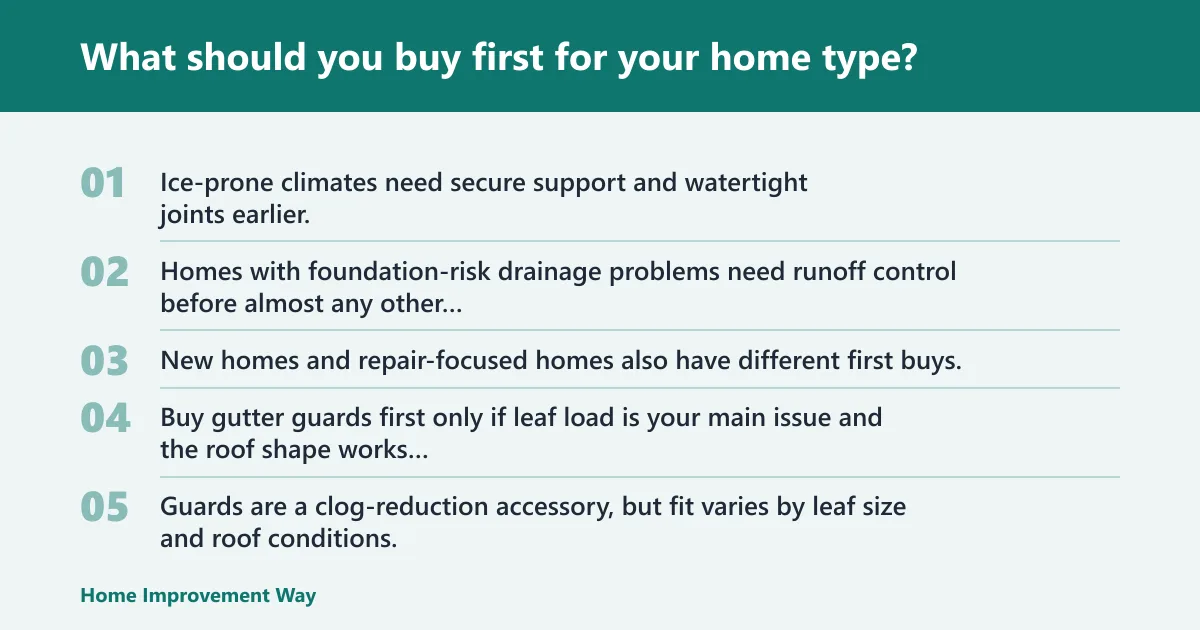
Home type changes the order. Leaf-heavy yards need clog control sooner. Ice-prone climates need secure support and watertight joints earlier. Homes with foundation-risk drainage problems need runoff control before almost any other upgrade. New homes and repair-focused homes also have different first buys.
Leaf-heavy yards
Buy gutter guards first only if leaf load is your main issue and the roof shape works with the guard type. Guards are a clog-reduction accessory, but fit varies by leaf size and roof conditions. If the downspouts already dump water close to the house, extensions still come first.
Say your home sits under maple trees and the gutters fill with small leaves and seed pods every few weeks. Guards can slow clogging, but a short outlet run that ends 2 feet from the wall still leaves the foundation exposed. Fix the runoff path first, then cut debris entry.
Ice-prone climates
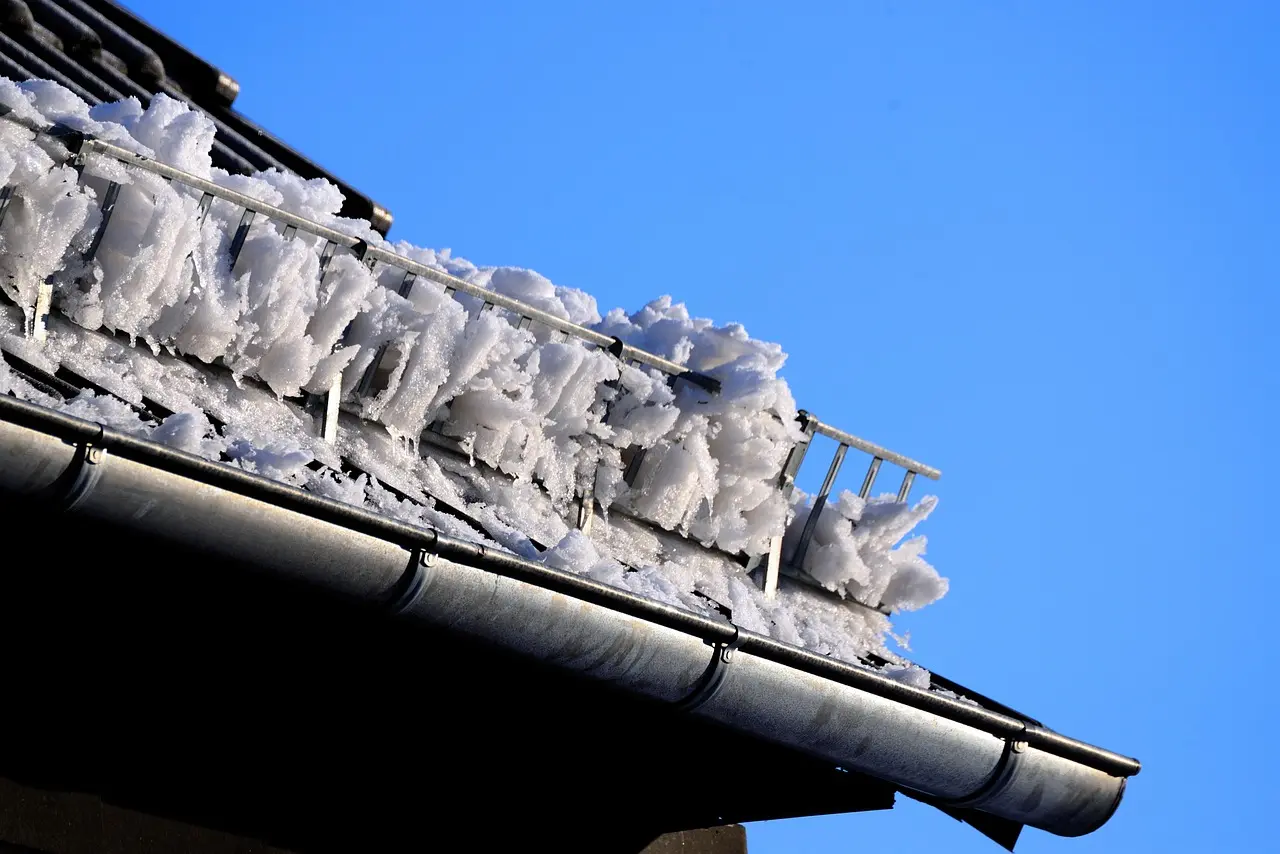
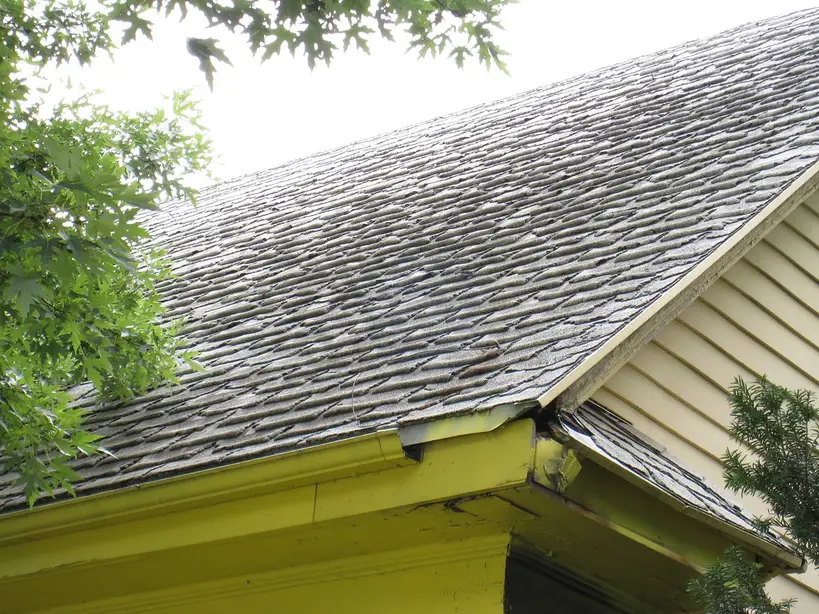
Buy sealant, hangers, and end-cap fixes earlier in wet freeze-thaw climates, because leaks and sagging get worse when water freezes in weak joints. Gutter sealant is a watertight joint treatment for seams and end caps, and durability matters when temperatures swing above and below freezing.
Fascia-hung gutters are described as sturdier and more secure, and installers recommend placing gutter brackets every 32 inches. That spacing helps resist sagging when snow, ice, or standing water adds weight.
Foundation-risk drainage problems
If water pools near the house, buy downspout extensions first. They move runoff farther from the foundation and work with existing downspouts. Splash blocks can help spread the discharge, but they are not a substitute for a longer outlet path where the grade slopes back toward the house.
A common first-timer mistake is buying a guard kit while the water still splashes at the base of the wall. That leaves the root problem untouched. When runoff is the issue, fix the outlet distance before buying parts that only reduce cleaning.
New home versus repair-focused buying
For a new home, start with the parts that complete the system: hangers or brackets, end caps, sealant, and correctly sized downspout accessories. For repairs, buy the piece that addresses the failure point first. A sagging run needs brackets; a leaking seam needs sealant; a short discharge needs extensions.
New gutter installation costs between $1,202 and $7,566, so many homeowners choose targeted add-ons instead of full replacement. Aluminum gutters are the best choice for most homes because they balance durability, corrosion resistance, and affordability. Vinyl gutters are budget-friendly but less durable. Copper and zinc gutters can last up to 50 years. (thisoldhouse.com)
Which gutter accessories matter most for water control?
Downspout extensions matter most when the goal is to move water away from the house. Splash blocks help at the outlet. Downspout adapters solve fit problems between parts. Rain barrel diverters matter when you want storage and can manage overflow safely. These accessories directly affect where water goes.
Downspout extensions
Extensions are the fastest fix when water lands too close to the foundation. They work with existing downspouts and are especially useful when runoff pools near the house after heavy rain. If the extension is short or undersized, the water-control benefit drops fast.
Splash blocks
Splash blocks sit below downspouts and spread runoff at the outlet. They are simple and low risk, but they do less than a true extension. Use them when you need a basic outlet pad or when the ground already slopes away and you want to cut splash-back.
Downspout adapters
Adapters connect different outlet sizes, and size compatibility is critical. Buy the adapter before you buy an extension or diverter if the downspout and add-on do not match. A poor fit can leak at the joint or reduce flow, especially during heavy rain.
Rain barrel diverters
Rain barrel diverters route roof runoff into storage, but they need overflow management. They fit specific downspout sizes, and they are best when water collection is the goal rather than pure drainage. If overflow control is the priority, buy the drainage fix first and the diverter second.
Which parts help prevent clogs, leaks, and sagging?
Gutter guards reduce debris entry, sealant stops wet joints from leaking, end caps close open gutter ends, and hangers or brackets support the run so it does not sag. Those parts matter after the water-routing basics are in place or when a visible failure is already present.
Gutter guards
Gutter guards are the main debris-control accessory. They help keep leaves and larger material out, but type fit varies by leaf size and roof conditions. They are not the first buy when water is pouring too close to the house or when outlets are too short.
Gutter sealant
Use gutter sealant at seams and end caps where water finds weak spots. In wet freeze-thaw climates, durability matters because repeated expansion and contraction can reopen weak joints. Sealant helps with leaks, but it does not solve sagging or poor drainage.
Gutter end caps
End caps close open gutter ends and stop water from escaping where it should not. Leak risk rises when they are installed poorly, so pair them with sealant and fasteners. They are a repair item, not a convenience upgrade.
Gutter hangers and brackets
Hangers and brackets matter when the gutter run sags or pulls away from the fascia. Fascia-mounted and roof-mounted variants are available, and the mount must match the existing system. Bracket spacing affects sag resistance, and 32 inches is the recommended spacing installers often use.
How do you match accessory size and material to your gutter system?
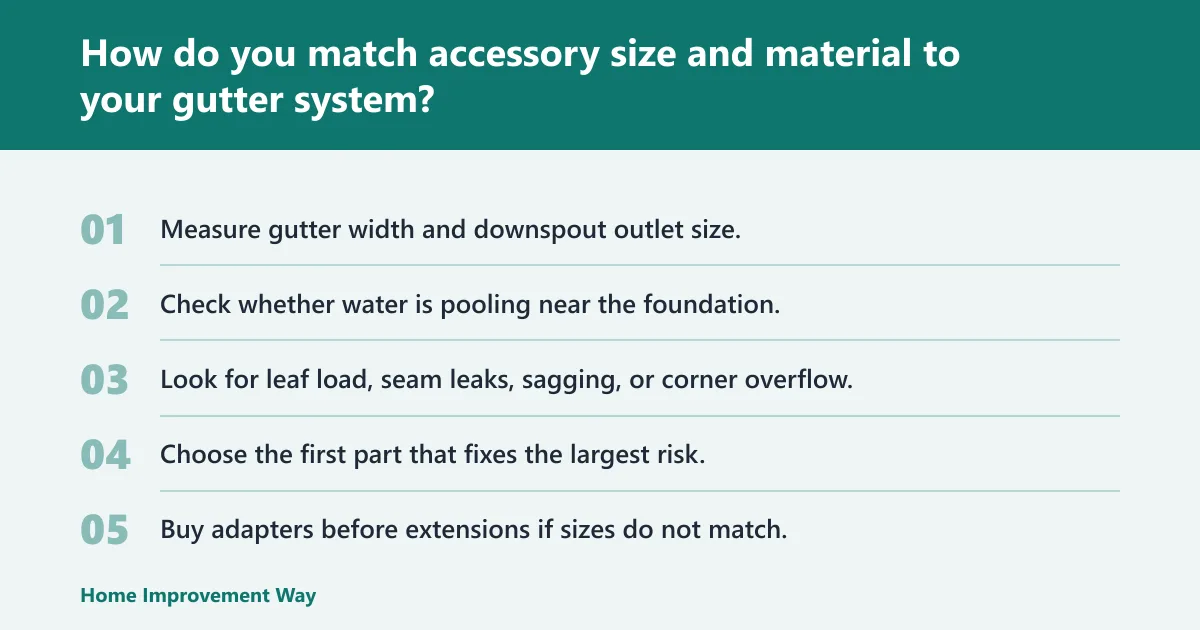
Match the gutter width, downspout size, and material before buying any add-on. Size mismatch causes leaks, poor flow, or awkward connections. Material matching also matters because a long-term repair should age at a similar pace to the gutter system around it.
Gutter and downspout dimensions
Check the existing gutter size and the downspout outlet size before you shop. The accessory should fit without forcing a loose joint or a reducer that slows water. If the outlet is undersized for the roof area, use the correct adapter and consider a larger flow path.
Adapter fit before extensions or diverters
Buy adapters before extensions or diverters when the sizes do not match. That order avoids returns and prevents a weak connection from becoming the leak point. It also keeps the new part from hanging at a bad angle that traps debris.
Material matching for long-term durability
Material mismatch can shorten service life. Aluminum gutters are the best choice for most homes because they balance durability, corrosion resistance, and affordability, so aluminum add-ons usually make the most sense for common repairs. Copper and zinc can last up to 50 years, but they are a different tier of cost and fit expectations.
- Measure gutter width and downspout outlet size.
- Check whether water is pooling near the foundation.
- Look for leaf load, seam leaks, sagging, or corner overflow.
- Choose the first part that fixes the largest risk.
- Buy adapters before extensions if sizes do not match.
- Add guards, sealant, or brackets only after the main drainage path is corrected.
What accessories matter most for a new home versus repairs?
New homes need the parts that complete a stable system: hangers or brackets, end caps, sealant, and correctly sized drainage pieces. Repairs should target the failure point first. If the house already has gutters, the best first buy is usually the one that stops overflow, leakage, or water pooling fastest.
Spend first on runoff control, then on clog reduction, then on convenience. That order keeps the home protected while avoiding early spending on accessories that do not address the biggest risk.
Say a home has one 10-foot downspout run that ends on a flat patch next to the slab, plus a second run under an oak tree. The first buy should be the extension for the flat run, because it reduces foundation risk. The second should be a guard for the oak side, because that run is clog-prone.
Frequently asked questions
What gutter accessories should I buy first?
Start with downspout extensions if water lands close to the foundation, because they reduce runoff risk immediately. After that, buy gutter guards if debris is causing clogs, then splash blocks, then support and sealing parts. The right first buy is the one that cuts the biggest drainage problem fastest.
Do I need gutter guards before anything else?
Not always. Gutter guards are the best first buy for leaf-heavy roofs only when the downspout system already moves water away from the house. If runoff still pools near the foundation, fix that first. Guards reduce debris, but they do not correct weak drainage paths.
What downspout accessories help water move farther from the house?
Downspout extensions are the main accessory for moving water farther from the foundation. Splash blocks help spread runoff at the outlet, and adapters let extensions or diverters fit the existing downspout size. If the goal is distance, extensions should come before convenience parts.
What size gutter accessories do I need for my gutters?
Match the accessory to the gutter width and downspout outlet size. A poor fit can leak, slow flow, or create a loose connection that fails during heavy rain. If the sizes do not match, buy the adapter first, then the extension, guard, or diverter.
Should I buy splash blocks or downspout extensions first?
Buy downspout extensions first when water is too close to the house, because they move runoff farther away. Choose splash blocks when you need a simple outlet pad and the grade already carries water away. Extensions usually do more for foundation protection.
What gutter parts prevent overflow and leaks?
Gutter guards help prevent clog-related overflow, while sealant and end caps address leak points at seams and open ends. Hangers and brackets help stop sagging that can create standing water and corner overflow. For best results, fix drainage first, then control debris and weak joints.
Sponsored / affiliate links. As an Amazon Associate I earn from qualifying purchases. I may earn additional commission from eligible campaigns.