Best Ceramic Repair Glues (2026): We Compared
For most ceramic repairs, choose a two-part epoxy for structural breaks, cyanoacrylate gel for small chips, and a food-safe repair only when the item will contact food. The wrong adhesive can leave weak joints, visible stains, or a repair that is unsafe to wash or eat from. This guide matches common damage types, surfaces, and food-contact needs to the safest glue to buy.
Quick comparison
| Product | Badge | Best for | Price | ||
|---|---|---|---|---|---|
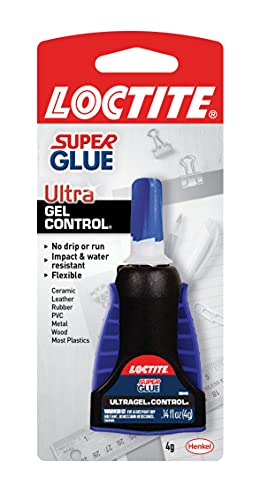 |
Loctite Super Glue Ultra Gel Control, Clear, 0.14 fl ozLoctite | Our pick | 0.14 fl oz · Clear · Gel Control | $4.49
Price as of 15 Oct 2026
|
View |
 |
Gorilla 2 Part Epoxy, Incredibly Strong Bonding, 5 MinuteGORILLA | Also great | 0.85 oz · Clear · 5 Minute Set | $5.97
Price as of 15 Oct 2026
|
View |
 |
J-B Weld 50112 ClearWeld 5 Minute Set Epoxy Syringe – ClearJ-B Weld | Budget pick | 25 ml · Clear · 5 Minute Set | $5.99
Price as of 15 Oct 2026
|
View |
 |
Starbond Super Fast Thin, Premium Instant CA (CyanoacrylateSTARBOND | Also great | 4 Ounce · Thin CA · Premium | $22.49
Price as of 15 Oct 2026
|
View |
Use this as a fast filter before you buy. Fit, surface type, heat exposure, and food contact decide the adhesive.
Glazed ceramic often bonds worse than rough, unglazed clay, so a clean-looking break can still need a different adhesive than a porous pottery repair.
How we chose
We compared adhesive categories by bond type, fit tolerance, cure behavior, heat exposure, finish quality, and food-contact caution. Those factors matter more than marketing language on the package.
Set time is only the first grab. A quick tack can still leave the joint weak for hours.
For food-contact items, the key question is cured, non-leaching use under the actual conditions you plan to put the item through. Package wording alone is not proof.
We also weighed cleanup, seam visibility, and likely failure modes. A glue that fills a gap may be the wrong choice for a hairline crack if it leaves a visible line or brittle edge.
Ceramic repair decision table
| Damage type | Surface type | Best adhesive category | Cure-time warning | Food-contact suitability | Likely failure mode |
|---|---|---|---|---|---|
| Hairline crack on a decorative vase | Glazed ceramic | Cyanoacrylate thin formula | Fast set, but full cure still takes hours | Not a food-contact repair | Brittle fracture or visible wicking line |
| Small chip on a mug handle | Glazed ceramic | Cyanoacrylate gel | Handles quickly, but do not stress it before full cure | Only if the final repair is rated and verified for cured food-contact use | Chipping again from impact or dishwasher heat |
| Broken plate with tight-fitting shards | Glazed ceramic | Two-part epoxy | Five-minute set is not full strength; wait for full cure | Usually not assumed safe from label claims alone | Weak bond from poor mix ratio or squeeze-out |
| Missing fragment on figurine base | Unglazed or rough ceramic | Two-part epoxy | Allow full cure before sanding or handling | Not food-contact | Visible seam or color mismatch |
| Uneven break on decorative pottery | Porous or uneven ceramic | Polyurethane adhesive | Expands while curing; cleanup must happen before it hardens | Not the first choice for food-contact items | Foaming, squeeze-out, or messy edge lines |
| Sink chip near a wet area | Glazed ceramic | Two-part epoxy | Full cure matters more than initial set, especially near water | Not for food; only for non-food sink repair use if the product allows it | Water exposure, stain pickup, or edge failure |
| Plate chip on a dining surface | Glazed ceramic | Two-part epoxy only if the item is not used for food after repair | Heat and washing can outlast a quick set | Do not assume safe for eating unless the adhesive and use case are specifically suitable | Dishwasher breakdown or stain halo |
Short rule: use cyanoacrylate for tight, small defects; use epoxy when you need gap filling or stronger structure; leave polyurethane for irregular or porous repairs where expansion helps.
Cyanoacrylate: best for small, tight repairs
Cyanoacrylate fits tight-fitting chips and hairline cracks best. It gives fast initial tack, thin versions can wick into narrow fissures, and gel versions are easier to control on vertical ceramic surfaces.
It works best when the break lines up cleanly. Think mug handle chips, a tiny decorative vase nick, or a clean shard on glazed ceramic with almost no gap.
When super glue fits the job
Use cyanoacrylate when the pieces mate closely and you want a quick, neat bond. Thin viscosity helps on hairline cracks; gel is easier when the repair is vertical or the edges are small and irregular.
For a 2-inch hairline crack on a figurine, the adhesive should only bridge the crack, not fill a missing section. That is where super glue’s fast tack helps.
Where it fails on ceramic
Cyanoacrylate is brittle after cure. That makes it less forgiving on impact, repeated washing, twisting stress, and larger missing fragments where the joint needs to absorb movement.
It is also a poor choice when the break has a gap. If you need fill, epoxy is usually the safer pick.
Clear seams and brittleness
Many cyanoacrylates dry transparent, which helps with finish quality, but clear does not mean invisible. Glazed ceramic can still show a repair line, especially if the edges do not meet perfectly.
A common first-timer mistake is flooding a chip with glue. Extra adhesive can leave a glossy ridge, stain the seam, and weaken the look of the repair.
Two-part epoxy: best for stronger gap filling
Two-part epoxy is the better choice for larger breaks, missing fragments, and repairs that need real structural strength after full cure. It also comes in clear and tinted versions, so you can choose based on seam visibility.
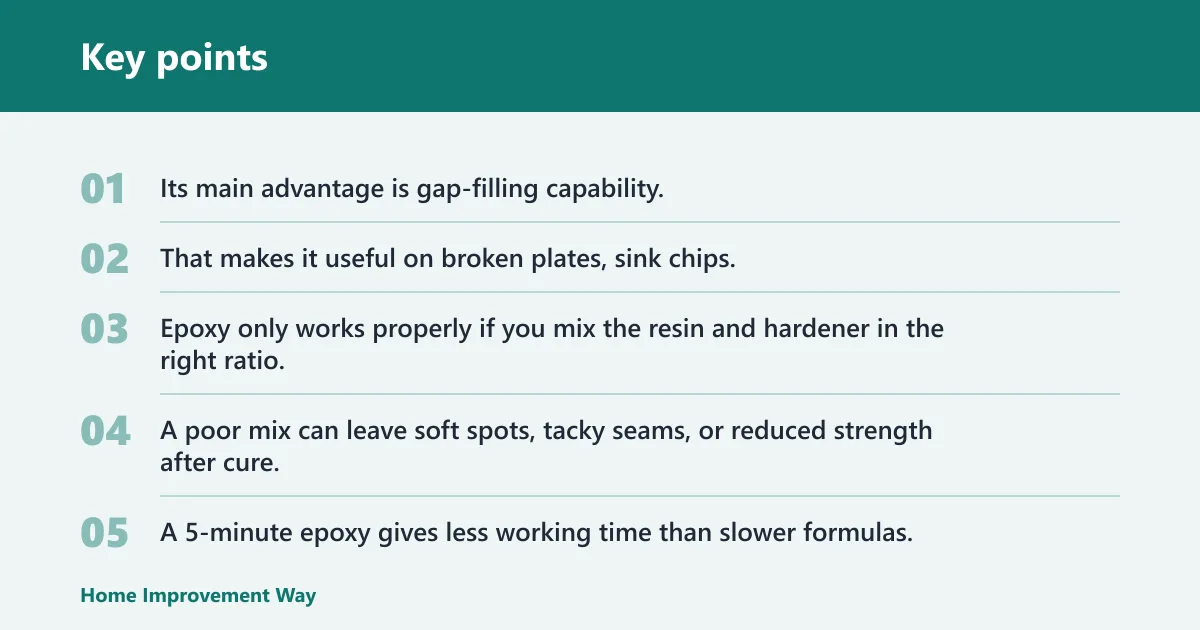
Its main advantage is gap-filling capability. That makes it useful on broken plates, sink chips, and figurines where the fit is imperfect.
Mix ratio and pot life
Epoxy only works properly if you mix the resin and hardener in the right ratio. A poor mix can leave soft spots, tacky seams, or reduced strength after cure.
Pot life matters too. A 5-minute epoxy gives less working time than slower formulas, so you need the pieces dry-fit and ready before you mix.
Clear versus tinted formulas
Clear epoxy is usually the better choice when you want a less visible repair on white or light ceramic. Tinted epoxy can hide a seam better on darker or patterned pieces, but it can also stand out if the color is off.
Do not assume clear means invisible. Fit quality, glare from the glaze, and stain pickup around the seam all affect the final look.
Where epoxy beats super glue
Epoxy beats cyanoacrylate on larger breaks, uneven edges, and joints that need more body. It is usually the better answer for a missing chip on a sink edge or a broken plate fragment that does not mate perfectly.
It also handles stronger structural repairs better after full cure. The tradeoff is more cleanup and more chance of a visible seam if you overfill the joint.
Polyurethane adhesive: best for uneven edges
Polyurethane adhesive is useful when the repair surface is porous or uneven and you need some expansion to fill irregular gaps. It is not usually the first choice for fine ceramic seams because the expansion can hurt finish quality.
It can help on rough pottery or broken areas where the edges do not line up neatly. For glazed, tight-fitting seams, it is usually harder to control than epoxy or super glue.
Why it expands as it cures
Polyurethane expands while curing. That can help fill voids, but it also means squeeze-out and foaming are common if you use too much.
Because of that expansion, light pressure is enough. Heavy clamping can push material out of the joint and leave a messy edge.
Cleanup before cure
Cleanup has to happen before the adhesive hardens. Once cured, polyurethane residue is much harder to remove cleanly from glazed ceramic.
That makes it a less forgiving option for visible items. Decorative pottery can tolerate a slight seam better than a dish used at the table.
Which one should you buy?
For mugs and food-contact items, the best answer is usually caution first. If the item will touch food or hot liquid, do not assume any adhesive is safe just because the package says “strong” or “water resistant.”
For a mug handle with a tight, clean break, cyanoacrylate gel can fit small chips, but only if the final repair is truly suitable for the intended food-contact use and heat exposure. For most eating surfaces, replacement is often the safer call.
For plates and plate chips, the safest advice is usually not to repair the eating surface for regular use. If the plate is purely decorative, epoxy may be fine for appearance and structure.
For figurines and decorative vases, choose based on fit. Tight seams favor cyanoacrylate; missing material or a broken base often favors epoxy.
For sink chips and heat-exposed repairs, epoxy usually makes the most sense because it fills, bonds, and handles structural repair better than a thin glue. Heat and repeated wetting still limit long-term durability, so a repair near hot water needs realistic expectations.
Picture a chipped mug handle with a clean break and no missing piece. Thin glue would bond fast, but a gel cyanoacrylate is easier to control and less likely to run onto the glaze. Now picture a sink chip with a missing corner. That needs gap filling, not just fast tack.
Surface preparation changes the result
Clean, dry surfaces matter for every adhesive. Degrease the ceramic, remove dust and loose shards, and dry-fit the pieces before you open the glue.
Light abrasion can help only when appropriate. On some glossy glaze repairs, a small amount of texture at the bond line can improve adhesion, but do not over-sand a visible surface.
Clamping or taping without overdoing it
Use light pressure, not brute force. Taping or gentle clamping should hold the pieces aligned without squeezing out so much adhesive that the joint dries starved.
Too much pressure can shift the break or force glue out of the seam. That hurts both strength and finish.
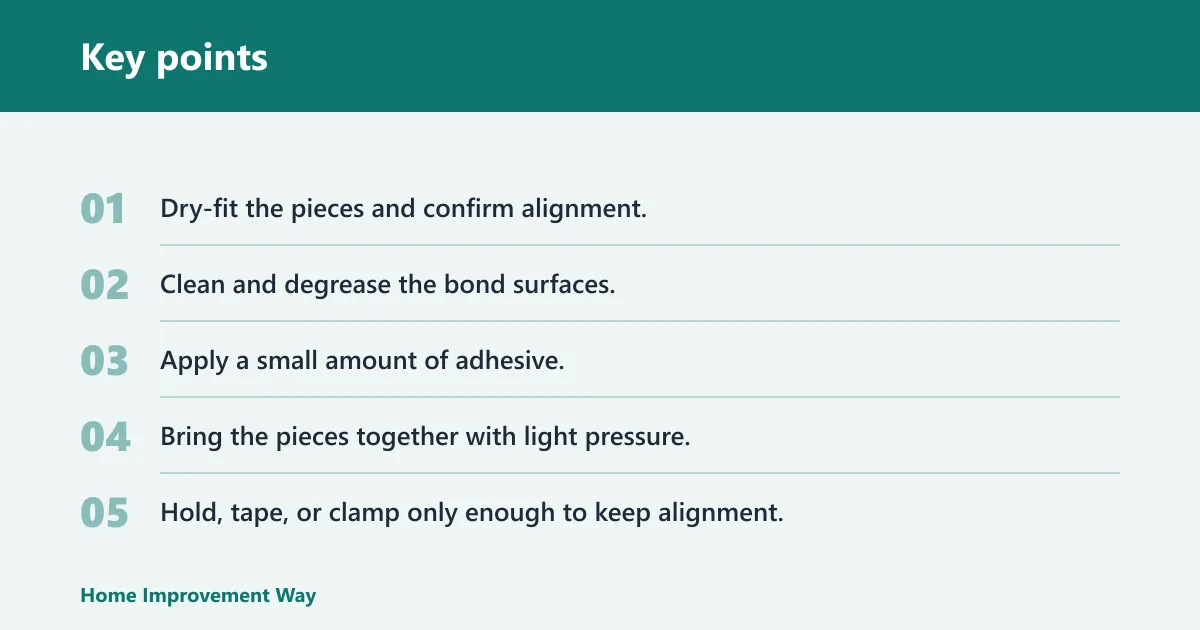
- Dry-fit the pieces and confirm alignment.
- Clean and degrease the bond surfaces.
- Apply a small amount of adhesive.
- Bring the pieces together with light pressure.
- Hold, tape, or clamp only enough to keep alignment.
- Leave the item untouched until full cure.
Loctite Super Glue Ultra Gel Control: best for tight chips and vertical seams
This fits small ceramic chips, hairline cracks, and vertical repairs where a no-drip gel helps you keep the bond line controlled. Based on the manufacturer’s specs and buyer feedback, the gel format is useful for glazed ceramic seams that would be too messy for thin liquid glue.
What stands out is the rubber-toughened formula, which is designed to resist impact, shock, and vibration, and the transparent dry-down helps with finish quality. The drawback is the same thing that limits most super glues on ceramic: it is still best for tight-fitting repairs, not gaps or missing fragments, and it remains brittle compared with epoxy after cure.
Gorilla 2 Part Epoxy: best for gap filling and stronger breaks
This is the better fit for larger breaks, slightly uneven edges, and repairs where you need some working time before the bond sets. Based on the product details, the syringe format makes mixing easier, and the clear cure is helpful when you want the seam to stay less obvious.
Its strength is gap filling. The drawback is that the five-minute set does not mean full cure, and mix-ratio errors can leave a weak joint or sticky spots. It is a stronger structural option than super glue, but only when mixed and cured correctly.
J-B Weld ClearWeld: best for clear structural repairs
This suits ceramic, tile, and similar repairs where you want a clear two-part epoxy with a fast set and a stronger final bond. Based on published product details, it is a practical choice for decorative ceramic breaks and areas that need a durable finish.
Its main benefit is the combination of clarity and strength. The drawback is that fast-set epoxy still requires careful measuring and fast work, and it can leave a visible seam if the joint is not tight or if too much adhesive squeezes out during alignment.
Starbond Super Fast Thin: best for hairline cracks and micro-fractures
This is the right kind of cyanoacrylate when you need very thin adhesive for micro-fractures, capillary action, and small cracks that need penetration rather than gap fill. Based on the manufacturer’s specs, the thin viscosity and included micro-tips make it better for precise application than a thicker general-purpose glue.
The drawback is control and brittleness. Thin CA can wick where you do not want it, stain nearby finish, and still crack under impact or repeated handling, so it is not the right pick for loose breaks or missing ceramic.
Can super glue fix broken ceramic?
Yes, super glue can fix broken ceramic when the pieces fit tightly and the break is small. It works best for hairline cracks, tiny chips, and clean fractures where fast tack and thin viscosity help the adhesive reach the joint quickly.
It is not the best answer for missing fragments, wide gaps, or repairs that will take heat, washing, or impact. In those cases, epoxy usually gives a safer structural result.
How do you glue ceramic back together without visible seams?
The best way to reduce visible seams is to start with a tight dry fit, use the smallest workable amount of adhesive, and choose a clear formula that matches the break. Even then, some seams will stay visible if the glaze, color, or fracture line reflects light differently.
Clean the surfaces, align them carefully, and support the part with tape or light clamping so it does not slide. A neat repair depends more on fit and cleanup than on simply choosing the strongest glue.
Frequently asked questions
What is the best glue for ceramic repairs around the house?
For most ceramic repairs, two-part epoxy is the best all-around choice for structural breaks, cyanoacrylate gel is best for small chips and tight hairline cracks, and polyurethane is the specialty option for uneven or porous surfaces. The “best” glue changes with fit, surface type, and whether the item contacts food.
Should I use epoxy or glue on ceramic?
Use epoxy when the break has a gap, needs more strength, or involves a missing fragment. Use cyanoacrylate when the edges fit tightly and the repair is small. Epoxy is usually the safer structural choice, but super glue is faster and cleaner on fine, tight seams.
How long does ceramic glue take to cure?
Set time can be only a few minutes, especially with fast epoxies and cyanoacrylate, but full cure usually takes hours and sometimes 24 hours or more depending on the product. Do not use the item until it has reached full strength, not just initial tack.
Is ceramic repair glue dishwasher safe?
Do not assume a repaired ceramic item is dishwasher safe just because the adhesive claims water resistance. Repeated hot washing, detergent, and drying cycles can weaken the joint or stain the seam. If the item touches food, the repair also needs a cured, non-leaching use case, not just a strong bond.
What glue works for glazed ceramic versus unglazed ceramic?
Glazed ceramic is nonporous, so adhesion depends heavily on surface prep and fit. Unglazed or porous ceramic can give some adhesives more bite, which is why polyurethane can be useful there. For glazed pieces, epoxy or controlled cyanoacrylate usually gives better results than a foam-expanding adhesive.
How do I fix a chipped ceramic mug or dish?
For a small chip, clean and dry the area, dry-fit any loose piece, and choose cyanoacrylate gel for a tight cosmetic repair or epoxy if the chip is larger and needs filling. For mugs and dishes used with food, be stricter, heat, washing, and food-contact safety matter as much as appearance.
Sponsored / affiliate links. As an Amazon Associate I earn from qualifying purchases. I may earn additional commission from eligible campaigns.