What Temperature Is Best for Using Glue Indoors? A Guide
For many indoor glue jobs, a fairly warm, steady room is a good place to start; PVA and wood glue usually work well in that kind of setup, cyanoacrylate tends to prefer dry air and moderate warmth, and epoxy often cures well in a slightly warmer range. Too cold slows cure and weakens bond formation; too hot can shorten open time, cause skinning, or make parts slip. This guide maps common adhesive types to workable indoor temperatures and tells you when to warm the room, the materials, or the glue itself.
What temperature is best for using glue indoors?
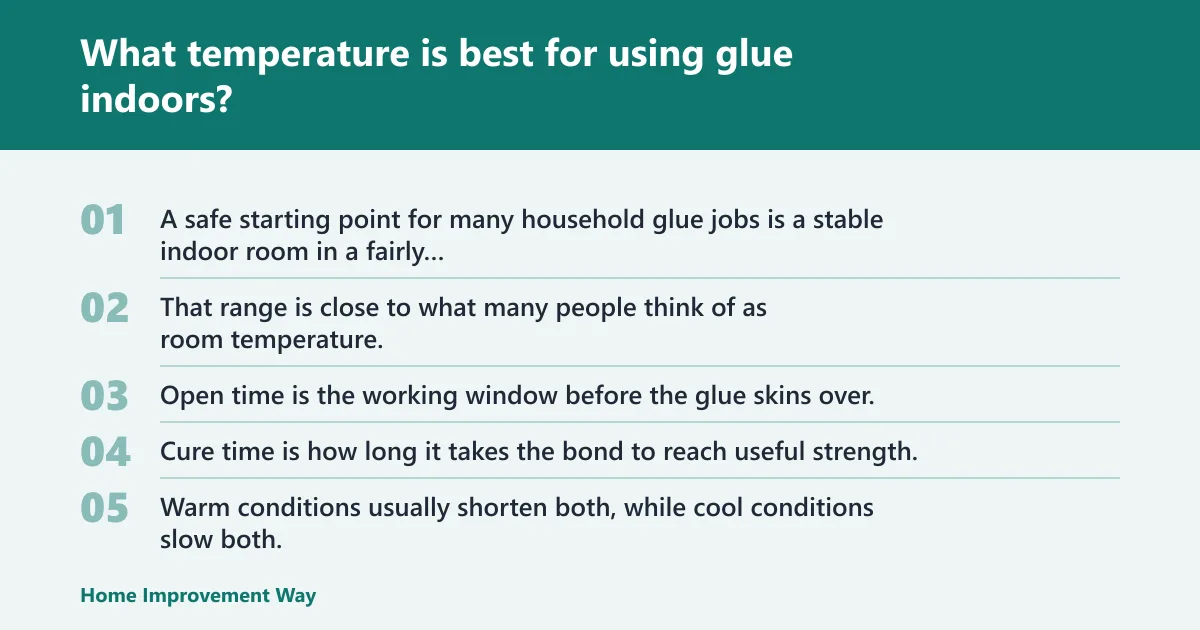


A safe starting point for many household glue jobs is a stable indoor room in a fairly warm range, roughly in the high teens to mid-20s °C or the mid-60s to mid-70s °F. That range is close to what many people think of as room temperature, but the key is steadiness: the air, the parts, and the adhesive need to stay in range long enough to bond.
Temperature affects two different stages. Open time is the working window before the glue skins over. Cure time is how long it takes the bond to reach useful strength. Warm conditions usually shorten both, while cool conditions slow both. That is why a glue that looks fine in a warm kitchen can fail in a cold basement or a drafty garage.
Why stable room temperature matters more than a single number
A single number is less useful than a narrow range that stays steady. If the room swings from cool to warm, the adhesive may thicken, skin over, or lose grab before the parts are aligned. For many indoor repairs, a small shift of a few degrees matters less than avoiding drafts, cold surfaces, and hot sun through a window.
Think of room temperature as the starting condition, not the whole picture. A thermometer helps confirm the air temperature, but the material temperature matters just as much. A plywood panel, ceramic tile, or plastic part can be several degrees colder than the room air, and that can change how fast the glue wets the surface.
Does humidity affect how glue dries indoors?
Yes. Humidity changes how fast some adhesives dry and how well they form a bond, especially when the room is very dry or very damp. A practical indoor target is often around moderate humidity, though the adhesive label should still guide the setup. Dry rooms can speed surface skinning; damp rooms can slow drying or interfere with tack.
Dry air can help some adhesives set faster, but it can also make the working window too short. Damp air can slow evaporation-based drying and can hurt bond quality on moisture-sensitive products. Cyanoacrylate, for example, reacts to trace moisture, while PVA wood glue and many construction adhesives depend more on even contact and steady conditions.
How dry rooms and damp rooms change drying speed
In a dry room, the surface of the glue may skin over before the parts are fully seated. That is a common cause of poor contact and weak edges. In a damp room, the glue may stay wet longer, which stretches clamp time and delays handling.
Humidity also affects the substrate. Porous wood can behave differently from sealed ceramic or smooth plastic, and moisture in the room can change how quickly the adhesive loses water or grabs the surface. The result is not always obvious until the joint fails later.
How warm should the room and materials be for each glue type?
Different adhesives need different conditions. PVA wood glue prefers moderate indoor warmth and steady clamping. Cyanoacrylate glue works fast, but it is sensitive to surface moisture and can act differently in cool air. Construction adhesive is thicker and often needs more time, so it benefits from a steady room and material temperature.
Use the room temperature as a guide, then check the material itself. A cool tile or metal part can steal heat from the glue line and slow initial grab. A warm room does not help much if the pieces being joined are cold to the touch.
PVA wood glue
PVA wood glue is a common indoor choice for furniture repair, trim, and wood joints. It usually works best in moderate temperatures and steady conditions. Cold rooms can lengthen clamp time and may make the first bond weaker, especially when the wood has been kept cold or near an exterior wall.
For woodworking glue, aim for the standard indoor range and follow the label for clamp duration. Many products need pressure long enough to keep the joint closed without forcing out too much adhesive. The goal is contact, not crushing the joint flat.
Cyanoacrylate glue
Cyanoacrylate glue, often called super glue, sets quickly and is sensitive to surface moisture. In a cool house, it may still bond, but it can set more slowly and may feel less reliable if the parts are damp or cold. Very dry air can also make the working window feel too short in some repairs.
Use it for small, close-fitting repairs rather than large gaps. On cool materials, warm the room first if you can. If the part is cold and the glue skins over before alignment, a different adhesive with more open time may be the better choice.
Construction adhesive
Construction adhesive is thicker and usually has a longer open time than many other indoor glues. That extra working time helps with trim, panels, and mixed-material repairs, but only if the room stays steady. Cold surfaces can slow grab, while excess heat can make the bead skin over unevenly.
Because it is thicker, this adhesive often depends on consistent pressure and a clean substrate. If the room temperature is drifting or the parts are cold, wait for better conditions rather than forcing the repair.
Indoor glue temperature checklist
This checklist gives a practical decision guide for common adhesive types. It is not a substitute for the label. Manufacturer instructions override any general range, especially for cure time, clamp time, and surface prep.
| Adhesive type | Room or material temperature target | Red-flag failure signs |
|---|---|---|
| PVA wood glue | About 65°F to 75°F room air; parts should feel near room temperature | Long clamp time, weak tack on cold wood, glue line turning rubbery or starved |
| Cyanoacrylate glue | Moderate indoor warmth; dry, clean surfaces and no chilled parts | Sets before alignment, cloudy joint, poor grab on damp or cold surfaces |
| Construction adhesive | Stable indoor conditions; room and substrate near the same moderate temperature | Bead skins over too fast, parts slip, uneven squeeze-out, weak initial hold |
| Epoxy | Most common products cure best around typical room warmth, often near 70°F to 80°F | Very slow cure, sticky surface after the expected set time, soft bond in cold air |
| Fabric or craft glue | Moderate warmth with low draft and light pressure | Wrinkling, bleed-through, long dry time, poor hold on damp fabric |
| Ceramic repair adhesive | Room and tile near the same temperature, dry surface, stable placement | Slippery parts, weak edge bond, joint failure at the first handling |
What should you do when the room is too cold, too hot, or too humid?
When conditions are off, do not guess. Move the work into the best stable space you have, or switch adhesive types if the repair needs a longer or shorter working window. Cold slows curing and can weaken early bond formation. Heat shortens open time. Humidity can slow drying or change how the glue sets.
| Condition | What to do | Best time to wait and reset |
|---|---|---|
| Room is too cold | Warm the room and the materials, or choose an adhesive with more open time | Wait until the substrate is near room temperature and no longer feels chilled |
| Room is too hot | Move to a cooler indoor area, work in smaller sections, and stage all parts first | Wait if the glue skins over before the pieces can be aligned |
| Room is too humid | Improve ventilation, reduce moisture sources, and allow longer drying or cure time | Wait if the adhesive stays tacky far longer than the label suggests |
What happens if you glue in a cold room?
Cold rooms usually slow drying and curing, and they can make some joints brittle or weak at first. The glue may thicken, spread poorly, or lose tack before the parts are pressed together. Cold substrates are a frequent hidden problem because they can be colder than the air in the room.
If the glue line is chilled, PVA wood glue may need longer clamp time, cyanoacrylate may behave unpredictably on damp or cold surfaces, and construction adhesive may take longer to grab. The bond can look set on the outside while still being soft inside.
Slower curing and longer clamp time
A colder room usually stretches both open time and cure time, but not in a helpful way. The adhesive may stay movable longer, yet still fail to build strength on schedule. That means you may need to clamp longer, hold longer, or simply wait for better conditions.
Say your wood shelf repair is happening in a 58°F basement and the pine board was stored against a concrete wall. The air may seem manageable, but the board itself is cold enough to slow the glue line. Warming the room and the board first can make the bond far more reliable.
Brittle joints and weak tack on chilled materials
Chilled materials can reduce tack, especially on smooth or nonporous surfaces. That is where a repair can seem secure and then fail when the part is moved. Weak tack is a warning that the adhesive did not wet the surface well enough before it started to set.
A common first-timer mistake is checking only the room and ignoring the part being glued. A ceramic tile from a cold floor, a metal bracket, or a plastic piece near a window may be several degrees colder than expected. Use a thermometer if the joint matters.
What should you check before you start gluing indoors?
Check the room temperature, the substrate temperature, and the label before the first drop of adhesive goes down. A thermometer gives a quick reading of the room and the parts being joined. Then confirm open time, clamp time, and cure time on the package, because those details beat any generic rule.
Also keep the work area clean and ventilated. Dust, grease, and trapped moisture cause more failures than many people expect. Even the right glue can fail on a dirty or damp surface.
- Measure the room air with a thermometer.
- Check the temperature of both parts being joined.
- Compare the reading to the adhesive label.
- Dry the surface and remove dust, grease, or loose fibers.
- Stage clamps, spacers, and cleanup materials before opening the glue.
- Apply the adhesive, join the parts, and hold or clamp them until set.
Room air versus substrate temperature
Room air and substrate temperature are not the same thing. Air can warm quickly, while wood, ceramic, metal, and thick plastic can stay cool for much longer. That is why a room that feels fine can still produce poor bond formation if the parts are cold.
For indoor repairs, the safer rule is to let the materials reach near-room temperature before gluing. That is especially useful for wood, tile, and heavier repair pieces that have been near an exterior wall or stored in a cold space.
Should you warm up glue before using it?
Sometimes, but warming the room is usually better than warming the glue itself. A glue bottle that is too cold may spread poorly, yet heating the adhesive directly can create uneven results or make the product too thin. Stable room conditions matter more than trying to rescue a cold repair with a warm bottle.
If the workspace is cold, warm the air and the materials first. If the label allows a certain storage or application range, stay inside it. When conditions are still poor after that, wait rather than forcing the job.
When to stop and wait for better conditions
Stop and wait if the glue skins over too fast, if the parts will not stay aligned, or if the substrate is still cold to the touch. Those are signs that the bond may fail even if it looks acceptable at first. A few hours of waiting can prevent a weak repair.
If the room is hot, humid, or unevenly heated, try again later in a steadier space. For many indoor glue jobs, patience beats a rushed bond.
Frequently asked questions
Is room temperature okay for glue to dry?
Yes, room temperature is usually the safest starting point for indoor glue work. It helps many adhesives dry and cure at a predictable pace. The better question is whether the room, the part, and the adhesive are all in a steady range, not just whether the air feels comfortable.
How long does glue take to cure at room temperature?
There is no single cure time for all indoor glues. Open time, initial grab, and full cure all vary by product and by temperature and humidity. Follow the label for the adhesive you are using, because manufacturer directions override any general guide.
Sponsored / affiliate links. As an Amazon Associate I earn from qualifying purchases. I may earn additional commission from eligible campaigns.