Best Air Sealing Materials for Small Gaps (2026): research shows
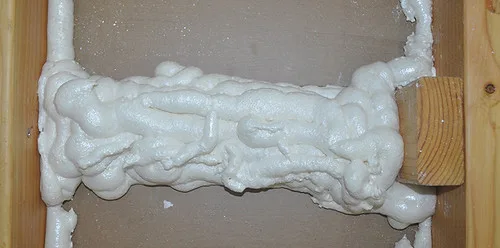
For gaps of roughly 1/4 to 1/2 inch, low-expansion foam is often used. Pick the wrong material and you waste product, leave leaks, or crack finishes after insulation goes in. This guide maps common gap sizes to the right air-sealing material, so you can buy the right product and seal small home leaks before insulating.
This guide is part of our Insulation and air sealing series.
Quick comparison
| Product | Badge | Best for | Price | ||
|---|---|---|---|---|---|
 |
DAP Liquid Cement Crack Filler (Ready to Use), Gray, 32 OzDAP | Budget pick | 32 oz · Ready-to-Use Concrete Crack Filler | $16.59
Price as of 11 Oct 2026
|
View |
 |
Gorilla Heavy Duty Spray Adhesive, Multi Purpose &GORILLA | Pair with it | 14 oz · Clear Multi-Purpose Spray Adhesive | $12.84
Price as of 11 Oct 2026
|
View |
 |
WOD SSFLDFT Closed Cell Sponge Rubber Foam Tape, 3/8 inchWOD Tape | Our pick | 24 oz · Fireblock Spray Foam Insulation Kit | $13.97
Price as of 11 Oct 2026
|
View |
 |
ABATRON Abocrete Kit – Self-Leveling Concrete EpoxyAbatron | Upgrade pick | 1.25 qt · Self-Leveling Concrete Epoxy | $56.40
Price as of 11 Oct 2026
|
View |
 |
GREAT STUFF PRO Gaps & Cracks 24 oz Spray Foam InsulationGREAT STUFF PRO | Pair with it | $199.00
Price as of 11 Oct 2026
|
View |
Use this first, then measure the gap and check the location before you buy. Small fixed cracks usually call for caulk; larger voids call for foam; doors and windows need weather stripping because they move every time they close.
How we chose
The selector below is based on four checks: gap size and location, moisture and fire safety, ease of application, and cleanup or durability. That keeps you from using a product where it will fail, such as standard foam near heat sources or hard caulk on joints that move.

Caulk: best for small cracks and joints
Caulk is the best overall choice for most small interior gaps because it seals narrow cracks cleanly, costs little, and is easy to smooth. For most small home air leaks, acrylic latex is the default, silicone fits damp areas, and polyurethane is better outdoors.
Acrylic latex for general indoor use
Acrylic latex caulk is the go-to for baseboards, trim joints, and many indoor frame seams. It is recommended for general indoor use, applies with a caulk gun, and can be smoothed with a wet finger or tool. It is usually the easiest to paint after curing.
Its main drawback is movement. If the joint flexes a lot, acrylic latex can crack or separate over time. Use backer rod first when the gap is too deep or too wide for a thin surface bead to bridge cleanly.
Silicone for moisture exposure
Silicone caulk is recommended for areas exposed to moisture, such as bath trim, sink edges, and damp utility spaces. It stays flexible and sheds water well, which makes it a better choice than acrylic latex where condensation or splashing is routine.
The drawback is finish compatibility. Many silicones are harder to paint, and once silicone is in place, cleanup is less forgiving than with acrylic latex. Use it where moisture matters more than paintability.
Polyurethane for exterior applications
Polyurethane caulk is recommended for exterior applications, especially where sun, rain, and seasonal movement hit the joint. It can handle door frames, window exterior trim, and other exposed transitions better than most basic indoor sealants.
The tradeoff is handling. It is usually messier than acrylic latex and less convenient for quick touch-ups. If the opening is wide, install backer rod first so the caulk forms the right depth instead of sinking too deep.
When backer rod is needed before caulk
Backer rod belongs in joints that are too deep for caulk alone. It gives the sealant a proper shape, reduces wasted product, and helps prevent cracking because the caulk is not trying to fill the whole void. If you can press the bead far into the crack, the gap is probably too open for caulk alone.
Picture a 3/8 inch gap along a baseboard in a drafty room. Caulk alone may skin over on top and shrink away from the sides. Backer rod plus caulk gives the bead something to rest on, so the seal stays intact longer.
Expanding foam sealant: best for larger openings
Expanding foam sealant is for larger gaps and openings, not tiny cracks. It fills about 50% of a gap before expanding, so overfilling can bow trim, push surfaces apart, or leave a messy excess that must be cut back after curing.
Open-cell versus closed-cell foam
In general, open-cell foam is lighter and more flexible, while closed-cell foam is often considered better for insulation and moisture resistance. Closed-cell is the better pick where dampness is a concern, such as some rim joist areas or exterior-side penetrations.
The drawback is control. Foam can expand farther than expected, so it is easy to use too much in a narrow cavity. Standard foam also does not belong near heat sources or chimney assemblies.
When to trim after curing
Foam should be allowed to cure before trimming. Cutting too early can tear the skin and leave voids that reopen later. Once cured, trim the excess with a knife so the surface sits flush and can be covered or finished as needed.
Where not to use standard foam
Do not use standard spray foam around chimneys, flue dampers, or other heat-sensitive areas. Those locations require a high-temperature sealant and chimney-specific products. Standard foam also is not a substitute for fire-blocking where code requires fire-rated materials.
Weather stripping: best for doors and windows
Weather stripping is the right material for moving parts like doors and operable windows because it forms a snug fit when closed. It belongs on surfaces that open and shut often, not on fixed cracks where caulk would do a cleaner job.
Foam tape
Foam tape is easy to install and inexpensive. It works well as a fast fix for light-duty doors or windows with modest gaps. The drawback is durability; compression and wear can shorten its service life, so check it annually.
V-strip
V-strip is durable and nearly invisible. It works well on window sashes and some door edges where you want a thin profile that still compresses when closed. The drawback is that it must be installed carefully to sit in the right path of movement.
Tubular rubber gaskets
Tubular rubber gaskets are a stronger choice where you need a tighter seal and repeated closing. They are useful on door perimeters and some window systems that can accept a thicker compression seal. The drawback is fit; if the door or window is out of square, the gasket may bind.
Door sweeps
A door sweep is effective for large gaps under exterior doors. It blocks wind, dust, and some water intrusion at the threshold line. The drawback is clearance: if the sweep drags or is set too low, the door will not close properly.
What should you seal before adding insulation?
Seal air leaks before insulation because insulation slows heat flow, while air leaks still move conditioned air. Start with attic hatches, rim joists, pipe penetrations, and drafty windows and doors. If you insulate first, you may bury gaps that should have been sealed at the source.
Attic hatch
The attic hatch is a commonly overlooked air leak area. It should be sealed before insulation goes in, and it needs both air sealing and insulation considerations. If the hatch leaks, warm air can rise into the attic, carrying moisture with it.
Rim joists
Rim joists are frequent leak points in basements and crawlspaces. Small cracks here often need foam or caulk depending on size, while larger gaps may call for foam plus a fire-safe covering where code requires it. Keep heat sources and combustible clearances in mind.
Pipe penetrations
Small openings around plumbing lines usually want caulk for narrow annular gaps or low-expansion foam for wider voids. If a pipe passes through a moist area, choose the material with the right moisture resistance rather than the cheapest one.
Drafty windows and doors
Drafty windows and doors often need more than one material. Use caulk for fixed frame cracks and weather stripping for the moving sash or slab. That split approach is usually better than trying to solve an entire opening with one product.
Air-sealing selector by gap size and location
This table is the core decision map. Start with the gap width, then check whether the spot moves, gets wet, or sits near heat. That order keeps you from buying the wrong material and helps you catch places where caulk, foam, or weather stripping should not be used alone.
| Gap size | Common location example | Moisture or fire caution | Recommended product type |
|---|---|---|---|
| 1/8 inch and smaller | Baseboards, trim-to-wall joints, narrow window casing cracks | Use silicone in damp areas; use acrylic latex indoors where paintability matters | Caulk |
| 1/4 inch | Window frames, door frames, small wall penetrations | Use polyurethane outdoors; add backer rod if the gap is deep | Caulk or backer rod plus caulk |
| 1/2 inch | Pipe chases, rim joist seams, larger trim voids | Use low-expansion foam for fixed gaps; keep foam away from heat sources | Expanding foam sealant |
| Larger than 1/2 inch | Big penetrations, missing blocks, open cavities | May need backing material, fire-safe material, or a specialty seal rather than standard foam alone | Specialty sealant, foam plus backing, or repair material |
| Moving joint | Doors, operable windows, threshold edges | Use compression materials; standard caulk can crack in movement | Weather stripping |
| Exterior-wall outlet or switch plate | Behind cover plates on outside walls | Use foam or rubber gaskets; do not pack the box with foam | Outlet and switch gasket |
A common first-timer mistake is stuffing a narrow gap around a bathroom pipe with paintable caulk instead of using backer rod and a flexible sealant designed for moving joints. The bead looks finished at first, then shrinks or separates because the gap was too wide for caulk alone. Another mistake is putting foam where a door sweep or gasket should go.
Should I use caulk or spray foam for tiny air leaks?
Use caulk for tiny air leaks. Spray foam is better once the opening grows beyond a narrow crack, because foam expands and can distort trim or leave a lumpy finish in small joints. For fine cracks under about 1/4 inch, caulk is usually the cleaner and safer choice.
Choose caulk when the leak is fixed and the surfaces meet cleanly. Choose foam only when the void is deeper or wider and you need the material to fill the cavity, not just coat the surface.
What kind of caulk should I use around windows and baseboards?
Use acrylic latex caulk around interior windows and baseboards when the joint is dry and you want easy cleanup and painting. Use silicone where moisture is present, and polyurethane on exterior joints that need greater weather resistance. The right caulk depends on location, not just gap size.
For windows, split the job if needed: caulk the fixed frame joints, then add weather stripping where the sash moves. For baseboards, a paintable acrylic latex bead is usually the simplest finish.
Can I use expanding foam around electrical outlets or pipes?
Use caution around outlets and pipes. Outlet and switch gaskets belong behind the cover plate on exterior-wall outlets and switches, while expanding foam is for larger cavities that do not contain sensitive components or heat concerns. Never force standard foam into the box itself.
For pipe penetrations, seal the annular gap around the pipe, not the pipe itself. If the penetration is near heat-producing equipment or a flue, switch to a specialty product or a high-temperature sealant instead of standard foam.
How do I seal drafty outlets and switch plates?
The fastest fix is an outlet or switch gasket installed behind the cover plate. These foam or rubber pieces reduce leakage through exterior-wall electrical boxes and are quick to install. They are not a substitute for code-required electrical work, but they are an easy air-sealing step.
After the gasket, check the rest of the box for obvious gaps in the wall cavity. If the opening around the box is large, address the wall-side gap with the correct sealant first, then reinstall the plate.
What is the best way to seal attic hatch or basement rim joist cracks?
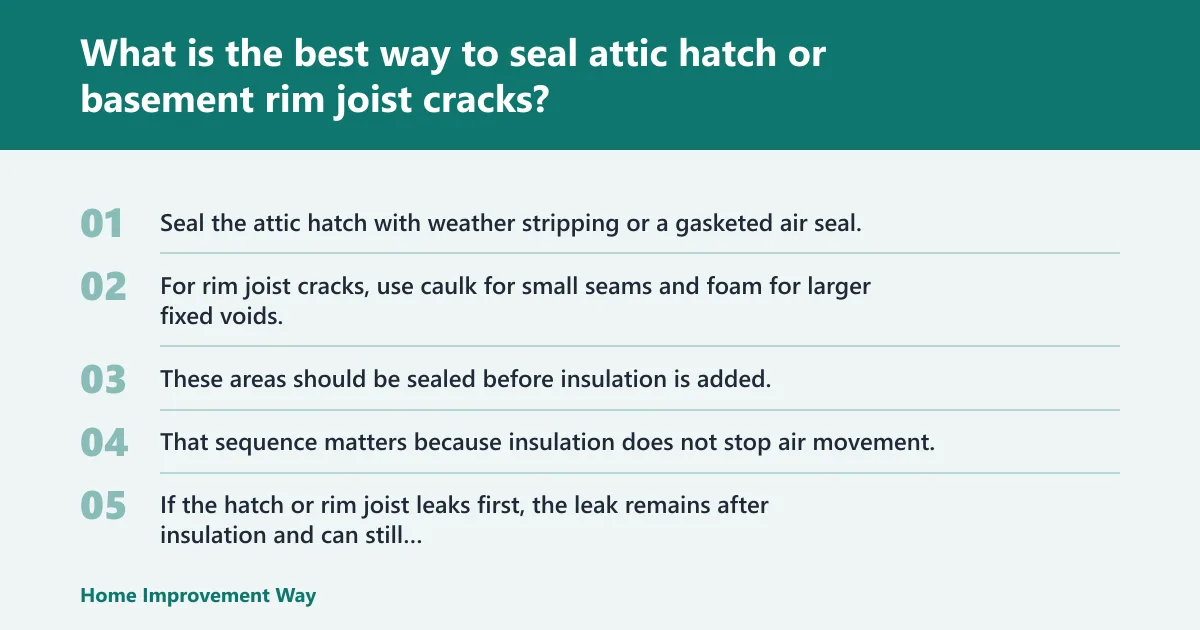
Seal the attic hatch with weather stripping or a gasketed air seal, then address insulation above or around the hatch cover. For rim joist cracks, use caulk for small seams and foam for larger fixed voids. These areas should be sealed before insulation is added.
That sequence matters because insulation does not stop air movement. If the hatch or rim joist leaks first, the leak remains after insulation and can still move heat and moisture.
Which air sealing material works best in moist areas?
Silicone caulk works best in moist areas because it is recommended for areas exposed to moisture. Closed-cell foam is also a better foam choice where moisture resistance matters because it offers better insulation and moisture resistance.
Use acrylic latex in dry, paintable indoor areas. Use polyurethane outside where exposure is harsher and the joint needs stronger weather durability. Moisture exposure should decide the material before color or price does.
How do I choose between silicone, acrylic latex, and polyurethane caulk?
Choose silicone for moisture, acrylic latex for general indoor use, and polyurethane for exterior applications. That rule covers most homes. If the joint is painted trim inside the house, acrylic latex is usually the easiest path; if rain or sun hits the seam, polyurethane is the stronger choice.
Also check movement. A static crack can take caulk, but a joint that opens and closes repeatedly may need weather stripping or a different seal entirely.
What is the best material for small gaps and cracks in a house?
Acrylic latex caulk is the best overall choice for most small interior gaps because it is easy to apply, easy to clean up, and works well on fixed cracks. For damp spots, silicone is better; for exterior joints, polyurethane is the better caulk family. The material should match the location.
For moving openings, switch to weather stripping instead of caulk. For larger voids, move up to foam or a specialty seal. One product cannot handle every gap size safely.
Which one should you buy
Choose by gap size first. Under 1/4 inch, buy caulk. Around doors and windows that move, buy weather stripping. At 1/4 to 1/2 inch in fixed gaps, low-expansion foam is usually the better fit. Larger openings may need foam plus backing or a specialty repair product.
Choose by location second. Moist rooms want silicone or closed-cell foam. Exteriors want polyurethane caulk. Chimney and flue damper areas need high-temperature sealant, not standard foam. Buy by the room only after you know the gap size.
Choose by budget and tools last. Foam tape and outlet gaskets are low-cost, fast fixes. Acrylic latex caulk is inexpensive and forgiving. Foam kits cost more but cover bigger voids faster. If you do not own a caulk gun, that matters too.
If you are deciding between materials for one room, start with the fixed cracks, then the moving parts, then the penetrations. That order keeps you from overbuying and helps you avoid using the wrong product where a simpler one would do.
Suppose a bedroom window has a thin crack at the casing, a loose sash, and a draft around the outlet on the same wall. The right mix is caulk for the casing, weather stripping for the sash, and an outlet gasket behind the cover plate. One material would not solve all three leak paths.
Caulks and sealants compared at a glance
Caulk is best for fixed cracks. Foam is best for larger openings. Weather stripping is best for moving doors and windows. Gaskets are best for outlet and switch plates. Specialty sealants belong where heat, moisture, or code requirements rule out standard products.
That is the short answer, but the right choice still depends on gap size. A 1/8 inch crack and a 1/2 inch void are not the same problem, and they should not get the same material.
Frequently asked questions
What size gap is too big for caulk?
Once a gap is wide enough that the bead would slump, shrink, or pull away, it is too big for caulk alone. As a practical guide, 1/4 inch is the point where backing material may be needed, and 1/2 inch often moves you toward foam or a specialty repair instead.
Sponsored / affiliate links. As an Amazon Associate I earn from qualifying purchases. I may earn additional commission from eligible campaigns.