Duct Sealing vs. Duct Insulation: What Fixes What?
Seal duct leaks first when airflow is weak, dust gathers at leaks, or bills are high; add insulation when ducts run through unconditioned spaces and the problem is heat gain or loss. Fixing the wrong issue wastes energy, leaves rooms uneven, and can strain equipment. This guide shows how to match each symptom and duct location to sealing, insulation, or both.
Duct sealing vs. duct insulation: what each one fixes
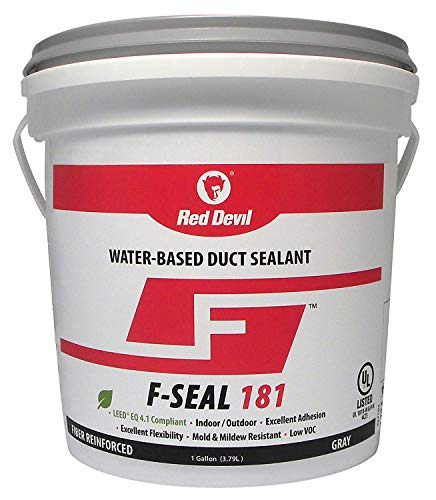
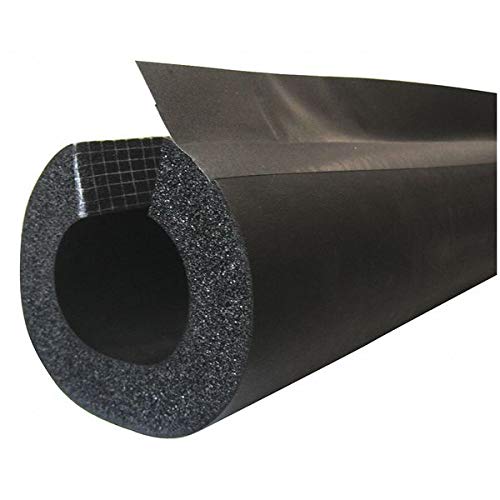

Ducts are conduits used in HVAC to deliver and remove air. They carry supply air, return air, and exhaust air, so small defects can affect airflow across the whole system. The key split is simple: duct sealing fixes air leakage and pressure loss, while duct insulation slows heat gain or loss through the duct wall.
That difference matters because one repair does not replace the other. A sealed duct can still lose heating or cooling energy if it runs through a hot attic or cold crawl space. An insulated duct can still leak air through loose joints, holes, or disconnected sections.
| Decision factor | Duct sealing | Duct insulation | Winner |
|---|---|---|---|
| Main problem fixed | Air leaks, loose joints, disconnected sections, pressure loss | Heat gain or loss through the duct wall | Depends on the failure mode |
| Works on leaky ducts | Yes | No | Duct sealing |
| Works on tight ducts in unconditioned spaces | Sometimes, but not for thermal loss | Yes | Duct insulation |
| Fixes crushed flex duct or broken joints | Only minor damage, if the section is repairable | No | Duct sealing |
| Typical best use | Stops wasted conditioned air | Reduces temperature change in duct runs | Tie |
Main problem fixed
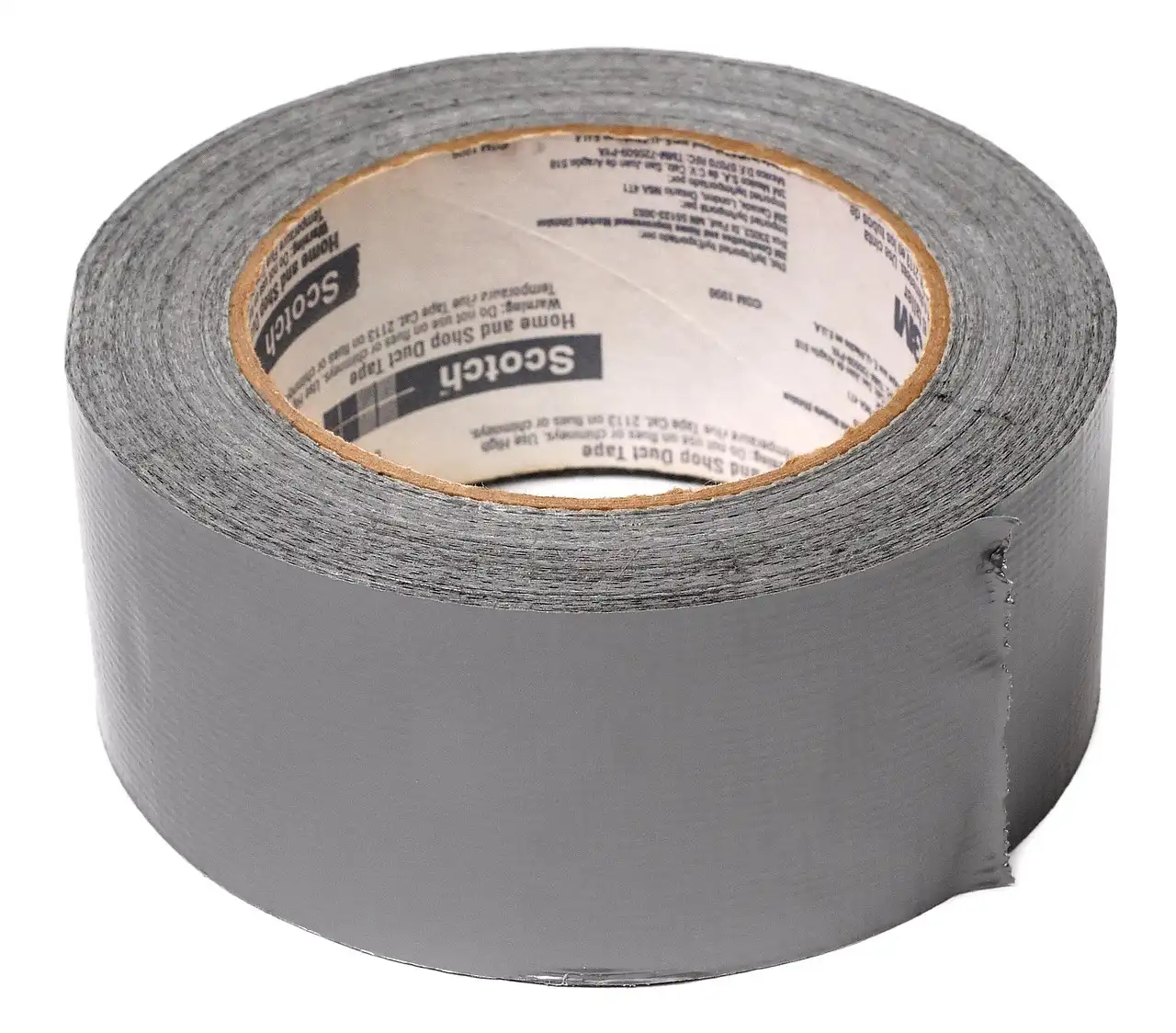
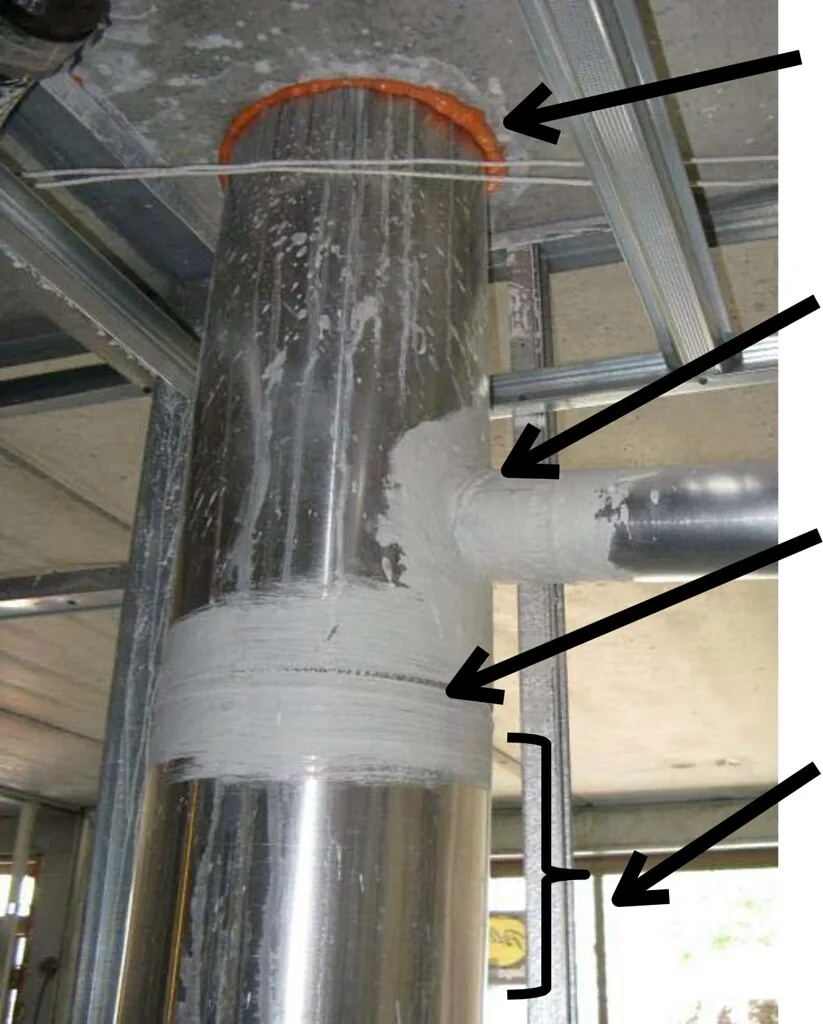
Duct sealing targets the path where air escapes. It uses special tapes or sealants to close leaks in existing ductwork, including damaged tape, loose collars, and small openings at joints. Duct insulation does a different job: it adds thermal resistance around the duct so the air inside changes temperature more slowly.
Works on leaky ducts
Leaky ducts waste conditioned air and can create room-to-room imbalance. If supply air escapes in an attic, for example, the air never reaches the room it was meant to serve. Insulation around that leak does not stop the loss; only sealing does.
Works on tight ducts in unconditioned spaces
When ducts are already airtight, insulation can be the better first repair if they sit in a hot attic, cold basement, crawl space, or garage. Metal ducts are often lined with faced fiberglass blankets or wrapped with fiberglass blankets, and that layer helps reduce heat gain or heat loss. A tight duct with poor insulation can still waste energy.
Fixes crushed flex duct or broken joints
Flexible ducts are typically made of flexible plastic over a metal wire coil, and in the U.S. the insulation is usually glass wool. Common failure points include compression, kinks, and poor support. Insulation does not correct any of those physical problems. If a flex run is crushed or disconnected, sealing or replacement comes first.
Typical best use
Sealing and insulation often work as a pair. Sealing stops air from escaping through gaps and loose connections. Insulation slows heat loss or gain through the duct wall. If you fix only one of those issues, the other can still keep bills high and comfort low.
📊 Flexible ducting is commonly sold in 25-foot boxes. Source: Duct (flow).
What does duct sealing fix?
Duct sealing fixes leaks, disconnected joints, and pressure loss in existing ductwork. It is the repair for openings that let conditioned air escape or unconditioned air enter the system. It also helps when damaged tape or old sealant has failed around seams, boots, or collars.
Where sealing matters most
Sealing usually matters most where ducts are exposed to rough conditions: attics, crawl spaces, garages, and basements. Those spaces often hold ducts that are hard to keep stable, and they also make leakage more noticeable because the air is lost outside the conditioned rooms.
Suppose a return run in a garage has a loose joint near the air handler. You may hear whistling, see dust buildup, and notice weak airflow at the registers. Sealing that leak improves delivery; wrapping the duct alone would not stop the loss.
When Aeroseal fits
Aeroseal is a duct-sealing method designed to seal leaks from inside the duct. It is marketed for residential and commercial duct sealing, but it still depends on duct leakage testing or diagnostics before or after the work so the leak problem is identified and checked.
Aeroseal is not the same thing as all duct sealing. It is one method inside the wider category of sealing repairs, which also includes tapes and sealants applied at accessible joints and seams.
What does duct insulation fix?
Duct insulation fixes heat gain or loss through the duct wall. That matters most when ducts run through unconditioned spaces, where summer heat or winter cold can change the temperature of the air inside before it reaches the rooms served by the system. It does not repair holes, tears, disconnected joints, or crushed sections.
Common insulation types
On sheet metal ductwork, duct wrap is an external fiberglass blanket insulation applied over the outside of the metal. Duct liner is a faced fiberglass blanket installed inside metal duct, and it is also used for sound absorption. Pre-insulated ductboard is another option, especially where the duct is built as an insulated assembly from the start.
Galvanized mild steel is the standard and most common duct material. Metal ducts made from it are often wrapped or lined. Rigid phenolic insulation ductwork is listed as a class 1 air duct to UL 181, which is a safety standard tied to certain pre-insulated duct systems. (en.wikipedia.org)
Why insulation cannot stand in for sealing
Insulation slows temperature change. It does not stop air from escaping through a gap. If a duct has holes, torn flex, or disconnected joints, air will still leak even if the outside is wrapped. That is why insulation on a damaged duct can hide the problem without solving it.
How duct location changes the first repair
Duct location often tells you which problem to tackle first. A duct run in a hot attic faces thermal loss and leakage. A duct in a basement may mainly need insulation if it is tight, while a duct in a crawl space may need sealing first if joints are loose or flex is sagging.
Attic ducts
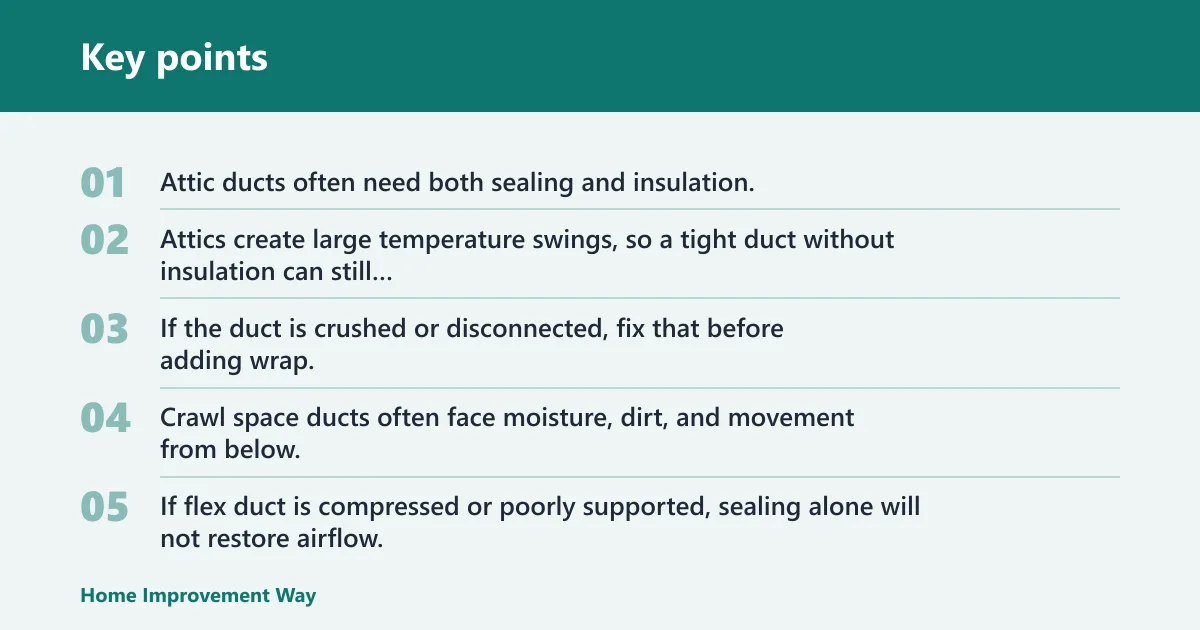
Attic ducts often need both sealing and insulation, but sealing should come first if the duct is obviously leaky. Attics create large temperature swings, so a tight duct without insulation can still lose a lot of heating or cooling effect. If the duct is crushed or disconnected, fix that before adding wrap.
Crawl space ducts
Crawl space ducts often face moisture, dirt, and movement from below. If flex duct is compressed or poorly supported, sealing alone will not restore airflow. If the duct is tight but exposed, insulation can help reduce heat loss or gain after the leaks are closed.
Basement ducts
Basement ducts may need insulation when the space is cooler than the supply air in winter or warmer than the return path in summer. If the ductwork is still leaking around seams or boots, sealing should come first. A tight basement duct may not need much insulation if the basement is already conditioned.
Garage ducts
Garage ducts should get close attention because garages can swing far from indoor temperatures. If supply air is leaking there, sealing is the first move. If the duct is intact but exposed, insulation helps prevent temperature change on the way to the living space.
Choose duct sealing if… / Choose duct insulation if…
Choose duct sealing if the problem is leakage, loose joints, or pressure loss. Choose duct insulation if the ducts are tight but exposed to extreme temperatures. Choose both if the duct runs through an unconditioned space and is also leaky. That order keeps you from insulating a defect that still wastes air.
Choose duct sealing if…
- You can see holes, tears, rust openings, or loose connections.
- Rooms are uneven because air is escaping before it reaches the registers.
- You hear hissing, feel air at seams, or find dust collecting near leaks.
- The duct is in decent shape and the damage looks minor enough to repair.
Choose duct insulation if…
- The duct is already tight but runs through an attic, crawl space, or garage.
- Supply air feels much warmer or colder by the time it reaches the room.
- You have bare metal ducts that are exposed to large temperature swings.
- The issue is thermal loss, not air leakage.
When do you need replacement instead of repair?
Replacement makes more sense when ducts are severely damaged, very old, or improperly sized. Most ductwork lasts 20-25 years before needing replacement, and if damage affects more than 30% of ductwork, replacement often makes more sense than patching. That is especially true when the system has repeated failures.
Signs repair is no longer enough
Crushed or badly sagging flex duct is a common replacement case. Heavy rust, major tears, repeated disconnections, or sections that cannot hold shape also point toward replacement. If patching costs approach the price of a better duct assembly, replacing the run is usually the cleaner fix.
Picture a 20-foot flex run in a crawl space with three kinks, a torn outer jacket, and a loose connection at one end. Sealing one split will not restore proper airflow if the duct is still compressed and unsupported. In that case, a new run is often the better repair path.
Can insulated ducts still leak air?
Yes. Insulated ducts can still leak air if there are holes, loose joints, failed tape, or disconnected sections underneath the insulation. The insulation only changes heat transfer through the duct wall; it does not close openings or restore pressure balance. That is why insulated-but-leaky ducts still waste conditioned air.
Will duct insulation lower your energy bills?
It can lower bills when duct runs are exposed to hot or cold unconditioned spaces and the ducts are already reasonably airtight. The savings come from reducing heat gain or loss, not from stopping leaks. If the ducts are already leaking, sealing usually needs to happen first.
Where should duct sealing be done in an attic, crawl space, or basement?
Duct sealing should be done wherever the leaks are, but the attic, crawl space, basement, and garage are the places to inspect first because they commonly hold exposed ductwork. Sealing is most effective at joints, seams, boots, and connections near the air handler or at damaged flex sections.
Is Aeroseal the same as duct sealing?
No. Aeroseal is one internal duct-sealing method, while duct sealing is the broader repair category. Aeroseal is used to seal duct leaks from inside and is often chosen when hidden leaks are hard to reach. It still needs duct leakage testing or diagnostics to confirm the problem and verify the result.
Frequently asked questions
What’s the difference between duct sealing and duct insulation?
Duct sealing closes leaks in existing ductwork, using tapes or sealants to stop air leakage, airflow loss, and pressure problems. Duct insulation adds thermal resistance around or within the duct so air keeps more of its temperature as it moves through unconditioned spaces.
Does duct sealing stop air leaks better than insulation?
Yes. Duct sealing is the repair that actually targets air leaks. Insulation cannot close holes, loose joints, or disconnected sections. If air is escaping, sealing is the direct fix; insulation may still help after the leaks are closed.
When should you seal ducts instead of insulating them?
Seal ducts first when you find loose joints, visible holes, damaged tape, rust openings, or pressure loss. If the duct is leaking, insulation only covers the problem. Sealing is also the better first move when the duct is already losing conditioned air in an attic, crawl space, basement, or garage.
How do I know if my ducts need sealing or replacement?
Minor holes, loose connections, and failed tape usually point to sealing. Crushed flex, heavy rust, major tears, repeated disconnections, or ductwork older than 20-25 years may point toward replacement. If more than 30% of the ductwork is damaged, replacement often makes more sense than piecemeal repair.
Sponsored / affiliate links. As an Amazon Associate I earn from qualifying purchases. I may earn additional commission from eligible campaigns.