
Best Winter Window Insulation Kits (2026): We Compared
The best removable winter window insulation is the one that matches the leak: shrink film for cold glass, a draft stopper for sill leaks, and cellular shades for added comfort. Pick the wrong fix and you can still lose heat, feel cold air, and spend money on a temporary solution that barely changes indoor comfort. This guide compares those options by window type, rental rules, insulation value, and removal ease so you can pick the right setup.
For bare glass, shrink film is usually the strongest temporary option. For leaks at the bottom edge, start with a draft stopper. For a softer feel and less heat loss, add cellular shades or thermal curtains over the window treatment you already have.
Quick comparison
| Product | Badge | Best for | Price | ||
|---|---|---|---|---|---|
 |
3M Indoor Window Insulation, Insulator Kit for 5 Windows3M | Our pick | 5 windows · clear · indoor kit | $17.54
Price as of 30 Oct 2026
|
View |
 |
KAKICLAY 36 Inch Draft Stopper for Bottom of Doors andKAKICLAY | Pair with it | 36 inch · weighted · door/window | $16.99
Price as of 30 Oct 2026
|
View |
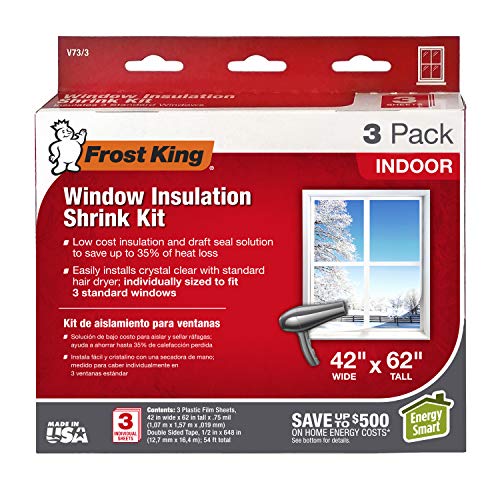 |
Frost King V73/3H Shrink Window Kit, Indoor, 42 x 62 in, 3Frost King | Budget pick | 42 x 62 in · clear · 3 pack | $4.98
Price as of 30 Oct 2026
|
View |
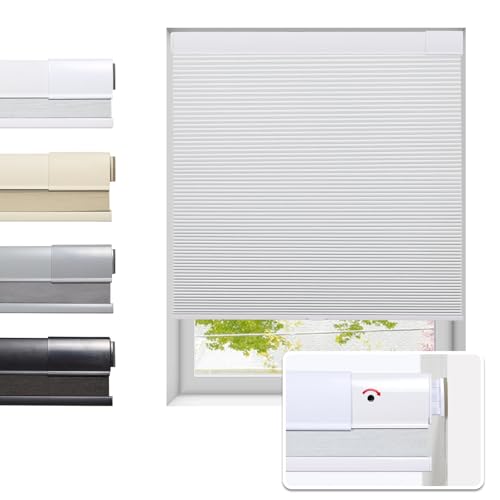 |
Tonature No Drill Cellular Shades for Indoor Windows,Tonature | Upgrade pick | Custom size · white · cordless | $29.99
Price as of 30 Oct 2026
|
View |
The core trade-off is simple: film seals the glass, draft stoppers block floor-level leakage, and shades add another insulating layer without sealing the window itself. The best choice depends on where the cold air enters and how much visibility, removal work, and residue risk you can accept.
Use the table below to match the problem to the fix before you buy. It separates removable options from semi-permanent sealing ideas, so you can avoid spending on the wrong category.
📊 This Old House says poor window insulation can waste about 30% of heating and cooling energy. Source: How To Insulate Apartment Windows for Winter.
How we chose
We compared options on five points that matter in winter: leak source fit, removal and residue risk, window type compatibility, visibility, and renter safety. We also separated true removable insulation from fixes that are better left for long-term maintenance.
That matters because a sash leak, a sill leak, and a glass-loss problem are not the same job. A product that helps one can miss the others completely.
- Leak source fit: glass, sill, moving parts, or frame gaps.
- Removal risk: whether the product comes off cleanly after the season.
- Window compatibility: double-hung, casement, sliding, or irregular sizes.
- Visibility and comfort: clear film versus shaded or opaque layers.
- Renter safety: low-damage choices that avoid permanent changes.
3M indoor window insulation: best for glass drafts
Choose this type of kit when the problem is cold glass, a chilly room perimeter, or light air movement across the pane. Based on the manufacturer’s kit details, this 3M option covers up to 5 windows and includes mounting tape, so it suits renters and homeowners who want a temporary seasonal barrier.
Window insulation film works by creating an airtight seal over the glass. It uses double-sided tape around the frame, then shrinks with a hair dryer so wrinkles tighten and the final seal forms across the opening.
That setup is why film is usually the best all-around removable option for glass loss. It is also the option most likely to help when you want a clear finish rather than a bulky visible layer.
The drawback is removal work. Tape residue can be an issue if the frame is dusty or painted poorly, and film is a poor fix for leaks at the sash, jamb, or sill that sit outside the pane itself.
How film kits work
Most kits include plastic film and mounting tape. You apply the tape to a clean, dry frame, press the film in place, and use a hair dryer to pull the film tight. That final pass removes slack and helps the seal settle evenly.
Family Handyman describes shrink film as creating an insulating buffer of air, and This Old House notes that window insulation film creates an airtight seal. That combination is why it is often the first removable choice for winter drafts.
What to check before buying a kit
Look at film roll size, window coverage count, thickness or durability, clarity, and surface compatibility. A kit that fits one small sash may not cover a wider picture window without gaps, and a very clear film is usually better if you want to keep daylight and visibility.
Two product details are especially useful. Duck Brand says its Window Insulation Kit covers up to 10 windows, while Duck MAX Strength Window Insulation Kit is described as two times thicker. Frost King V73/3H is a 3 pack sized for 42 x 62 in windows, and RGJ Window Insulation Kit uses a 63 × 394 inch film per kit.
Those details help you compare coverage, not just price. If your windows are oversized or irregular, you may need extra overlap so the film reaches the full frame without stretching too thin.
When film is the wrong choice
Film is not the best fix for a loose sash, a warped frame, or a gap at the meeting rail on a double-hung window. It also does little for a draft that enters under the window, where the air is moving below the pane.
Suppose a 36-inch double-hung window feels cold only at the lower edge. Film may still help a little, but a draft stopper at the sill will usually solve the symptom more directly.
KAKICLAY draft stopper: best for sill leaks
Use a draft stopper when cold air comes from the bottom of the window rather than the glass. This weighted style is meant for doors and windows, and it is a sensible temporary choice for double-hung windows with a weak seal near the sill.
Its main strength is simple placement. You set it where the draft enters, and you can remove it at the end of the season without tools or adhesive cleanup.
The drawback is scope. A draft stopper does nothing for heat loss through the pane itself, and it will not fix sash gaps or moving-part leaks higher in the frame.
Why sill leaks need a different fix
Air that slips under the window behaves differently from air that passes through glass. If the leak is at the bottom edge, a bottom-mounted barrier can be more useful than a full-window film setup.
For many renters, that makes this one of the easiest temporary add-ons to try first. It is also the least visible option in a room with existing shades or curtains.
Tonature cellular shades: best for renter-friendly layering
Cellular shades are a strong choice when you want a removable layer that improves comfort without taping plastic to the frame. Family Handyman identifies cellular or honeycomb shades as recommended window treatments, and they work best when paired with curtains during winter.
This no-drill option is useful for renters who want a cleaner look than film provides. It also fits the “leave it in place all season” approach better than a product you plan to remove and reinstall repeatedly.
The drawback is that shades alone do not seal a leaky window. They reduce heat loss and make the room feel warmer, but they are usually not enough for severe drafts on their own.
How shades and curtains work together
Think of cellular shades as a layer that slows heat loss across the glass. Add thermal curtains over them, and you create a thicker barrier that acts like a blanket over the window surface.
That layered setup is useful when you want better comfort without a visible film. It is still a comfort strategy, not a fix for a broken seal or a strong frame leak.
Frost King V73/3H: best for small-window kits
This 3-pack is a straightforward option when you need a basic shrink film setup for standard-sized windows. Frost King V73/3H is sized for 42–62 inch windows, which makes it useful when you want a kit aimed at a common range rather than a custom-sized roll.
Its strength is convenience. You get a compact pack for multiple windows, and the indoor shrink-film format is familiar to anyone who wants a seasonal solution with a modest upfront cost.
The drawback is fit. A fixed-size pack is less flexible for oversized, irregular, or unusually tall windows, so it may leave you needing extra material or a different product entirely.
Which option fits your window type?
The best option depends on how the window opens and where the gap sits. Double-hung windows often benefit from a bottom draft stopper plus film on the glass, while casement and sliding windows usually call for film or shades that do not interfere with moving parts.
If your window shape is irregular or wider than a standard kit, size and overlap matter more than brand. Measure first, then buy to fit the frame you actually have.
Double-hung windows
Double-hung windows often leak at the lower sash and bottom edge. A draft stopper can help with sill air, while film helps with the glass surface. If you only pick one, match it to the strongest leak you feel by hand.
A common first-timer mistake is sealing the pane and ignoring the lower gap. That can leave you with a clear window that still feels cold.
Casement windows
Casement windows tend to leak at the moving edges and latch side. Weatherstripping fits better here than film alone because the leak is often at the jamb or sash, not across the glass.
For renters, a removable add-on such as shades may be easier than changing the frame. Film still helps if the glass itself is the main problem, but it will not solve every moving-part gap.
Sliding windows
Sliding windows often leak along the track and meeting surfaces. Film can reduce glass loss, but the moving track is where you should inspect first. If the gap is at the side or bottom track, a non-permanent seal around the moving area is usually more relevant than extra film.
When visibility matters less than comfort, pairing shades with curtains can soften the cold without blocking operation.
Oversized or irregular windows
Oversized or irregular windows need more careful sizing because a kit that is only barely large enough can leave thin spots or exposed corners. That is where film roll size and coverage count matter more than product name.
If the frame shape is unusual, choose a kit with enough material to overlap the edges cleanly. A larger roll is often easier to adapt than a narrow pre-cut pack.
What is easiest to remove after winter?
The easiest removable setup is usually a draft stopper, followed by shades or curtains, then shrink film with tape cleanup. Film can come off cleanly, but only if the tape was applied to a clean, dry surface and the adhesive was not left on too long.
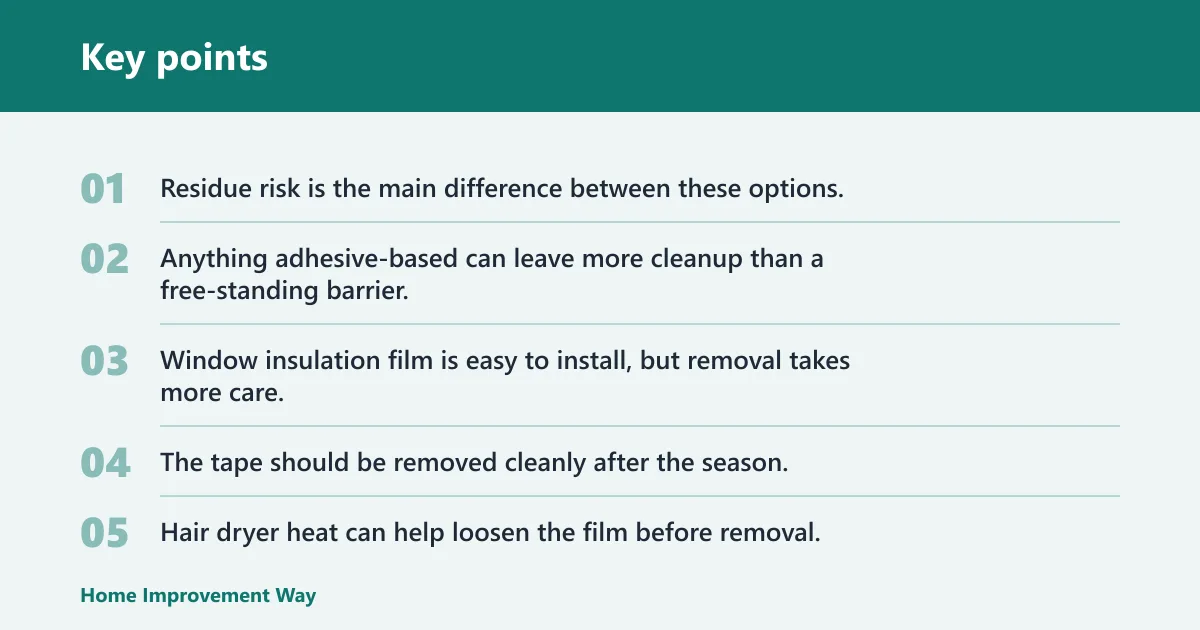
Residue risk is the main difference between these options. Anything adhesive-based can leave more cleanup than a free-standing barrier, especially on older paint or dusty frames.
Film removal and tape cleanup
Window insulation film is easy to install, but removal takes more care. The tape should be removed cleanly after the season, and the frame should be dry and clean when the kit goes up in the first place. That lowers the chance of sticky residue.
Hair dryer heat can help loosen the film before removal. The same tool that tightens wrinkles can also help break the bond later.
Draft stopper removal
Draft stoppers are the simplest removable option. You lift them away, store them, and reinstall them next season if the material still holds its shape.
That makes them a strong fit for renters who want zero adhesive cleanup and minimal effort at the end of winter.
Shade and curtain removal
Cellular shades and thermal curtains are usually easier to remove than taped film, but they are not always quick to reinstall if hardware changes are needed. Their visibility advantage is strong, though, because they do not leave plastic across the glass.
Thermal curtains help, but they are a supplemental layer. They are not enough alone for severe drafts.
Residue risk by option
Film kits carry the highest residue risk because they depend on double-sided tape. Draft stoppers have the lowest residue risk because they do not attach to the frame. Shades sit in the middle, depending on whether they use no-drill hardware or a more permanent mount.
Window insulation decision matrix
This matrix ranks removable winter window insulation by leak source, window type, removal effort, visibility, and renter safety. Use it to match the fix to the problem instead of buying the most familiar product.
| Problem type | Best option | Install time | Seasonal removal ease | Residue risk | Best-use scenario |
|---|---|---|---|---|---|
| Cold glass, little frame leakage | Window insulation film | Moderate | Moderate | Medium | Clear, temporary seal for a main living room window |
| Draft at the bottom edge | Draft stopper | Fast | Very easy | Low | Double-hung windows with a sill leak |
| Leak at moving parts | Weatherstripping | Moderate | Moderate | Varies | Casement or sliding windows with sash gaps |
| Comfort upgrade with less visible plastic | Cellular shades plus curtains | Moderate | Easy to moderate | Low to medium | Rental rooms where appearance matters |
| Severe draft at multiple points | Film plus draft stopper | Moderate to long | Moderate | Medium | Windows with both glass loss and sill leakage |
Now compare by use case. Film is strongest on glass, draft stoppers are strongest at the sill, and shades are strongest for comfort and appearance. Weatherstripping is best when the leak is at a moving part rather than the pane itself.
Picture a 28-inch apartment window that feels cold at the lower sash but looks clear enough during the day. A draft stopper plus a simple curtain may be the better answer than taping plastic over the entire frame.
Suppose a wider living-room window measures 63 inches across and the frame is otherwise sound. A larger film kit or roll is a better fit than a small pre-cut pack that would leave the corners exposed.
Choose film if… / Choose a draft stopper if…
Choose film if the glass itself is the coldest surface, you want the clearest view, and you can prep a clean, dry frame for tape. Choose a draft stopper if the leak is at the bottom of the window, especially on a double-hung unit, and you want the easiest seasonal removal.
Choose cellular shades if you want a more finished look and can accept that they are supplemental rather than complete insulation. Choose weatherstripping if the air is slipping through moving parts, not across the glass.
- Choose film for cold panes and clear, temporary coverage.
- Choose a draft stopper for sill leaks and the fastest cleanup.
- Choose cellular shades for renter-friendly layering and comfort.
- Choose weatherstripping for gaps at jambs, sashes, and tracks.
- Choose two products when the leak comes from both glass and frame.
Which one should you buy?
The best budget choice is usually a shrink-film kit if your problem is glass loss, because it gives you the strongest temporary seal for the money. The best apartment choice is often a no-drill cellular shade or a simple draft stopper, since both avoid major surface damage.
If the draft source is unclear, start with the tissue test on a breezy day to find where air is moving. Utility Bill Busters recommends that test, and it is useful because it tells you whether the leak is at the glass, the sill, or the moving parts.
For most drafty windows, plastic is usually the best first move when the pane is the problem. For moving-part leaks, weatherstripping belongs in the conversation. For bottom-edge drafts, a stopper is usually faster and cleaner.
Will window insulation help reduce heating bills? Yes, it can help by reducing heat loss and improving comfort, but the size of the effect depends on how leaky the window is and which product you use. This Old House says poor window insulation can waste about 30% of heating and cooling energy, which is why sealing the right leak source matters.
Windows with broken seals, warped frames, or heavy condensation between panes may need repair rather than another temporary layer. Removable insulation can mask discomfort, but it cannot restore a failed window unit.
Frequently asked questions
What is the best window insulation for winter?
The best winter window insulation depends on the leak source. Shrink film is usually the strongest removable choice for cold glass, a draft stopper works best for bottom-edge leaks, and cellular shades help most when you want comfort layering without a taped seal.
What is the best window insulation kit for winter?
The best kit is the one that fits your window size and still leaves enough material to seal the frame cleanly. Check coverage count, roll dimensions, thickness, and clarity. The same source says one kit covers up to 10 windows, while some larger kits use longer film rolls for broader coverage.
What is the best removable window insulation for winter?
For most people, shrink film is the best removable option for winter because it creates an airtight seal over the glass and comes off at season’s end. If the draft is under the window instead of through the pane, a draft stopper is the easier removable fix.
Does window insulation film work better than bubble wrap?
Film is usually the better choice when clarity, a cleaner look, and a tighter seal matter. Bubble wrap can reduce glare and may add a layer of air, but it blocks visibility and is better treated as a lower-clarity fallback rather than the main winter solution.
How do I choose the right window insulation kit size?
Measure the width and height of the full frame before you buy, then check the kit’s coverage count and film dimensions against those measurements. If the window is oversized or irregular, choose a larger roll or a kit with enough overlap so the seal reaches the edge without stretching thin.
Which window insulation works best for apartments or rentals?
Rentals usually do best with removable, low-damage choices: shrink film, draft stoppers, and no-drill cellular shades. Film helps most on glass, draft stoppers help most at the sill, and shades are the cleanest-looking option when you want better comfort without a taped finish.
Sponsored / affiliate links. As an Amazon Associate I earn from qualifying purchases. I may earn additional commission from eligible campaigns.