
How to Weatherproof Windows Around Window AC Units
Seal the side gaps with foam panels or backer rod, weatherstrip the sash contact line, and keep the exterior drain path open. Poor sealing lets in hot air, rain, dust, and pests, and it can make the unit rattle. For rentals, use friction-fit foam boards, removable foam tape, or clamp-on inserts that come out cleanly.
What you’ll need
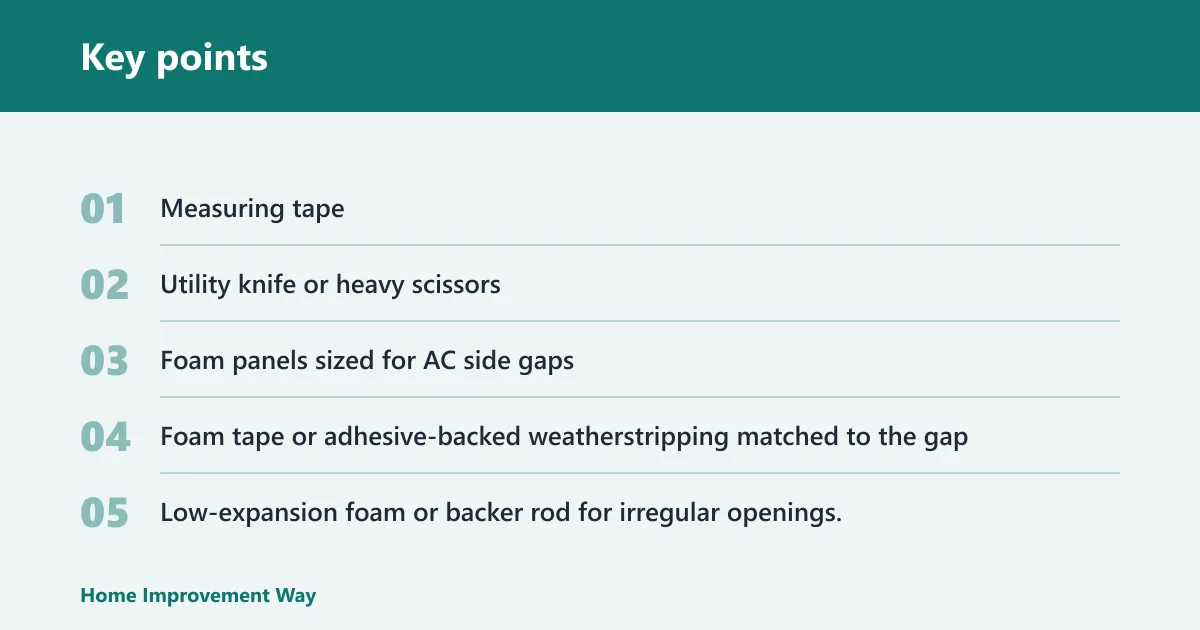


- Measuring tape
- Utility knife or heavy scissors
- Foam panels sized for AC side gaps
- Foam tape or adhesive-backed weatherstripping matched to the gap
- Low-expansion foam or backer rod for irregular openings, if allowed by the window type and your lease
- Mounting brackets or screws from the installation kit, if provided
- Window lock, sash stop, or anti-lift hardware matched to the window type
- Flashlight
- Clean cloth and mild cleaner
Which gap gets which seal?
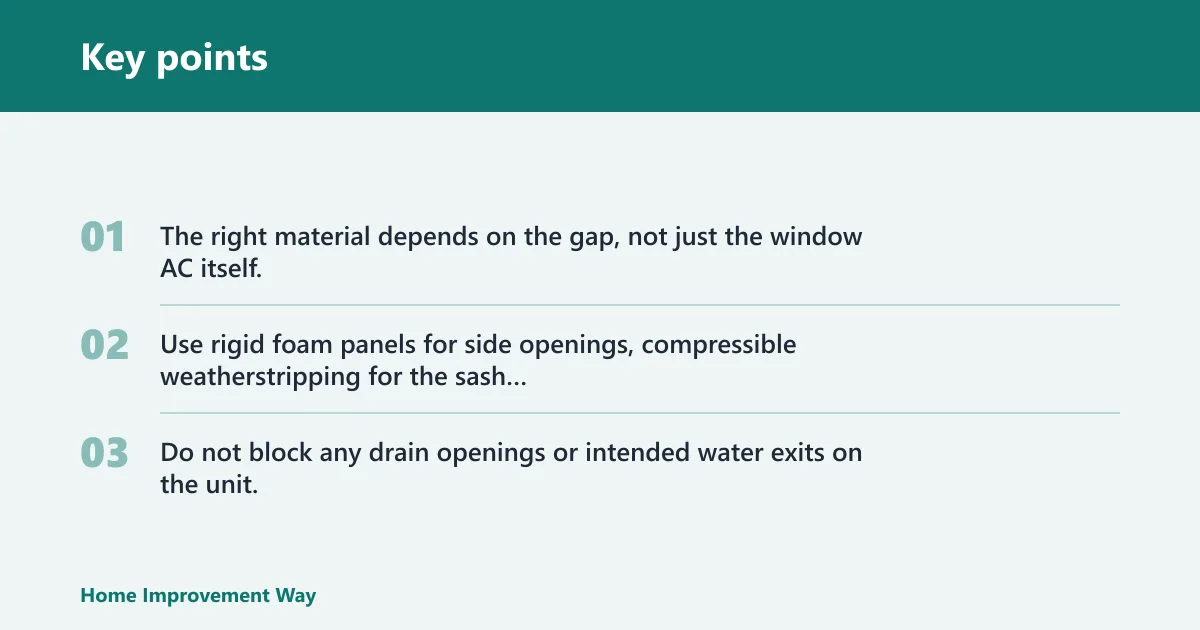
The right material depends on the gap, not just the window AC itself. Use rigid foam panels for side openings, compressible weatherstripping for the sash contact line, and only exterior sealing at frame gaps that are supposed to be closed. Do not block any drain openings or intended water exits on the unit.
| Gap location | Common gap width | Best material choice | Renter-safe option | Common failure mode |
|---|---|---|---|---|
| Side gaps beside the cabinet | About 1/4 to 2 in. | Rigid foam panel, then foam tape at edges | Cut-to-fit foam board held by friction | Panel bows inward or leaves thin air channels |
| Top sash gap above the unit | About 1/8 to 1/2 in. | Compressible weatherstripping matched to the gap | Adhesive-backed foam tape | Sash lifts, loosens, or still leaks air |
| Lower sash contact line | Direct contact, or a slight uneven edge | Window lock, stop, or anti-lift hardware | Removable sash stop or clamp-style lock | Sash can open, rattle, or ride up on the cabinet |
| Exterior trim gaps around the frame | Hairline to about 1/4 in. | Exterior-rated sealant only where water should be blocked | Removable trim gasket or temporary seal strip | Water is trapped where it should drain |
Install the unit and confirm the fit
Most window AC units sit partially inside and partially outside the window frame, and proper installation creates a tight seal. The window sash usually closes down onto the top of the unit, especially in single- and double-hung windows. Start with the manufacturer’s instructions, because support and drainage requirements vary by model.
- Set the unit according to the model’s placement and support instructions.
- Measure each gap before cutting any insert. Check the left side, right side, top sash line, and exterior frame edges separately.
- Confirm that the sash closes onto the unit without force. If it binds, stop and refit before sealing.
- Install the support hardware or fasteners included with the unit to reduce instability.
- Check that the cabinet remains steady before you add the finish seals.
Seal the side gaps first
The side gaps are usually the biggest air leaks. Foam panels are common in AC installation kits because they block air and weather intrusion while covering the cabinet edges. For uneven openings, rigid foam often works better than soft foam tape because it holds shape instead of collapsing.
- Measure the opening from frame to cabinet edge on both sides.
- Cut the foam panel to fit tightly without bending the window frame.
- Add foam tape where the panel meets the frame if you see a thin light gap.
- Use removable inserts if you need to take the unit out later without damage.
Suppose one side gap measures 7/8 inch and the other is closer to 1 1/4 inch. Cut each insert separately. A single oversized strip often leaves a wrinkled edge that leaks air and pulls loose when the unit vibrates.
Secure the sash against movement
Opening the window with the unit installed is usually unsafe. It can destabilize the unit, create a fall hazard, and break the seal that keeps hot, humid, or polluted air out. Keep the sash closed on the unit and locked or stopped in place.
- Use the lock or stop listed for your window type.
- Keep support brackets separate from anti-opening hardware. Brackets hold the unit; locks keep the sash from lifting.
- Check that the sash cannot slide up, drift open, or rattle against the cabinet.
- Add window guards or child-proof latches if the window opens into a child or pet access area.
Single-hung, double-hung, and slider windows
Single-hung and double-hung windows are the most common matches for a standard window AC because the sash closes down onto the unit. Slider windows can work with model-specific kits, but the seal is easier to compromise if the panel is opened or if the fit is loose. Check the manufacturer’s instructions for your exact window style before you seal anything.
Seal exterior trim and check for leaks
Exterior gaps can admit rain even when the interior looks tight. Seal only the frame gaps that should be closed, and leave the unit’s designed drainage path alone. Do not block drain openings or intended weep paths on the cabinet. Water that should exit the unit must still have a clear route out.
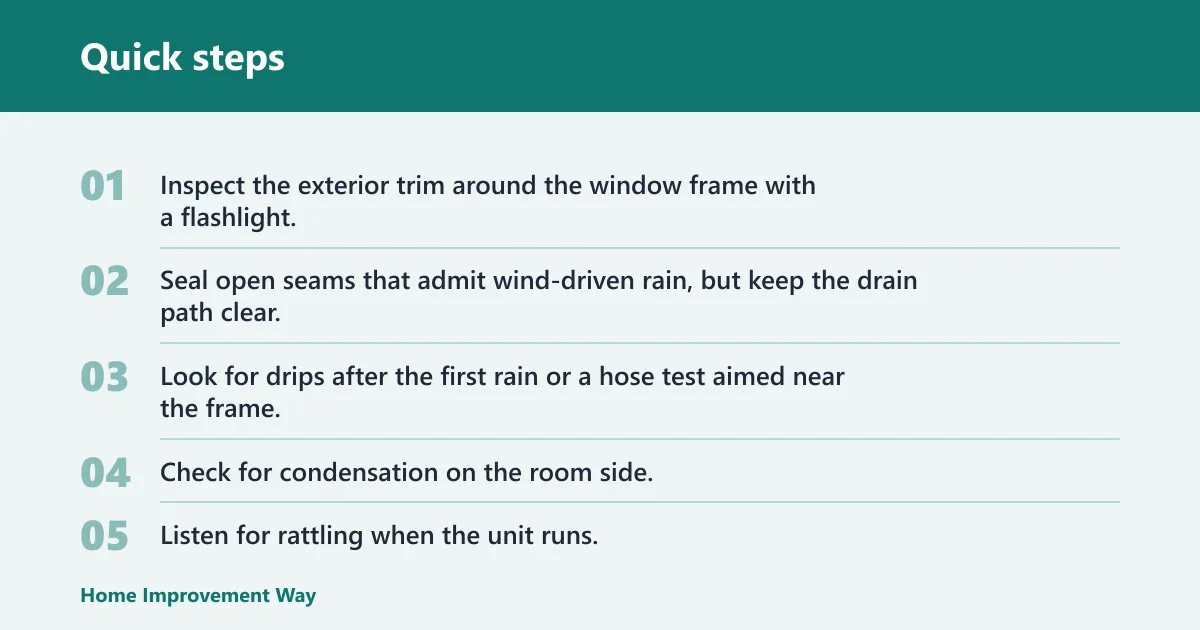
- Inspect the exterior trim around the window frame with a flashlight.
- Seal open seams that admit wind-driven rain, but keep the drain path clear.
- Look for drips after the first rain or a hose test aimed near the frame, not at the cabinet openings.
- Check for condensation on the room side. If it appears at the sash line, the seal there is too loose.
- Listen for rattling when the unit runs. Movement usually means the sash or side panel still needs support.
Picture a unit that stops the draft but still leaves droplets on the sill after a storm. That points to an exterior water path, not a side-gap problem. Seal the exposed trim seam, then recheck the sill after the next rain instead of packing more foam into the cabinet edges.
Gap-by-gap sealing selector
Use this selector to match the gap to the material. When you need a removable fix, choose the renter-safe option in the same row. The most common failure mode tells you what to watch for after the first install.
| Gap location | Common gap width | Best material choice | Renter-safe option | Common failure mode |
|---|---|---|---|---|
| Left or right side gap | 1/4 to 1 1/2 in. | Rigid foam panel with edge weatherstripping | Friction-fit foam board | Soft foam compresses too much and leaves a leak path |
| Top sash gap | 1/8 to 1/2 in. | Adhesive-backed weatherstripping matched to the gap | Removable foam tape | Sash does not close fully and the seal breaks |
| Lower sash contact line | Direct contact point | Window lock or anti-lift stop | Clamp-on sash stop | Window can lift, rattle, or open accidentally |
| Exterior trim gap | Hairline to 1/4 in. | Exterior-rated sealant where water should not enter | Temporary trim seal strip | Sealant blocks water exit points or peels away |
Common mistakes
One filler will not solve every gap. Side openings need structure, while the sash line needs compressible sealing and movement control. Use the right fix for each point.
- Using foam tape on a wide side gap: it compresses too much and leaves a draft.
- Overfilling the top gap: the sash may not close fully, which weakens the seal.
- Blocking drain openings or intended weep paths: water backs up where it should leave the unit.
- Mixing up support brackets and anti-opening hardware: the unit can stay upright but still allow the sash to move.
- Leaving the sash unsecured: this increases fall risk and makes the AC easier to disturb.
Frequently asked questions
How do I weatherproof the gaps around a window AC unit?
Seal the side gaps with foam panels, match weatherstripping to the sash contact line, and keep the exterior water path clear. Start with the largest air leak, then recheck all four sides after the unit runs. Start with the manufacturer’s instructions before you add sealant or hardware.
What should I use to seal around a window air conditioner?
Use foam panels for the side openings and foam-based or adhesive-backed weatherstripping for smaller contact points. If the gap is uneven, choose the material that fits the widest section without forcing the frame. For rentals, use friction-fit inserts and removable weatherstripping, and avoid permanent sealant where possible.
Can you open a window with a window AC unit installed?
No. Most window AC units require the window to be closed down onto the top of the unit, and opening the sash can destabilize the installation. It also breaks the seal, which lets outside air and moisture enter. Keep the sash locked or stopped in place.
How do I keep rain from leaking around a window AC?
Check the exterior trim first, then seal only the gaps that should be closed. Do not block drain openings or intended weep paths on the cabinet. If water still appears indoors after rain, inspect the side panels and the top sash line for gaps that open under wind pressure.
What is the best way to stop drafts around a window AC unit?
The best fix is a gap-specific seal. Use rigid foam for side spaces, weatherstripping for the sash contact line, and a secure sash lock so the window cannot drift open. Drafts usually come from a loose side panel, not from the center of the unit.
What should renters use to seal a window AC without damaging the window?
Renters should use friction-fit foam panels, removable weatherstripping, and clamp-style sash stops when possible. Check your lease before installing or removing the unit. Avoid permanent adhesive on finished trim unless the lease allows it and the material can be removed cleanly.
How do I secure a window AC so the sash stays closed?
Use the lock or stop that fits your window type, then verify that the sash cannot lift off the cabinet. Support brackets hold the unit; they do not replace a sash lock. Add window guards or child-proof latches where needed for extra protection.
Sponsored / affiliate links. As an Amazon Associate I earn from qualifying purchases. I may earn additional commission from eligible campaigns.