How Much Does It Cost to Weatherproof Windows?
Weatherproofing windows usually costs about $20 to $150 per window for DIY fixes, or roughly $150 to $600+ per window for professional work, with replacement often becoming the better choice when rot, broken sash parts, or failed seals keep coming back. Missed gaps can let drafts in, and cold glass surfaces can make indoor humidity condense on the glass, pushing heating bills higher. This guide breaks down seasonal DIY fixes, pro pricing, and the signs that patching an older window is no longer worth it.
Costs, lifespan, and skill by weatherproofing method


The cheapest weatherproofing jobs are small, seasonal fixes. Caulk, weatherstripping, shrink film, and draft hardware usually stay in the low-cost range, while storm windows and interior inserts cost more because they add a new barrier layer. The real budget question is not “Can you seal it?” but “How long will that fix last on this window type?”
| Method | Typical DIY material cost per window | Typical pro-installed cost per window | Lifespan | Skill level | Best window condition | When this fails |
|---|---|---|---|---|---|---|
| Caulk | $3 to $10 | $50 to $150 | 1 to 5 years | Beginner | Fixed exterior gaps around trim, casing, or stationary joints | Fails on moving parts, cracked beads, or joints that keep opening |
| Weatherstripping | $5 to $25 | $75 to $175 | 2 to 5 years | Beginner to intermediate | Double-hung, casement, or sliding windows with light air leakage | Fails when compressed, torn, missing, or installed on warped sashes |
| Window film | $8 to $20 | $40 to $100 | One season | Beginner | Interior glass that needs a temporary insulation layer | Fails when the adhesive loosens, the film wrinkles, or the window must open often |
| Shrink film kit | $10 to $25 | $40 to $100 | One season | Beginner | Rental units, drafty single panes, and temporary winter coverage | Fails if the tape does not stick well, or if the pane is handled often |
| Draft stopper | $10 to $30 | $35 to $90 | 1 to 3 years | Beginner | Lower sills, movable sashes, and obvious bottom-edge drafts | Fails where the window has multiple leak points or hardware issues |
| Sash lock or sweeps | $8 to $35 | $50 to $120 | 3 to 10 years | Beginner to intermediate | Operable windows with loose closure, light rattle, or worn bottom edges | Fails when the frame is out of square or the sash will not close flat |
| Storm window | $75 to $250 | $200 to $600+ | 10 to 20 years | Intermediate to advanced | Older windows that need a second barrier against air and moisture | Fails if the base window is rotted, badly bowed, or impossible to close |
| Interior insert | $150 to $500 | $300 to $800+ | 10 to 20 years | Intermediate | Windows that need a tighter, removable insulating layer than film can provide | Fails if the opening is too irregular or the sash cannot hold a clean fit |
For performance, the main point is simple: tighter sealing usually cuts heat loss, but the size of the gain depends on the starting condition of the window. A pro can often spot whether a $20 fix or a $300 upgrade is the better move before you spend more on repeat tape and caulk.
What is the cheapest way to weatherproof windows?

The cheapest way to weatherproof windows is to target the exact leak source with seasonal fixes: caulk for fixed exterior gaps, weatherstripping for moving parts, and shrink film or window film for the glass. These are low-ticket materials, but they work best only when the frame, sash, and hardware still fit reasonably well.
Seasonal fixes that cost the least
Shrink film kits and basic weatherstripping are usually the lowest-cost starting points. For renters, shrink film is often the most practical because it removes cleanly at the end of the season. Draft stoppers and simple sash hardware can also cut obvious leakage without opening the wall or replacing the window.
Say your double-hung window has a cold lower sash and a loose latch, but the frame is straight and the paint is intact. A $15 weatherstripping kit plus a $10 sash lock may stop the rattle and shrink the gap enough for the heating season.
Where cheap fixes stop working
Cheap fixes stop working when the problem is structural rather than surface-level. Rot, bowed sashes, broken balance parts, failed glazing, or gaps that reopen after one season usually mean the window needs repair work, not another roll of tape. Caulk cannot make a warped frame square.
When repeat purchases add up
Repeat seasonal purchases can erase the savings of a low-cost fix. If a $15 kit must be replaced every winter and still leaves a draft, the long-term cost begins to point toward a storm window, an interior insert, or a targeted repair. The cheapest option is the one you do once, not three times.
How much does it cost to caulk and weatherstrip windows?
Caulk and weatherstripping are usually the core low- to mid-budget weatherproofing jobs. Caulk is best for stationary exterior gaps, while weatherstripping belongs around sash edges, meeting rails, and frames where parts move. Together, they often cost far less than replacement, but only if the window is still sound.
Caulk for fixed exterior gaps
Caulk is for gaps that should not move. That includes trim joints, exterior casing, and stationary seams around the frame. When the bead cracks, separates, or pulls away, it needs removal and reapplication. New caulk over failed caulk rarely lasts.
Weatherstripping for moving parts
Weatherstripping belongs where the window opens and closes. On double-hung units, that usually means around the sash, meeting rails, and frame. On casement and sliding windows, the placement changes with the hardware and contact points. Replace it when it is compressed, cracked, torn, or no longer seals under light pressure.
Small hardware costs for drafts and loose sashes
Small-ticket parts can matter more than the sealant itself. Draft stoppers, sash locks, and sweeps are cheap, but they have to match the window type. A bad match can stop the sash from closing fully, which leaves the draft in place and can wear out the new material faster.
Window film, shrink film, and inserts
Window film, including shrink film kits, and interior inserts all aim to cut heat loss through the glass, but they sit in different budget tiers. Film is the least expensive temporary layer. Inserts cost more because they create a tighter, more durable barrier and usually perform better through a full heating season.
Low-cost interior film options
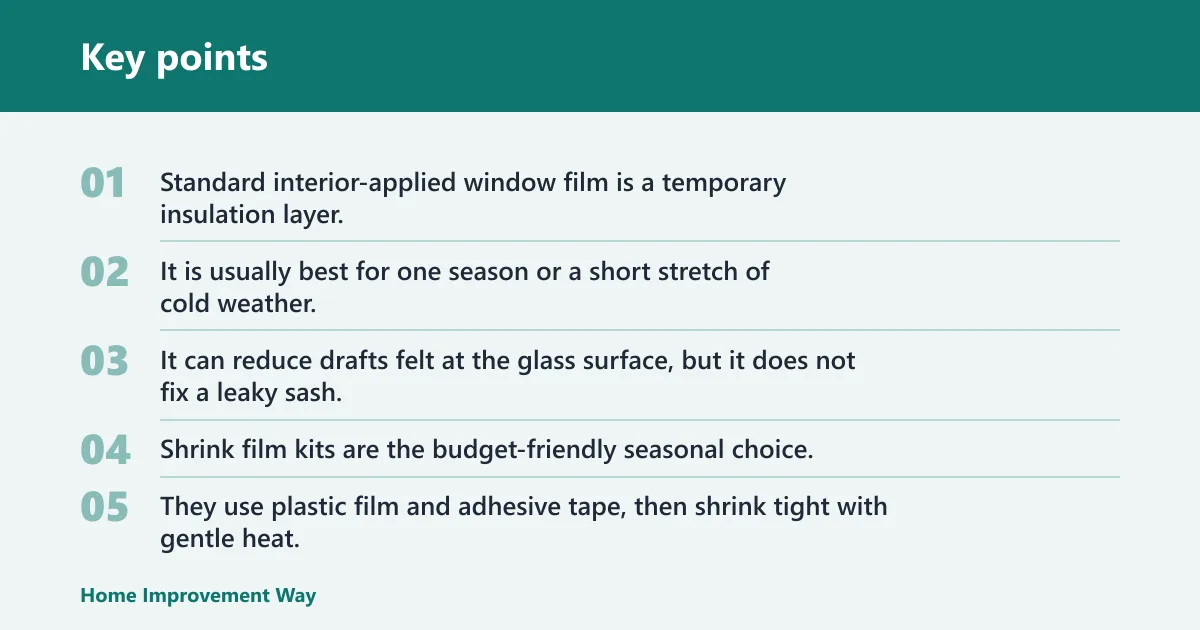
Standard interior-applied window film is a temporary insulation layer. It is usually best for one season or a short stretch of cold weather. It can reduce drafts felt at the glass surface, but it does not fix a leaky sash, broken latch, or rotted frame.
Shrink film kits for renters
Shrink film kits are the budget-friendly seasonal choice. They use plastic film and adhesive tape, then shrink tight with gentle heat. That makes them useful for renters and short-term fixes, but they are not a substitute for a failing frame or damaged sash seal.
When an insert beats tape or film
An interior insert costs more up front, but it can be the better buy if the same window leaks every winter. Inserts are semi-permanent or removable, and they add a stronger barrier to air and moisture than tape or film. For a window that stays in place for years, the higher initial cost can beat repeated seasonal replacements.
Picture a basement window with a tight frame but very cold glass every January. A shrink film kit may cost less this year, but an interior insert can make more sense if the opening is standard-sized and the same spot keeps needing a new kit every winter.
Can old wood windows be saved?
Old wood windows often can be saved, but the answer depends on the sash, paint, glazing, and rot. Many do better with targeted repair than with replacement. If the wood is still solid and the parts still move, sealing and repair may buy years of service at a lower cost than a full swap.
Glazing repair and sealing costs
Old wood windows often need glazing repair plus sealing. Loose or missing glazing compound around the glass can leak air and water, and exterior caulk alone will not solve that problem. The cost stays much lower than full replacement when the wood is intact and only select areas need attention.
Paint, sash movement, and rot issues
Paint failure can lock a sash in place, and a sash that does not move freely usually will not seal well. Rot changes the math faster than missing caulk does. Once the wood is soft, split, or out of shape, the window may keep leaking even after fresh weatherproofing.
When patching is still worth it
Old windows are still worth patching when the frame is sound, the sash can be adjusted, and the leak is limited to a few known spots. Weatherstripping, glazing repair, and careful caulking can work well together here. If the window still opens and closes properly, repair first is often the cheaper path.
Pro labor and installation costs
Labor is a major part of the bill once you move beyond tape and sealant. Per-window installation pricing varies by region, window type, access, and the amount of prep work needed. A simple caulk-and-weatherstrip visit costs far less than a storm window or interior insert installation.
Per-window labor rates
For basic weatherproofing, pro labor commonly adds a meaningful amount to the material price. Small jobs can still be worth hiring out if the window is high, awkward, or difficult to remove and reset. Labor also rises when the installer has to scrape old caulk, remove failed weatherstripping, or repair minor hardware issues first.
Regional price variation
Regional labor rates vary with demand, travel time, and local wage levels. Urban markets often price higher than rural ones. The same job can also cost more when the window is on a second floor, over landscaping, or blocked by trim that needs extra care.
DIY versus pro cost comparison
DIY is cheapest for simple, accessible windows with clear leak points. Pro work makes more sense when the opening needs careful prep, when a ladder is involved, or when the failure could come from frame alignment rather than just missing caulk. Paying labor for the wrong fix is still wasted money.
When weatherproofing is not enough
Weatherproofing is not enough when the window keeps failing after you repair the obvious gaps. Rot, bowed sashes, broken hardware, failed seals, and persistent air leakage are warning signs that the issue is beyond sealing. At that point, repair-first decisions should be based on the cost of repeated fixes versus replacement.
Signs the window is too far gone
If the sash will not close correctly, the frame is soft, the glazing keeps failing, or the glass fogs between panes, the insulated-glass seal may have failed. Repeated drafts after fresh caulk or new weatherstripping usually mean the leak source is deeper than the surface joint.
Repair first versus replace later
Repair first makes sense when the frame is stable and the problem is specific. Replace later makes sense when the same window keeps demanding new parts, new sealant, or more labor every season. The practical threshold is simple: if the next repair still leaves a leaky or unsafe window, replacement starts to win.
Cost threshold for replacement
Replacement becomes easier to justify when weatherproofing costs pile up around a window that still performs poorly. That is especially true for damaged frames, failed seals, or old wood windows with repeated rot. Replacement windows are commonly pitched as a way to save on heating and cooling, and they can also increase a home’s curb appeal.
Frequently asked questions
How much does it cost to weatherproof windows?
Most DIY weatherproofing costs land around $20 to $150 per window, depending on whether you use caulk, weatherstripping, film, or a seasonal kit.
How much does it cost to insulate windows?
Window insulation can be very cheap for seasonal film and shrink kits, or much higher for inserts and storm windows. If the same window leaks every winter, the higher-cost option may pay off faster.
How much does it cost to seal windows?
Sealing a window with caulk and weatherstripping is usually one of the lowest-cost fixes. Material costs are often under $30 per window, with more if hardware needs replacement.
Can I weatherproof old windows without replacing them?
Yes, if the wood is still sound and the sash still works. Old wood windows often respond well to glazing repair, new weatherstripping, and careful caulking around fixed joints. If the frame is rotten, the sash is bowed, or the paint and operation are failing together, replacement may be the better spend.
Sponsored / affiliate links. As an Amazon Associate I earn from qualifying purchases. I may earn additional commission from eligible campaigns.