Plastic Window Insulation Kits vs. Shrink Film: What to Buy
Choose shrink film for visible, occupied windows where you want the clearest view and a tighter-looking finish; pick cheaper plastic window insulation kits for hidden, odd-shaped, or easily damaged windows. Choosing the wrong type can leave wrinkles, block sightlines, or waste money on a fix that fails early. This guide compares cost, appearance, installation effort, durability, and the best use case for each.
| Decision factor | Plastic window insulation kits | shrink film | Winner |
|---|---|---|---|
| Appearance and view quality | Often clear, but finish depends on film thickness, cutting, and how evenly it shrinks. | Can be nearly invisible when installed well. | shrink film |
| Cost per window | Commonly $8–$15 per window for kit pricing. | Often overlaps with kit pricing because many kits use the same film system. | Plastic window insulation kits |
| Coverage flexibility | Pre-cut sheets and multi-window kits can simplify standard windows. | Roll formats and cut-to-size sheets fit unusual dimensions better. | shrink film |
| Damage resistance | Thicker options, including 1.5 mil film, resist punctures better than lighter film. | Standard lighter film, including 0.75 mil examples, is more vulnerable to tears. | Plastic window insulation kits |
| Installation speed | Usually slower because you still need clean prep, tape placement, and heat shrinking. | Same basic install steps, so the time advantage is limited unless the format is pre-cut. | tie |
What these products actually
Most plastic window insulation kits are shrink-film kits. The buying choice usually comes down to film thickness, coverage format, and tape quality, not two different technologies. Both create an insulating air layer against cold glass, and both are seasonal indoor fixes for drafty windows.
What the box usually contains
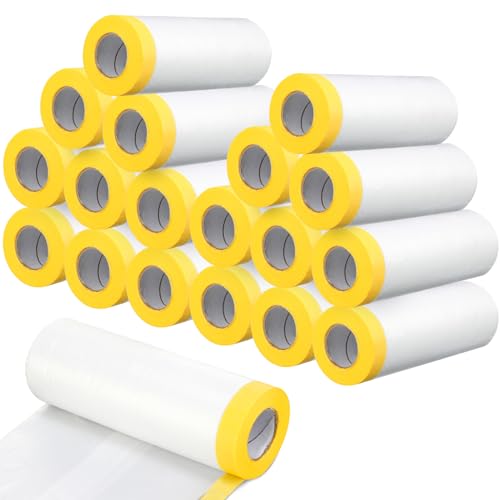
A typical kit often includes a clear oversized plastic sheet or pre-cut sheets, double-sided tape, and instructions for shrinking the film with a hair dryer. Some products use rolls, some use pre-cut panels, and some cover multiple windows in one package. That format matters more than the name on the front.
How the film system works
The system is simple. You tape the film to the frame, then heat it so it tightens across the opening and leaves a trapped air layer between the cold glass and the room. That air layer is the main reason these products improve comfort in winter.
Tape goes on first
Double-sided tape generally needs a clean, dry frame and a continuous rectangle with no gaps. If the tape line breaks, air can leak behind the film and the window will not seal well. Painted wood, aluminum, and vinyl trim can all work if the surface is sound.
Heat tightens the film
A hair dryer is used after the film is taped in place. The heat pulls out wrinkles and tightens the sheet, which is what makes clear film look finished instead of baggy. A careful pass over the whole pane matters more than one hot spot.
Why the trapped air layer matters
The film itself is not the insulation. The dead air space between the film and the glass slows heat loss and reduces the drafty feeling near the window. That is why older single-pane windows usually benefit most.
Plastic window insulation kits vs. shrink film: which is better?
For most homeowners, shrink film is the better answer when the window is visible and appearance matters. Plastic window insulation kits are the better buy when you want lower-cost coverage, easier sizing, or a thicker film option that can hold up better in rougher spots. The real choice is format and fit, not technology.
| Scenario | Visibility | Draft severity | Damage risk | Install effort | Expected fit | Recommended product type |
|---|---|---|---|---|---|---|
| Front living room window | High | Moderate to high | Low | Moderate | Standard | shrink film |
| Bedroom window | Moderate | Moderate | Low | Moderate | Standard | shrink film |
| Basement window | Low | High | Low | Low to moderate | Standard to small | Plastic window insulation kits |
| Garage or utility window | Low | Moderate to high | High | Low | Variable | Plastic window insulation kits |
| Rental unit window | Moderate | Moderate | Low to moderate | Low | Standard | shrink film |
| Pet or kid traffic area | Moderate | Moderate | High | Low to moderate | Standard | Plastic window insulation kits |
| Odd-shaped frame | Low to moderate | Moderate | Moderate | Moderate | Better with cut-to-size formats | Plastic window insulation kits |
Appearance and view through the window
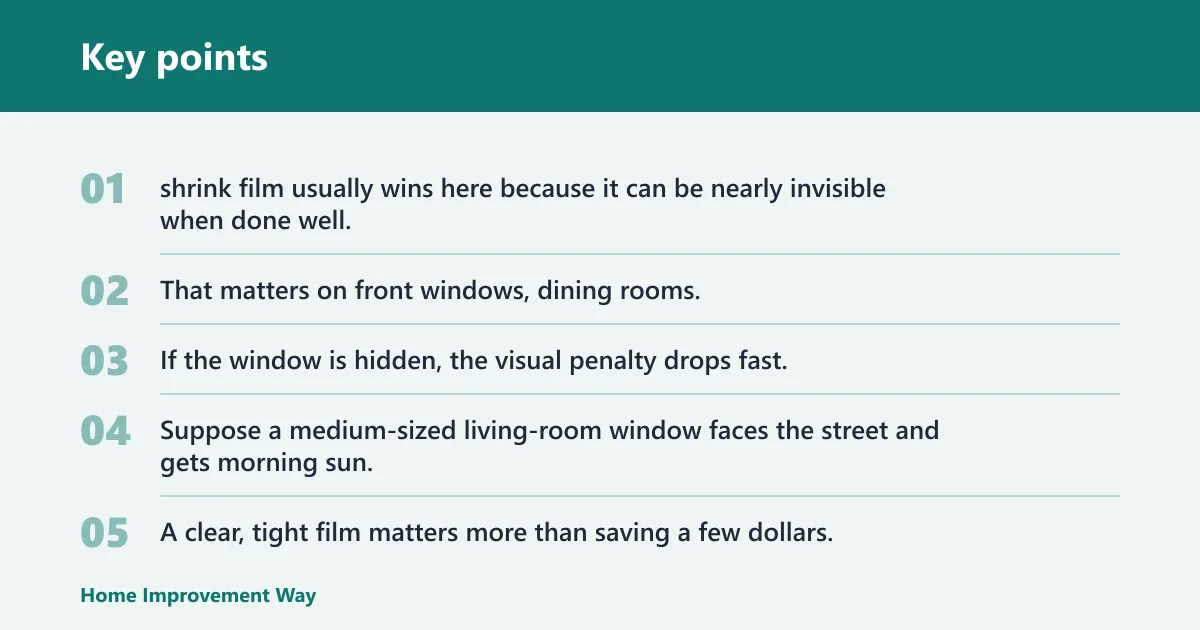
shrink film usually wins here because it can be nearly invisible when done well. That matters on front windows, dining rooms, and bedrooms where a wrinkled sheet will be obvious every day. If the window is hidden, the visual penalty drops fast.
Suppose a medium-sized living-room window faces the street and gets morning sun. A clear, tight film matters more than saving a few dollars, because every ripple shows at eye level. On a basement hopper, that tradeoff is far less important.
Draft reduction and comfort impact
Both products do the same basic job: they add an air layer that slows heat loss. Single-pane windows are the best target because they start with little insulation. Double-pane windows already trap air between panes, so the added gain is smaller and often lower priority.
Installation time and cleanup
Bubble wrap can be faster to install than shrink film, and it can be free if you use recycled packaging, but it blocks the view. For film, the extra time goes into taping, smoothing, and heat-shrinking. That added effort is the price of a cleaner finish.
Fit, size options, and damage risk
Coverage size matters when you have multiple windows or odd dimensions. Multi-window kits can simplify standard openings, while roll formats and pre-cut sheets help when the frame is tall, narrow, or unusual. Thicker film, including 1.5 mil examples, is the better call where puncture risk is higher.
A common first-timer mistake is buying a standard kit for a window with blinds, tight muntins, or rough trim. The film can scuff or tear during install if it rubs on sharp edges. In those cases, a thicker kit or a different location is the smarter pick.


Which windows should you insulate first?
Start with single-pane, drafty, older windows. Those usually give the biggest comfort gain for the money because the glass loses heat quickly and the air layer from the film has something to improve. Double-pane windows are a lower-priority target unless they have obvious drafts around the frame.
Best candidates: single-pane and drafty older windows
Older homes often have single-pane or aluminum-frame windows that feel cold to the touch and leak air at the edges. Those are good candidates for seasonal film because the fix is cheap, temporary, and easy to remove in spring. A damaged sash or broken seal is a different problem.
Lower-priority candidates: double-pane and already-tight windows
Double-pane units already do part of the job, so film may add only modest comfort improvement. If the room already holds temperature well, the money may be better spent on weatherstripping, caulk, or a repair to the window assembly. Film is not the first answer for a tight window.
What film thickness and coverage size should you buy?
Choose thickness and coverage based on how exposed the window is, how often it gets touched, and how many panes you need to cover. Lighter film is fine for calm, protected windows. Thicker film is worth considering where puncture resistance matters more than the cleanest look.
0.75 mil versus 1.5 mil
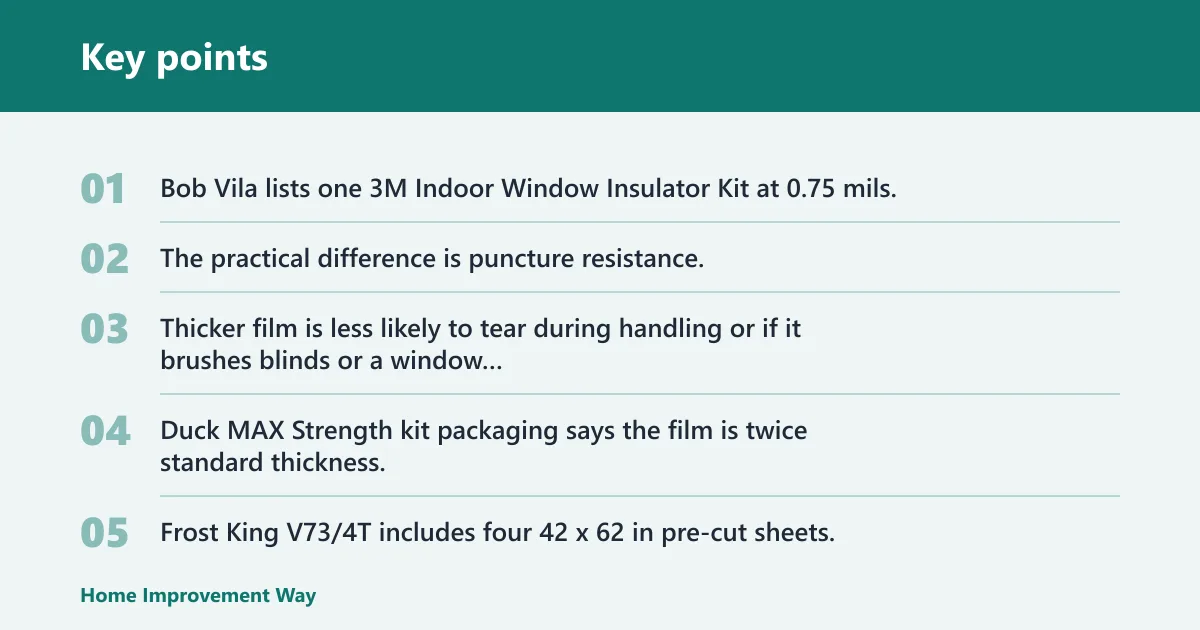
Bob Vila lists one 3M Indoor Window Insulator Kit at 0.75 mils, while it lists a Duck Brand Max Strength Window Kit at 1.5 mil. The practical difference is puncture resistance. Thicker film is less likely to tear during handling or if it brushes blinds or a window lock.
Duck MAX Strength kit packaging says the film is twice standard thickness, and the 10-window kit includes two 62 x 210 in rolls. Frost King V73/4T includes four 42 x 62 in pre-cut sheets. Those formats show why thickness and size need to be part of the same decision.
Pre-cut sheets versus roll formats
Pre-cut sheets work well on repeat-sized windows and keep the job simple. Roll formats are better when the openings vary or when you need to cut around trim, vents, or unusual shapes. If the window is standard and visible, pre-cut can be the easier route.
Matching kit count to your window sizes
Coverage is usually measured by window count or dimensions, not by square footage on the shelf label. Count the panes you actually plan to cover and compare that with the package layout before buying. Oversized kits can be useful if you have several small windows or one large picture window.
How do you install shrink film so it seals properly?
Start with a clean, dry frame, then apply the tape as a complete rectangle with no gaps. After the film is in place, use a hair dryer to shrink it evenly from the center outward. Good prep matters more than forceful heating.
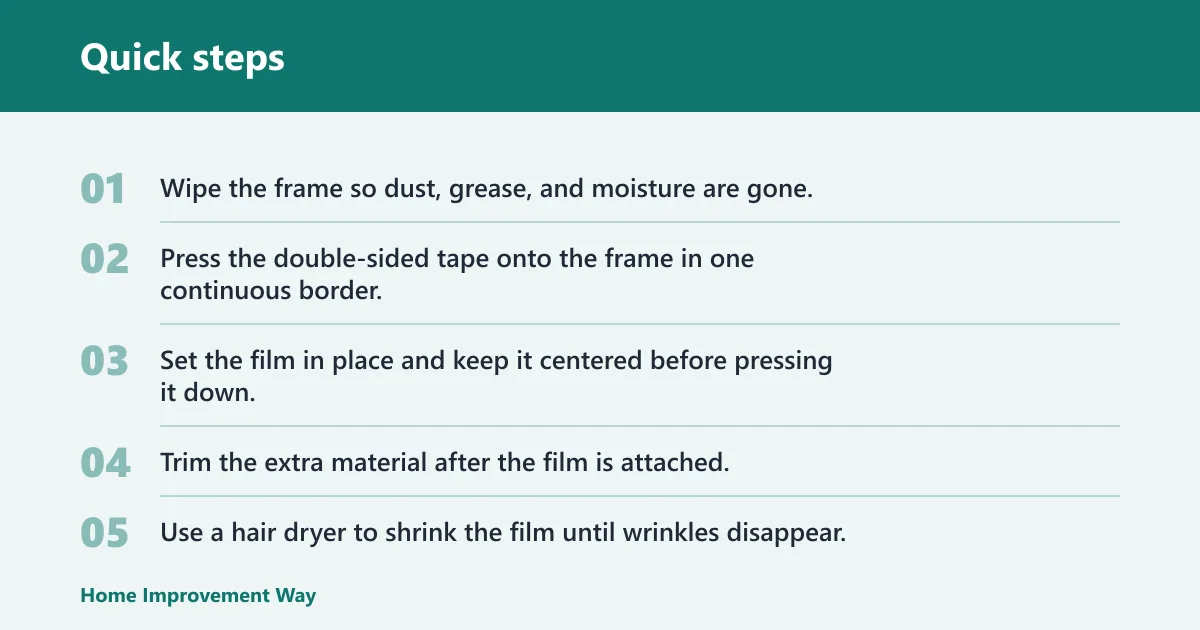
- Wipe the frame so dust, grease, and moisture are gone.
- Press the double-sided tape onto the frame in one continuous border.
- Set the film in place and keep it centered before pressing it down.
- Trim the extra material after the film is attached.
- Use a hair dryer to shrink the film until wrinkles disappear.
Prep the frame so tape sticks
Adhesion fails on dirty or damp surfaces. If the frame has peeling paint, loose caulk, or rough edges, deal with that first or the tape may lift before winter ends. That is one reason hidden windows tolerate the product better than high-traffic ones.
Apply a continuous tape rectangle
Every gap in the tape line becomes a leak point. The film needs full perimeter contact so the trapped air layer stays still. If the frame is warped or curved, fit becomes harder and a cut-to-size format is usually safer.
Heat the film evenly and trim the edges
Hold the hair dryer far enough away to tighten the film without scorching it. Work in passes instead of dwelling in one spot, or the film can distort. Once the sheet is smooth, trim the excess so the edge looks clean.
Choose Plastic window insulation kits if… / Choose shrink film if…
Choose Plastic window insulation kits if the window is hidden, odd-shaped, or likely to get bumped by people, pets, or stored items. Choose shrink film if the window is visible, occupied daily, or you care most about a nearly invisible finish and a cleaner look.
Choose Plastic window insulation kits if…
Pick them for basement windows, garage windows, utility rooms, rentals where you want a low-friction install, and any opening where a thicker film is worth the tradeoff. They also make sense when you need pre-cut sheets or a roll format to fit an unusual opening.
Choose shrink film if…
Pick it for front rooms, bedrooms, and any window where view quality matters enough to justify the extra care in installation. It is the better call for standard frames on single-pane windows that need a seasonal comfort boost without drawing attention.
Do not expect film to fix broken seals, warped sashes, or major air leaks around the window assembly. It reduces drafts and comfort loss at the glass, but it does not repair the window itself. If the frame leaks badly, repair that first.
Frequently asked questions
Do window insulation film kits actually work in winter?
Yes, they can help in winter by creating a trapped air layer against cold glass. That makes them most useful on single-pane and drafty older windows. They are temporary and will not solve a damaged frame, but they can improve comfort at low cost.
Is shrink film better than bubble wrap for windows?
For appearance, yes. shrink film is the better choice when you want clear sightlines, while bubble wrap is faster to install and can be free if you use recycled packaging. Both create an insulating air layer, but bubble wrap blocks the view and fits a different use case.
How much does a window insulation kit cost per window?
Plastic film kits commonly cost $8–$15 per window. That range is a useful planning number, but the actual cost depends on thickness, number of windows covered, and whether you buy pre-cut sheets or rolls. Multi-window kits can lower the per-window cost if your sizes match.
Will plastic window film ruin my view through the window?
It can reduce clarity if the film is wrinkled or poorly installed, but shrink film can be nearly invisible when done well. The view matters most on front rooms and bedrooms. On basement or garage windows, the visual impact is usually much less important.
Can I reuse window insulation film next season?
Most shrink film is one-season only and not reusable. Once it is removed, the sheet and tape usually do not go back on cleanly. If reuse matters, check the package carefully, but seasonal removal and replacement is the normal expectation for this product.
Sponsored / affiliate links. As an Amazon Associate I earn from qualifying purchases. I may earn additional commission from eligible campaigns.