Why Won’t My Front Door Close Properly in Cold Weather?
Cold weather can make a front door stick because the slab may shrink, the weatherstripping may drag, or the hinge and strike alignment may shift. Check those in that order before turning screws. Leaving it alone can lead to a door that will not latch, drafts, a strained lock, or worn hinges and trim. This guide shows how to tell which fault you have and the safest first fix.
Why your front door fails in cold weather



Cold can change the fit of a wood exterior door, but the slab is not always the source. Weather changes can make wood doors expand and contract, and winter drying can change how the door fits within the frame. Seasonal movement also happens as homes shift slightly over time, so a door that worked in fall can bind by midwinter.
Start by separating three patterns: a door that shrank and now leaves a gap, a door that still fits but is being stopped by seal drag, and a door that shifted enough to throw off the latch or deadbolt. Front-door problems are often alignment problems, so the symptom tells you where to look first.
Winter movement in wood doors and frames
A wood exterior door can move with moisture and temperature changes. In winter, dry indoor air can pull moisture out of the slab, which may reduce its size enough to change the fit at the latch, top edge, or bottom sweep. If the frame also settles or shifts, the latch and deadbolt no longer meet their strike openings cleanly.
That is why the same door can close fine on a mild day and feel tight during a cold snap. A gap or light around the edge is a common symptom of door trouble, but the direction of the gap matters. A top gap with a rubbing latch side points to a different fix than a bottom rub at the threshold.
Winter door diagnosis matrix
| Symptom | Likely cause | Best first fix | DIY or pro? |
|---|---|---|---|
| Latch misses only after a cold snap | Cold-shrink in the slab or slight frame shift | Check fit at the latch edge before touching the strike plate | DIY if the door still hangs square; pro if the gap changed on several sides |
| Door scrapes near the latch side | Hinge sag, loose screws, or pullout | Tighten hinge screws and test for sag | DIY for minor sag; pro if screws spin or the jamb is split |
| Deadbolt only turns when the door is pulled tight | Strike plate misalignment or frame shift | Test latch and bolt fit with light hand pressure | DIY only if the offset is small; pro if the bolt binds hard |
| Door feels sticky at the edges | Weatherstripping drag or over-thick seal | Inspect hardened or oversized seals and trim or replace as needed | DIY if the seal is the only bind point |
| Bottom edge drags on the threshold | Door sweep or threshold interference | Check bottom clearance, then adjust the sweep or threshold | DIY for sweep adjustment; pro if the threshold is uneven or loose |
| Light shows around the edge after closing | Alignment problem, worn seals, or a damaged door | Identify where the light shows before changing hardware | DIY for seal or hardware checks; pro if the slab is damaged |
Why won’t my front door latch when it gets cold outside?
When cold weather stops the latch from catching, the usual cause is a small shift in how the door meets the strike plate. The door may have shrunk, the frame may have moved slightly, or the hinges may have dropped enough to change latch height. The deadbolt can show the same problem, and missed alignment can make the deadbolt harder to lock at night.
Do not start with the strike plate. First check whether the latch tongue enters the opening cleanly with gentle pressure on the door edge. If the door closes when pulled tight, the frame or hinges are usually off by a little, and the latch is simply showing the shift.
-
Check the latch fit. Close the door slowly and watch where the latch meets the strike opening. If it catches only when you lift, pull, or press the door, note the direction of movement because that tells you whether the problem is sag, shift, or seal drag.
-
Test the deadbolt separately. Extend the deadbolt with the door open, then close the door and see whether it lines up freely. A shifted door can make the deadbolt not line up even when the latch seems close.
-
Inspect the strike opening. Look for shiny rub marks, chipped paint, or uneven wear around the latch and bolt holes. That wear pattern shows whether the door is hitting high, low, or deep against the plate.
Say your deadbolt turns only after you pull the door inward at the handle side. That points to alignment drift, not a bad key or a stiff lock core. A small shift can be enough to make the bolt nose scrape the edge of the strike opening.
Does the latch or deadbolt line up?
The latch and deadbolt should both enter their strike openings without force. If the latch needs a shove or the deadbolt only works when the door is pulled tight, the frame, hinges, or strike plate are no longer centered the way they should be. Front-door problems are often alignment problems, and the lock hardware is usually the first place that shows it.
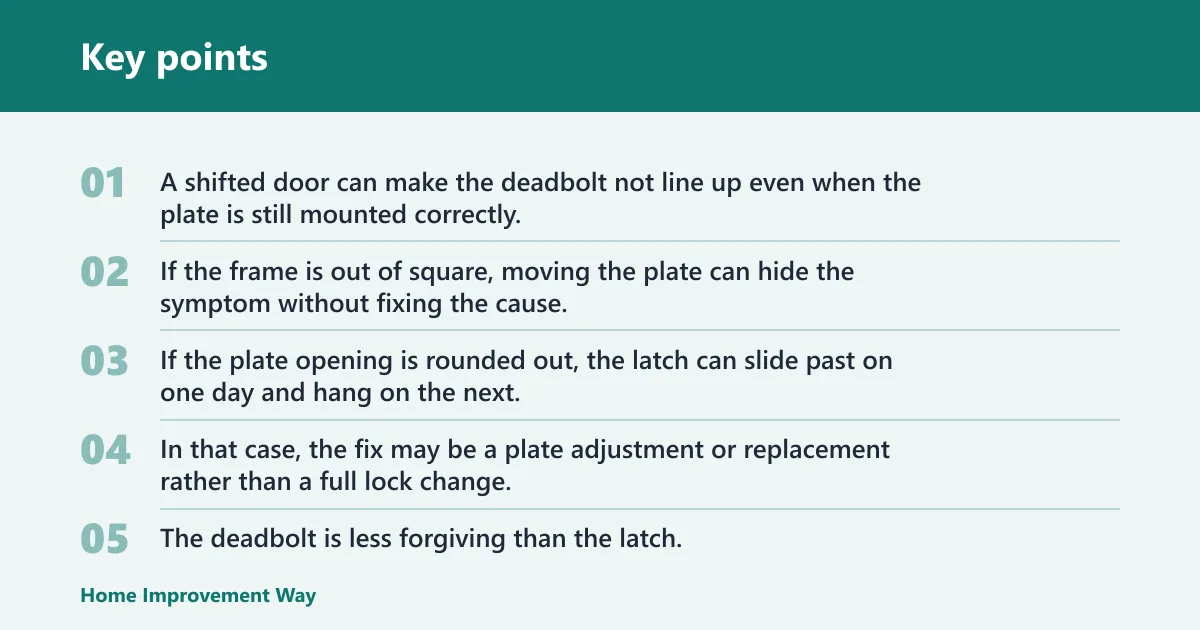
That does not mean the strike plate is always the part to move. A shifted door can make the deadbolt not line up even when the plate is still mounted correctly. If the frame is out of square, moving the plate can hide the symptom without fixing the cause.
Strike plate misalignment
A strike plate issue is most likely when the door closes fully but the latch face hits the edge of the opening instead of slipping in. Small shifts can often be corrected by shimming or relocating the plate, but only after confirming that the hinges are not sagging and the sweep is not dragging the door off line.
Wear matters too. If the plate opening is rounded out, the latch can slide past on one day and hang on the next. In that case, the fix may be a plate adjustment or replacement rather than a full lock change.
Deadbolt bind as a shift warning
The deadbolt is less forgiving than the latch. If it binds, that is often a sign of door shift or frame movement rather than a bad lock cylinder. Missed alignment can make the deadbolt harder to lock at night, especially when the door is slightly twisted by weather or sag.
Do not force the thumbturn. Extra force can wear the bolt edge, damage the strike opening, or crack the trim around the jamb.
Check hinges and door sag first
Loose hinges can make a door drop just enough to scrape the latch side or miss the strike. If the hinge screws have loosened, the door may sag, drag, or need lifting to close. That creates the same symptoms many people blame on the strike plate, so hinge checks come before plate changes.
If the door was fine before winter and now rubs at the top on the latch side, hinge sag is a strong suspect. A door that drags near the handle side or closes only when lifted often needs hinge repair before anything else.
-
Snug the hinge screws. Tighten the screws in the top, middle, and bottom hinges, especially the screws that bite into the jamb. If a screw spins without gripping, the hinge may need a longer replacement screw or wood repair at the hole.
-
Watch for sag. Open the door halfway and look for drop at the latch side. If the gap narrows at the top and opens at the bottom, the slab is hanging low and needs hinge correction before strike work.
-
Test the swing again. Close the door slowly after tightening. If the latch now centers better and the deadbolt slides in without pressure, the hinge fix was enough.
A common first-timer mistake is to move the strike plate first because the latch is the part that fails at the end. If the door is sagging, that change only hides the real fault and can leave the deadbolt still out of line.
Are the weatherstripping, sweep, or threshold binding the door?
Yes. Hardened weatherstripping, an oversized seal, a dragging door sweep, or a high threshold can stop a door that is otherwise square. Weatherstripping compresses the door edge for air sealing, but cold can make some seals stiff enough to resist closing. A frayed or bubbled rubber gasket can affect sealing and can also create drag.
Check these parts before changing the strike plate. If the door closes when the seal is pushed aside by hand, the hardware may be fine and the seal may be the real problem.
Weatherstripping drag
Look for flattened, hard, split, or swollen seal material. Over-thick seals can bind the door, and winter hardening can make a marginal seal act too tight. The result is a door that feels stuck near the last inch of travel, even when the latch is close to aligned.
Bottom sweep and threshold interference
The bottom sweep should brush lightly, not drag hard. If the sweep rides on the threshold, the door may need more bottom clearance or a different sweep profile. A threshold that sits too high, slopes up, or has shifted can block the door bottom and make the door close heavily.
Check for rub marks on the sweep edge and on the threshold. If the wear is centered low and the top of the door closes cleanly, the issue is usually at the bottom, not the lock side.
What first fix should you try?
Begin with the easiest causes that you can confirm by sight and feel: loose hardware, seal drag, and bottom interference. Tightening screws, checking the sweep, and using a safe lubricant often solve a winter sticking problem without moving the strike plate. If the door still does not line up after those checks, then adjust the hardware that centers the latch.
Use a lubricant that is safe for hinges and latch parts and leaves little residue. Dry silicone is often a good choice for cold-weather movement because it is less likely to swell wood or leave a gummy film. Avoid heavy oils and sticky residues that attract dust or slow the latch.
-
Tighten the fasteners. Secure hinge screws, strike screws, sweep screws, and any loose hardware on the jamb. A loose part can move just enough in cold weather to change the line of travel.
-
Lubricate contact points. Apply a light amount of dry silicone to hinge knuckles and latch parts, then cycle the door several times. Use only enough to reduce friction, not enough to drip onto paint or seals.
-
Retest the closing path. Close the door slowly and listen for rub. If the bind remains at the same spot, the part at that location is the one to adjust or replace.
When can you fix it yourself?
You can often handle minor hinge tightening, seal trimming, sweep adjustment, and small strike shifts yourself. If the door closes with light pressure and the misalignment is small, a careful homeowner repair is often enough. If the door is badly out of square, the frame has shifted, or the deadbolt still binds after basic checks, a locksmith or door carpenter is the safer call.
Older homes are commonly affected by door alignment issues, and seasonal movement can make a small problem worse. A damaged door can prevent proper closing, so do not keep forcing a slab that scrapes hard or leaves large gaps at several edges.
-
Confirm the fault. Decide whether the issue is the slab, hinges, strike, seal, sweep, or threshold. A clear diagnosis keeps you from moving the wrong part and making the fit worse.
-
Measure the symptom. Look for even gaps, rubbing marks, and whether the deadbolt locks without force. If the door needs a tug to line up or the light around the edge stays visible after closing, the problem is beyond a simple latch tweak.
-
Stop when square is lost. If the jamb is out of square, screws will not hold the correction for long. At that point, pro rehang or frame repair is the better path.
Suppose a 3-foot-wide front door closes fine on warm days but sticks at the bottom after a cold night. If the latch still lines up and only the sweep rubs the threshold, trim or replace the sweep before touching the strike plate. That one change fixes the symptom without disturbing the lock fit.
Frequently asked questions
Can cold weather make a door frame shift enough to stop closing?
Yes. Seasonal movement happens as homes shift slightly, and that shift can change latch and deadbolt alignment. Even a small frame change can stop the latch from catching or make the deadbolt hard to turn, especially on older homes.
Why does my front door stick only in winter?
Winter adds dry air, colder material behavior, and harder seals. A wood door may contract, while weatherstripping may stiffen and drag. If the problem shows up only in cold weather, look for seal bind and bottom interference before assuming the slab is warped.
Is the problem the door, the hinges, or the strike plate?
Use the symptom to sort it out. Door drag on the latch side points to hinges, a latch that barely misses the opening points to the strike plate, and heavy rubbing at the edge or bottom points to seal or threshold interference. A damaged door slab is less common but still possible.
How do I know if my door sweep is causing the door to bind?
If the door closes farther when the sweep is lifted by hand, the sweep is likely dragging. Look for wear on the threshold, compressed bristles, or a rubber edge that catches before the latch seats. The sweep should seal air, not stop the final inch of travel.
Can I fix a misaligned front door myself or do I need a locksmith?
You can usually handle small hinge tightening, seal changes, sweep adjustment, or minor strike shifts yourself. Call a locksmith or door pro if the deadbolt still binds, the frame looks out of square, screws will not hold, or the door has a damaged slab or split jamb.
Sponsored / affiliate links. As an Amazon Associate I earn from qualifying purchases. I may earn additional commission from eligible campaigns.
 Exterior Door Lock Set with Deadbolt, Front Door Handle Set with Deadbolt, Door Levers Single Cylinder Deadbolt Set, Keyed Alike Heavy Duty Keyed Entry Handles Locksets,(Satin Nickel ,3Pack)
 Exterior Door Lock Set with Deadbolt, Front Door Handle Set with Deadbolt, Door Levers Single Cylinder Deadbolt Set, Keyed Alike Heavy Duty Keyed Privacy Handles Locksets,(Satin Nickel)