How to Reduce Heat Loss Through Single-Pane Windows
Reduce heat loss from single-pane windows by matching the fix to the likely failure point: seal sash gaps first, then add window film for glass loss, and use a storm panel when a low-cost upgrade is the best next step. Ignored drafts raise heating bills and make rooms cold near the window. This guide shows how to tell glass loss, frame leakage, and sash leakage apart, then choose the lowest-cost fix.
What causes heat loss in single-pane windows
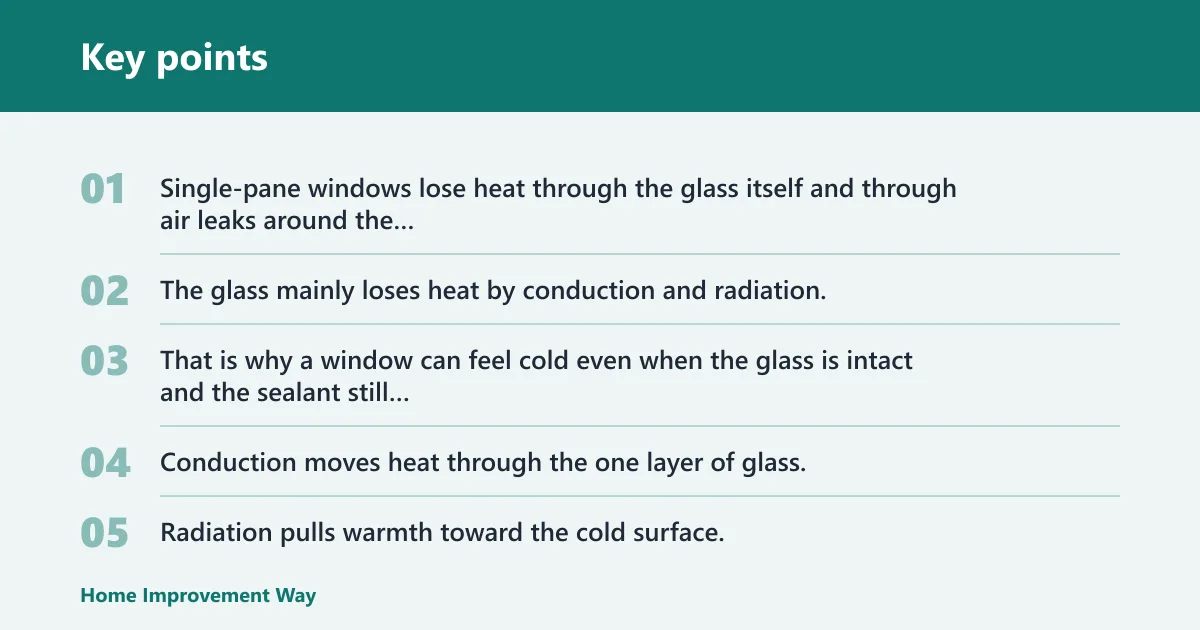


Single-pane windows lose heat through the glass itself and through air leaks around the frame and sash. The glass mainly loses heat by conduction and radiation, while gaps add drafts and convection. That is why a window can feel cold even when the glass is intact and the sealant still looks present.
Heat-loss pathways to know
Conduction moves heat through the one layer of glass. Radiation pulls warmth toward the cold surface. Convection happens when air near the glass cools and drops, then is replaced by warmer room air. Air leakage around the frame or sash is different: it is a draft seal problem, not a glass problem.
What you’ll need
- Utility knife
- Measuring tape
- Caulk gun
- Cleaning supplies
- Hair dryer for shrink film
- Clear plastic window insulation film and double-sided tape
- Foam, V-strip, felt, or rubber weatherstripping
- Interior or exterior caulk that fits the location
- Heavy thermal curtains or insulated drapes
- Interior storm window or low-e retrofit panel, if you plan a larger upgrade
Where is the heat leaking?
Start by checking whether the main problem is the glass, the frame, or the sash. A tissue, smoke source, or even a hand held near the edges can show a draft seal failure. If the cold is strongest at the glass face, film or a storm panel helps most. If air moves at the edges, seal those first.
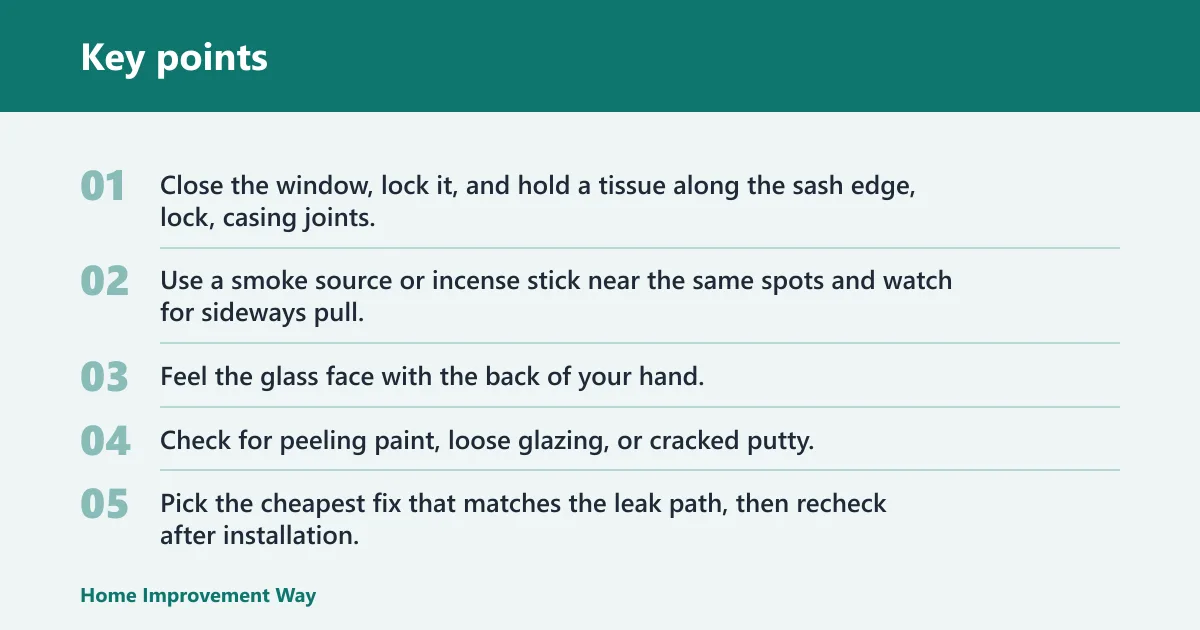
- Close the window, lock it, and hold a tissue along the sash edge, lock, casing joints, and bottom rail.
- Use a smoke source or incense stick near the same spots and watch for sideways pull.
- Feel the glass face with the back of your hand. A cold pane without moving air points to conductive loss, not a draft.
- Check for peeling paint, loose glazing, or cracked putty. Those signs often mean air and moisture are entering through more than one path.
- Pick the cheapest fix that matches the leak path, then recheck after installation.
Say your 28-inch by 56-inch sash window feels cold at the lock side, but the glass itself is intact. Weatherstripping at the meeting rail may fix the draft with less effort than film. If the whole pane feels cold and still air moves little, a shrink film layer or interior storm panel is the better first move.
Heat loss through single-pane matrix
This matrix puts the cheapest, fastest options first. Use the row that matches the main failure point. Skip a fix when the leak is elsewhere or the window is too worn for the material to stay put. A better match saves time and prevents peeling film, loose strips, or a seal that fails in the cold.
| Problem type | Best fix | When to skip it |
|---|---|---|
| Glass heat loss | Window insulation film, then thermal curtains | Skip film if you need frequent window access or the frame cannot hold tape |
| Frame gap | Caulk stationary gaps around trim and casing | Skip caulk on moving parts, soft rot, or paint that will not bond |
| Sash draft | Weatherstripping that matches the gap size | Skip if the sash is loose, warped, or so worn that the strip will not compress evenly |
Priority order from cheapest to most durable
1) Draft check and cleanup. 2) Weatherstripping for operable sashes. 3) Caulk for stationary gaps. 4) Window insulation film for glass loss. 5) Thermal curtains for night use. 6) Interior storm window or low-e insert for longer seasonal use. 7) Replacement if the unit is failing structurally.
Quick DIY checklist
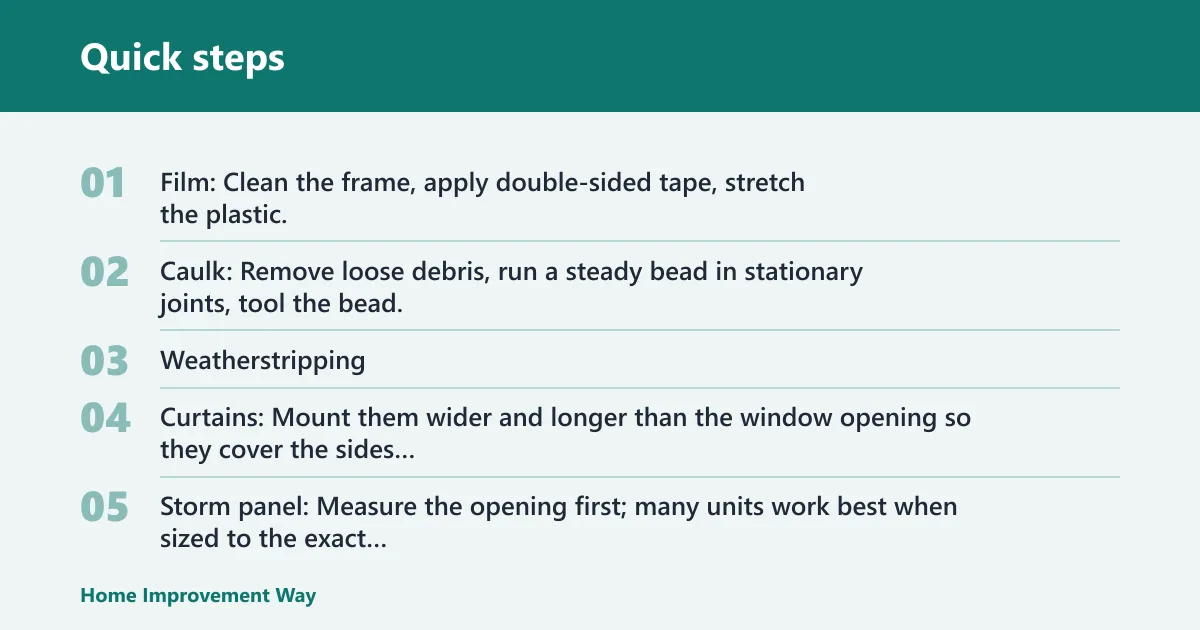
- Film: Clean the frame, apply double-sided tape, stretch the plastic, shrink it with a hair dryer, then trim the excess.
- Caulk: Remove loose debris, run a steady bead in stationary joints, tool the bead, and let it cure before repainting.
- Weatherstripping: Measure the gap, choose foam, V-strip, felt, or rubber, then place it only where the sash moves against a stop or rail.
- Curtains: Mount them wider and longer than the window opening so they cover the sides and bottom edge.
- Storm panel: Measure the opening first; many units work best when sized to the exact frame.
Seal stationary gaps
Use caulk only where two parts stay fixed or are not meant to move. That means trim joints, casing seams, and fixed frame cracks. Do not caulk the meeting rail, balance area, or any sash contact point. Cold weather slows cure time, so read the tube for the minimum application temperature before you start.
Use caulk the right way
- Clean out dust, failed sealant, and loose paint from the joint.
- Cut the tube tip to match the bead size, then apply a continuous line.
- Tool the bead immediately so it bonds to both sides of the gap.
- Leave moving parts alone. If the sash slides there, use weatherstripping instead.
If the paint around the joint is already peeling from moisture, caulk may hide the problem for a season and then fail again. In that case, remove loose material, let the area dry, and decide whether the frame is still worth sealing.
Should you weatherstrip the sash first?
Weatherstripping is commonly a good first fix when the draft comes from an operable sash. It works at movable contact points, not around fixed trim. Match foam, V-strip, felt, or rubber to the gap size; a strip that is too thin leaks, and one that is too thick can make the window hard to latch.
Gap size guide
- Foam: useful for small, simple gaps when compression is light.
- Felt: often used for light-duty sealing on older sash edges.
- V-strip: fits narrow channels and sliding contact points.
- Rubber: better where repeated closing needs a tougher seal.
Common sash leak points
Check the meeting rail, lock area, side jambs, and lower sash corners. Those are common draft seal failure points. If the sash is warped or the lock no longer pulls the two parts together, weatherstripping may help only partly. The strip needs enough compression to seal, not enough to bind.
Add film or curtains
Window insulation film is the low-cost seasonal fix for glass heat loss. It is a clear plastic shrink film applied indoors over the frame with double-sided tape. Thermal curtains work best at night and in very cold weather. They reduce radiant heat loss and cut down on cold air movement near the glass.
When film makes sense
Choose film when the frame is sound, the pane is intact, and you want a winter-only fix. It is usually removed in spring. Skip it if tape will lift paint, the window must open often, or the frame surface is too rough to seal. Trapped condensation between layers means the edge seal needs attention.
When an interior storm window is better
An interior storm window or low-e retrofit panel is the stronger choice when you want a tighter air space and a longer seasonal setup. It costs more than film, but it is more durable and usually better for repeated use. That matters on windows you plan to keep sealed for more than one winter.
When should you skip sealing and replace?
Skip more sealing work when the sash is rotten, the frame is soft, or the window will not stay square enough to accept tape, caulk, or strips. If locks fail, glazing is loose all around, or paint will not hold to the frame, sealing may buy little comfort. At that point, a retrofit panel or replacement may make more sense.
When to move up a level
- Try film if the glass is the main problem and the frame still holds tape.
- Try weatherstripping if the sash is movable and the gap is consistent.
- Try an interior storm or low-e insert if the window needs a tougher seasonal barrier.
- Replace the unit if the sash, frame, and trim are all failing or water damage keeps returning.
For rental units, film and removable curtains are the safest starting points. For owner-occupied homes with older but solid wood windows, weatherstripping plus a storm panel often makes more sense than a full replacement right away.
Common mistakes
Most failures come from using the wrong material in the wrong place. Caulk on moving parts will crack. Weatherstripping that is too thick can stop the sash from locking. Film left on into warm weather can trap moisture. Adhesion problems also happen when old paint is dusty, chalky, or already lifting.
How to avoid them
- Do not caulk a sash joint or any part that slides.
- Do not buy weatherstripping before measuring the gap.
- Do not leave film in place after spring temperatures rise.
- Do not ignore condensation at the edges; it often signals a leak or trapped moisture.
- Do not apply tape over loose paint and expect it to hold.
Frequently asked questions
How much heat do single-pane windows lose in winter?
Single-pane windows generally lose more heat than modern double-pane units because they have only one layer of glass. The actual loss depends on air leakage, glass size, wind, and indoor-outdoor temperature difference. A drafty sash can feel far worse than a tight fixed pane of the same size.
Can you insulate single pane windows?
Yes. You can improve them with film, weatherstripping, caulk at stationary gaps, thermal curtains, or an interior storm window. The best choice depends on where the heat is escaping. If the sash leaks, weatherstrip first. If the glass is the main problem, start with film or a secondary panel.
What is the cheapest way to reduce heat loss through old windows?
For most old windows, the cheapest fix is a draft check followed by weatherstripping or film, depending on the leak path. Weatherstripping is usually the lowest-cost answer for operable sashes. Film is the low-cost answer when the glass feels cold but the frame is already tight.
Should I caulk, weatherstrip, or replace single-pane windows first?
Weatherstrip movable sashes first, caulk only stationary gaps, and replace only when the window is too deteriorated to hold a seal. That order avoids wasted effort. If the sash slides but leaks at the meeting rail, weatherstripping comes before caulk. If the frame is soft or rotten, replacement rises to the top.
Do window insulation film and thermal curtains actually work?
Yes, but in different ways. Film reduces drafts and convection losses at the window surface, while thermal curtains cut radiant loss and help most at night. Neither fixes a rotten frame. Both work best when the underlying air leaks are already under control.
What should I do if my single-pane windows are drafty and condensation forms?
Check the sash edges, lock, and casing joints first, then inspect the frame for failed caulk or loose paint. Drafts plus condensation often mean air leakage and moisture movement at the same time. Seal the correct spot, then watch for trapped moisture. If the wood is soft, stop and assess for damage before sealing over it.
Sponsored / affiliate links. As an Amazon Associate I earn from qualifying purchases. I may earn additional commission from eligible campaigns.