Why Are My Floors Cold in Winter and How Do I Warm Them?
Cold floors in winter usually come from one of three issues: heat loss below the floor, a concrete slab that stays cold, or a comfort problem tied to the floor surface and dry indoor air. The cheapest fix depends on which one you have. If you guess wrong, you can spend on rugs, insulation, or heating fixes that barely change the feel and still leave the room uncomfortable.
Why floors feel cold


Floor feel depends on surface temperature, heat flow, and what the floor is made of. Tile and stone are durable and water-safe, but they move heat away fast, so they pull warmth from your feet quicker than carpet. Carpet feels warmest underfoot because it traps air. Laminate, hardwood, and LVP usually sit between those two ends, and the underlayment can change the feel.
Room air temperature and floor temperature are not the same thing. A floor can be a few degrees cooler than the air and still feel unpleasant, especially if it is near an exterior wall, over a cold crawlspace, or on a concrete slab. Dry winter air can make floors feel colder, too.
How flooring material changes perceived warmth
Surface material affects how fast heat leaves your skin. That is why ceramic, stone, and tile often feel colder than wood, even when the thermostat reads the same temperature. Concrete has the same issue on a larger scale because it stores cold and releases it slowly.
Hardwood, laminate, and LVP tend to feel less cold than tile, but they do not stop heat loss by themselves. A pad or underlayment can soften the feel, yet the space below the floor may still be the main driver.
When a cold floor is comfort, not a heat-loss problem
Sometimes the house is heating normally, but the floor still feels unpleasant because the surface is cold to the touch or the air is dry. In that case, a comfort fix may be enough. If the chill is strongest at edges, above a crawlspace, or on one level of the home, the problem is more likely to be heat loss.
Cold floor decision table
| Home type | Symptom pattern | Likely cause | Best first fix | When to call a pro |
|---|---|---|---|---|
| Slab | Whole room feels cool; tile or stone feels especially cold; rugs help only where placed | Concrete slab acts like a heat sink and stays cold in winter | Add area rugs with rug pads; consider radiant floor heat for bathrooms, kitchens, or slab areas | If moisture, cracking, or major uneven temperatures point to a slab or moisture issue |
| Crawlspace | Floors above the crawlspace feel cold across the room or along one side | Vented or under-insulated crawlspaces cool the subfloor from below | Air seal and insulate the floor system or address the crawlspace itself | If access is poor, insulation is damaged, or ducts and plumbing are also exposed |
| Basement | Main floor is cool, often more near exterior walls or over unfinished basement areas | Below-grade space is losing heat and cooling the floor above | Seal leaks, insulate rim joists, and improve basement insulation and air sealing | If the basement has moisture, mold, or exposed mechanicals that need correction |
| Over garage | Room over garage has a colder floor than nearby rooms, especially in winter wind | Heat loss through the floor system and garage ceiling | Install underfloor insulation and seal air leaks at penetrations | If the garage ceiling is unfinished, poorly sealed, or the room has comfort swings all season |
Is your floor cold because of heat loss below it?
Yes, often. If the floor above a crawlspace, basement, or garage is colder than the rest of the house, the space below may be pulling heat out of the floor system. That pattern usually calls for insulation, air sealing, or both, rather than surface-only fixes.
Crawlspace floors
Cold floors can come from a vented or under-insulated crawlspace. Cold moves through the floor system from below, and the result is often a floor that feels chilly across most of the room. If the crawlspace is open to winter air or the insulation is thin, the floor above usually suffers first.
A good clue is consistency. If the whole room feels cold, but the thermostat seems normal, the crawlspace is a strong suspect. If the floor is worst near the perimeter, edge leakage may be joining the problem.
Basement-adjacent floors
Basement conditions can affect upstairs comfort. A below-grade space that is cold, damp, or poorly insulated can cool the floor above it. This often shows up in the room over the basement, not throughout the whole house.
Look at rim joists, sill plates, and any gaps around pipes or wires. Those spots can let basement air and outdoor cold meet the floor system and make the room above feel colder than expected.
Floors over a garage
Floors over garages are a special case because the garage is usually colder than the house. The floor system above it may need underfloor insulation and air sealing to help keep the room comfortable. This is one of the clearest places where underfloor insulation can make a noticeable difference.
Suppose a bedroom over the garage feels warm in the center but cold along the outer wall in January. That pattern points to floor-edge leakage or weak insulation at the garage ceiling, not to the carpet choice.
Concrete slab floors
Concrete slab floors often feel colder in winter than framed floors because the slab acts like a heat sink. It can store cold from the ground and release it into the room, which makes tile, stone, or bare concrete feel especially chilly underfoot.
On a slab, thin surface fixes rarely solve the whole problem. A thin pad on top of a cold slab rarely satisfies for long. Rugs can make a spot feel better, but the slab itself still drives the surface temperature.
Can air leaks or HVAC problems make floors feel colder?
Yes. Rooms near exterior walls often point to edge air leaks, and weak heat delivery can mimic a floor insulation problem. If the floor is cold near the perimeter, or one room never catches up, air leakage or duct trouble may be part of the story.
Rim joists and floor-edge drafts
Rim joists and penetrations are common leak points. When outdoor air sneaks in there, the edge of the floor cools first. That can make the floor feel colder near exterior walls even when the middle of the room is fine.
If the perimeter is cold but the center of the room is less affected, air sealing should come before major insulation work. Sealing leaks first helps the insulation do its job.
Duct leaks, disconnected runs, and weak supply
Leaky, disconnected, or improperly sized ducts can contribute to cold-floor complaints. If warm air never reaches the room in the right amount, the floor and the air above it stay cooler than they should. That can feel like a floor insulation problem even when the floor assembly is not the main issue.
Signs include weak supply from vents, rooms that warm slowly, and temperature differences that do not match the rest of the house. A duct inspection is worth it when a single room stays cold while nearby rooms are comfortable.
Signs the heating system is the real issue
If multiple rooms feel chilly, supply air is weak, and the thermostat keeps calling for heat, the heating system may be part of the problem. Cold floors can happen when the system is undersized, the ducts leak, or airflow is out of balance.
Do not assume the floor assembly is the only issue if the whole house feels underheated. The symptom pattern matters more than the floor material alone.
What can you do right away to warm cold floors?
Start with the cheapest comfort fixes first. Area rugs, better rug pads, and humidity control can improve how the floor feels without major work. These steps do not stop heat loss at the source, but they can make a cold room easier to live with while you sort out the cause.
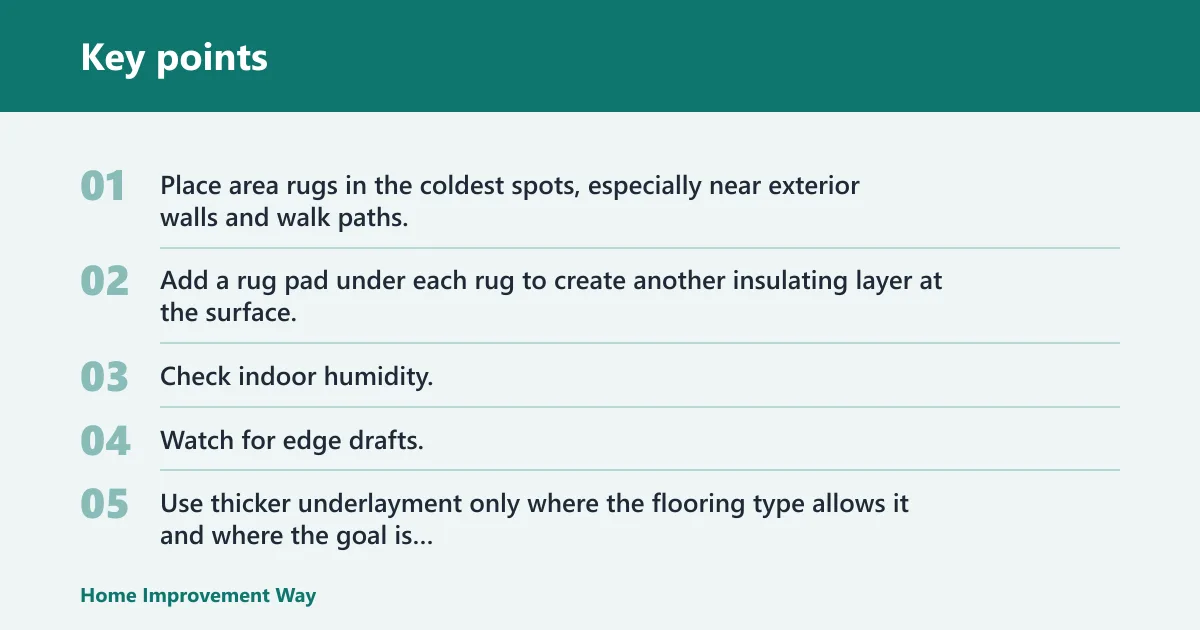
- Place area rugs in the coldest spots, especially near exterior walls and walk paths.
- Add a rug pad under each rug to create another insulating layer at the surface.
- Check indoor humidity. Dry winter air can make floors feel colder, and a target of 35–50% indoor relative humidity is a common comfort range.
- Watch for edge drafts. If the room feels colder near the perimeter, air sealing may matter more than thicker rugs.
- Use thicker underlayment only where the flooring type allows it and where the goal is better feel, not a full heat-loss fix.
Area rugs and rug pads
Area rugs are the fastest comfort fix for bare tile, stone, or concrete. A rug pad adds insulation at the surface and slows how quickly heat leaves your feet. This works best for localized comfort, such as a living room seating area or a bed-side path.
Rugs help most when the cold feels tied to touch, not to a house-wide temperature problem. They help least when the floor is cold because the space below it is losing heat.
Humidity changes in winter
Indoor humidity matters more than many homeowners expect. Furnace season dries homes and causes winter floor movement, and dry air can make floors feel colder even when the room temperature seems fine. A more comfortable humidity range is often 35–50% indoor relative humidity.
That does not mean humidity fixes a slab or crawlspace problem. It can, however, make the same floor feel less harsh underfoot while you address the bigger source of heat loss.
When thicker underlayment helps
Thicker underlayment can help with perceived warmth under laminate, engineered wood, and some LVP systems. It can also improve sound and soften the step. The gain is modest, though, and it will not fix cold air leaking in from below.
Use this option when the goal is better comfort on an already decent floor, not when the house has a clear insulation or air-sealing problem.
Which upgrades actually move the needle?
The biggest gains usually come from fixing the heat path, not from covering the symptom. Underfloor insulation, air sealing, and in some homes radiant heat do more than rugs or underlayment alone. The right order depends on whether the cold comes from below, from the edges, or from the heating system.
Underfloor insulation
Underfloor insulation is often a good move for floors above garages, crawlspaces, or basements when heat loss from below appears to be the main cause. It can make a big difference because it slows heat flow before it reaches the cold space underneath.
It works best when installed between floor joists or below the floor in a way that fits the house assembly. If air leaks remain open, though, the insulation will underperform.
Air sealing before insulation
Seal rim joists, penetrations, and obvious gaps before or along with insulation. That order matters because moving air carries heat away faster than still air. If edge drafts are the problem, insulation alone may not solve it.
Picture a dining room over a basement where the floor is cold only along the outside wall. That pattern points to air sealing and rim-joist work before any bigger flooring upgrade.
Radiant heated flooring
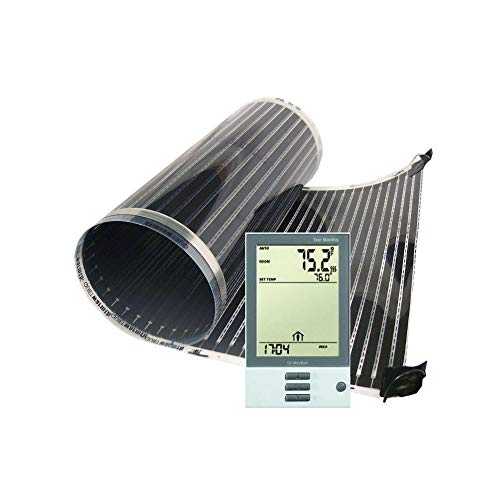
Radiant heated flooring is a long-term comfort upgrade, especially useful for tile and stone. One common placement is bathrooms, kitchens, and slab areas. It works because it warms the surface directly instead of asking the room air to do all the work.
It is a premium option, not the first one to reach for. Choose it when you want a higher comfort level, the floor material stays cold by nature, or you are already remodeling the room.
How do I tell whether the problem is a crawlspace, slab, or basement issue?
Start with location and pattern. A crawlspace problem usually affects the whole floor above it. A basement issue often shows up in the room over the basement or near exterior walls. A slab problem feels more constant across the room, especially with tile or stone.
Use this quick check:
- Whole room is cold above a low space: think crawlspace or basement heat loss from below.
- Cold is strongest at the edge of the room: think air leaks at the rim joist or exterior wall line.
- Tile or stone feels colder than nearby carpeted rooms: think slab contact or a material effect layered on top of heat loss.
- One room over a garage is much worse: think garage-floor insulation and air sealing.
Ask where the cold starts, not only how bad it feels. That detail usually points to the right repair path faster than the floor covering alone.
Frequently asked questions
Why are my floors cold in winter?
Cold floors in winter usually come from heat loss below the floor, a concrete slab that stays cold, or a comfort mismatch caused by dry air and the floor material itself. The best fix depends on where the cold shows up: across the room, at the edge, or only on one level of the house.
Is a cold floor a sign of poor insulation or air leaks?
It can be either, and sometimes both. Floors above crawlspaces, basements, and garages often need more insulation. But if the cold is strongest near exterior walls or the room perimeter, rim joist leaks and other air leaks are strong suspects and should be checked before bigger upgrades.
Why do tile and concrete floors feel colder than wood or carpet?
Tile, stone, and concrete conduct heat well, so they can draw warmth from your feet quickly. Carpet feels warmer because it traps air, which slows heat loss. Hardwood, laminate, and LVP usually feel less cold than tile, but the subfloor and underlayment still matter.
What can I do to warm cold floors without replacing them?
Start with area rugs and rug pads, then check indoor humidity and air leaks at the floor edge. A humidity target of 35–50% indoor relative humidity can improve comfort in winter. These are practical comfort steps, but they will not fix a slab or crawlspace heat-loss problem.
Will insulating under the floor make a big difference?
Yes, when the cold floor sits above a crawlspace, basement, or garage and heat loss from below is the real cause. It often helps much more than rugs or thicker underlayment. It will not do much, though, if the main problem is a slab, duct leak, or major air leakage.
Are radiant floors the best long-term fix for cold floors?
Radiant heated flooring is a strong comfort upgrade, especially for tile and stone, but it is not the first fix for every house. It fits best in bathrooms, kitchens, and slab areas where the surface naturally feels cold. For many homes, air sealing and underfloor insulation should come first.
Sponsored / affiliate links. As an Amazon Associate I earn from qualifying purchases. I may earn additional commission from eligible campaigns.