How to Make a Cold Basement Warmer
A cold basement warms fastest when you seal air leaks first, then add insulation where walls or the slab are uninsulated. Add dehumidification if moisture is high. If you skip the source of the chill, you pay for heat that escapes or for fixes that can make dampness worse. This guide shows how to find the cause and match the right fix to your basement type and budget.
This guide is part of our Winter Weatherproofing: How to Draft-Proof Your Home series.
Why your basement feels colder than upstairs



Basements usually feel colder for more than one reason. Below-grade walls stay in contact with cool soil, concrete slabs pull heat from your feet, and gaps around windows, rim joists, and penetrations let outdoor air leak in. Damp air then makes the same temperature feel colder.
Below-grade walls and slab contact
Concrete transfers heat well, so an unfinished wall or slab can feel much colder than framed drywall upstairs. If the floor feels icy even when the air temperature is fair, the main problem is often surface temperature, not just room air.
Air leaks, insulation gaps, and stack effect
Warm air leaves through leaky upper levels and escapes through the top of the house. That loss pulls replacement air upward from the basement, which can make the lower level feel drafty. Rim joists, sill plates, window frames, and pipe openings are common leak points.
Why damp air makes the room feel colder
Moist air can make a basement feel clammy and cold even before the thermostat says so. It also slows the payoff from insulation and heaters. A dehumidifier may help if the basement smells musty, has condensation, or feels better only on dry days. The U.S. Department of Energy recommends controlling humidity as part of basement comfort and mold prevention.
How to tell what is actually causing the chill
Start by separating air leakage, slab cold, and moisture. Each problem shows up differently, and the best fix changes with the symptom. If the basement is cold upstairs too, look beyond the basement itself and check the rest of the house for major leakage or duct loss.
Signs the problem is air leakage
If you feel a draft near windows, rim joists, sill plates, or around plumbing and wiring holes, air sealing should be first. Cold spots that line up with framing gaps or the edges of concrete walls also point to leakage. A thermal-imaging camera can help find those weak points before you spend on heat. Infrared scans are a common diagnostic tool, but they work best when paired with a visual check for gaps and missing insulation.
Signs the floor or slab is the issue
If the air is tolerable but the floor is always cold, the slab is likely doing the damage. Bare concrete and tile transfer chill straight into your feet. That is where rugs, pads, or floor insulation help more than a bigger heater.
Signs moisture is part of the problem
Condensation on pipes, a damp smell, visible damp spots, or a basement that feels colder after rainy weather all point to moisture. In that case, adding heat alone may not help much. Drying the air often makes the room feel warmer at the same thermostat setting. For sizing and placement guidance, the U.S. Environmental Protection Agency and Department of Energy both advise choosing a dehumidifier that matches the space and the dampness level rather than oversizing by guesswork.
When cold in the basement points to a housewide issue
If the basement is cold and the rooms above it are also hard to heat, the source may be stack effect, attic air leaks, or duct leakage. A basement can be the symptom, not the cause. In that case, homewide air sealing and duct checks matter more than a portable heater.
Basement warm-up decision table
| Symptom | Likely cause | Best first fix | Estimated difficulty | Approximate cost band | Finished basement: best option | Unfinished concrete basement: best option | DIY vs pro boundary |
|---|---|---|---|---|---|---|---|
| Cold floors in a dry basement | Slab contact, bare concrete, leaks at rim joists | Seal obvious gaps, add a rug with pad, then use spot heat only where needed | Low to moderate | Low to mid | Rug, pad, and targeted zoning heat | Air sealing plus floor comfort layers | DIY for sealing and rugs; pro for wall or floor insulation and new circuits |
| Rec room feels chilly but looks dry | Insulation gaps, leaky windows, weak distribution | Air seal, add insulation where missing, then consider an electric fireplace or heat pump | Moderate | Mid to high | Ductless heat pump or electric fireplace | Air sealing, then modest spot heat if the space is used occasionally | DIY for minor sealing; pro for finished-wall work, refrigerant equipment, or panel upgrades |
| Laundry or mechanical area feels cold and damp | Moisture, poor air sealing, equipment room air movement | Use a dehumidifier, seal gaps, and avoid oversized space heating | Low to moderate | Low to mid | Dehumidifier and careful air sealing around finished transitions | Dehumidifier, sealing, and simple floor comfort fixes | DIY for dehumidifier setup and visible gaps; pro if combustion appliances or venting are involved |
| Basement is cold and the floor above feels chilly too | Stack effect, attic leakage, duct leakage, weak insulation | Check the whole house for air leaks and duct loss before adding more basement heat | Moderate to high | Mid to high | Whole-house air sealing and insulation fixes before room-by-room heat | Whole-house envelope and duct checks before basement-only upgrades | DIY for simple visual checks; pro for blower-door work, duct sealing, or complex envelope issues |
What is the cheapest way to warm a basement?
The cheapest path is usually to stop heat loss before buying more heat. Seal obvious leaks, add insulation where the payoff is biggest, and cut floor chill with rugs and pads. If the basement is damp, a dehumidifier can improve comfort without a major remodel.
Seal leaks before buying heat
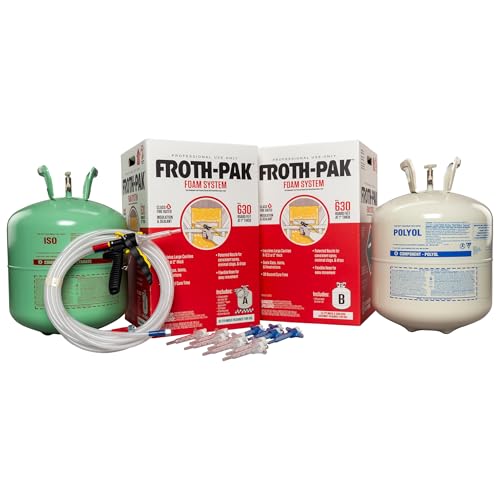
Rim joists, window edges, sill plates, and pipe or wire openings are often among the first places to check for sealing leaks. Even small leaks can make a basement feel colder than the thermostat suggests. Air sealing often returns more comfort than running a bigger heater longer. Use caulk, spray foam, or weather-appropriate sealants where the gap and surface call for them, and follow the product directions for curing in cold weather.
Add insulation where it gives the biggest return
If your basement has bare rim joists, exposed concrete, or uninsulated window areas, those are high-value spots. Insulation works best when paired with air sealing. Without that step, warm air can still escape around the edges. In basements with combustion appliances, close off and seal only after checking that the appliance still has safe combustion air and proper venting; sealed changes around a mechanical room can create backdrafting or other hazards if they are done blindly.
Use rugs and pads to cut floor chill
An area rug with a nonslip base helps most on cold concrete or tile. High-pile or plush styles feel warmer underfoot because they trap more air between your feet and the slab. That is a comfort fix, not a full heat solution, but it can help right away.
Add a dehumidifier when moisture is part of the issue
When damp air is part of the problem, a dehumidifier can make the room feel warmer at the same temperature. It also helps protect finishes and stored items. Pair it with sealing and insulation so you are not drying air that keeps getting replaced by wet air. The EPA recommends keeping basement humidity under control to reduce mold risk; for many homes, that means setting the unit to remove moisture steadily rather than only during obvious damp spells.
Say your roughly medium-size rec room feels fine at the couch but icy by the concrete wall. A rug and pad can make the seating zone feel warmer, but if the wall is leaking air, the room will still lose heat fast. The fix should match the symptom, not the guess.
Should you use a space heater in the basement?
A portable electric space heater is useful for short-term spot heating in an enclosed basement room, especially when you only need warmth in one area. It is not the right answer for moisture, missing insulation, or a whole-house heat loss problem. Use it as a local fix, not a repair. For electrical safety, the U.S. Consumer Product Safety Commission advises plugging the unit directly into a wall outlet, keeping it away from combustibles, and never leaving it unattended.
Best use case for a portable electric space heater
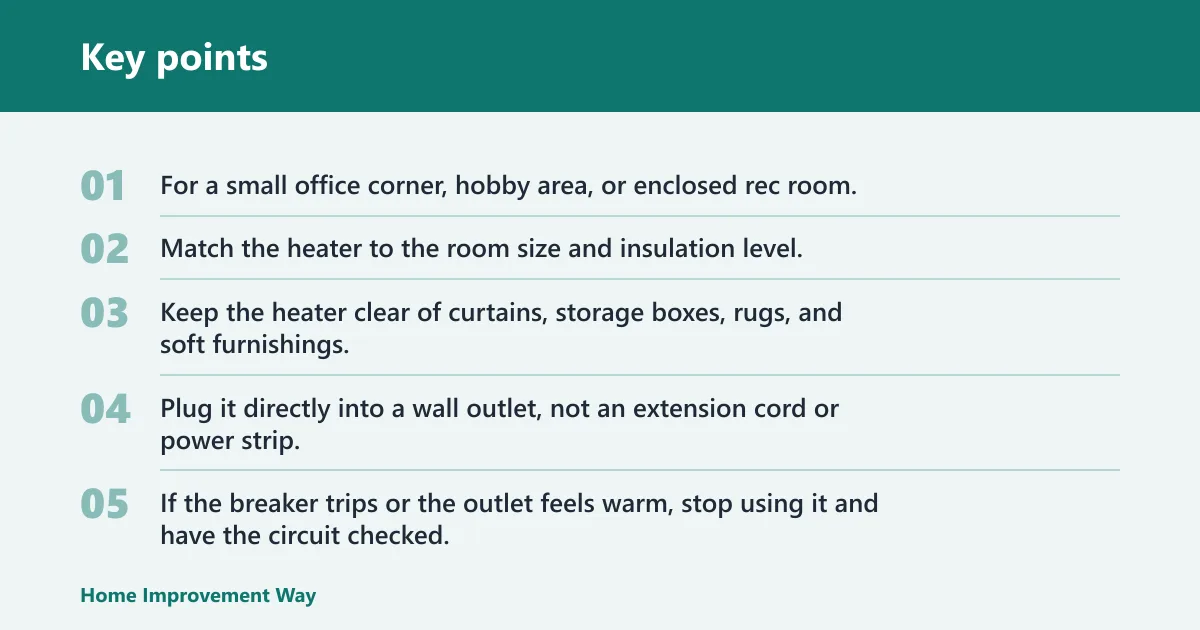
For a small office corner, hobby area, or enclosed rec room, a space heater can add quick warmth to a limited zone when the room is already reasonably tight and dry. Match the heater to the room size and insulation level, and check the manufacturer’s output guidance rather than assuming one model will work everywhere.
Clearance, outlet, and cord safety
Keep the heater clear of curtains, storage boxes, rugs, and soft furnishings. Plug it directly into a wall outlet, not an extension cord or power strip, and avoid sharing the circuit with other heavy loads. If the breaker trips or the outlet feels warm, stop using it and have the circuit checked.
Why it works for spot heating, not whole-room fixes
A portable heater warms the air around it and the area near it. It does not stop heat loss through concrete, leaks, or damp air. That is why it can make one chair or desk comfortable while the far side of the basement still feels cold.
Best heating options by basement type
The best option depends on how the basement is used, how finished it is, and whether it is occupied every day. A media room needs a different solution from a laundry area. Match the heat source to the space, or you will pay for comfort you cannot use.
Finished rec room and media space
A finished basement can often work well with an electric fireplace or a ductless heat pump. Electric fireplaces come in recessed, semi-recessed, and wall-mounted styles, and they add both heat and a visual focal point. A finished room benefits from zone control and a cleaner look.
Unfinished concrete basement
An unfinished basement usually needs air sealing and floor comfort help before fancy heat. If you want quick relief, a portable electric baseboard heater can be a quiet, low-profile choice for spot heating. A long, low-profile unit can fit along a wall without taking up much floor space.
Laundry or mechanical area
These spaces often need moisture control more than high heat output. A dehumidifier can keep the area from feeling clammy, and air sealing helps prevent outside air from feeding the dampness. Avoid placing heaters near stored chemicals, lint, or appliance vents.
Basement that stays cold upstairs too
If the whole house feels harder to heat, a basement heater is probably the wrong first move. Check attic leaks, duct leakage, and major gaps in the building shell. The problem may be upstairs air loss pulling conditioned air out of the basement and the rest of the home.
Which upgrades fix the root cause?
Root-cause fixes cost more up front, but they often deliver better comfort than adding more heat. Focus first on insulation and air sealing, then use targeted heating only where the space is occupied. That order keeps you from paying twice for the same warmth.
Insulation and air sealing at rim joists and windows
Seal around rim joists, window frames, sill plates, and utility penetrations. Those are the spots where cold air often enters and warm air escapes. In many basements, this work brings more value than a larger heater because it keeps heat from leaving in the first place.
Thermal-imaging cameras for finding cold spots
A thermal-imaging camera can help identify leak and insulation problem areas before you cut into walls or buy bigger equipment. It is most useful when you want to see which spots are colder than the surrounding surfaces, not when you already know the exact defect. Used correctly, it is a diagnostic aid, not a substitute for sealing and insulation basics.
Radiant floor heating for even heat from the floor up
Radiant floor heating gives even warmth from the floor up and is especially appealing in finished spaces. Electric heated mats are one option. This is a comfort upgrade with a higher upfront cost, so it makes the most sense when you plan to stay in the space often.
Ductless heat pumps for zone control without ductwork
A ductless heat pump can provide year-round heating and cooling without new ductwork. These systems are generally far more efficient than resistance heat and can provide several units of heat for every unit of electricity used, but they cost more up front. Installed prices commonly land in a broad multi-thousand-dollar range depending on the number of zones, electrical work, and line-set routing, and some installs may require a wall penetration for the indoor-outdoor connection. For many homes, they are best when the basement is finished and used regularly.
Picture a finished media room with no ducts and a wall that stays cold in January. A ductless system can handle that room well because it heats one zone directly. By contrast, a damp unfinished basement usually gets better results from sealing, drying, and floor comfort fixes first.
Adding a reverse ceiling fan setting in a basement
A reverse ceiling fan setting can help in a basement with enough ceiling height and a properly installed fan. In winter, the fan should turn slowly clockwise so it pushes warm air that collects near the ceiling back down along the walls. That can make the room feel more even without blasting people with direct airflow.
It will not solve a cold slab, missing insulation, or air leaks. If the basement is chilly because concrete is pulling heat away or outside air is sneaking in, a ceiling fan only moves the same cold air around. Use it as a supplement after air sealing and moisture control, not as the main fix.
Frequently asked questions
Does insulating the basement floor help?
It can, especially if the floor is bare concrete or tile and the room feels cold underfoot. Floor insulation helps reduce slab chill, but it is usually most effective when combined with air sealing and moisture control. If the floor is already finished, a rug and pad may be the easier first step.
Why is my basement cold upstairs too?
That often points to stack effect, attic leaks, or duct leakage rather than a basement-only problem. Warm air escaping from upstairs can pull replacement air from below, which leaves both levels harder to heat. In that case, check the whole house shell and ducts before buying more basement heat.
Do I need a dehumidifier in a cold basement?
If the basement feels damp, smells musty, or has condensation, a dehumidifier is often worth it. Moist air makes the space feel colder and can reduce the value of heating upgrades. Drying the air first can make the room more comfortable without raising the thermostat as much.
What basement heating option is best for a finished basement?
For a finished basement, a ductless heat pump is often the strongest all-around choice because it gives zone control and efficient year-round heating and cooling. An electric fireplace can be a good fit for a media room or rec space when you also want a decorative focal point and supplemental heat.
Sponsored / affiliate links. As an Amazon Associate I earn from qualifying purchases. I may earn additional commission from eligible campaigns.