
How to Weatherproof Windows for Winter Without Replacing Them
Find the leak path first, then seal the smallest gap with the lowest-risk fix: weatherstripping for moving sashes, rope caulk or removable film for renters, and caulk only at stationary exterior joints. Skip that diagnosis and you can trap moisture, waste heat, or block a window that still needs to open in a fire or emergency. This guide shows how to test drafty windows, match the right winter seal to each window type, and avoid fixes that backfire.
Before you seal anything


Find the draft source first
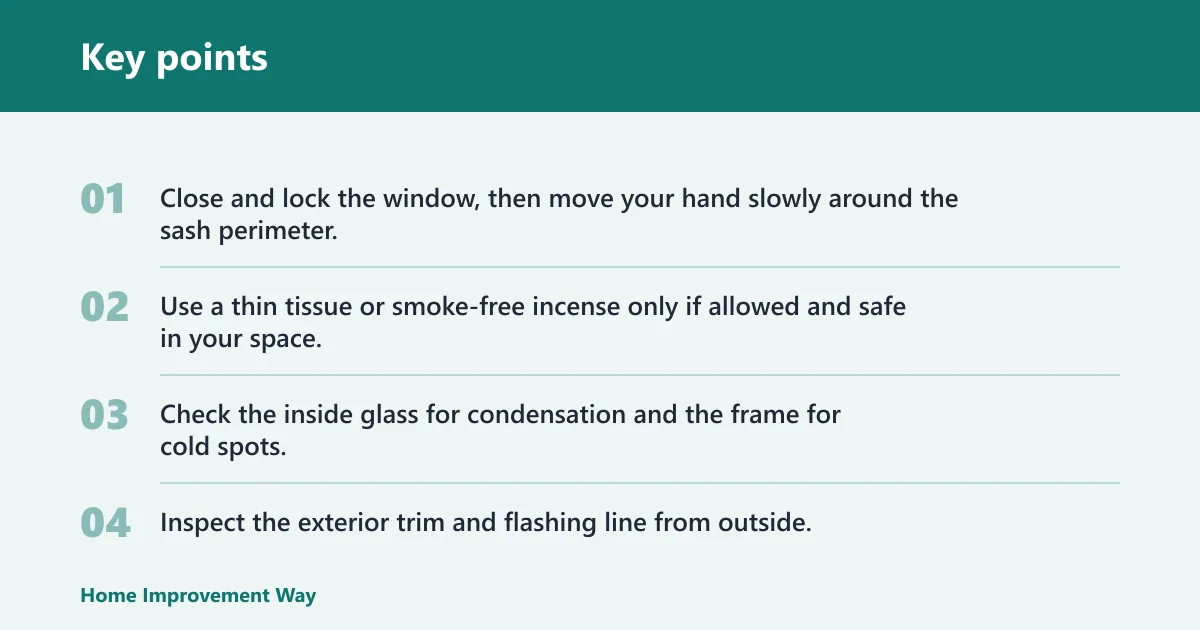
- Close and lock the window, then move your hand slowly around the sash perimeter, lock area, meeting rail, and trim.
- Use a thin tissue or smoke-free incense only if allowed and safe in your space; a moving flutter points to air movement, not just cold glass.
- Check the inside glass for condensation and the frame for cold spots. Condensation means moisture control is part of the problem; cold glass alone does not always mean an air leak.
- Inspect the exterior trim and flashing line from outside. If the draft is strongest at the outer edge, the fix belongs on the exterior joint, not on the sash.
Check the window type and frame material
Double-hung windows, casements, and sliders move differently, so the seal has to fit the moving part. Wood frames often need paint touch-up or rot repair before adhesive will hold. Vinyl usually accepts adhesive well if the surface is clean. Aluminum frames can feel colder and may condense more, which makes air sealing more important. Composite frames vary by manufacturer, so clean and dry prep matters before any product goes on.
What you’ll need
- Microfiber cloths
- Mild cleaner and water
- Rubbing alcohol for final wipe-down on approved surfaces
- Putty knife or plastic scraper
- Measuring tape
- Utility knife or scissors
- Caulk gun
- Exterior-rated sealant for outside joints
- Paintable acrylic latex caulk for interior stationary seams
- Adhesive foam, V-strip, felt, or rubber weatherstripping
- Rope caulk for temporary sealing
- Window insulation film kit with double-sided tape and heat-shrink film
- Draft stopper or removable interior blocker for renters
- Gloves
Which fix matches the leak?
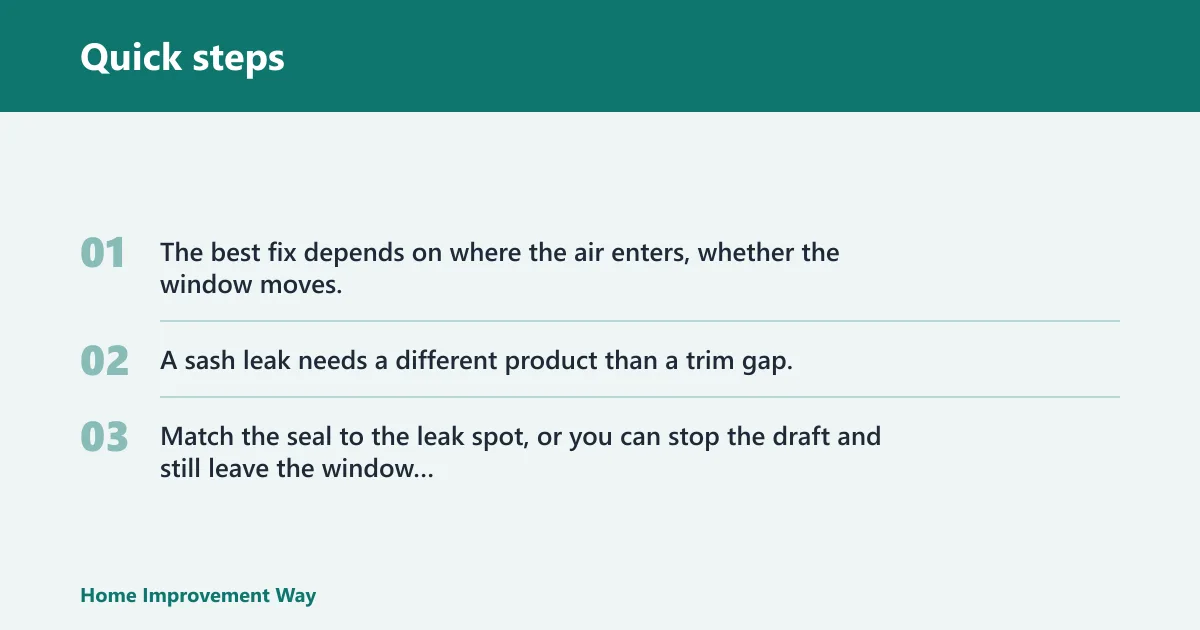
The best fix depends on where the air enters, whether the window moves, and whether you need a removable solution. A sash leak needs a different product than a trim gap. Match the seal to the leak spot, or you can stop the draft and still leave the window hard to open.
| Leak location | Window type / status | Best fix | Materials needed | Install time | Estimated cost band | Durability | Common failure mode |
|---|---|---|---|---|---|---|---|
| Sash perimeter or meeting rail | Operable window; homeowner or renter | Weatherstripping | Adhesive foam, V-strip, felt, or rubber | 20–60 minutes | $5–$25 per window | One season to several years | Peels off, compresses too much, or blocks closure |
| Fixed trim or interior frame seam | Nonmoving gap; homeowner | Caulk | Paintable acrylic latex for inside, exterior-rated sealant for outside | 30–90 minutes | $6–$20 per tube | Several years if the joint stays stable | Cracks again if the joint moves |
| Glass surface draft sensation | Any window; seasonal use | Window insulation film | Film kit, double-sided tape, hair dryer | 20–45 minutes | $8–$25 per kit | One winter | Sags, wrinkles, or loosens at the tape edge |
| Frame seam in a rental | Renter; temporary use | Rope caulk | Removable putty-like sealant | 10–30 minutes | $3–$10 per window | One season | Picks up dust or leaves residue if removed late |
| Outer trim or flashing joint | Exterior gap; homeowner | Exterior sealant | Exterior-grade caulk, cleaner, scraper | 30–90 minutes | $8–$20 per tube | Several years | Fails if applied over wet or dirty surfaces |
Weatherstrip moving parts
Use weatherstripping on parts that open and close, not on joints that must stay rigid. It works best on operable sashes, locks, and meeting rails. Choose the profile by gap size, because oversized material can bind the window or keep the lock from engaging.
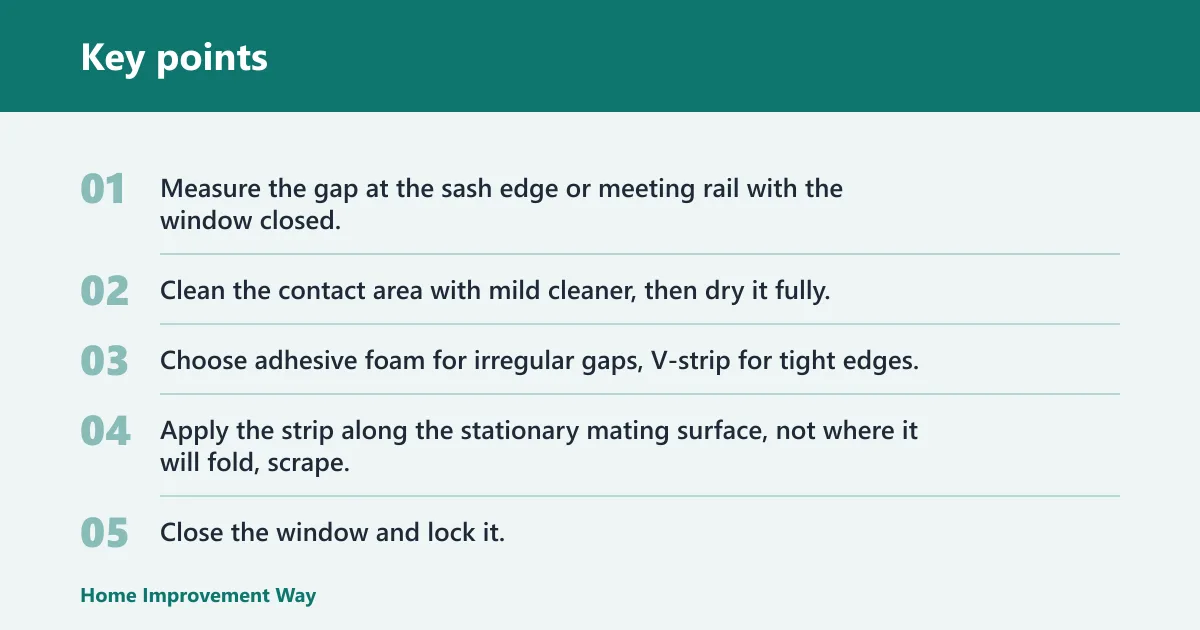
- Measure the gap at the sash edge or meeting rail with the window closed.
- Clean the contact area with mild cleaner, then dry it fully. Adhesive weatherstripping needs a clean, dry surface.
- Choose adhesive foam for irregular gaps, V-strip for tight edges, felt for light-duty contact points, or rubber/compression strip for stronger sealing.
- Apply the strip along the stationary mating surface, not where it will fold, scrape, or block the latch.
- Close the window and lock it. If it binds, remove the strip and drop the thickness by 1/16 inch to 1/8 inch, then recheck.
Say your double-hung bedroom window leaks at the meeting rail but still opens every morning. A thin V-strip on the fixed side may solve it without making the sash drag. If the same window needs force to lock after sealing, the strip is too thick for that gap.
Seal fixed gaps and trim joints
Use caulk only where the joint does not move. It is the right choice for stationary cracks at interior trim, casing, and exterior joints. It is the wrong choice for sash edges, meeting rails, or any place that must slide or flex.
- Scrape loose paint, old caulk, and debris from the joint.
- Clean and dry the seam completely.
- Apply paintable acrylic latex caulk for interior cosmetic sealing.
- Use exterior-rated sealant on outside trim and flashing joints where weather exposure is possible.
- Tool the bead so it bridges the gap without clogging drainage paths.
If the draft comes from outside at the trim line, exterior sealant belongs on the weather side. A crack between siding and trim can admit both air and water. That is different from a sash draft, which needs a moving-part seal.
When trim damage needs repair
Caulk cannot fix rot, loose trim, or failed flashing. If wood is soft, crumbly, or swollen, repair the substrate first. Sealing over damaged material can hide a water problem while it keeps growing behind the finish surface.
Should you use window film or rope caulk?
Use window film when the glass itself feels cold and you want a seasonal interior layer. Use rope caulk when you need a removable seal around frame seams, especially in rentals. Film helps cut draft sensation and radiant heat loss across the glass; rope caulk is better for fast removal at season end.
- Pick film for broad glass coverage and rope caulk for narrow perimeter gaps.
- Clean the surface and let it dry before applying either product.
- For film, apply the double-sided tape to the interior frame, stretch the film, and heat-shrink it with a hair dryer.
- For rope caulk, press the material into the seam by hand and smooth it flush.
- Check the edge after installation. If film sags, re-tension it; if rope caulk pulls away, press it back or replace that section.
Suppose a rental apartment has old aluminum windows with a cold draft around the frame but no permission for permanent sealants. Rope caulk at the interior seam plus film on the glass is usually the least risky combination. That keeps the window removable and avoids damage to the trim.
Common mistakes to avoid
- Sealing moving joints with caulk. Use weatherstripping instead, or the sash may stick.
- Using oversized compression strip. Too much thickness can stop the lock from engaging.
- Applying adhesive over dust or moisture. Clean and dry surfaces first or the strip will peel.
- Blocking drains, weep holes, or hardware. Leave water paths and operating parts clear.
- Skipping damage checks. Soft wood, broken glazing, or loose hardware needs repair before sealing.
- Assuming cold glass equals a leak. Condensation and radiant chill need different fixes.
A common first-timer mistake is adding about a 1/4-inch foam strip to a sash that already closes tightly, which can make latching harder. The window then needs extra force to latch, and the seal gets crushed within days. A narrower profile is the better correction.
What if the draft still comes back?
If the draft returns after sealing, move up the ladder: recheck the leak path, then add a second layer only where the first fix missed the gap. If the problem is outside at flashing or trim, use exterior-grade sealant. If the window still leaks after that, the issue is likely damage rather than air sealing alone.
- Open and close the window once more to verify operation.
- Repeat the hand or tissue check at the same spots.
- Add 1/8 inch more weatherstripping only where the gap still leaks.
- Replace a sagging film panel rather than stacking tape over loose edges.
- Stop and inspect for rot, missing glazing, broken latches, or a frame that has shifted out of square.
Prevention: check exterior sealant and weatherstripping before the first hard freeze, while temperatures are still mild enough for materials to bond well.
When is a drafty window beyond DIY repair?
A drafty window is beyond simple sealing when the frame is rotten, the sash will not stay in place, glazing is missing or cracked, or the hardware no longer lets the window close evenly. At that point, sealing can still help briefly, but it will not solve the underlying failure.
Frequently asked questions
How can I weatherproof my windows for winter without replacing them?
Start with the leak source, then use weatherstripping on moving sashes, caulk on fixed trim, and film on the glass if the room still feels cold. Clean and dry the surface first. If you rent, choose rope caulk or removable film so the window can be restored later.
What is the cheapest way to stop drafts around windows?
Rope caulk is usually the lowest-cost temporary fix, often a few dollars per window. For operable sashes, adhesive foam or felt is still inexpensive. If the draft is at a fixed trim joint, a tube of interior acrylic latex caulk can be cheaper than repeated temporary fixes.
Should I use window film or weatherstripping for cold windows?
Use weatherstripping when the air is coming through a moving sash, lock area, or meeting rail. Use film when the glass is the cold surface and you want a seasonal interior layer. If both the sash and glass are part of the problem, you can use both without blocking the window.
Can I weatherproof windows if I rent and can’t use caulk?
Yes. Rope caulk is removable and works on frame seams, while window insulation film can cover the glass for the winter. Interior draft stoppers help at the sill area. Avoid permanent exterior sealants unless your lease and landlord allow them.
Where should I seal a drafty window first?
Start at the exact leak path: sash perimeter, lock area, meeting rail, glazing, trim, then exterior joints. If the draft is at a moving part, use weatherstripping. If it is at a fixed seam, use caulk. That order keeps you from sealing the wrong place and blocking the window.
Sponsored / affiliate links. As an Amazon Associate I earn from qualifying purchases. I may earn additional commission from eligible campaigns.