Are Interior Storm Windows Worth It?
Interior storm windows are worth it when the primary window is sound but drafty, the glass is intact, and you want a lower-cost air-sealing fix. They are usually a stopgap, not a substitute for failed sashes or rotted frames. Ignore bad windows, and you can waste money on a fix that still leaks, binds, or traps condensation. This guide compares them with repair, exterior storms, and full replacement.
This guide is part of our Winter Weatherproofing: How to Draft-Proof Your Home series.
What interior storm windows can and cannot do

Interior storm windows are removable secondary panels installed on the room side of an existing window. They add a layer of still air and help cut drafts and cold-glass discomfort without changing the exterior opening.
They make the most sense when the primary window is still serviceable. They do not fix rot, water intrusion, cracked glass, failed hardware, flashing problems, or structural movement.
What they can fix and what they cannot
A well-fit interior insert can reduce air leakage around an otherwise usable window and make the area near the glass feel warmer. That is the job.
It is not the job of an interior storm window to rescue a broken sash, hide a failed lock, or stop active water intrusion. If the window frame is soft, warped, or damaged enough that the sash does not open and close correctly, the storm window is not the real repair.
Why fit matters more than marketing claims
Fit is the difference between useful and disappointing. Compression seals help press the insert into the opening, but the fit has to be correct. Too loose, and drafts still move around the edges. Too forced, and the panel may sit badly or strain the opening.
Some interior storm-window inserts limit normal window operation while installed. That matters if you rely on the sash for daily ventilation or for bedroom escape.
Are interior storm windows worth it?
Yes, when the window is sound, the room is cold, and you want a reversible upgrade at lower cost than replacement. No, when the opening has rot, failed hardware, water intrusion, or an egress problem. In those cases, the storm window can delay the real fix without solving it.
Best cases: sound primary windows and cold rooms
Interior storms fit older homes well, especially when preserving the exterior look matters. They can also help in rooms that feel chilly near the glass even though the window still functions.
Say your 30-by-60-inch double-hung window is painted shut free, the sash locks work, and the main complaint is cold air on winter nights. An interior insert may be a sensible repair strategy because the opening is sound and the goal is comfort, not a full rebuild.
Weak cases: rot, failed hardware, or water intrusion
Do not use an interior storm to paper over rotten wood, broken balances, damaged locks, or recurring leaks. Those problems usually belong in the repair or replacement column.
InspectandTest warns that rot, improper operation, or major damage can make low-e storm windows inappropriate. That is the right threshold to use: if the window cannot operate properly on its own, a secondary panel is not the first fix.
A simple rule for deciding fast
If the window opens, closes, locks, and sheds water as intended, an interior storm window may be a good winter upgrade. If any of those basics are failing, repair first.
Interior storm window decision table
Score each opening on 10 criteria. Give 0 points for a poor fit for storms, 1 point for mixed conditions, and 2 points for a strong fit. Add the points, then read the recommendation at the bottom.
| Criterion | 0 points | 1 point | 2 points |
|---|---|---|---|
| Draftiness | Little or no draft | Some seasonal draft | Clear winter draft near sash |
| Sash condition | Binds, sticks, or will not latch | Works, but needs minor repair | Opens and closes normally |
| Rot | Visible rot or soft wood | Localized damage | No rot at frame or sill |
| Condensation | Frequent moisture on the primary window | Seasonal moisture only | Little or no condensation now |
| Frequency of opening | Opened daily | Opened weekly | Rarely opened in winter |
| Bedroom egress | Fixed panel would block escape | Unsure | Not an egress opening |
| Historic value | No need to preserve exterior appearance | Some preservation value | Original exterior should stay visible |
| Winter comfort need | Comfort is fine | Moderate comfort issue | Severe cold-glass discomfort |
| Budget | Room for repair or replacement | Some budget, but limited | Need a lower-cost option now |
| Install difficulty | Complex or out of square | Moderate fit challenge | Simple, repeatable opening |
Read the score: 16 to 20 points points to an interior storm window. 10 to 15 points points to a closer look at exterior storms or selective repairs. 0 to 9 points means repair first, or replace if the opening is beyond practical repair.
Picture a north-facing bedroom window that scores high on draftiness, comfort need, and historic value, but low on frequency of opening because it is rarely used for ventilation in winter. That opening is a strong interior-storm candidate only if it is not the required escape window.
Do interior storm windows work?
Yes, if the window is otherwise sound and the insert fits well. They can reduce drafts, raise the interior glass temperature, and make a room feel less cold near the window. Their best results come from a tight, even fit and a serviceable primary window.
Draft control and cold-glass comfort
By adding a second air space, interior storms slow heat loss through the opening and reduce the chill people feel near the glass. That comfort gain is often the main reason homeowners choose them.
Compression seals matter here. A loose panel leaks air; a panel forced into a bad opening may not seat correctly. A good fit matters more than a brand claim.
Low-e coatings and winter performance
Some interior storms use low-e coating, a microscopically thin coating that reduces heat loss through glass. ENERGY STAR-certified storm windows must have emissivity of 0.22 or lower, and northern-zone products need solar transmittance greater than 0.55, according to InspectandTest.
That matters because climate zone changes the result. A winter-focused insert for a cold northern climate is not the same product as one chosen for milder weather with different solar gain goals.
Noise reduction and moisture limits
Bob Vila says some users report noise reduction by up to 50 percent. That can help on a street-facing room, but it is not guaranteed and should not be the only reason to buy.
Condensation can still happen if indoor humidity stays high. A tighter interior storm can reduce condensation on the primary window, yet moisture control still matters. If indoor air is humid, the problem may move rather than disappear.
Interior vs exterior storm windows
Interior storms mount on the room side. Exterior storms mount to the outside of the casing and protect the primary sash from weather. Both can help, but they solve different problems and bring different tradeoffs.
Room-side access versus outside mounting
Interior storms are easier to remove seasonally and usually preserve the outer look of the house. They can be a strong choice for historic homes where the original exterior appearance matters.
Exterior storms can protect the primary window from rain and weather exposure. They often need drainage or weep holes, which is one reason installation details matter more on the outside side of the wall.
Drainage, cleaning, and curb appeal
Exterior panels are harder to clean from the outside and may change curb appeal. Interior panels avoid that outside maintenance but can interfere with normal window operation while installed.
That is why the right choice depends on how the window is used. A rarely opened parlor window and a bedroom escape window should not be treated the same way.
Which one fits older homes better?
Interior storms often fit older homes better when the goal is reversible winter comfort and preserved trim. Custom sizing is common because older openings are often out of square or nonstandard.
Exterior storms can still work, but they ask more of the outside installation and may matter more for weather protection than for reversible preservation.
Cost, savings, and payback
Costs vary by type. The same source says interior storm windows can cost less than $100 per window. That is a useful ceiling for some simpler options, but custom inserts and professional installation can raise the total quickly.
Windows Resource says the EPA estimates low-e storms save about $350 a year, and DOE puts storm windows at about a quarter of the cost of replacement. Those figures help frame the choice, but payback depends on climate, window count, and heating fuel.
DIY kits, custom inserts, and pro install
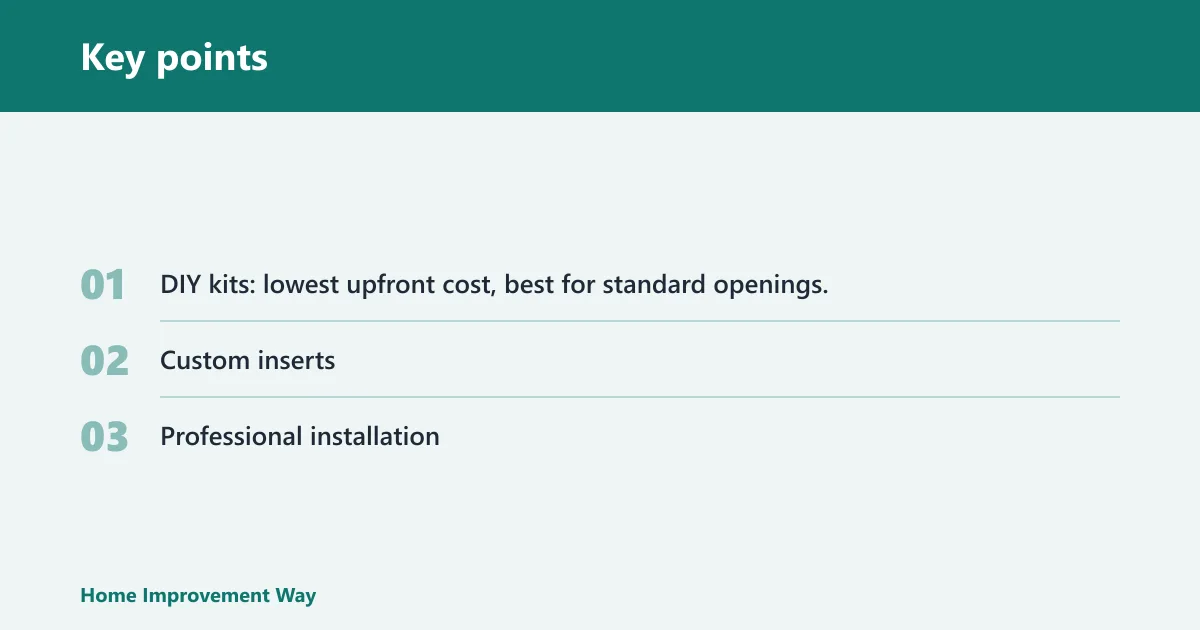
- DIY kits: lowest upfront cost, best for standard openings, and most dependent on careful measuring.
- Custom inserts: better for older homes, odd sizes, or tighter fit requirements.
- Professional installation: more expensive, but useful when the opening is out of square or the trim is delicate.
A common first-timer mistake is buying a panel for a visibly worn opening and hoping the insert will hide the problem. If the sash hardware is failing, the money belongs in repair first.
How climate and heating fuel change payback
Payback is usually better in cold climates, on larger windows, and where heating fuel is expensive. It is usually weaker in mild climates or on windows that already perform reasonably well.
Fuel type matters too. If your home uses expensive electric heat, draft reduction can matter more than it would on a lower-cost fuel. If the room is only used part of the year, payback is slower.
When replacement beats another season of patching
Replacement starts making more sense when several windows fail the same way, when rot is widespread, or when the opening no longer supports safe and normal use. The same source notes interior storms can be a relatively affordable alternative to replacement windows, but affordable is not the same as appropriate.
If the frame is structurally sound and the problem is mostly comfort, an interior storm is a reasonable repair strategy. If the problem is the window itself, replacement may be the cleaner fix.
Frequently asked questions
How much do storm windows cost?
Cost depends on type and installation. The same source says some interior storm windows can cost less than $100 per window. Custom inserts and professional installation cost more. For payback, cold climates and expensive heating fuel help, while mild climates and lightly used rooms slow the return.
Storm windows vs replacement windows: which is better?
Replacement is better when the window is failing as a window: rot, broken hardware, water intrusion, or structural problems. Storm windows are better when the window still works and the goal is comfort, draft control, and a reversible upgrade. They solve different problems.
Do they still make storm windows?
Yes. Interior storm windows are still sold through local glass shops, specialty window makers, and online custom-order channels. Availability is often better for custom sizes than at big-box retail because many older homes need nonstandard dimensions or a more exact fit.
How do interior storm windows compare with exterior storm windows?
Interior storms are easier to remove, preserve the outside look, and are often a better fit for historic homes. Exterior storms protect the primary sash from weather and need drainage or weep holes. Exterior units can be harder to clean from outside and may change curb appeal.
Sponsored / affiliate links. As an Amazon Associate I earn from qualifying purchases. I may earn additional commission from eligible campaigns.