
Best Window Insulation Kits for Apartments (2026): We Compared
For most apartments, a removable window insulation film kit is the best all-around fix because it seals the air leak, stays renter-friendly, and does the most work against winter drafts without replacing the window. Choose rope caulk for loose gaps, cellular shades for daily insulation, and a removable insert only if you need frequent access to the sash.
Quick comparison

| Product | Badge | Best for | Price | ||
|---|---|---|---|---|---|
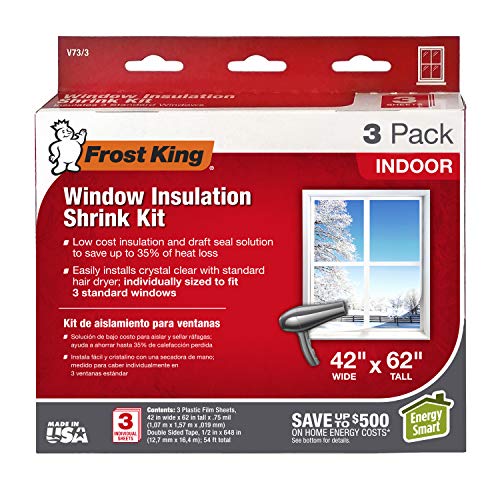 |
Frost King V73/3H Shrink Window Kit, Indoor, 42 x 62 in, 3Frost King | Our pick | 42 x 62 in · clear · 3-pack | $4.98
Price as of 25 Oct 2026
|
View |
 |
Duck Brand MAX Strength Window Insulation Kit, 84in x 120Duck | Also great | 84 in x 120 in · clear · 2-pack | $29.94
Price as of 25 Oct 2026
|
View |
 |
Frost King R538H Foam Tape, 3/8" W, 5/16" T, 10 ft L, BlackFrost King | Pair with it | 3/8 in x 5/16 in · black · 10 ft | $3.47
Price as of 25 Oct 2026
|
View |
 |
Wamlente 1/8" x 90 ft Grey Caulking Cord, 2 Roll | ConcreteWamlente | Pair with it | 1/8 in x 90 ft · grey · 2-roll | $29.99
Price as of 25 Oct 2026
|
View |
 |
3M Transparent Weather Sealing Tape, 1.5 in x 30 ft,3M | Also great | 1.5 in x 30 ft · crystal clear · removable tape | $15.02
Price as of 25 Oct 2026
|
View |
Use this page to match the fix to the failure mode. A window can lose heat through glass, frame gaps, worn seals, or plain air leakage, and the right product changes with each one.
For most apartments, the best result starts with the leak, then adds heat retention or light control if the lease and window style allow it.
📊 Poor window insulation can waste about 30% of heating and cooling energy. Source: How To Insulate Apartment Windows for Winter.
How we chose
The ranking below weighs six practical criteria: draft sealing, heat retention, summer heat control, daylight, open-and-close compatibility, and damage risk.
Department of Energy guidance says windows can account for roughly 25% to 30% of energy use, and reducing air leaks is often a cost-effective first step. That is why the guide ranks sealing power first, then comfort tradeoffs that matter in apartments.
The comparison also includes renter limits such as landlord rules, bedroom escape windows, window air conditioners, and sash operation. A fix that blocks access or leaves adhesive residue is not a good fit for every lease.
Frost King V73/3H shrink window kit: best for basic winter sealing
This is the simplest pick for a renter who wants a low-cost seasonal seal on standard interior windows. Based on the listed size and the product type, it fits a straightforward winter setup where clear film matters more than heavy-duty puncture resistance.
Its strength is coverage value. The three-pack gives basic apartment insulation coverage, and clear shrink film keeps daylight usable on painted or standard windows.
The drawback is that it is a seasonal solution, not a permanent upgrade. Like most shrink kits, treated windows usually cannot be opened until the film comes off, so it is a poor fit for windows you need to operate often.
Duck MAX Strength window insulation kit: best for large windows
This is the better choice for big panes, patio doors, or drafty openings that need more film area than a small kit can cover. The listed 84 in x 120 in size makes it better suited to oversized glass than a compact apartment window kit.
The puncture-resistant film is the main advantage. It is built for colder conditions, and the included tape keeps the installation indoors, which matters for renters who cannot modify the exterior.
The tradeoff is cost and bulk. It is more than many small apartments need, and a large kit can be overkill if your real problem is a tiny gap around the sash rather than the glass itself.
Frost King foam tape: best for worn seals
This self-adhesive foam tape is a practical answer when the problem is the frame edge, not the pane. It is best for small air leaks around movable parts, especially on windows with tired compression seals or obvious draft paths.
Its strongest point is simplicity. Foam tape can close small gaps quickly, and that can improve comfort without covering the whole window.
The drawback is durability and fit. Foam tape works on limited gaps, but it will not solve a warped frame, a badly adjusted sash, or a window that leaks around multiple edges.
Wamlente caulking cord: best for temporary gaps
This removable caulking cord fits renters who need a no-damage filler for joints, cracks, and odd-shaped openings. It is useful where you want a temporary seal that can come back off with less fuss than adhesive tape.
The long roll length is the selling point. It can handle many small gap-filling jobs around windows, doors, and trim, which helps in older apartments with uneven framing.
The drawback is that it is a gap filler, not a full insulation system. It will not match shrink film for sealing a window pane, and it will not help much if the main loss is through the glass itself.
3M transparent weather sealing tape: best for low-profile film edges
This is a good fit when you want a clear, removable tape that stays visually subtle on interior windows. It helps secure a seal around the frame while keeping the window area less noticeable than many opaque strips.
Its best feature is the combination of clarity and adhesion. That makes it useful for apartments where appearance matters and where you want a tighter edge than a loose temporary patch.
The drawback is that tape alone is not insulation. It needs to be paired with a film or another barrier, and removal can still require care if the frame finish is delicate.
Do window insulation kits work in apartments?
Yes. In apartments, insulation kits work best when the problem is air leakage through the glass area or the perimeter of the window. A shrink-film kit can create an airtight seal over the pane, which is why it is the best renter-friendly winter option for many units.
Window insulation film works by applying double-sided tape around the frame, stretching heat-shrink plastic over the opening, and then tightening it with a hair dryer after installation. That combination is what gives the wrinkle-free finish and the best seal of the common temporary options.
Say your studio has a 36-inch by 48-inch window that feels cold near the sofa in January. A film kit can reduce that draft path without changing the window itself, while a curtain alone mostly stops radiant chill after it reaches the room.
Window insulation film
Film is the strongest all-around answer for winter drafts because it closes off the air path between the room and the pane. It is also the clearest path to a seasonal, renter-friendly fix.
Its weak point is access. Treated windows usually cannot be opened, so skip it on windows that must stay operable for ventilation, a window air conditioner, or emergency use.
Bubble wrap
Bubble wrap is the cheapest temporary hack and it does add an air layer, while still allowing sunlight through. This Old House lists it as an apartment insulation option.
It is less effective than film for sealing gaps, so it belongs in the “quick stopgap” category rather than the “real seal” category. Use it when budget is the main constraint and the window does not need to look polished.
Can you insulate apartment windows without damaging the frame?
Yes. Rope caulk, updated weather stripping, and some removable tapes can improve comfort without a permanent change to the window frame. These are the best first choices if your lease is strict or the finish is fragile.
Rope caulking is a temporary, removable gap filler that suits renters who need a no-damage fix. Updated weather stripping is a renter-friendly fix as well, especially where the sash or frame edge is the source of the leak.
Picture a painted wood frame with a quarter-inch gap near the latch. Rope caulk can fill that edge for the season, while weather stripping can help when the seal has worn down but the window still needs to open and close normally.
Rope caulk
Rope caulk is best when you want temporary draft control and want to remove it later without a full cleanup job. It is especially useful around small irregular gaps where tape does not sit well.
The drawback is that it is not a complete insulating layer. It fills space, but it does not create the same window-wide barrier as shrink film.
Weather stripping
Weather stripping fits best when the issue is a worn seal around the sash or frame edge. It is a replacement or upgrade option, not a full-pane treatment.
The drawback is that it depends on the right profile and a clean surface. If the frame is badly misaligned, stripping may help only at the margin.
Which is better for apartments: curtains, shades, or inserts?

Choose thermal curtains when daylight control matters, cellular shades when you want daily insulation with a cleaner look, and window inserts when you want the strongest removable upgrade. They solve different problems, and the best one depends on whether you need insulation, light control, or frequent access.
Thermal curtains reduce heat loss and work best as a supplemental layer. Cellular shades also reduce heat loss, can be installed without replacing windows, and are often paired with film. Window inserts are more durable than film and can improve insulation more meaningfully.
Thermal curtains
Thermal curtains are the best fit for rooms where you want to block light as well as reduce heat loss. They are renter-friendly and easy to add, but they work best as a layer over another fix rather than as the only fix.
The drawback is coverage. Curtains help most when they hang close to the window and reach beyond the frame, but they do not seal the air path the way film does.
Cellular shades
Cellular shades are a strong year-round option because the cell structure helps reduce heat loss without replacing the window. They also pair well with film when winter comfort matters most.
The drawback is that they cost more than simple film or caulk, and they do not usually give the same full seal as a shrink kit or insert.
Window inserts
Window inserts are the strongest removable option when you want better insulation without a permanent remodel. They are more durable than film and can improve insulation in a way that feels closer to a real window upgrade.
The drawback is access and cost. Inserts take more planning, and they can be awkward in small apartments where every inch near the window matters.
Apartment window comparison table
| Option | Draft sealing | Heat retention | Summer heat control | Daylight | Open/close compatibility | Damage risk | Best for |
|---|---|---|---|---|---|---|---|
| Window film | 5 | 5 | 3 | 4 | 1 | 2 | Most apartments with winter drafts |
| Cellular shades | 3 | 4 | 4 | 3 | 4 | 3 | Year-round use with cleaner appearance |
| Thermal curtains | 2 | 3 | 4 | 2 | 5 | 1 | Light control and supplemental comfort |
| Bubble wrap | 2 | 2 | 1 | 4 | 2 | 1 | Cheapest temporary fix |
| Rope caulk | 3 | 2 | 1 | 5 | 4 | 1 | Temporary gap sealing |
| Weather stripping | 4 | 3 | 2 | 5 | 4 | 2 | Worn seals and sash edges |
| Window inserts | 5 | 5 | 3 | 4 | 3 | 3 | Strongest removable upgrade |
Which one should you buy?
If winter drafts are the main problem, buy window film first. It is the best all-around apartment fix because it seals the glass area, keeps the room clearer than heavy coverings, and usually gives the biggest comfort gain per dollar.
If summer glare and heat matter more than winter drafts, cellular shades or thermal curtains make more sense. Shades are the better year-round choice; curtains are the better choice when you want easy light blocking and privacy.
If the lease is strict, start with rope caulk or weather stripping because both are lower-risk than full film on every opening. That is especially useful in older units where you need to keep a bedroom window operable.
For windows you still need to open, skip full shrink film on that sash and use temporary edge sealing, shades, or curtains instead. A common first-timer mistake is sealing the only bedroom escape window during cold weather and then having to tear the setup off later.
How to keep apartment windows warm without replacing them comes down to matching the fix to the failure mode. Sealing gaps helps when the problem is the frame, film helps when the pane leaks air, and inserts help when you want the strongest removable barrier.
- Check the frame edges first for worn seals, gaps, or loose sash contact.
- Measure the window opening before buying film, shades, or inserts.
- Use the least invasive fix that solves the leak.
- Keep required egress windows clear and operable.
- Add a secondary layer only if it does not block access or ventilation.
Frequently asked questions
What is the best window insulation for apartments?
For most apartments, removable window insulation film is the best overall choice. It creates an airtight seal, works as a seasonal solution, and handles winter drafts better than curtains or bubble wrap. Use rope caulk or weather stripping first if the leak is around the frame rather than the glass.
What is the best way to insulate apartment windows?
The best way is to check the leaks first, then match the fix to the problem. Seal frame gaps with rope caulk or weather stripping, then add film for the pane, or use cellular shades and thermal curtains if you need light control and daily operation.
Are window insulation film kits renter-friendly?
Usually, yes. They are a seasonal solution, and many renters choose them because they avoid permanent changes. The main caution is that they must be removed carefully, and they are not a good fit for every lease if the window must stay open or unobstructed.
Which is better for apartments: window film, thermal curtains, or bubble wrap?
Window film is the strongest option for sealing drafts. Thermal curtains are better when you want privacy and daylight control, and they work best as a supplemental layer. Bubble wrap is the cheapest temporary fix, but it is less effective than film for sealing gaps.
Sponsored / affiliate links. As an Amazon Associate I earn from qualifying purchases. I may earn additional commission from eligible campaigns.