Do Cellular Shades Reduce Heat Loss in Winter?
Yes. Cellular shades can reduce winter heat loss, especially with a tight fit, side tracks, and a multi-cell, low-e design. U.S. DOE Energy Saver guidance says insulating window coverings can cut winter heat loss by up to about 40% when they are installed well; the real-world gain depends on the window, the fit, and whether the window itself is leaky. They help most on newer double-pane windows and only modestly on drafty single-pane windows. This guide explains how much benefit to expect by window type, how to use cellular shades correctly, and when you still need weatherstripping, storm windows, or better glazing.
How honeycomb cells trap air to insulate windows
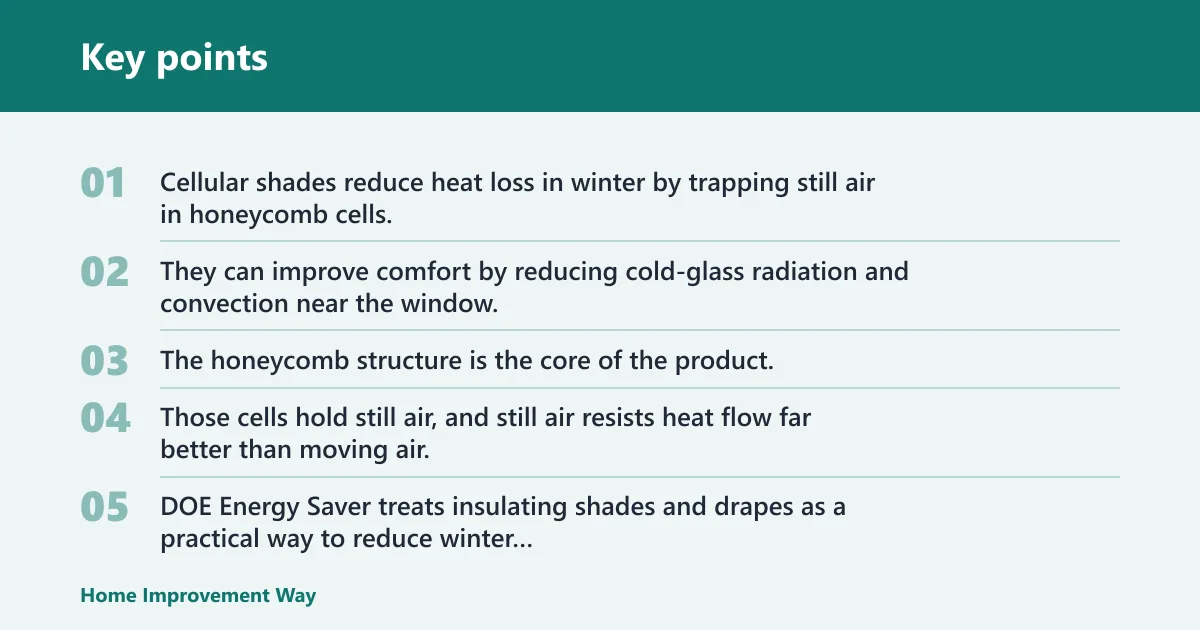


Yes. Cellular shades reduce heat loss in winter by trapping still air in honeycomb cells, which slows heat transfer across the window. They can improve comfort by reducing cold-glass radiation and convection near the window, but the size of the gain depends heavily on fit, window condition, and whether the room has air leakage.
What honeycomb cells do
The honeycomb structure is the core of the product. Those cells hold still air, and still air resists heat flow far better than moving air. DOE Energy Saver treats insulating shades and drapes as a practical way to reduce winter heat loss, and the benefit comes from the trapped air layer more than from the fabric itself.
Independent and trade-style guidance commonly places single-cell shades around R-2 to R-3 and double-cell shades around R-4 to R-5, while a bare single-pane window is roughly R-1. Those are approximate ranges, not guarantees, but they show why cellular shades can make a real difference at the window surface.
What winter heat loss looks like at a window
Winter heat loss is not one thing. Heat leaves through the glass by conduction, then cold glass cools nearby air, which sinks and creates a draft-like circulation pattern. Gaps around the shade can add even more loss. A good shade reduces the first two; a poor fit leaves the third problem mostly untouched.
What cellular shades can and cannot fix
Cellular shades can reduce winter heat loss, but they do not seal a leaky window. They will not stop air leakage through a cracked sash, failing weatherstripping, or a loose lock. They can also reduce cold-surface discomfort and help with frost risk, yet condensation still depends on indoor humidity and how cold the glass gets.
Single-cell vs. double-cell shades
Single-cell and double-cell shades both use honeycomb-shaped air pockets, but the construction is different. Single-cell shades have one layer of air pockets and are usually the lower-cost option. Double-cell shades add a second layer, which generally means more insulation and better winter performance, especially on larger or colder windows.
How one layer compares with two
Single-cell shades usually provide a meaningful comfort upgrade, while double-cell shades are the stronger insulating option. Published comparisons and manufacturer specifications vary, but a reasonable working range is about R-2 to R-3 for single-cell and about R-4 to R-5 for double-cell. The second cell matters most when the glass gets very cold or when the window is large enough that edge losses start to matter more.
Where double-cell shades make the most sense
Double-cell shades are a stronger choice for extreme climates, north-facing windows, and rooms where the window area is large relative to the wall. They also make more sense if the room has long heating hours and the owner wants the best insulation from a shade without moving up to a storm window.
Picture a living room window of roughly that size with winter sun in the morning and a noticeable chill after dark. A double-cell shade with a close inside mount can improve nighttime comfort more than a single-cell shade of the same fabric opacity, especially if the glass is already in decent condition.
When single-cell shades are the better buy
Single-cell shades are often the better value on double-pane windows, in milder winter zones, or on windows that already have good seals. They cost less than double-cell versions, and the insulation gap may not justify the extra spend if the room already holds heat well. That is especially true when the window is small.
What R-value means for windows

R-value is a heat-flow resistance metric. Higher numbers mean better resistance to heat loss. In this context, it helps compare bare glass with treated windows and compare shade constructions with one another. It is useful because it turns a vague comfort claim into a more checkable number.
How R-value compares bare glass and treated windows
Using the ranges commonly cited in energy-efficiency guidance, a bare single-pane window is about R-1, a single-cell cellular shade is roughly R-2 to R-3, and a double-cell shade is roughly R-4 to R-5. Those are approximate ranges, not universal guarantees, but they show why cellular shades can matter most on weak windows.
Why fit quality changes real-world performance
R-value assumes the layer of insulation is doing its job. In real rooms, the fit changes the result. Side gaps, a loose inside mount, and leakage at the headrail can let room air circulate around the shade and reduce the effective benefit. The same fabric can perform very differently from one window to the next.
What to look for in product specs
Look for single-cell or double-cell construction, opacity, and mounting options. Stoneside lists four opacities for cellular shades: sheer, semi-sheer, semi-opaque, and room darkening. For winter use, opacity affects light and privacy more than insulation, but the right opacity can help you keep shades closed more often without making a room feel shut in.
The same source says its cellular shades are available in widths from 8 inches to 174 inches and heights from 6 inches to 192 inches. That matters because large custom sizes can create more opportunity for edge leakage if the mount is not measured and installed carefully.
Window heat loss decision table
This table is the core shortcut for matching window type to treatment. It separates likely comfort gains from insulation gains and shows when cellular shades are enough on their own versus when they work best as part of a layered fix with film, weatherstripping, curtains, or storm windows.
| Window type | Shade type | Fit quality | Approx. added R-value | Expected comfort gain | Best use case | Pair with |
|---|---|---|---|---|---|---|
| Single-pane window | Double-cell, room darkening if needed | Tight inside mount, minimal side gap | About +3 to +4 over bare single-pane glass | Noticeable reduction in cold-glass feel, but the glass still limits performance | Older windows that need winter help in bedrooms or living rooms | Film or storm window, plus weatherstripping if the sash leaks |
| Single-pane window | Single-cell | Average fit | About +1 to +2 over bare single-pane glass | Modest comfort gain; less help against heat loss than double-cell | Lower-cost upgrade when the room is used less often | Film, and weatherstripping if drafty |
| Double-pane window | Single-cell or double-cell | Tight fit, limited headrail leakage | About +1 to +3 depending on construction and fit | Good comfort improvement; often enough for a normal heated room | Most homes with intact modern windows | Curtains in very cold rooms, or weatherstripping if the sash leaks |
| Double-pane window | Double-cell | Tight fit with side tracks if possible | About +2 to +4 depending on fit and installation | Better insulation than single-cell; strongest shade-only option | Cold rooms, north-facing windows, larger glass areas | Heavy curtains for nighttime layering, or storm windows in harsh climates |
| Drafty window | Any cellular shade | Loose fit or visible edge gaps | Small effective gain if air leakage dominates | Small comfort gain; leakage still dominates heat loss | Use with air sealing and another insulating layer | Weatherstripping first, then film or a storm window |
Are cellular shades enough for your windows?
Sometimes yes, often no. If the window is tight, double-pane, and not especially cold, cellular shades may be enough on their own. If you notice drafts, condensation, or a poor sash seal, the shade should be part of a layered fix rather than the only fix.
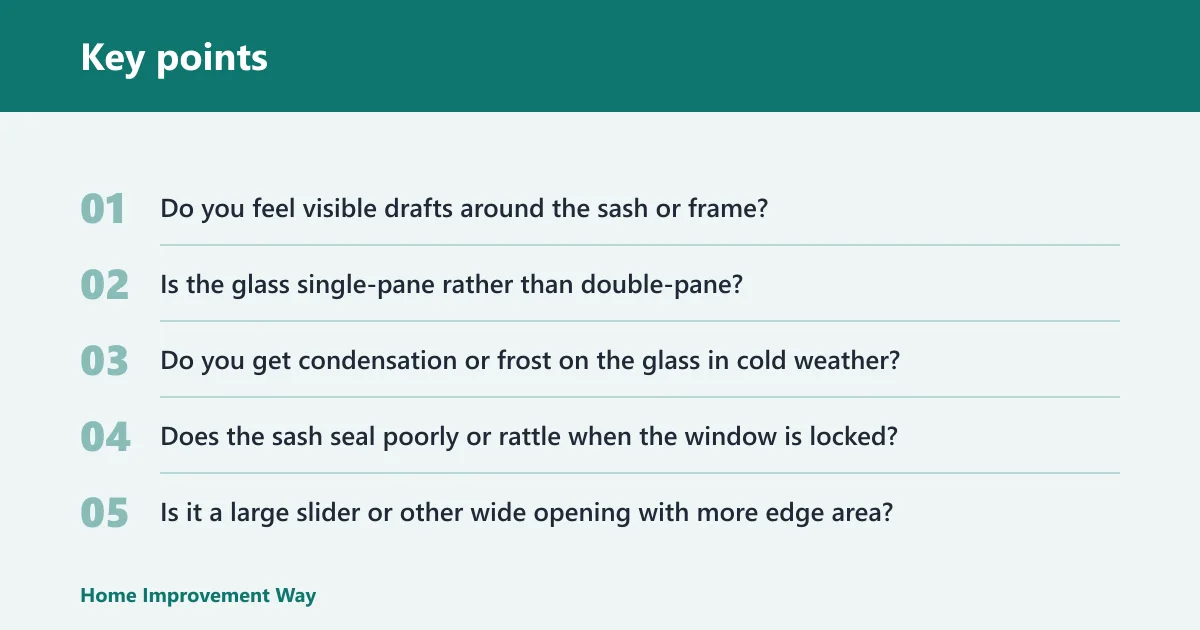
Quick yes/no checklist
- Do you feel visible drafts around the sash or frame?
- Is the glass single-pane rather than double-pane?
- Do you get condensation or frost on the glass in cold weather?
- Does the sash seal poorly or rattle when the window is locked?
- Is it a large slider or other wide opening with more edge area?
- Is the room north-facing or otherwise colder than the rest of the house?
- Is the existing double-pane window still in good condition and reasonably tight?
If you answer yes to any of the first six items, cellular shades alone are usually not the whole answer. If the last item is yes and the others are mostly no, a well-fitted cellular shade can be a very reasonable winter upgrade.
Single-pane windows
Single-pane windows lose heat quickly, so cellular shades can help more here than on a newer window, but they rarely solve the problem alone. A room with a cold single-pane window often benefits from shrink film or an interior storm window first, then a cellular shade on top for everyday use.
Say your bedroom has a 36-by-48-inch single-pane window that feels cold at night. A single-cell shade may improve comfort, but a tight film layer or storm panel can reduce heat loss much more, with the shade then helping mainly with nighttime insulation and light control.
Double-pane windows
On double-pane windows, cellular shades often deliver enough improvement to be worthwhile on their own, especially if the room is already reasonably tight. A double-cell model is the stronger pick for colder climates, but even a single-cell shade can reduce heat loss and cut the cold-glass effect in a meaningful way.
Skylights and sliding doors
Skylights and sliding doors are different cases. Skylights can gain and lose heat rapidly, and the mounting geometry can limit how well a shade seals. Sliding doors are large, so edge leakage matters more and internal air sealing becomes more important. In both cases, the fit and installation details matter more than the fabric choice alone.
Do they work better than other window treatments?
Cellular shades usually insulate better than regular blinds and many solar shades, but they do not always beat curtains, shutters, or storm windows. The right choice depends on the window type, the amount of leakage, and whether your goal is winter insulation, daytime light control, or both.
Cellular shades vs. regular blinds
Regular blinds have slats, so air can move more freely around them. That makes them weaker for winter heat loss. Cellular shades trap air in honeycomb-shaped cells, so they generally insulate better and improve winter comfort more than standard blinds.
Cellular shades vs. curtains and drapes
Heavy curtains can help, especially when they are lined and extend beyond the window opening. Cellular shades often do a better job at the glass surface itself. A lined curtain over a well-fitted shade can be stronger than either one alone, which is why layering is often the best answer for older windows.
Cellular shades vs. shutters, solar shades, film, and storm windows
Shutters can help with insulation, especially when they close tightly, but they are less flexible for daytime use. Solar shades are better known for reducing glare and heat gain, not winter heat loss. Shrink film and interior storm windows usually do more for a truly drafty window because they address leakage and add another insulating layer.
DOE Energy Saver emphasizes insulating window coverings as one piece of winter performance, but not the only piece. For drafty windows, air sealing and an added insulating layer usually matter more than the color, brand, or opacity of the shade itself.
Cellular shades work best in winter when you use them as a night layer and keep the fit tight. Closing them after sunset helps trap indoor air near the glass. During the day, the right operation can preserve daylight and support passive solar gain when the sun is available.
Why closing them at night helps
At night, the glass gets colder than the room. Closing the shade adds a still-air layer between the room and the glass, which reduces heat loss and can make the room feel less drafty. This is the time when the insulation benefit matters most.
How top-down/bottom-up shades support daytime sun
Top-down/bottom-up operation lets you lower the top of the shade while keeping the bottom up. That gives privacy while still allowing daylight from above, and it can let winter sun enter lower on the window when the angle is right. It is useful in south-facing rooms with daytime solar gain.
Simple checks for gaps, fit, and mounting
- Measure for a close inside mount if the window frame allows it.
- Check side clearance so the shade does not leave large air gaps.
- Inspect the headrail area for leakage above the shade.
- Use side tracks if the design offers them and the window is cold.
- Pair the shade with film or a storm window if the sash leaks air.
A common first-timer mistake is choosing a room-darkening fabric and assuming that means better insulation. Opacity mainly changes light control. For winter performance, construction, fit, and whether the window leaks matter more than the color or darkness of the fabric.
The same source says cellular shades are available in sheer, semi-sheer, semi-opaque, and room darkening versions, which makes them flexible for bedrooms, living rooms, and home offices. The tradeoff is simple: darker fabrics can help with sleep and glare, but the insulation comes from the honeycomb cells and the installation quality.
Frequently asked questions
Do cellular shades reduce heat loss in winter?
Yes. Their honeycomb cells trap air, which slows heat transfer across the window. That can improve comfort and reduce heat loss, especially on double-pane windows with a tight fit. On leaky or single-pane windows, they still help, but the benefit is smaller unless you add film or a storm window.
How much heat loss can cellular shades reduce?
Primary sources and energy-efficiency guidance support a broad estimate: well-installed insulating window coverings can reduce winter heat loss by up to about 40% in some situations. That upper end depends on window type, fit, climate, and whether the treatment is layered with other fixes. Treat that number as a best-case range, not a promise for every window.
Are double-cell cellular shades better than single-cell shades?
Usually yes. Double-cell shades add a second layer of air pockets, which generally gives better insulation than single-cell shades. A practical estimate is about R-4 to R-5 for double-cell versus about R-2 to R-3 for single-cell. The extra cost makes the most sense for cold climates, larger windows, and rooms that lose heat quickly.
Do cellular shades help more than regular blinds or curtains?
Usually more than regular blinds, because blinds do not trap air the same way. Compared with curtains, the answer depends on curtain weight and how well they fit the wall. A well-fitted cellular shade often beats standard blinds and many light curtains, while heavy lined drapes can compete if they seal well.
Should cellular shades be closed at night in winter?
Yes. Closing them at night helps trap still air near the glass, which reduces heat loss and can make the room feel warmer. If the shade is top-down/bottom-up, you can still lower the top during the day for light and raise the bottom for privacy, then close it fully after dark.
What R-value do cellular shades add to a window?
Approximate values often cited for insulated shades are about R-2 to R-3 for single-cell and about R-4 to R-5 for double-cell. A bare single-pane window is around R-1, so the improvement can be meaningful, especially when the shade fits tightly. Real-world performance drops if the shade has large edge gaps or the window leaks air.
Sponsored / affiliate links. As an Amazon Associate I earn from qualifying purchases. I may earn additional commission from eligible campaigns.