Do Interior Storm Windows Work Better Than Plastic Film?
Yes, interior storm windows usually work better than plastic film for comfort and draft control when you want a repeatable seasonal fix. Film is cheaper for a quick test, but a well-sealed storm is the better long-term choice. Poor sealing leaves cold spots, condensation risk, and heat loss on the table. This guide compares cost, installation effort, performance, and when each option makes sense in older homes, rentals, and condos.
Comparing cost, insulation value, and durability
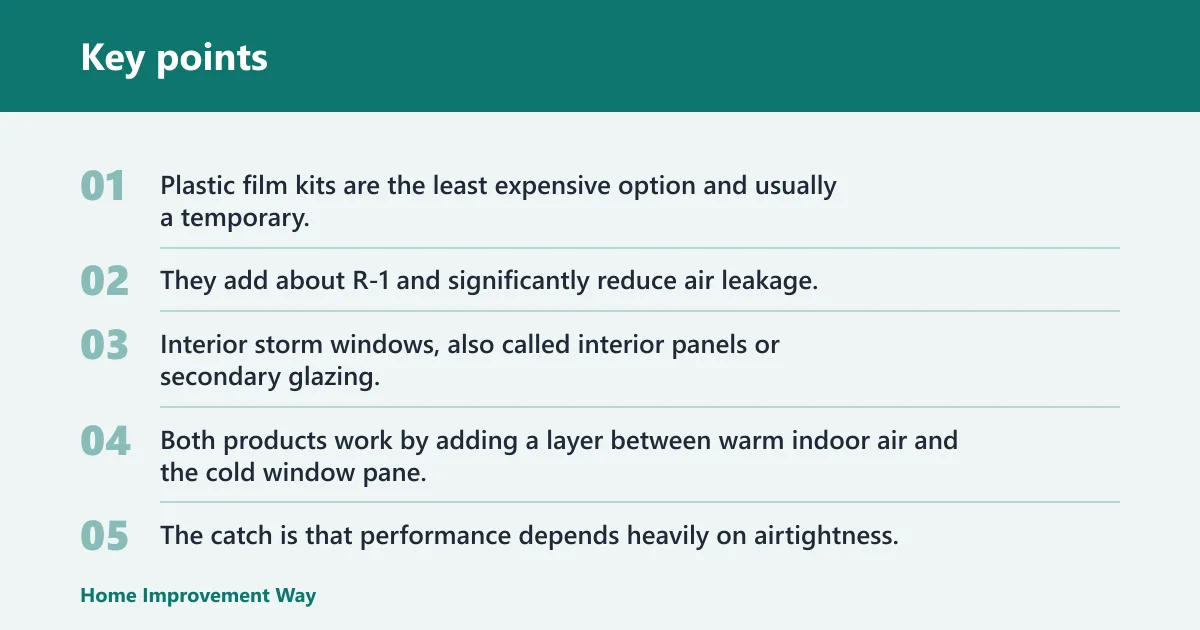


Plastic film kits are the least expensive option and usually a temporary, seasonal measure. They add about R-1 and significantly reduce air leakage, which can make a room feel less cold near the glass. Interior storm windows, also called interior panels or secondary glazing, are a bigger step up and can improve R-value by about 2.
Both products work by adding a layer between warm indoor air and the cold window pane. That extra air space is the main insulator. The catch is that performance depends heavily on airtightness, especially at the frame edges and gaps around the insert. A leaky install can give away much of the gain.
The short answer: when each one wins
Choose plastic film if you want the cheapest seasonal test, have a short timeline, or are unsure whether a room needs more than a basic winter fix. Choose interior storm windows if the window is worth improving and you want better comfort, less condensation, and a solution you can reuse year after year.
Suppose a bedroom window feels chilly every January, but the frame is in decent shape. Film may be enough for one winter. If the same window still feels drafty after that, a properly sealed interior panel is the more durable fix.
Window attachment decision matrix
This comparison focuses on how the options perform in real use, not just on catalog claims. The biggest differences are upfront cost, install effort, airtightness, and how well the product fits a window that needs a long-term upgrade.
| Criteria | Plastic film | Plastic interior storm panels | Low-E glass interior storms |
|---|---|---|---|
| Upfront cost | Lowest | Higher than film | Highest of the three |
| Install time | Fastest for one season | More involved; fit matters | More involved; fit matters |
| Removable or seasonal use | Yes, usually seasonal | Interior storm windows are often seasonal or removable, and some use friction-fit frames. | Yes, often seasonal; some stay up year-round |
| Expected R-value gain | About R-1 | About 2 | About 2, with better thermal performance than uncoated versions |
| Airtightness sensitivity | Moderate | High | High |
| Condensation control | Moderate | Better than film when sealed well | Best of the three when sealed well |
| Durability | Lowest | Better; still lighter-duty if plastic | Best |
| Visibility | Can look hazy | Usually clearer than film | Clearest, especially with glass |
| Historic-home suitability | Temporary only | Good when reversible retrofit matters | Very good when appearance and performance both matter |
| Best-fit use case | Low-cost seasonal test | Better long-term comfort upgrade | Highest-performance interior option for a window worth keeping |
What the matrix means in practice
The material matters, but the seal matters almost as much. A plastic panel with poor edge sealing can underperform a better-fit film kit, while a well-sealed panel can feel far more stable near the glass. Low-E versions go further because the coating reduces air infiltration and thermal conductance.
Some plastic storm panels use flexible silicone frames that friction fit into place. That can make them easier to install than a rigid custom insert, and plastic interior storm windows can be removed very easily. That convenience is useful when you need a seasonal product, but the tradeoff is usually lower durability than glass.
Do interior storm windows work better than plastic film?
Usually, yes. Interior storm windows tend to outperform plastic film for comfort because they create a more stable air layer and can be sealed more tightly. Film still helps, but its gain is modest, while a well-fitted storm panel gives you more insulation, better draft control, and better condensation reduction.
Comfort near cold glass
The biggest comfort difference is the temperature of the surface you sit or stand near. Film warms the room a bit by reducing heat loss, but interior panels do more to block the chill radiating from the window. That matters most for desks, beds, and seating placed near the glass.
Draft reduction and air leakage
Plastic film kits significantly reduce air leakage. Interior storm windows do the same, and a tighter fit usually gives them the edge. In windy conditions, though, a loose install loses ground fast. If the edges leak, the air space stops working as well as it should.
When better sealing matters more than material
On a leaky old sash, the seal can matter more than whether the insert is film or plastic. A well-sealed lower-performance product can beat a poorly sealed higher-performance one. That is why fit, perimeter tape, and frame quality deserve as much attention as the glazing itself.
How much warmer will they make a room?
There is no single room temperature gain that applies to every window. As a general guide, plastic film adds about R-1, while interior window panels improve R-value by about 2. That difference usually shows up as less chill near the glass, fewer cold spots, and a room that feels steadier.
What an R-value gain means
R-value is only part of the picture, but it is useful for comparing these attachments. A gain of about 1 from film is modest. A gain of about 2 from an interior panel is more noticeable, especially on windows that already leak air or have large panes exposed to wind.
Why the air space matters
The dominant insulating factor in a multi-layer window assembly is the air space between panes. A wider, better-sealed gap helps the most when it stays still. Wind can reduce performance by moving air through leaks or by cooling the outside layer more aggressively.
Why a leaky install cuts performance
Even a good product can disappoint if the perimeter leaks. If outside air washes through the cavity, you lose the still air that creates the insulating benefit. That is why a careful fit often changes real-world results more than the material label does.
Picture a living room with a large north-facing window. Film may take the edge off the draft. A sealed interior panel can make the seating area feel much less cold, because the room-side surface stays closer to indoor temperature.
When is plastic film enough?
Plastic film is enough when cost comes first and the goal is a short-term seasonal test. It is a practical choice for renters, for units where the window may change soon, and for rooms where you only want a low-risk way to reduce winter chill. It is also the easiest way to see whether the window deserves a larger upgrade.
Rental, condo, or short-term situations
Film makes sense when you cannot make permanent changes or do not want to store parts. It is common in rentals and condos because it is cheap, familiar, and simple to remove. If the space has strict rules about visible exterior changes, film keeps everything inside.
Budget-first seasonal use
If you just need one winter fix, film is hard to beat on price. It is widely available, fast to install, and enough to prove whether a cold window is causing the problem you think it is. That makes it a sensible first step before spending more.
Windows that do not justify a larger upgrade
Some windows are too temporary, too damaged, or too low-priority for a better insert. If the sash is due for replacement soon, or if the room is used rarely, film may be the right answer. In those cases, the cheaper option avoids paying for a fix you may not keep.
Where interior storm windows make the most sense
Interior storm windows make the most sense where you want a reversible retrofit that preserves the exterior look of the house. They are especially popular where exterior storm windows will not work. That includes many historic homes, some condos, and rentals where outside changes are off limits.
Historic homes and preserved exteriors
Interior panels are a good fit when you want to keep the exterior unchanged. They are considered a reversible retrofit, which matters when original windows or trim need to stay visible. In that setting, the inside-mounted approach gives you performance without altering the facade.
Year-round or repeat seasonal use
Some interior panels can remain in place year-round. Others are meant to come down and go into storage each season. If you want a repeatable winter solution and do not mind a little storage, interior storms can be a better long-term system than film.
Low-E, AERC, and ENERGY STAR
Low-E interior panels use a low-emissivity coating to help reduce heat loss and, in some cases, solar heat gain. Low-E storm windows are about 50% more energy efficient than traditional uncoated storm windows. Glass storm windows with low-E coatings can qualify for ENERGY STAR, while plastic interior storm windows cannot receive an ENERGY STAR label without low-E coating. (PNNL)
AERC, or the Attachments Energy Rating Council, rates energy-efficient window attachments. It can apply to some plastic and glass storm products, so it is useful for comparing categories. AERC tells you how a product performed under its rating method, but it does not replace the need to check fit, seal quality, and whether the product suits your window.
Will interior storm windows help with sound control?
Yes, but only to a point. Heavier, better-sealed interior panels can help more than thin film because they add mass and reduce leaks. They are not full soundproofing, though, and low-frequency noise will still get through more than many buyers expect.
What to expect from noise reduction
If street noise or a neighbor’s HVAC hum is part of the problem, an interior panel may take the edge off. The result is usually a smaller, quieter improvement rather than a dramatic one. Tight sealing matters here too, because air leaks carry sound as well as heat.
What is the downside of interior storm windows?

The main downsides are cost, storage, and fit. Interior storms cost more than film, can take longer to install, and may need seasonal removal unless you choose a year-round setup. They also need careful sizing, because a poor fit hurts both insulation and condensation control.
Tradeoffs to plan
- Measure carefully so the insert seals well.
- Decide whether you want removable seasonal use or year-round placement.
- Check whether storage space is available if you remove them.
- Choose low-E glass if performance matters more than low initial cost.
- Use film only when the window does not justify a larger upgrade.
One common first-timer mistake is treating film and interior panels as equal if both look clear from across the room. The real difference shows up at the edges and at the glass surface. A tighter, better-sealed panel often feels warmer even before the thermostat moves.
Frequently asked questions
How much do interior storm windows cost compared with film kits?
Film kits are the cheapest option by a wide margin, while interior storm windows cost more because they are a fitted product. The exact price depends on window size, material, and whether you choose plastic or low-E glass, so compare them by room and by how long you plan to keep them.
Do interior storm windows reduce drafts and condensation?
Yes, when they are sealed well. They reduce air leakage and add a buffer between indoor air and the cold pane, which helps cut drafts and can reduce condensation on the interior glass. They do not eliminate moisture problems if the room has high humidity or major air leaks elsewhere.
What is the R-value difference between plastic film and storm windows?
Plastic film kits add about R-1. Interior window panels improve R-value by about 2. That gap is big enough to matter in comfort terms, especially on large or exposed windows, but the result still depends on how airtight the installation is.
Can interior storm windows stay up all year?
Sometimes. Some interior panels can remain in place year-round, while others are intended for seasonal removal and storage. Whether year-round use makes sense depends on ventilation needs, window access, cleaning access, and how well the panel matches the frame.
Are interior storm windows better than exterior storm windows for historic homes?
For many historic homes, yes, if preserving the exterior is the priority. Interior panels are a reversible retrofit and are often used where exterior storms will not work or would change the look of the facade. They are a practical way to improve comfort without altering the outside appearance.
Sponsored / affiliate links. As an Amazon Associate I earn from qualifying purchases. I may earn additional commission from eligible campaigns.