How Much Heat Do You Lose Through Windows?
A typical double-pane window loses about 20% to 30% of its heat by conduction, and it can lose much more if the sash leaks air; in many drafty rooms, air leakage may matter more than the glass itself. If you misread the problem, you may replace a window that only needs caulk, weatherstripping, or a storm window. This guide shows how to estimate window heat loss, separate glass loss from leakage, and match the fix to the failure mode.
How window heat loss happens
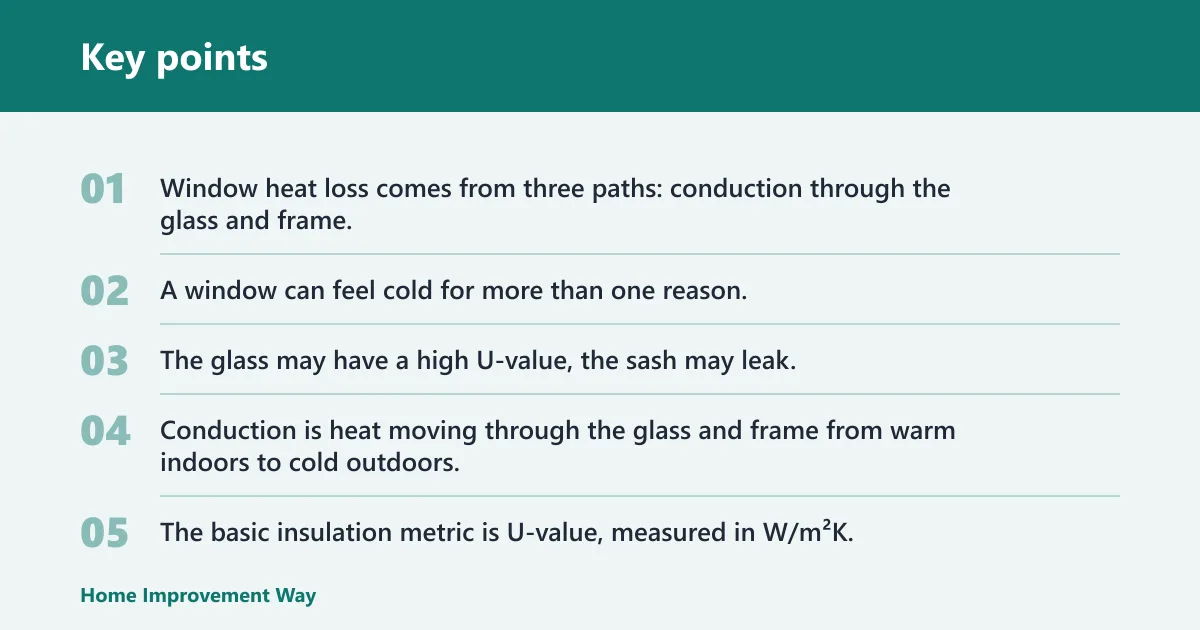


Window heat loss comes from three paths: conduction through the glass and frame, air leakage through gaps, and radiant loss from cold interior surfaces during winter conditions. A window can feel cold for more than one reason. The glass may have a high U-value, the sash may leak, or the interior surface may be cold enough to make nearby air sink and feel drafty.
Conduction through the glass
Conduction is heat moving through the glass and frame from warm indoors to cold outdoors. The basic insulation metric is U-value, measured in W/m²K. Lower numbers mean better insulation. Single-pane glass has a much higher U-value than insulated glazing, so it loses more heat for the same indoor-outdoor temperature difference.
Air leakage at sash and frame gaps
Air leakage is separate from glass performance. A sash that does not close tightly, a warped frame, cracked glazing putty, or missing weatherstripping can move warm indoor air outdoors and pull cold air in. That draft infiltration can dominate the heat loss, even if the glass itself is not unusually bad.
Why cold surfaces feel drafty
A window can feel cold without a visible leak because the interior glass surface is chilled by winter conditions. That cold surface cools nearby air, which then sinks. You feel that moving air as a draft, even when the room is not obviously leaking. In other words, surface temperature difference can create discomfort that mimics air leakage.
How much heat do windows lose?
What windows lose depends on U-value, window size, indoor-outdoor temperature difference, and leakage. Lower U-values mean lower conductive loss. Single-pane windows lose the most heat because one layer of glass offers little resistance to winter heat flow. Double-pane windows lose less, and triple-pane windows lose less still. Air leakage can change the picture completely, which is why a drafty window may perform worse than a tighter older one.
What U-value tells you
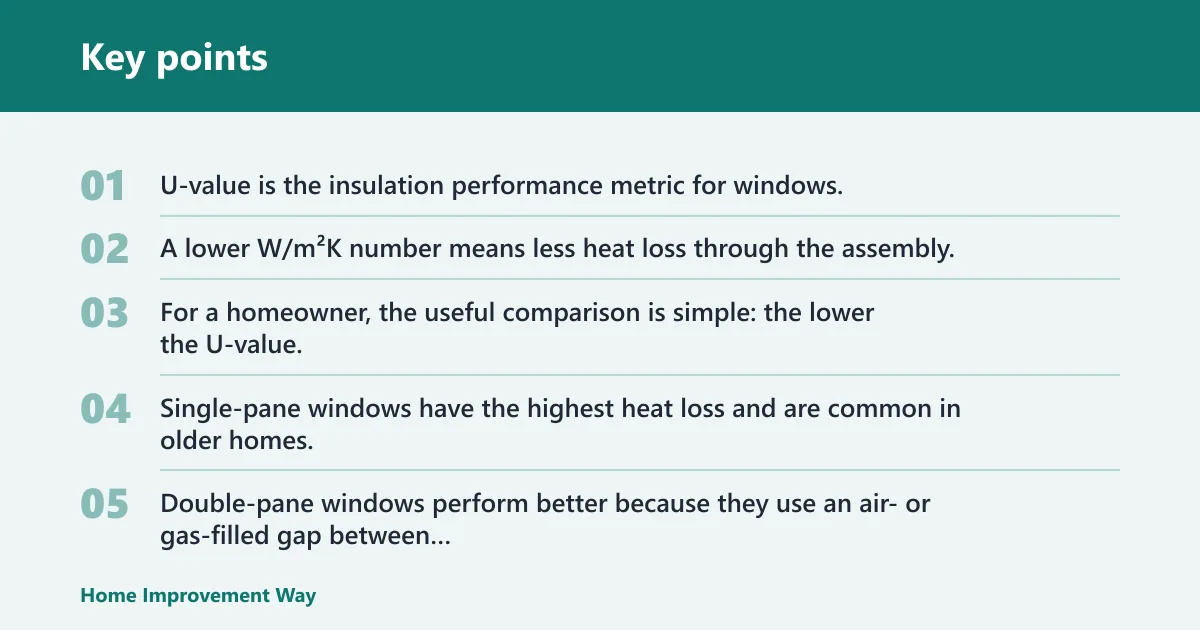
U-value is the insulation performance metric for windows. A lower W/m²K number means less heat loss through the assembly. For a homeowner, the useful comparison is simple: the lower the U-value, the better the winter performance, assuming the frame and installation are also sound.
Single-pane vs double-pane vs triple-pane
Single-pane windows have the highest heat loss and are common in older homes. Double-pane windows perform better because they use an air- or gas-filled gap between panes. Triple-pane windows improve insulation further by adding another barrier and another gap, but their real-world benefit still depends on frame quality and installation.
| Window type | Typical U-value range, W/m²K | Winter performance |
|---|---|---|
| Single-pane | 5.0 to 6.0 | Poor |
| Double-pane, clear glass | 2.5 to 3.0 | Better |
| Double-pane with Low-E coating | 1.4 to 2.0 | Good |
| Triple-pane, Low-E, gas-filled | 0.8 to 1.2 | Very good |
Why lower W/m²K numbers matter in winter
Lower U-values matter because they reduce heat flow for every square meter of glass. A difference of one or two W/m²K is meaningful when a room has a large window area and a long heating season. The payoff is biggest on north-facing walls, in basements, and on windy exposures where the outside film is colder and the pressure difference is higher.
Single-pane vs double-pane windows
Single-pane windows lose the most heat because one layer of glass offers little resistance to winter heat flow. Double-pane windows do better because the air or gas gap slows conduction and reduces radiant exchange between panes. If the seal fails, however, the insulating benefit drops and condensation often appears between the panes.
Why single-pane windows lose the most heat
Single-pane windows are common in older homes and are often the biggest retrofit candidate. They conduct heat quickly and usually have weaker frames, older sash hardware, and more air leakage. If you need the largest long-term reduction in heat loss, they are often the first windows to target.
How insulated glass units reduce loss
Insulated glass units use two panes with a sealed gap between them. That gap slows conduction, and Low-E coating reduces radiant heat transfer. In winter, the interior pane stays warmer than a single sheet of glass would, which lowers both heat loss and the cold-surface effect near the window.
What failed seals do to performance
A failed seal lets moisture enter the gap and often leaves the insulating gas replaced by ordinary air. That raises heat loss and can create fogging or visible haze between panes. Once the seal fails, the window no longer performs like a healthy insulated glass unit, even if the outside pane still looks intact.
Window heat loss decision table
This table helps you match the symptom to the likely heat-loss mode before you spend money. Start with the visible clue, then decide whether the main issue is conduction, air leakage, or a failed insulated unit. Fix the cheapest, most likely failure mode first.
| Symptom | Likely cause | Urgency | Lowest-cost remedy |
|---|---|---|---|
| Single-pane window feels very cold in winter | High conductive heat loss through glass | High for comfort, moderate for damage | Plastic window film or thermal curtain; plan replacement later |
| Double-pane window has fog or haze between panes | Failed seal in the insulated glass unit | High | Replace the sash or glass unit if available; replacement is usually the real fix |
| Draft near the sash or frame | Air leakage at gaps, worn weatherstripping, or cracked caulk | High | Caulk, weatherstrip, or seal the gap before considering replacement |
| Window feels cold but no obvious draft | Cold interior surface from poor insulation | Moderate | Thermal curtain, window film, or upgrade to better glazing |
| Older window rattles in wind | Loose sash, warped frame, or poor installer fit | High | Adjust hardware, add weatherstripping, seal gaps, then reassess |
How do you spot air leakage?
Air leakage usually shows up as movement, sound, or a localized cold spot around the sash or frame. Look for a fluttering curtain, a dust line, or a candle flame that wavers near the edge. Condensation alone does not prove leakage, but it often points to cold surfaces, poor sealing, or both.
Drafts around sashes and frames
Run your hand slowly around the perimeter of the window on a windy day. A distinct cold stream near the meeting rails, bottom sash, or side jamb suggests leakage at the moving parts or frame junction. Weatherstripping and caulking are the first fixes to check because they are cheap and often effective.
Condensation and visible gaps
Moisture on the room side of the glass can mean the interior surface is cold enough to condense humid indoor air. Visible daylight, cracked putty, or worn seals point more directly to leakage. If the glass itself is fogged between panes, the insulated unit likely failed rather than the room simply being humid.
Where warped frames change the diagnosis
Warped frames change the diagnosis because the problem is not just a missing seal. The window may never close tightly enough for caulk or weatherstripping to fully solve it. In that case, repair may help, but the frame geometry may limit the result. That is common in older homes and on windows exposed to sun, moisture, or movement.
Best fixes for different failure modes
Do not treat every window problem the same. Seal air leaks first, then add a secondary layer if the glass is still cold, and replace only when the assembly has failed or the long-term energy loss justifies it. Temporary fixes are often the right move for renters or short-term budgets.
Caulk and weatherstripping for leakage
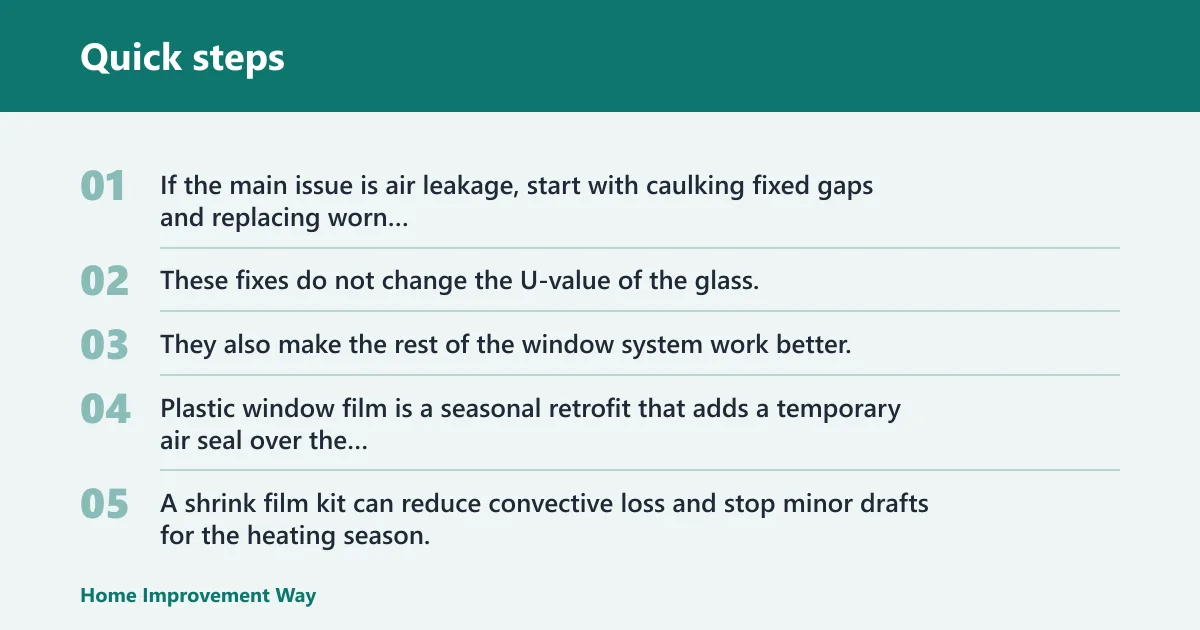
If the main issue is air leakage, start with caulking fixed gaps and replacing worn weatherstripping on operable sashes. These fixes do not change the U-value of the glass, but they can cut draft infiltration quickly. They also make the rest of the window system work better.
Plastic film for a seasonal air seal
Plastic window film is a seasonal retrofit that adds a temporary air seal over the interior side of the window. A shrink film kit can reduce convective loss and stop minor drafts for the heating season. It is especially useful when you need a low-cost fix, live in a rental, or want to delay a bigger project.
Thermal curtains as a secondary layer
Thermal curtains can reduce convective loss near the glass, but they work best after gaps are sealed. If a curtain covers a leaky window without fixing the leak, it may hide the problem rather than solve it. Use them as a secondary layer, not as the only fix.
When replacement makes sense
Replacement makes the most sense when the glass unit has failed, the frame is warped beyond practical repair, or the window’s U-value is so poor that repeated patching no longer pays back. For single-pane windows in cold rooms, replacement or a storm window is often the strongest long-term move. For renters, film and weatherstripping usually come first.
Say your 3-by-5-foot single-pane bedroom window faces north and sits above a basement stairwell. If the sash is tight but the glass feels icy, the main loss is likely conduction. If a 1/8-inch gap at the sash also whistles on windy nights, sealing that gap should come before any full replacement decision.
Picture a double-pane kitchen window with fog between the panes and no draft at the frame. The seal has likely failed, so the glass unit is no longer performing as intended. Caulk around the frame will not fix the broken insulated unit, though it can still help if the exterior trim is leaking air.
How much heat do you lose from old windows?
Old windows can lose a lot of heat because of age, wear, and installation quality, not just because they are old. Older homes often have single-pane glass, loose sash hardware, warped frames, or shrinking putty. Room placement matters too: north-facing rooms, basements, and windy exposures usually need the most attention first.
Older homes and installer quality
A good replacement window installed badly can underperform, while an older window that has been carefully repaired can do better than expected. Poor installer quality can leave gaps, out-of-square frames, or compressed weatherstripping that never seals right. That is why the surrounding trim and frame condition matter as much as the glazing itself.
Room-by-room triage for windy exposures
Start with the rooms that lose the most comfort per dollar: windy corners, north-facing bedrooms, and basement windows. These spaces often show the strongest draft symptoms and the biggest cold-surface effect. Fixing one bad room can matter more than replacing a few quiet windows on a sheltered side.
When repair beats full replacement
Repair beats full replacement when the problem is localized. A cracked bead of caulk, tired weatherstripping, or a loose sash can often be handled for less money and less disruption than a full swap. If the frame is sound and the window closes squarely, repair is usually the sensible first step.
Frequently asked questions
How much heat do you lose through windows?
Heat loss depends on window type, size, seal quality, and weather. Single-pane windows lose the most through conduction, while drafty frames can leak even more by moving air. A lower U-value means better insulation, so insulated double-pane or triple-pane units usually perform better in winter.
How much heat do you lose through single glazed windows?
Single glazed windows have the highest heat loss among common residential types. Their U-value is much higher than that of insulated glazing, so more indoor heat escapes during winter. If they are also loose in the frame, air leakage can add another large loss path.
How much heat do you lose through double glazed windows?
Double glazed windows lose less heat than single-pane windows because the gap between panes slows conduction. Most standard units do even better with Low-E coating. If the seal fails or the frame leaks, though, the real-world performance can fall well below what the glass package suggests.
What percentage of heat is lost through windows?
There is no single percentage that fits every home. The share depends on window area, window type, air leakage, and the climate. In winter, a poorly sealed window can waste far more energy than a tight insulated one, so the symptom and the U-value matter more than a generic percentage.
How much heat do you lose through your windows?
You lose heat through your windows by conduction, air leakage, and radiant exchange with cold interior surfaces. If the glass feels cold but the window is tight, conduction is probably the main issue. If curtains move or you feel a stream of cold air, leakage is likely a bigger part of the loss.
Sponsored / affiliate links. As an Amazon Associate I earn from qualifying purchases. I may earn additional commission from eligible campaigns.