How to Stop Cold Air Coming Out of a Bathroom Exhaust Fan
If cold air is coming out of a bathroom exhaust fan, a common fix is a stuck or missing backdraft damper, a leaky duct, or a vent cap problem. Start with the damper before you change anything else. Ignoring the draft can waste heat, move moisture into cold framing, and pull attic air or combustion air where it does not belong. This guide shows how to identify the draft source and choose the right repair without creating condensation or airflow problems.
What causes cold air at a bathroom fan?
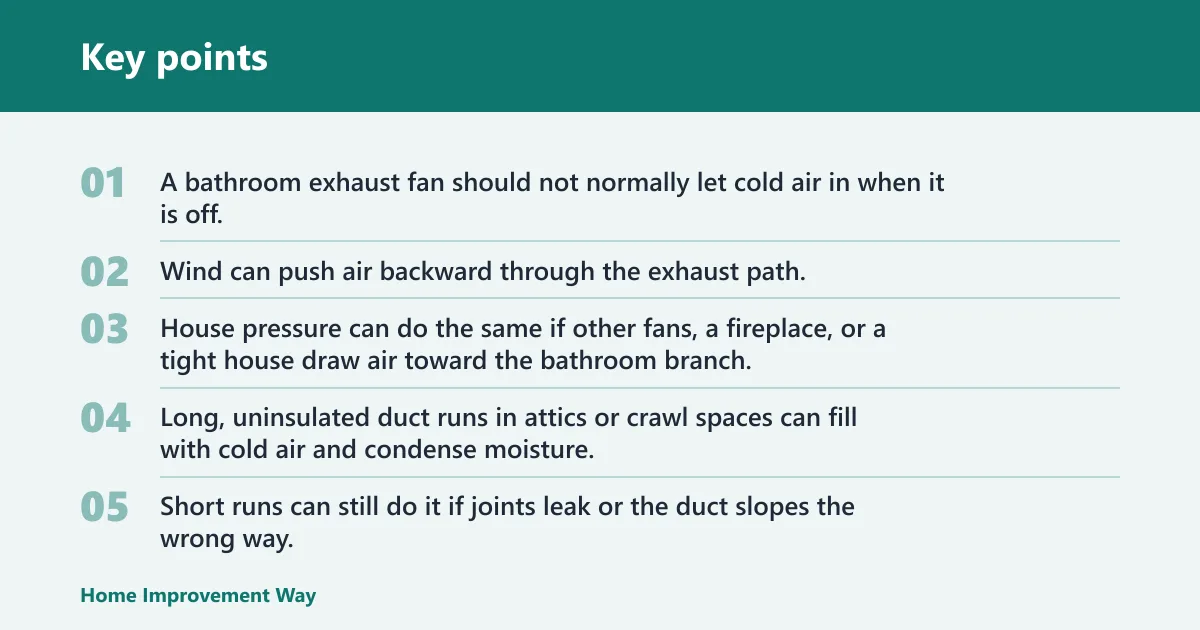


A bathroom exhaust fan should not normally let cold air in when it is off. If you feel a draft, the source is usually reverse airflow through the duct, air leaking around the housing, or cold air slipping through an exterior cap that is stuck open, damaged, or exposed to strong wind. Winter makes each fault easier to notice.
Reverse airflow from wind or house pressure
Wind can push air backward through the exhaust path. House pressure can do the same if other fans, a fireplace, or a tight house draw air toward the bathroom branch. If the draft gets stronger on windy days or when other exhaust equipment is running, look beyond the fan motor and grille.
Cold air sinking through a leaky or uninsulated duct
Long, uninsulated duct runs in attics or crawl spaces can fill with cold air and condense moisture. That cold column can spill into the fan housing when the damper does not seal well. Short runs can still do it if joints leak or the duct slopes the wrong way.
Attic air leakage around the fan housing
A leaky housing or open ceiling gap can make the fan feel like a draft source even when the duct is fine. Cold attic air can slip around the metal can, through unsealed drywall cutouts, or through a missing insulation cover. The result is often a cold grille plus stains, dust, or frost near the unit.
Bathroom exhaust fan troubleshooting matrix
Use this matrix to match the symptom to the likely failure point before you replace parts. The goal is to fix the actual source, because a new damper will not solve a disconnected duct, and a vent cover will not stop attic leakage around the housing.
| Symptom | Likely cause | Inspection step | Fix |
|---|---|---|---|
| Cold air at grille with fan off | Stuck or missing backdraft damper | Remove the grille and check whether the flap closes fully by gravity or spring action | Clean, free, or replace the damper |
| Draft gets worse on windy days | Wind-driven backdraft at the exterior vent cap | Inspect the cap for a warped flap, weak spring, or louver that stays open | Replace the cap or use a cap with a working damper |
| Cold air plus attic smell | Attic air leakage around the housing or ceiling cutout | Check the housing seam, drywall edge, and insulation around the can | Seal gaps with foam or caulk and restore insulation contact |
| Fan is quiet but room still chills | Uninsulated duct or leaky duct joints | Trace the run in the attic for loose clamps, tape failure, or bare duct | Seal joints and insulate the full run in unconditioned space |
| Intermittent draft after storms | Frozen exterior cap | Check the hood for ice, frost, or blocked louver movement | Clear the cap and correct the condensation source |
| Draft only when the furnace or another fan runs | House pressure imbalance | Watch whether other exhaust appliances change the airflow direction | Improve damper closure and reduce pressure-driven backflow |
| Cold grille plus vibration or noise | Loose housing, dirty fan, or worn motor mounting | Check the grille, wheel, and housing seams for dust and movement | Clean the assembly and tighten or repair loose parts |
| Cold air at ceiling and in attic | Disconnected or crushed duct | Inspect the full run above the ceiling for separation or pinching | Reconnect or replace the duct and secure the slope to the exterior |
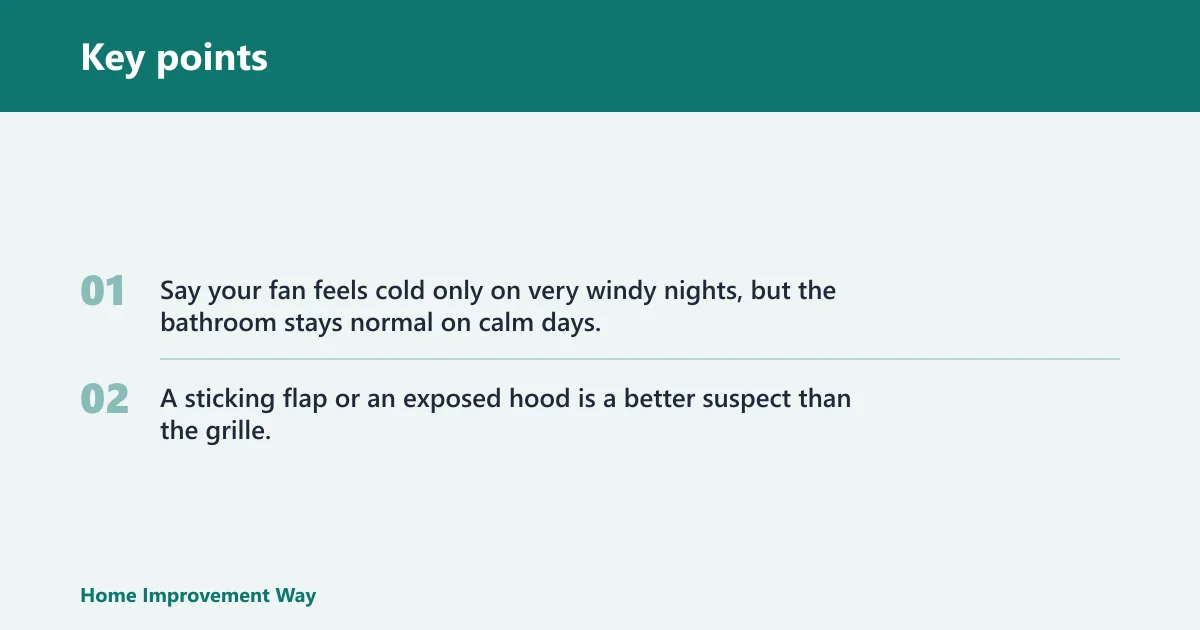
Say your fan feels cold only on very windy nights, but the bathroom stays normal on calm days. That pattern points to wind-driven reverse airflow at the exterior cap, not a motor problem. A sticking flap or an exposed hood is a better suspect than the grille.
How do you check the damper and grille?
Start here because the backdraft damper is the first part that should stop reverse airflow. It may be spring-loaded or gravity-operated, and it can stick, warp, or fail to close fully. If the grille is dusty or the flap cannot move freely, the fan can leak cold air even when the motor is off.
- Shut off power first. Turn off the breaker before removing the grille or opening the housing. That keeps you away from moving parts and live wiring.
- Remove the grille carefully. Release the grille clips and lower it straight down. Dust buildup around the opening can hide a stuck damper or a loose housing seam.
- Find the damper location. Look inside the fan housing first, then check the duct run if the model places the damper farther out. Some fans use an internal flap; others rely on a separate inline damper.
- Check flap movement. The flap should open with airflow and close fully when the fan is off. If it binds, hangs open, or sits crooked, clean it and inspect for warping or broken hinges.
- Inspect for missing parts. If you see an open passage with no flap at all, the damper is missing. In that case, replacement is usually the right fix rather than sealing around the grille.
A common first-timer mistake is to assume the cold draft is fixed after replacing the cover, without checking for an uninsulated vent duct or missing backdraft damper. That can reduce noise, but it will not fix a missing damper, a leaky duct, or attic air slipping around the housing.
What to inspect at the exterior vent cap
The exterior cap is the last barrier against reverse airflow. A hood or louvered cap should close when the fan is off, but wind exposure, a weak flap, bird or insect screen blockage, or ice can hold it open. If the problem starts outside, the room side will keep feeling cold no matter how clean the grille is.
- Check the cap from outside. Look for a flap that is stuck open, bent, or cracked. Also check whether the hood faces strong prevailing wind or sits in a spot that catches gusts.
- Clear visible blockage. Remove lint, nests, leaves, or ice that can keep the damper from closing. A blocked screen can also reduce exhaust flow and leave moisture in the duct.
- Verify the cap type. Make sure the cap is sized for the fan and has a working damper. A cap with a louver that never closes fully can backdraft in winter.
Frozen caps matter because a warm moist exhaust stream can condense in cold outdoor sections and freeze at the termination. If that happens repeatedly, the cure is not a bigger grille cover inside the bathroom. It is correcting the exterior termination and the cold duct path that feeds it.
Seal the duct and fan housing
Seal points matter because air often leaks around the system rather than through it. Air leaks at duct joints, at the housing-to-drywall edge, or around ceiling penetrations can pull attic air into the bathroom or let warm air escape into cold framing. That creates drafts, heat loss, and a higher condensation risk.
- Trace every joint. Follow the duct from the fan to the exterior cap and look for loose joints, crushed flex duct, or disconnected sections. Any gap in an unconditioned space can move a lot of air.
- Seal the connections. Fasten loose joints and seal them with the correct foil tape or mastic rated for ducts. Do not use cloth-backed tape or random caulk on moving duct joints.
- Seal the ceiling plane. Close gaps between the fan housing and the drywall cutout with caulk or low-expansion foam where appropriate. The housing should sit sealed to the ceiling plane so attic air cannot bypass the duct path.
- Check access and covers. If the housing has an access panel, make sure it closes fully after service. If the fan has an insulated cover or wrap, confirm that the cover does not block the grille or interfere with maintenance access.
Picture a 4-inch flex duct in an attic with two loose connections and no insulation. The fan can still move air, but the space around the duct cools the pipe and feeds water into the run. Sealing the joints first keeps the repair from turning into a moisture problem.
Insulate cold duct runs
Insulation helps only after the airflow path is sound. Uninsulated ducts in unconditioned spaces cool quickly, which increases condensation on the inside and frost on the outside in freezing weather. Short runs need insulation too if they cross a cold attic or chase.
- Inspect the full run. Check whether the duct passes through attic space, a garage, or another unconditioned area. Longer runs and sharp bends lose heat faster and are more likely to collect moisture.
- Wrap exposed duct. Use duct insulation rated for the installation and keep the wrap continuous over the full cold section. Seams should stay closed so warm exhaust does not leak into the insulation layer.
- Maintain slope outward. Keep the duct pitched toward the exterior termination so any condensate drains out rather than pooling in a low spot. A sagging section can trap water and freeze later.
- Match the fix to the run. If the duct is already sealed and still cold, adding wrap is often better than putting on a larger cover inside the bathroom. The room side cover does not stop cold surfaces in the attic.
Condensation and frost are part of the diagnosis, not a side issue. If you stop the draft but leave a bare duct in freezing air, water can collect inside the pipe and freeze at the cap, which brings the same problem back.
When should you replace parts or call a pro?
Replace a broken or missing damper or vent cap when cleaning and sealing do not stop the draft. Call a pro sooner if the issue keeps returning, if you find hidden attic damage, or if the fan is tied to wiring you are not comfortable opening. Some drafts are really ventilation or pressure problems, not just a bad flap.
- Replace damaged parts. If the damper is warped, missing, or no longer closes, replacement is usually the right move. The same is true for a cracked or frozen exterior cap that will not seal.
- Escalate for hidden faults. If the duct is buried, crushed, disconnected, or surrounded by wet insulation, a deeper attic repair may be needed. Repeated frost or water means the system is still moving moisture to the wrong place.
- Get help for wiring issues. If the housing needs electrical work, the motor will not start, or the fan vibrates badly after cleaning, stop and call an electrician or HVAC pro. A fan draft can hide a mechanical problem that needs more than sealing tape.
Most homeowners can clean the grille, inspect the damper, and check the cap. Once the repair moves into attic access, damaged wiring, or repeated moisture, professional diagnosis is the safer choice.
Frequently asked questions
Why is cold air coming out of my bathroom exhaust fan?
Cold air usually means the system is allowing reverse airflow somewhere in the path. The most common causes are a stuck or missing damper, a leaky or uninsulated duct, wind at the exterior cap, or attic air leakage around the housing. Start with the damper, then check the duct and cap.
Is it normal for a bathroom fan to blow cold air?
No. A bathroom exhaust fan should move air out, not let cold air come back in when it is off. A brief draft can happen if wind or house pressure changes, but a steady cold flow points to a fault in the damper, duct, cap, or housing seal.
How do I stop cold air from coming through the bathroom vent?
Shut off power, remove the grille, and check the damper first. Then inspect the exterior cap, seal duct joints, close gaps around the housing, and insulate any duct in unconditioned space. If the damper is broken or missing, replacement is usually the lasting fix.
Does the backdraft damper on a bathroom fan go bad?
Yes. A backdraft damper can stick, warp, loosen, or fail to close fully. Dust, age, vibration, and cold weather can all make it stop sealing well. If cleaning does not restore smooth movement and full closure, replacement is usually better than trying to force it shut.
Can insulation or a vent cover fix a cold bathroom exhaust fan?
Sometimes, but only if the airflow path is already sound. Insulation helps reduce condensation and frost on cold duct runs, and an exterior cap with a working flap can block wind. Neither one fixes a missing damper, disconnected duct, or attic leak by itself.
How do I tell if the fan duct is pulling in attic air?
Look for attic dust near the housing, air movement around the ceiling cutout, or a draft that continues even with a closed damper. A disconnected duct, open housing seam, or unsealed penetration can pull attic air into the bathroom. That problem often comes with insulation gaps or stains nearby.
Sponsored / affiliate links. As an Amazon Associate I earn from qualifying purchases. I may earn additional commission from eligible campaigns.