Can You Add New Insulation on Top of Old Attic Insulation?
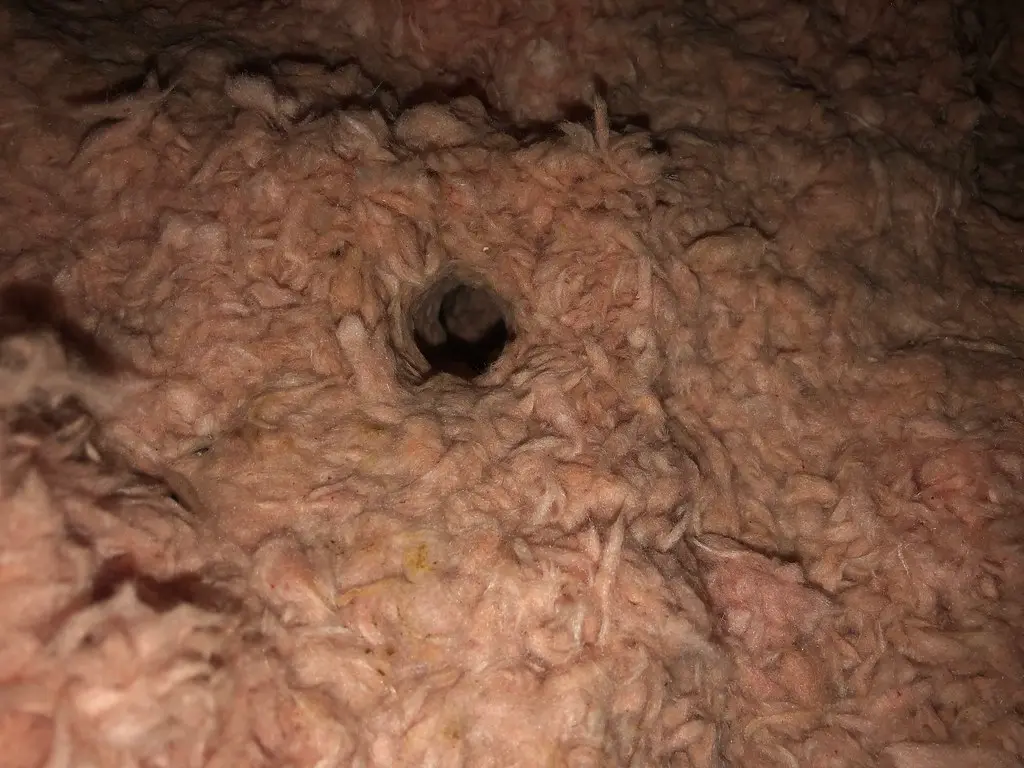
Yes, you can add new attic insulation over old insulation if the existing layer is dry, mold-free, evenly laid, and not covering hazards. Get it wrong, and you can trap moisture, hide air leaks, or compress the old insulation until its R-value drops. This guide explains when layering is safe, when to remove old insulation, and how to avoid burying problems.
When to stop and inspect before adding insulation


You usually can, but only after you confirm the attic is dry, clean, ventilated, and low enough in R-value to justify more material. A poorly insulated attic leaks heat and drives up heating bills, and insulation quality is measured by R-value, so start with condition and target depth, not the material alone.
When layering is usually safe
Adding new insulation over old works best when the existing layer is intact, loose enough to keep its loft, and below your climate target. For many homes, that means aiming for about R-38 or higher in Southern climates or about R-49 or higher in Northern climates. If the old layer is dry and even, topping it up is often the simplest path.
Fiberglass batts are the easiest DIY-friendly option to lay over an attic that already has insulation, and they should be installed perpendicular to the joists. That crosswise layout helps reduce gaps between batt layers and limits heat loss through the joist pattern.
When you should stop and inspect first
A common rule of thumb is to stop before adding anything if moisture staining, mildew, rodent signs, compressed patches, or blocked vents are present. Those issues can make the old insulation perform badly or point to a problem that new insulation would hide instead of fix. Wet insulation is a replacement flag, not a layering candidate.
Mixed attics need extra caution. An attic with old batts near the hatch and newer loose-fill deeper in the space may have uneven depth, air leaks, or compressed edges near the eaves. That does not mean “never add more.” It means you need to identify the bad areas first.
How do you know if attic insulation is too low?
Measure the current depth and compare it with your climate target. If the insulation sits below the tops of the attic joists, more insulation is usually needed. Use a tape measure or ruler and check several spots, because settled or patchy insulation can look thicker in one area and thin in another.
Measure current depth against the joists
-
Pick several spots. Check near the hatch, the center of the attic, and along exterior edges. You need more than one reading because depth often varies after settling, foot traffic, or past repairs.
-
Set a ruler vertically. Push it down until it reaches the attic floor or the top of the ceiling drywall below. Read the depth at the top of the insulation, then repeat in other spots.
-
Compare to the joists. If the insulation is below the joist tops, the attic is usually underfilled. That does not prove you need a full replacement; it tells you the attic likely needs more coverage if the material is otherwise sound.
Use R-value to compare against your climate target
R-value is the main way to judge whether the attic has enough resistance to heat flow. For a quick check, compare the listed or typical R-value of the existing insulation with your target: at least R-38 in Southern climates and at least R-49 in Northern climates. If the attic falls short, a top-up may make sense.
Material type matters because different products add different resistance per inch. Fiberglass insulation has a standard R-value of R-2.9–R-3.8, blown-in cellulose has an R-value of R-3.6–R-3.8, closed-cell spray foam offers R-6–8, and open-cell spray foam offers R-3.6–4.3. A deeper layer of a lower-R material can still be useful, but you need to calculate the gap. (Thisoldhouse)
Attic insulation checklist
Use this checklist before you add insulation. If any item points to damage or a hazard, fix that first rather than covering it.
| Check | What to look for | Recommendation |
|---|---|---|
| Current depth below joists? | Insulation sits below the tops of the attic joists. | Add |
| Moisture staining? | Dark marks, damp spots, or wet insulation. | Remove first |
| Odor present? | Musty smell or signs of mildew. | Remove first |
| Rodent evidence? | Urine, nests, droppings, or runways. | Remove first |
| Compressed areas? | Smashed batt edges or flattened loose-fill. | Add with caution |
| Uneven coverage? | Thin patches, gaps, or bare spots. | Add with caution |
| Insulation type combo? | Old batts with loose-fill, or mixed materials. | Add with caution |
| Ventilation obstructions? | Soffits, baffles, or other air paths blocked. | Remove first |
| Recessed-light clearance? | Insulation too close to heat-producing fixtures. | Remove first |
| Target R-value gap? | Existing layer falls short of R-38 or R-49. | Add |
Which insulation type is best for layering?
The best option depends on the attic’s condition and how uneven the existing layer is. Fiberglass batts work well when the attic is open and even. Blown-in cellulose is often better when gaps, odd framing, or mixed depths make batts hard to fit. Spray foam is a different approach and is usually not a simple top-up job.
Fiberglass batts over existing insulation
Fiberglass batts are common and DIY-friendly, with a standard R-value of R-2.9–R-3.8. They can be laid perpendicular to the joists over existing insulation, which helps cover the framing pattern and reduce thermal bridging through the joists. Keep the lower layer from being crushed, or the total performance can drop.
A common first-timer mistake is laying batts too low over a fluffy existing layer. If the new batt presses the old insulation flat, you lose loft and may end up with less real resistance than expected. Batts should rest lightly, not squash the layer below.
Blown-in cellulose for mixed or uneven attics
Blown-in cellulose has an R-value of R-3.6–R-3.8 and can fill gaps more fully than batts, which makes it a strong choice for attics with irregular framing or patchy coverage. It tends to level out around joists and small voids better than cut batt sections.
This option often needs professional installation, especially when the attic has a lot of obstructions or you need consistent depth across a large area. Cellulose also works well when you want to top up an attic with old batts plus open areas, because it can blend the surface into a more even blanket.
Spray foam when the attic needs a different approach
Spray foam is usually a full-system choice rather than a simple add-on. Closed-cell spray foam offers R-6–8, and open-cell spray foam offers R-3.6–4.3. It is expensive and requires professional installation, with costs of $1–$4.50 per square foot.
Because spray foam changes the assembly more than batts or loose-fill, it is best reserved for attics where air sealing, moisture control, or a different thermal strategy is needed. It is not the default answer for a normal top-up project.
When should old attic insulation be removed first?
Remove old insulation first when it is wet, moldy, contaminated, or crushed enough that it no longer performs. New insulation should not cover up a bad substrate. If the old material is damaged, the safest move is to fix the cause and clear out the failed insulation before adding anything new.
Moisture, mold, and odor
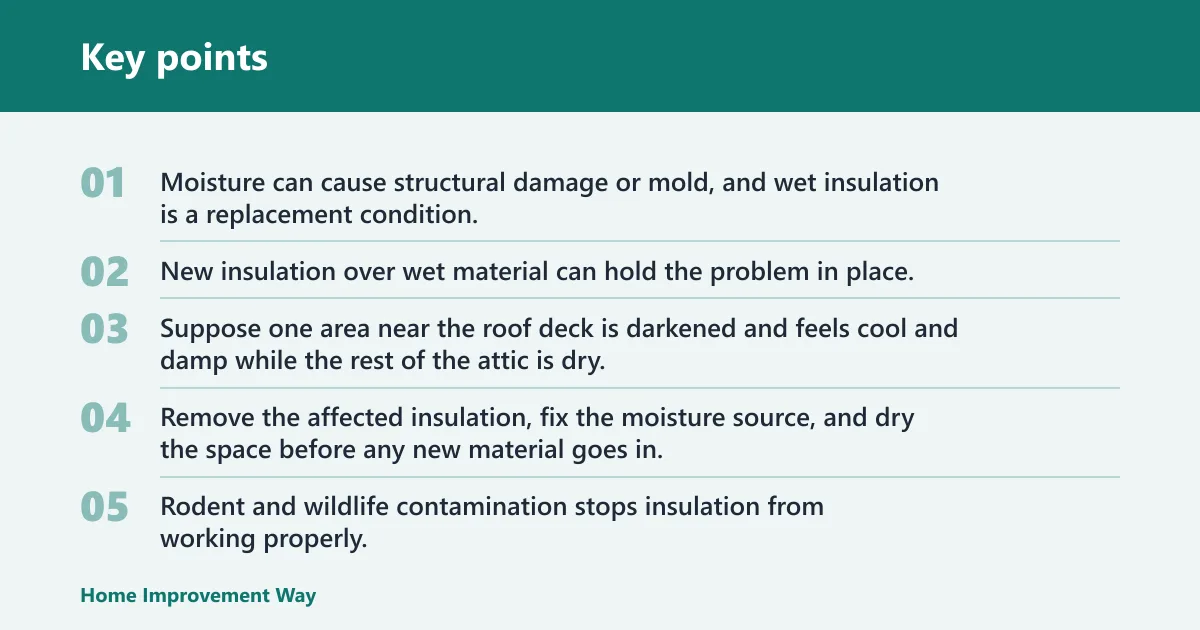
Moisture can cause structural damage or mold, and wet insulation is a replacement condition. If you see staining, damp patches, or a persistent musty smell, assume the problem extends beyond the insulation itself until you find the source. New insulation over wet material can hold the problem in place.
Suppose one area near the roof deck is darkened and feels cool and damp while the rest of the attic is dry. That single area should be treated differently from the rest of the attic. Remove the affected insulation, fix the moisture source, and dry the space before any new material goes in.
Rodent contamination
Rodent and wildlife contamination stops insulation from working properly. Urine, nests, droppings, and runways are failure cases because they reduce the insulation’s ability to trap air and can leave odor and health concerns behind. In those spots, layering over the damage just hides the problem.
If you find a few disturbed channels near the eaves or around stored items, clean and remove the affected sections before you add new material. The goal is not to cover the evidence. It is to remove contamination and restore the attic surface.
Compression and damaged coverage
Compressed insulation should be corrected before new material goes in. Flattened batts and crushed loose-fill have lower effective R-value because trapped air is what slows heat flow. If you install new batts too low or place heavy material over a soft lower layer, you can make the whole assembly perform worse.
Damage around the hatch, along walk paths, or where people have stepped on the joists is common. Those zones often need reshaping, re-fluffing, or removal before topping up the rest of the attic.
What clearances and ventilation should you protect?
Do not bury soffit vents, recessed lights, or access paths under new insulation. Attic air needs defined paths, and heat-producing fixtures need clearance. If you cover those areas, you can trap heat, restrict airflow, or make the attic harder to inspect later.
Soffit vents and air pathways
Soffit vents must stay open so outside air can move through the attic as intended. Keep insulation back from those openings and use baffles where needed so loose-fill or batts do not slide into the vent path. If the airflow path is blocked, the attic can run warmer and wetter than it should.
Recessed lights and heat-producing fixtures
Check the clearance around recessed lights and other heat-producing fixtures before you add insulation. Some fixtures need space around them, and covering them can create a fire risk or shorten the fixture’s life. If you are unsure, stop and verify the fixture type before covering it.
Attic access hatches and walk paths
Leave the hatch and your access route usable after the job. If you pile insulation across the opening, future inspections become harder and you may drag material back into the attic every time you enter. Keep a clear path, then seal and insulate the hatch itself as needed.
Frequently asked questions
Can you add new insulation on top of old attic insulation?
Yes, if the old layer is dry, clean, and still sound. The attic also needs enough ventilation and clearance around vents and fixtures. If the existing insulation is below the joists and short of your climate target, topping it up is often the right move.
When should old attic insulation be removed before adding more?
Remove it first if you see moisture staining, mold, odor, rodent evidence, or heavy compression. Those conditions can hide damage or reduce performance. Wet or contaminated insulation is a stop sign, not a candidate for a simple top-up.
Can you put fiberglass batts over blown-in insulation?
Yes, but only if the blown-in layer is even enough to support the batts without compressing it. Fiberglass batts should be laid perpendicular to the joists. If the loose-fill is already shallow, patchy, or contaminated, fix those issues first.
What R-value should attic insulation have?
A common target is about R-38 or higher in Southern climates and about R-49 or higher in Northern climates. Your exact target can depend on the climate, attic layout, and insulation type, but those figures are the useful starting point for deciding whether to add more.
What type of attic insulation is easiest to add over existing insulation?
Fiberglass batts are usually the easiest DIY option when the attic is open and the existing layer is even. Blown-in cellulose is better for mixed or uneven attics, but it often needs professional installation. Spray foam is usually a professional job and is not the simplest add-on.
Sponsored / affiliate links. As an Amazon Associate I earn from qualifying purchases. I may earn additional commission from eligible campaigns.