How to Stop Drafts From a Sliding Glass Door
Stop a drafty sliding glass door by finding the leak first: if light or a thin strip shows a gap at the jamb, replace weatherstripping; if the panel drags, adjust or replace rollers; if the latch misses, fix alignment. If you chase the wrong cause, you waste time and still let in cold air. Check the leak path first, then choose the repair that matches it.
This guide is part of our Winter Weatherproofing: How to Draft-Proof Your Home series.
How do you find the draft source first?
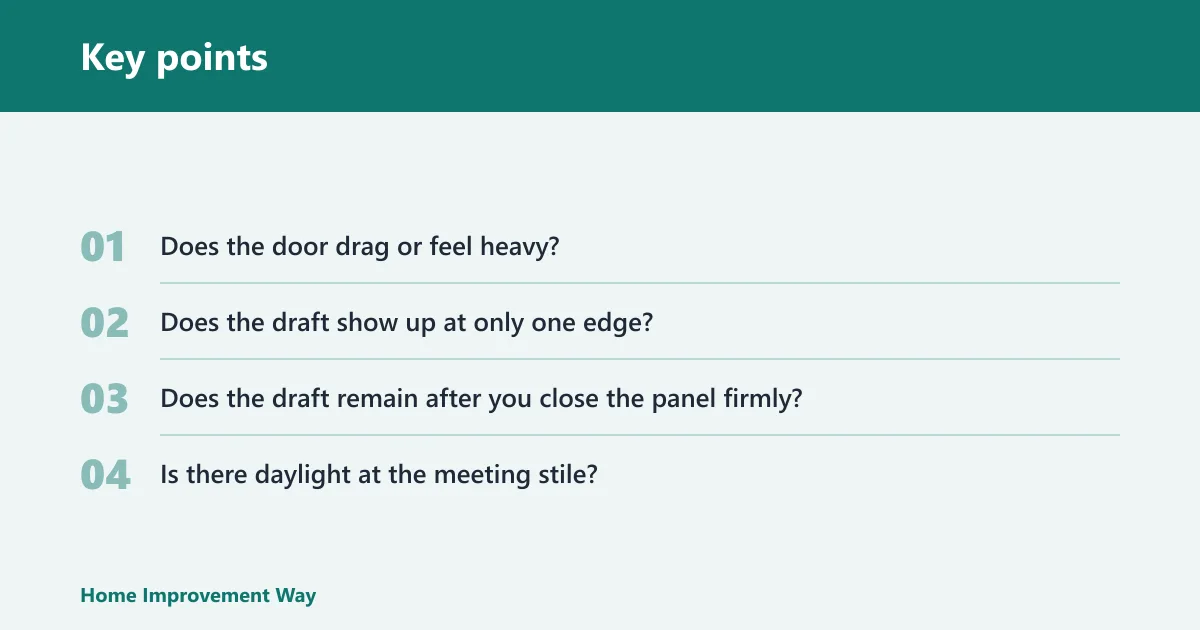

Start with three checks: where the air hits, whether the panel drags, and whether the door seals only when you push it closed harder than normal. That quick pass usually separates a seal problem from a roller or alignment problem before you buy parts.
Look at the top edge, bottom rail, interlock stile, and meeting stile. A closed slider uses multiple seal lines, so a leak at one area often points to one failed seal line, not the whole door.
Yes/no path
- Does the door drag or feel heavy? If yes, inspect rollers first.
- Does the draft show up at only one edge? If yes, focus on the matching seal line.
- Does the draft remain after you close the panel firmly? If yes, check alignment and interlock contact.
- Is there daylight at the meeting stile? If yes, the panel may be dropped, out of square, or missing the right seal.
If a roughly 6-foot patio slider feels smooth at the handle but daylight is visible at the top corner near the lock side, that can point more to uneven contact or an off-square panel than to a worn bottom seal. That pattern points more to uneven contact or an off-square panel than to a worn bottom seal.
Sliding door draft matrix

This matrix helps separate the leak pattern from the repair. Check it before you replace parts. The same symptom can come from different causes, but the location of the draft narrows the fix fast.
| Symptom pattern | Likely cause | Best fix |
|---|---|---|
| Top-edge draft | Worn pile at the head, dropped panel, or poor contact from misaligned rollers | Check roller height, then replace head pile if the slot still holds the strip poorly |
| Bottom-rail draft | Short pile, missing pile, or rollers set too high so the seal never touches | Verify pile height and roller setting together |
| Interlock draft | Failed interlock pile, crushed bumper or bulb seal, or panels not meeting squarely | Replace the interlock seal and verify panel alignment |
| Door drag | Worn or seized rollers, pile that is too tall, or debris in the track | Clean the track and adjust or replace rollers before installing taller seal material |
| Daylight at the meeting stile | Panel dropped, frame out of square, or interlock seal missing | Adjust rollers; if the gap stays uneven, inspect the frame and rail geometry |
| Leakage after new weatherstripping | Wrong pile backing width, wrong pile height, dirty slot, or panel alignment problem | Match the strip to the slot and clearance, then recheck squareness |
Measurement note: pile weatherstrip is sold by backing width and pile height. Backing width should match the slot or carrier channel; backing that is too wide may not slide into the slot, while backing that is too narrow can work its way out of the slot. Pile height should match the door clearance; pile that is too tall can make the door drag, and pile that is too short may not contact the mating surface.
What seal parts can leak?
Most sliding door seals are pile weatherstrip. Pile is a dense brush-like strip used on jambs, the head, the bottom rail, and the interlock. It can fail by matting, fraying, or walking out of the slot. When it is worn, the leak often shows up as a thin line of air rather than a wide gap.
Fin-seal pile versus standard pile
Fin-seal pile is a version with a thin plastic fin running through the fibers. The fin helps block air through the fibers, so it is common on modern doors. Over time, the fin can crack or tear from sun and age, leaving the brush part in place but reducing the air seal.
Bumper or bulb seal
Some doors use a bumper or bulb seal at the interlock or lock jamb. This soft vinyl or rubber profile fills a more compressive gap than pile does. It can harden, split, or crush, which leaves a gap even if the strip still looks complete.
Glazing gasket
The glazing gasket seals the glass to the sash, and it does not move. It matters when the leak seems to come through the panel itself or from a corner that has shrunk back in the sun. If that gasket pulls away from a corner, air may move through the panel assembly even when the door seal is intact.
A common first-timer mistake is to replace the interlock pile while ignoring a shrunken corner on the glazing gasket. The strip at the edge may be perfect, but the air path still remains.
Can worn rollers make the door drafty?
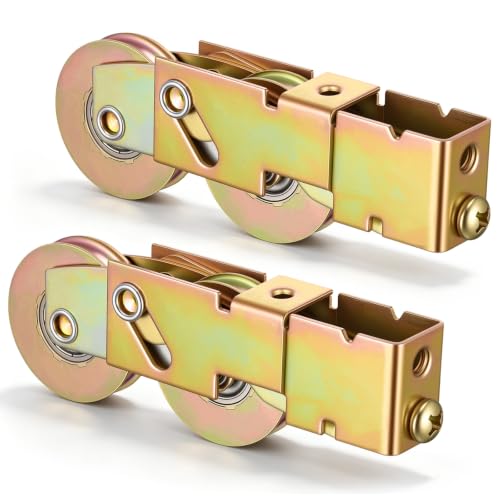
Yes. Sliding door rollers support panel height and alignment, so worn or seized rollers can let the panel drop and open gaps at the head, the interlock stile, or the bottom rail. Roller adjustment changes seal contact, which is why a draft can appear even when the weatherstripping still looks usable.
Signs the panel is dragging instead of sealing
- The door feels heavy at the start of travel.
- The latch lines up only when you lift the panel slightly.
- One upper corner shows daylight while the opposite side does not.
- The bottom rail scrapes or leaves uneven wear in the track.
Suppose a slider starts rubbing the sill after a season of use, and the interlock gap opens only on the upper lock side. That pattern points to dropped rollers before it points to a failed seal.
What roller adjustment can fix and what it cannot
Minor roller adjustment can restore contact between the panel and the weatherstripping. It can also reduce drag and bring the latch back into line. It cannot fix a bent frame, a damaged track, or a door that is so out of square that the seal line changes from top to bottom.
What should you replace first?
Replace weatherstripping first when the seal is frayed, cracked, compressed, or missing, and the door still closes squarely. Adjust rollers first when the door sags, drags, or sits crooked. If the door still leaks after a fresh seal, stop and inspect the frame, track, or panel alignment instead of buying a second strip.
Cost and effort tiers
| Repair | Typical effort | What it usually involves |
|---|---|---|
| Cleaning the slot or carrier channel | Low | Remove packed sand, fibers, and old adhesive before new pile goes in |
| Weatherstripping replacement | Low to moderate | Match backing width and pile height, then install without stretching |
| Roller adjustment | Moderate | Lift and lower the panel until the seal line and latch contact improve |
| Professional repair | Moderate to high | Frame, track, roller, or squareness correction when the door will not seal after basic repair |
When to stop DIY
If new weatherstripping still leaks after the correct strip is installed, the frame or panel may be out of square. That is a different repair. It often needs a pro-level alignment check because repeated seal swaps will not close a structural gap.
How do you fit the right replacement strip?
Measure the backing width so the pile fits the slot or carrier channel, then choose pile height that matches the door clearance. Clean the slot before installation, and do not stretch the new strip during installation. Those steps matter as much as the strip type itself.
Field checklist for matching the part
- Remove a short sample of the old strip.
- Measure the backing width with a ruler or tape, edge to edge across the insert portion.
- Compare pile height to the gap the door actually leaves at the seal line.
- Clean the slot or carrier channel until loose fibers and sand are gone.
- Press the new strip in evenly, without pulling it lengthwise.
What type of weatherstripping fits a sliding glass door? Usually the answer is the same style that was already there, because the door was built around that carrier channel. A fin-seal pile, standard pile, or bumper style all need the correct backing width to stay put.
Frequently asked questions
How do I stop drafts from my sliding glass door?
Find the leak line first, then match the repair to the symptom. If the draft shows at one edge, replace the matching seal. If the panel drags or sits low, adjust or replace the rollers. If the door still leaks after new weatherstripping, check alignment and squareness.
How do I stop drafts from patio doors?
Use the same diagnosis for patio sliders: top edge, bottom rail, interlock stile, or meeting stile. Pile weatherstrip is the most common seal type, but it only works when the backing width and pile height match the door. Clean the slot before installing any new strip.
How can I prevent a draft from a sliding door?
Keep the rollers adjusted so the panel does not drop, and replace worn seals before they mat or fray. Make sure the interlock stile has proper contact, since that is a common leak point. If the door closes unevenly, fix the alignment before adding more seal material.
Why is cold air coming through my sliding glass door?
Cold air usually enters where the seal line is weak, not through the whole door. A gap at the top edge often points to dropped rollers or worn head pile, while a leak at the interlock points to seal failure or poor panel meeting. Daylight often confirms the path.
Should I replace weatherstripping or rollers first?
Replace weatherstripping first when the strip is visibly worn but the door still tracks smoothly and seals evenly. Replace or adjust rollers first when the panel drags, sits crooked, or needs lifting to latch. If a fresh seal fails, the frame or panel may be out of square.
When does a sliding door need professional repair instead of DIY?
Call a pro when new weatherstripping does not stop the draft, the door is out of square, the track is damaged, or the panel will not stay aligned after roller adjustment. Those problems can keep any seal from contacting evenly, even with the correct replacement strip installed.
Sponsored / affiliate links. As an Amazon Associate I earn from qualifying purchases. I may earn additional commission from eligible campaigns.
 Dog Door for Sliding Glass Door with Magnetic Plastic Flat, Sliding Door Pet Doggie Door Insert with Lock, Adjustable Height No-Cut Required Doggy Door Access Renters, Apartments, Patio (White, M)
 PGT Sliding Glass Door Latch with Thumbturn, Silver – 4-1/2 in. Hole Spacing Interior Handle Latch Replacement for Sliding Patio Doors