How Much Does It Cost to Reseal Windows?
In the UK, resealing windows often costs about £40 to £180 per window. Leave failed seals alone, and you can end up paying for higher energy bills, water damage, and a repair that turns into replacement. This guide breaks down US and UK pricing, what a reseal covers, and how to tell when caulk, seal replacement, or full window replacement is the smarter choice.
Typical cost range


For a straightforward reseal, expect a low-cost maintenance job. In the US, a simple per-window reseal often lands in the $50 to $250 range, while in the UK it is usually £40 to £180. The job pays for weatherproofing, not a new window, and the bill is mostly labor unless a large amount of old sealant must be removed.
Material cost vs labor cost
Sealant itself is often the smaller part of the bill. The labor is what moves the price, especially when old caulk must be cut out, surfaces cleaned, and joints retooled so the new bead bonds properly.
Exterior resealing often costs more than interior resealing because it usually takes longer and may need safer access. Interior work can be a quick air-seal job around trim or an interior perimeter. Exterior work must stand up to rain, UV, and movement at the frame edge.
Sealant type and frame compatibility
Compatibility matters. A sealant that works on vinyl or uPVC may not be the best choice for timber, and some aluminum frames need a product that adheres well to metal without attacking finishes. Silicone, polyurethane, and hybrid sealants are common choices, but the right pick depends on the frame material and whether the joint is exposed to weather.
A reseal should solve minor air and water leakage at the perimeter. It does not restore failed insulated glass, fix warped sash parts, or correct a frame that has moved out of square.
What changes the price
Frame material, seal length, access, and the condition of the opening all change the cost. uPVC or vinyl is usually the least expensive to work on, aluminum tends to sit in the middle, and timber is often the most expensive because prep, patching, and compatibility checks take more time.
Perimeter length and prep work
A small casement with short perimeter runs costs less than a large picture window with long seal lines. If the old bead is brittle, painted over, or contaminated with dust and mildew, removal and prep can add more labor than the new seal itself.
Access height and surrounding condition
Upper-floor windows can cost more because a ladder or scaffold may be needed. That access issue can turn a simple reseal into a bigger job, especially if the opening sits above a porch roof or near landscaping that limits safe footing.
Damage around the opening matters too. Cracked masonry, loose trim, or soft wood can make a fresh bead fail early. In that case, resealing is only a short-term patch.
Expected lifespan
A properly applied sealant can last several years, but sun, movement, and weather exposure shorten that life. Exterior beads usually need attention sooner than interior ones because they take the full hit from rain and UV.
Drafty window or failed seal?

Use the symptom, not just the draft, to decide the fix. A window that leaks air at the edge may only need resealing. A window with moisture trapped between panes points to failed insulated glass, which caulk will not solve. If the frame itself is warped, rotted, or loose, resealing is usually the wrong first move.
Signs a window needs resealing
Look for visible cracks in exterior caulk, small air leaks at the frame edge, minor water staining at the perimeter, or a bead that has pulled away from the frame. Those issues usually point to weatherproofing failure rather than a dead window.
Signs the frame needs repair first
Soft wood, peeling paint that keeps returning, swollen corners, or gaps that open and close with weather changes suggest a frame problem. Reseal after the substrate is sound. If you seal over rot, the joint may fail again quickly.
When condensation between panes points to failed glazing
Condensation between panes is the classic sign of a failed insulated glass unit. That is a glazing issue, not an exterior caulk issue. Single-pane windows can fog on the room side or outdoors, but moisture sealed inside a double- or triple-glazed unit means the insulating seal has failed.
When resealing is the wrong fix
Stop at resealing only if the window structure is intact. If the sash is distorted, the glass seal has failed, or the frame has rot, the better spend is repair or replacement.
Say your second-floor bedroom window has a cracked exterior bead and a draft, but the sash opens cleanly and the frame feels solid. A reseal is a sensible first job. If the same window also shows brown, soft wood at the sill, the bead will not hold for long.
Window seal decision table
Use this table to separate a cheap weatherproofing job from a repair or replacement. The key question is what the work actually fixes: a leak at the edge, a damaged component, or a failed window unit.
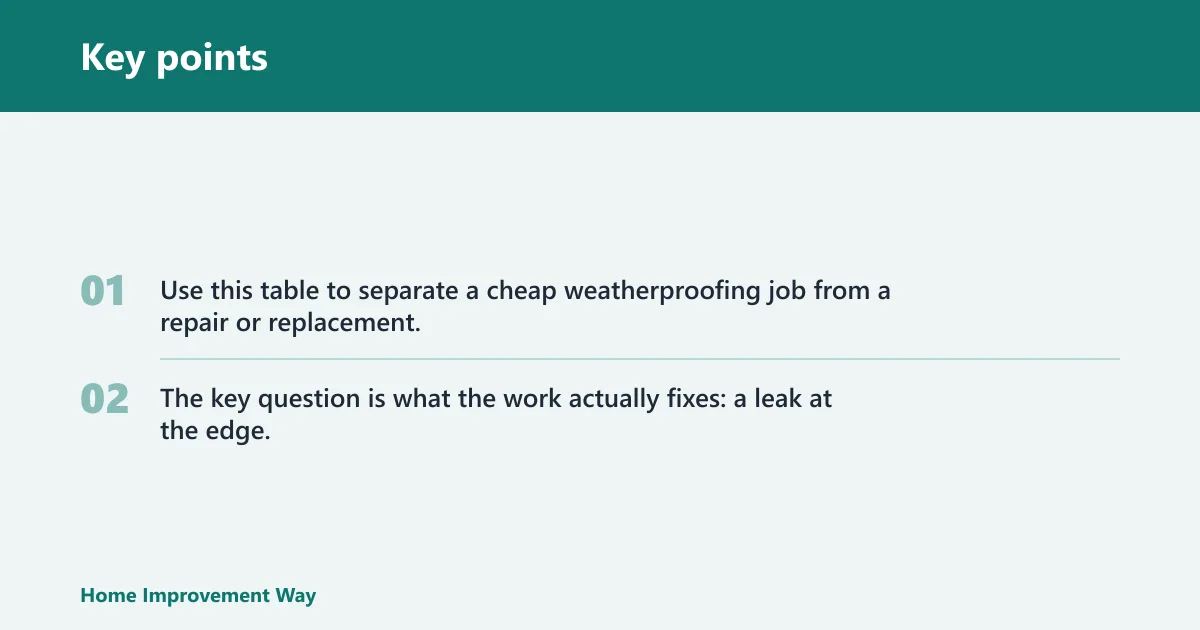
| Scenario | Likely cost band | What the fix actually addresses | When to stop resealing and escalate |
|---|---|---|---|
| Drafty sash | US: $50 to $250 per window; UK: £40 to £180 per window | Minor air leakage at the perimeter, weatherstrip gaps, or a loose bead | If the sash is warped, the hardware is failing, or the frame is out of square |
| Cracked exterior caulk | US: $50 to $150; UK: £40 to £120 | Water entry at the joint between frame and wall or trim | If the surrounding wood or masonry is damaged, or the crack keeps returning after prep |
| Failed IGU seal | US: glass replacement often starts around $700 to $2,000+ for energy-efficient upgrades; UK: pricing varies by unit size and spec | The insulated glass unit, not the perimeter caulk | Always escalate. Condensation between panes means resealing will not fix the failure |
| Rotted wood frame | US: frame damage can cost up to $1,000; UK: repair costs vary widely with timber condition | Localized wood repair, filler, splice work, or frame part replacement | If decay is widespread, the window may need replacement instead of patching |
| Hard-to-access upper-floor windows | US: reseal cost rises with ladder or scaffold needs; UK: access can push labor well above the base reseal price | Safe access for exterior sealing and inspection | If access costs rival a simple repair, compare the full repair or replacement quote before proceeding |
How much do window repairs cost?
Window repairs can be cheaper than replacement when the damage is narrow and the frame still has life left. Today’s Homeowner lists leak repairs at $50 to $150, while frame damage can cost up to $1,000. If the problem is glass or hardware rather than the perimeter seal, a repair may be enough.
Leak repair cost range
A leak repair often covers failed caulk, minor flashing issues, or a localized gap around trim. That work is usually far cheaper than replacement because it targets the leak path without disturbing the whole unit.
Frame damage and hardware issues
Frame damage costs climb when rot, split corners, or structural movement is involved. Hardware issues such as broken locks, worn hinges, or stuck balances can also raise the total, though these jobs are still often less expensive than swapping out a sound frame and opening.
When repair is enough
Repair is enough when the window still opens and closes correctly, the glazing is intact, and the damage is local. If the frame is stable and the issue is limited to a leak, a broken latch, or one damaged section, repair usually beats replacement on cost.
When replacement costs make more sense
Replacement becomes the better spend when the frame is failing, the glass seal has failed, or the labor to repair approaches the cost of a new unit. In the US, average national replacement window cost is $400 to $1,000 per window. Today’s Homeowner lists low-end replacement window costs at $200 to $400 and high-end replacement window costs at $1,000 to $2,500.
Like-for-like replacement versus resizing openings
A like-for-like swap is cheaper because it avoids structural work. If you need to resize the opening, repair framing, or change the window style, labor rises fast and the job can move from simple replacement to a small construction project.
How glazing choice affects price
Double glazing usually costs less than triple glazing, and triple glazing usually adds £100 to £150 per window over double glazing in the UK. Energy-efficient glass upgrades can also push the bill higher; Today’s Homeowner says those upgrades may range from $700 to $2,000+.
Whole-house replacement
For a full house, the total adds up quickly. The Independent says most UK homeowners spend between £4,000 and £7,000 for all windows in a typical three-bedroom semi-detached house, and larger properties or premium materials can push whole-house costs above £15,000. In the US, the per-window total is the key starting point before labor and add-ons are counted.
Suppose a 1st-floor timber sash has recurring drafts, a soft sill, and fogging between panes. Resealing the perimeter would only address one symptom. The better spend is usually repair or replacement, because the failed glass and frame damage will keep driving costs back up.
Frequently asked questions
How much does it cost to reseal windows?
In the US, resealing windows usually costs $50 to $250 per window. In the UK, £40 to £180 is a common range. The price depends on access, perimeter length, sealant removal, and whether you need exterior or interior resealing.
What is the average cost to reseal windows per window?
Smaller, easy-to-reach windows trend lower; tall or damaged openings trend higher.
Is resealing cheaper than replacing windows?
Yes. Resealing is far cheaper because it fixes the weatherproofing line, not the whole unit.
What signs mean a window needs resealing instead of replacement?
Cracked caulk, small drafts at the edge, and minor water ingress usually point to resealing. If the frame is sound, the sash works properly, and there is no moisture between panes, resealing is often the right first step.
Can resealing fix condensation between panes?
No. Condensation between panes usually means the insulated glass seal has failed. That is a glazing problem, so the fix is repair or glass replacement, not new caulk around the frame.
How much does it cost to replace windows with double glazing?
Double glazing usually costs more than a basic repair and less than many premium upgrades. In the US, replacement windows commonly run $400 to $1,000 per window overall, with high-end jobs reaching $1,000 to $2,500. In the UK, triple glazing adds £100 to £150 per window over double glazing, which shows how quickly spec changes affect the total.
How much does it cost to reseal windows uk?
In the UK, a typical reseal costs £40 to £180 per window. uPVC usually starts at the lower end of material pricing, aluminum sits in the middle, and timber tends to cost more because prep and compatibility checks take longer. Access and frame condition can push the price higher.
Sponsored / affiliate links. As an Amazon Associate I earn from qualifying purchases. I may earn additional commission from eligible campaigns.