Price Per BTU Calculator: Compare HVAC Value for Buyers
Price per BTU = unit price ÷ BTU output; smaller numbers usually mean more heating or cooling capacity for each dollar, if the equipment matches the room. Ignore it and you can pay for capacity you do not need, or buy a cheap unit that costs more to run and replace. This guide shows the formula, worked examples, and how to compare HVAC, AC, and heater options without mixing capacity with room sizing.
How is this calculated?
Press Calculate to see the math with your numbers.
What does price per BTU mean?
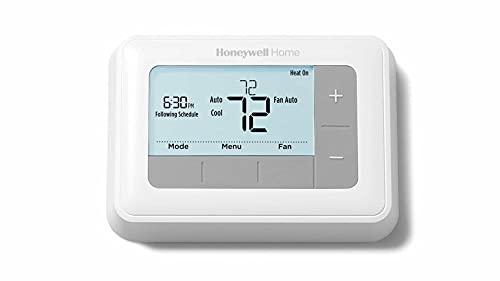

Price per BTU is a buying metric. It tells you how much you are paying for each unit of heating or cooling capacity, so you can compare two models with different prices and output ratings on the same basis.
BTU means British Thermal Unit. In plain language, it is an energy unit used to compare heat. One BTU is approximately the energy needed to heat one pound of water by 1 degree Fahrenheit, and 1 BTU equals 1,055 joules.
For HVAC equipment, the important number is usually BTU per hour, not total BTU. BTU per hour is the capacity rating. Air conditioners use it for heat removal, heaters use it for heat output, and the number lets shoppers compare stated capacity from one model to another.
That is different from room sizing. A room can need 8,000 BTU per hour or 24,000 BTU per hour depending on square footage, ceiling height, insulation, windows, sun exposure, climate, and room type. Price per BTU does not tell you whether the unit fits the room.
When this metric helps buyers
Price per BTU is useful when comparing equipment on the shelf or in a quote. It works well for window ACs, portable ACs, space heaters, packaged units, and many ductless indoor units where the output rating is visible and the prices are easy to compare.
It is less useful if the model’s real output changes a lot with conditions. Variable-speed systems, extreme outdoor temperatures, and installation differences can make the advertised capacity less useful than the number on the box suggests.
According to BTU Calculator — A BTU is approximately the energy needed to heat one pound of water by 1 degree Fahrenheit.
How do you calculate price per BTU?
The formula is simple: price per BTU = purchase price ÷ BTU output. If the rating is BTU per hour, use that number as the capacity figure. A lower result means more capacity for each dollar spent, but only if the unit is still a proper fit for the space.
Unit conversion notes
Sometimes equipment is listed in watts or kilowatts instead of BTU per hour. Use the conversion note that 1 watt is approximately 3.412 BTU per hour. If a heater is listed at 1,500 watts, its output is about 5,118 BTU per hour before you calculate price per BTU.
For reference, 1 BTU also equals 0.293 watt-hours and 252 calories. Those conversions help when a label uses energy units that are not written in BTU per hour.
Quick example
- Find the price.
- Find the BTU per hour rating.
- Divide price by BTU per hour.
- Compare the result across models.
If an air conditioner is around 10,000 BTU per hour and costs about $300, the price works out to roughly $0.03 per BTU. If a unit is around 12,000 BTU per hour and costs about $360, the price per BTU is also roughly $0.03. Same value on paper, but the room fit still decides which one belongs there.
Price per BTU worked examples
The table below shows the upfront price per BTU calculation from equipment cost and rated output. It also shows why the smallest number is not always the best buy. I have seen cheap capacity turn into the wrong purchase when the unit was oversized, underpowered in real use, or built for a different load profile.
| Example | Unit type | Price | Rated output | Formula | Price per BTU | Conversion note | When lower price per BTU is the wrong choice |
|---|---|---|---|---|---|---|---|
| A | Window AC | $299 | 5,000 BTU per hour | $299 ÷ 5,000 | $0.0598 | Already in BTU per hour | Good for a small room, but too little capacity for a larger space. |
| B | Window AC | $389 | 8,000 BTU per hour | $389 ÷ 8,000 | $0.0486 | Already in BTU per hour | Better value on paper, but only if the room actually needs 8,000 BTU per hour. |
| C | Portable AC | $429 | 10,000 BTU per hour | $429 ÷ 10,000 | $0.0429 | Already in BTU per hour | Portable units often deliver less useful cooling than their nameplate suggests. |
| D | Electric heater | $119 | 1,500 watts | $119 ÷ 5,118 | $0.0233 | 1,500 watts × 3.412 = 5,118 BTU per hour | Very low price per BTU, but only useful for small spaces or spot heating. |
| E | Ductless indoor unit | $899 | 18,000 BTU per hour | $899 ÷ 18,000 | $0.0499 | Already in BTU per hour | A strong value only if the paired outdoor system and room load support it. |
| F | Space heater | $79 | 1,200 watts | $79 ÷ 4,094 | $0.0193 | 1,200 watts × 3.412 = 4,094 BTU per hour | Cheap per BTU, but may not heat the room evenly or safely if the room is too large. |
| G | Whole-house unit | $2,499 | 34,000 BTU per hour | $2,499 ÷ 34,000 | $0.0735 | Matches the 2,000 to 2,500 square foot range | Higher price per BTU can still be correct if the home needs the capacity and airflow. |
Read the warning column carefully. The cheapest price per BTU can hide weak airflow, poor installation match, or capacity that is too large for the room. A model can look efficient on paper and still be the wrong buy for the space.
How many BTUs do you need for your room?
Room size gives a rough starting point, but it is only a starting point. Square footage is the primary input, yet room volume matters too, which is why ceiling height, insulation, windows, sun exposure, climate, and room type all change the final load.
Basic square-footage-to-BTU sizing chart
This chart is approximate, not exact. I use it as a first pass before I compare price per BTU across models. A 100 to 150 square foot area maps to 5,000 BTU per hour, and a 2,000 to 2,500 square foot area maps to 34,000 BTU per hour.
| Room size | Rough BTU per hour |
|---|---|
| 100 to 150 square feet | 5,000 BTU per hour |
| 150 to 250 square feet | 6,000 to 8,000 BTU per hour |
| 250 to 400 square feet | 9,000 to 12,000 BTU per hour |
| 400 to 650 square feet | 14,000 to 18,000 BTU per hour |
| 650 to 1,000 square feet | 20,000 to 24,000 BTU per hour |
| 2,000 to 2,500 square feet | 34,000 BTU per hour |
Why ceiling height changes the result
Higher ceilings mean more air volume, which usually means more BTUs. A 12-by-15 bedroom with an 8-foot ceiling does not have the same cooling load as the same room with a 10-foot ceiling. The floor area is identical, but the volume is larger.
The calculator includes room ceiling height in feet or meters for that reason. If the ceiling is above standard height, the room often needs more capacity than a square-foot-only chart suggests.
How insulation and windows affect BTU calculations
Good insulation lowers the load. Average insulation is the middle case. Poor insulation, leaky windows, thin walls, and older homes usually raise the BTU need because more heat moves in or out through the shell of the room.
Window leakage matters as much as the glass itself. A sunny room with drafty windows can behave like a much larger space than the floor plan implies. That is why insulation condition and window age should be part of the estimate.
How sun exposure and climate change the load
Heavily shaded rooms usually need less cooling than rooms with very sunny exposure. For heating, a cold climate needs more output than an average climate, and a hot climate pushes cooling demand higher. Boston and Houston do not have the same load profile.
The calculator includes climate options for cold, average, and hot conditions, plus sun exposure options for heavily shaded, average, and very sunny spaces. Those inputs are simple, but they matter.
Can I use the same logic for heating and cooling?
Yes. The same price-per-BTU formula works for both, because you are still comparing cost against rated capacity. What changes is the load on the room. Heating and cooling both depend on the desired temperature increase or decrease, room type, and how much heat moves through walls, ceilings, and windows.
Room type changes the estimate
Room type matters because different spaces carry different loads. A bedroom usually has lower demand than a kitchen. An entire house, entire first floor, or entire second floor or above needs more output than a single room. The calculator includes Bedroom, Living Room, Kitchen, Entire House, Entire First Floor, and Entire Second Floor or Above.
People count also affects the estimate. More occupants add heat to the room, especially in smaller spaces. That input matters when a room is used by several people for long periods.
How target temperature change affects demand
The larger the gap between outdoor conditions and the indoor target, the more BTUs you need. A mild day with a small temperature difference is one thing. A hot afternoon or a cold night with a bigger difference is another. That is why the same room can need different equipment in different climates.
When a lower price per BTU is the wrong choice
A lower price per BTU is not always the better choice. Oversized units can short cycle, variable-speed systems may not spend much time at nameplate output, and some products do not deliver their rated capacity under real conditions. The cheapest capacity on paper can become the wrong capacity in the room.
Oversized units
An oversized AC or heater may cost less per BTU, but it can perform worse in the room. Cooling can turn on and off too quickly. Heating can feel uneven. If the unit is much larger than the load, the low price per BTU is a misleading number.
Variable-speed systems
Variable-speed equipment often changes output to match demand. That can be a good thing, but it makes nameplate comparisons less direct. A model with a favorable price per BTU on the box may not spend much time at that output in real use, so the comparison needs more context than the sticker price.
Nameplate rating versus real output
Nameplate capacity is the advertised rating. Real output can drop because of duct losses, install quality, outdoor conditions, or product design. That is why buyers should treat price per BTU as a purchase comparison, then check whether the actual installation and operating conditions support the rating.
Frequently asked questions
How many square feet per btu
There is no exact number, but square footage is a useful starting point. A 100 to 150 square foot area maps to 5,000 BTU per hour in the rough chart above. Bigger rooms need more capacity, but ceiling height, insulation, sun, and climate can shift the answer a lot.
How many btu per square foot
BTU per square foot changes with room conditions, so there is no single universal ratio. Small, well-insulated rooms need fewer BTUs per square foot than hot, sunny, poorly insulated rooms. Use the square-foot chart as a first pass, then adjust for ceiling height, windows, and climate.
How do I calculate price per BTU?
Use this formula: price per BTU = purchase price ÷ BTU output. If the label gives watts instead of BTU per hour, multiply watts by 3.412 to convert to BTU per hour first. Then compare the resulting number across models to judge equipment value.
What is a good BTU per square foot for a room?
A good BTU per square foot depends on the room’s volume, insulation, sun exposure, and climate. A shaded, well-insulated room needs less than a sun-baked room with drafty windows. The best answer is the smallest capacity that still matches the load without oversizing.
Does ceiling height change BTU needs?
Yes. Higher ceilings increase room volume, and more volume usually means more BTUs. Two rooms with the same floor area can need different equipment if one has an 8-foot ceiling and the other has a vaulted ceiling. That is why ceiling height belongs in the estimate.
How do insulation and windows affect BTU calculations?
Good insulation and tight windows reduce BTU needs. Poor insulation, leaky windows, and older homes raise them. A room with heat gain through the glass or heat loss through the walls will need more capacity than a similar room with a tighter envelope, even when the square footage is the same.
Sponsored / affiliate links. As an Amazon Associate I earn from qualifying purchases. I may earn additional commission from eligible campaigns.