Epoxy vs Polyurethane for Basement Crack Repair
Use epoxy for dry, non-moving structural cracks when strength matters. Use polyurethane for active leaks or hairline cracks with moisture because it flexes and seals water. Pick the wrong one and the crack can keep leaking, widen, or hide a structural problem that needs more than a sealant. This guide matches crack condition, moisture, and movement to the right repair and explains when neither product is enough.
| Decision factor | Epoxy | polyurethane for basement crack repair | Winner |
|---|---|---|---|
| Best use | Structural foundation crack repair on dry or slightly damp concrete | Waterproofing a wet or actively leaking basement crack | tie |
| After-cure behavior | Hard and rigid | Slightly flexible | polyurethane for basement crack repair |
| Moisture tolerance | Generally performs poorly if the crack is wet | Reacts with moisture and expands inside the crack | polyurethane for basement crack repair |
| Structural strength | Bonds concrete to concrete and can restore structural continuity | Designed for waterproofing rather than strength | Epoxy |
| Movement tolerance | Best for non-moving cracks | Better for minor movement | polyurethane for basement crack repair |
| Typical cure time | About 24–72 hours | Minutes to hours | polyurethane for basement crack repair |
Epoxy vs polyurethane at a glance
The trade-off is direct: epoxy gives strength, while polyurethane controls leaks. That split matters because the right material depends on whether the crack is dry or wet, stable or moving, and whether the wall needs structural bonding or just water sealing.
What the table means in practice
On a poured concrete foundation wall, a dry vertical crack that has stayed the same size can often be a candidate for epoxy if the goal is structural bonding. A crack that seeps during rain or snowmelt usually points toward polyurethane, especially if the wall is still stable and the leak is the main problem.
A common first-timer mistake is to treat every basement crack as the same problem. A horizontal crack, a stair-step crack, or an offset crack can point to pressure or movement, which changes the repair plan before any injection starts.
Which crack condition do you have?
Start with the crack itself, not the product. Measure the width, note whether the crack is dry or damp, and check whether it changes over time. Those three details usually decide whether epoxy, polyurethane, or a structural review comes first.
Dry, stable crack
A dry crack that has not widened and shows no offset is the best fit for epoxy if the wall is poured concrete and the goal is structural bonding. If the crack is only cosmetic and does not leak, polyurethane is usually not the first choice.
Damp, stable crack
A damp crack can still be a candidate for polyurethane if the aim is sealing seepage, because polyurethane handles moisture better and expands inside the void. Epoxy is less reliable here because it generally performs poorly if the crack is wet.
Actively leaking crack
If water enters during rain or snowmelt, polyurethane is usually the better choice because it is made for waterproofing and tolerates moisture. The leak may still point to a drainage problem outside the wall, so injection may stop the symptom without fixing the cause.
Moving or structural crack
A crack that is growing, offset, wide, horizontal, or stair-stepped needs more caution. Epoxy may restore structural continuity on a dry, stable crack, but ongoing movement can break that bond, and polyurethane will not restore strength where the wall is under load.
Epoxy crack injection
Epoxy crack injection is recommended for structural foundation crack repair. It cures into a hard, rigid material that bonds concrete to concrete, so it can restore structural continuity when the crack is dry or only slightly damp and the wall is not still moving.
What epoxy does in concrete
Epoxy is used inside the crack through ports and pressure, then hardens into a rigid bond. On a poured concrete foundation wall, that bond can connect both sides of the crack again instead of just sealing the surface.
When epoxy is the better fit
Epoxy is the better choice when the crack is dry, narrow to moderate in width, and appears stable. It fits structural cracks where bonding strength matters more than flexibility, including dry vertical or diagonal cracks that are not showing active movement.
What goes wrong if epoxy is used on a wet or moving crack
If the crack is wet, epoxy may not bond well. If the wall is still moving, the rigid repair can crack again, which leaves you with repeat work and no real fix for the underlying condition.
Suppose a vertical crack about 10 feet long stays dry after a long rain and has no offset. Epoxy can be a reasonable structural repair if the wall is poured concrete and the crack is not widening. Change only one condition, and the answer can shift fast.
Polyurethane crack injection
Polyurethane crack injection is recommended for waterproofing a basement crack. It stays slightly flexible after cure, reacts with moisture, and expands inside the crack, which makes it well suited to leaking foundation crack repair and minor wall movement.
What polyurethane does in a basement wall
Polyurethane is aimed at stopping water intrusion, not rebuilding strength. Its expansion helps fill the crack and nearby voids, which is useful when water is finding a path through a damp or actively leaking concrete wall.
When polyurethane is the better fit
Polyurethane is the better choice for actively leaking cracks, damp cracks, and cracks that may move a little over time. It is often the practical pick when the main goal is to stop seepage during wet weather, not to restore structural continuity.
What goes wrong if polyurethane is used where strength is needed
If the crack is structural, polyurethane can seal water yet leave the wall without the bonding strength that epoxy can provide. That is a problem when the crack signals load or pressure, because the leak may stop while the wall continues to shift.
Say your basement wall has a hairline crack that only seeps during spring thaw. Polyurethane can be the better fit because the moisture is active and minor movement is acceptable. The wall still needs a look if the crack changes shape or begins to offset.
Basement crack decision matrix
Use the crack condition, not the product label, to choose the repair. This matrix separates dry, damp, leaking, and moving cracks so you can see where epoxy, polyurethane, or an engineer review fits best.
| Crack condition | Recommended material | Red flags | Likely failure if wrong material is used | Structural engineer review? |
|---|---|---|---|---|
| Dry, stable | Epoxy | No leak now, but the crack is wider than about a quarter inch or shows offset | Polyurethane may seal the crack without restoring structural continuity | Usually no, unless the crack is wide or changing |
| Damp, stable | Polyurethane | Persistent dampness, salt staining, or a crack that re-wets after storms | Epoxy may not bond well on a wet crack and can fail early | Maybe, if the crack is wide or the wall shows movement |
| Actively leaking | Polyurethane | Water during rain or snowmelt, wet wall face, or repeat seepage after prior repairs | Epoxy can lose bond on wet concrete and may leave the leak unresolved | Yes if the leak comes with horizontal cracking, offset, or widening |
| Moving or structural | Engineer review before injection; epoxy only if a pro confirms a stable structural crack | Horizontal cracks, stair-step cracks, shear, offset, or ongoing widening | Polyurethane can stop water but will not restore strength; epoxy can fail if movement continues | Yes |
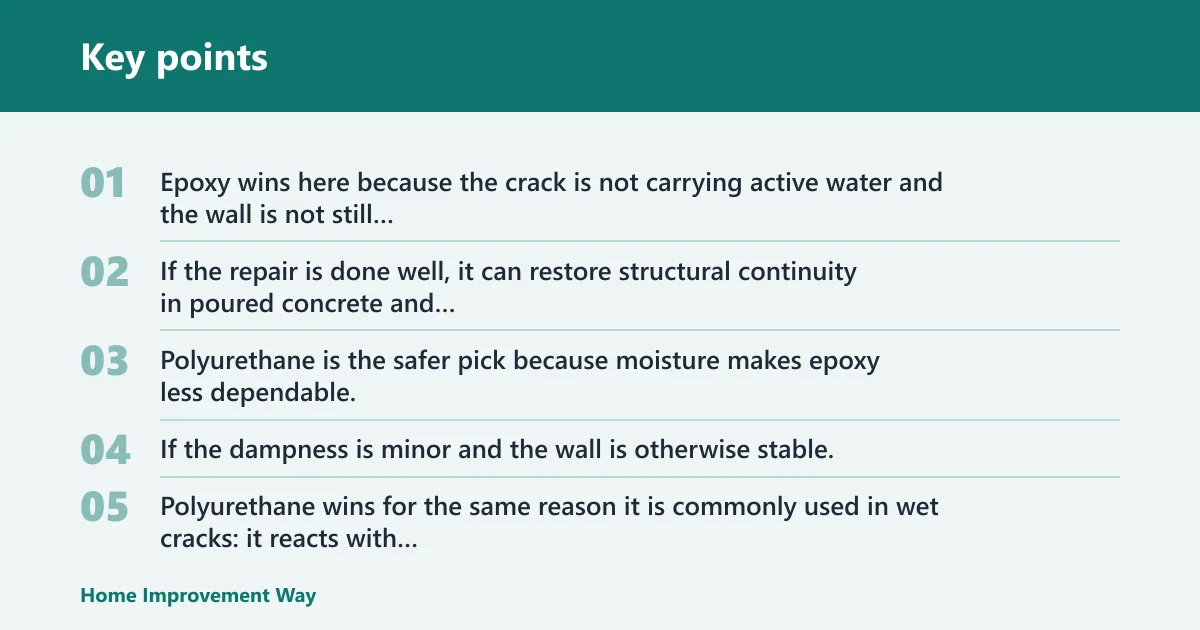
Dry: epoxy wins here
Epoxy wins here because the crack is not carrying active water and the wall is not still shifting. If the repair is done well, it can restore structural continuity in poured concrete and keep the crack from opening at the surface again.
Damp: polyurethane is the safer pick
Polyurethane is the safer pick because moisture makes epoxy less dependable. If the dampness is minor and the wall is otherwise stable, the repair can focus on waterproofing without pretending the crack is structural.
Actively leaking crack: polyurethane wins
Polyurethane wins for the same reason it is commonly used in wet cracks: it reacts with moisture and expands to fill the void. If water keeps returning, though, the leak may be a symptom of hydrostatic pressure, poor grading, clogged gutters, short downspouts, or a missing French drain.
Moving or structural crack: this is the row
This is the row that should slow you down. If the crack is horizontal, stair-stepped, or offset, a structural engineer review is the safer step before injection, because neither material fixes wall movement by itself.
Can you DIY basement crack injection?
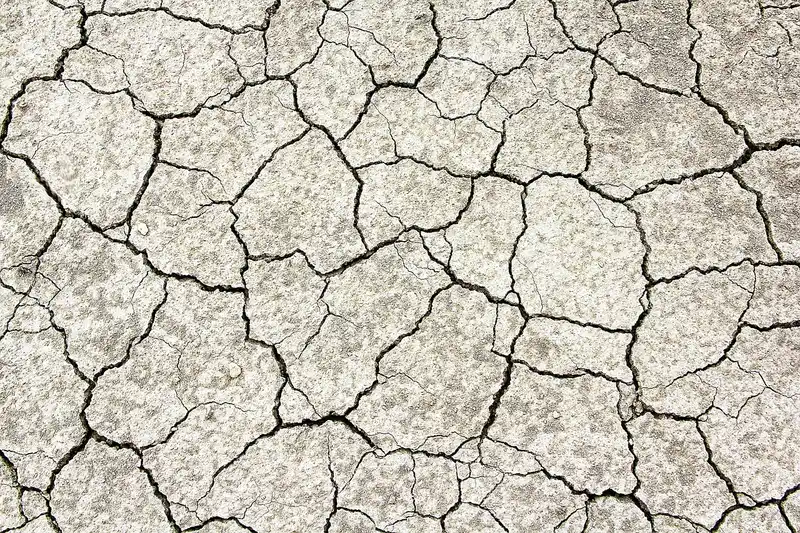
A DIY injection kit can make sense for a minor, stable, vertical seepage crack on poured concrete. It is a lower-cost option for non-structural cracks, but it is not the right move for horizontal cracks, wide cracks, or any crack that is still growing.
When a DIY kit can make sense
DIY kits usually include ports and cartridge material, and they are aimed at small repairs where the crack is stable and the wall is not under obvious stress. They are most appropriate when the crack is narrow, vertical, and only slightly damp or intermittently weeping.
What to measure, photograph, and check first
- Measure the crack width at several points.
- Photograph the crack direction: vertical, diagonal, horizontal, or stair-step.
- Check for offset, where one side of the crack sits proud of the other.
- Mark the ends of the crack and date the marks so you can see whether it grows.
- Note whether the wall is dry, damp, or actively leaking during rain or thaw.
- Look outside for grading, gutters, downspouts, and signs of hydrostatic pressure.
When to stop and call a pro
Stop and call a professional if the crack is wider than about a quarter inch, if it is horizontal, if it has an offset, or if it keeps changing. Those are signs that injection may be only part of the answer and that a structural review is safer before any material goes into the wall.
Choose Epoxy if… / Choose polyurethane for basement crack repair if…
Choose epoxy if the crack is dry or only slightly damp, the wall is poured concrete, the crack is stable, and you need bonding strength or structural continuity. Choose polyurethane for basement crack repair if water is entering, minor movement is possible, or the main goal is waterproofing rather than strength.
Choose epoxy if…
Choose epoxy if the crack is a dry structural crack, the wall is not still moving, and the repair has to tie the concrete back together. It is the better fit for stable cracks that need a hard, rigid bond.
Choose polyurethane for basement crack repair if…
Choose polyurethane for basement crack repair if the crack is wet, actively leaking, or only needs waterproofing with some movement tolerance. It is the better pick when moisture is present and the wall is not showing signs of structural failure.
When neither material is the whole answer
If the wall has horizontal cracking, wide cracking, or ongoing movement, injection alone may not solve the problem. In that case, address the wall condition and the water source together, because repeat leaks often come from drainage or pressure outside the foundation.

Frequently asked questions
Epoxy vs polyurethane foundation crack repair
For foundation crack repair, epoxy is the stronger choice for dry, stable structural cracks, while polyurethane is the better choice for wet or actively leaking cracks. The deciding factors are moisture, movement, and whether the wall needs bonding strength or just waterproofing.
Which is better for a wet basement crack, epoxy or polyurethane?
Polyurethane is usually better for a wet basement crack because it tolerates moisture and expands inside the crack. Epoxy generally performs poorly if the crack is wet, so it is a poor match unless the crack can be dried and the repair is structural, not leak-focused.
Can epoxy be used on a leaking foundation crack?
It can be used only with caution, and it is usually not the first choice for an actively leaking crack. Epoxy is recommended for structural foundation crack repair, but if water is present, bond quality drops and the leak may remain. Polyurethane is the better match for active seepage.
Does polyurethane repair a structural foundation crack?
Polyurethane can seal a crack and handle minor movement, but it does not restore structural strength the way epoxy can. If the crack is horizontal, offset, wide, or still growing, a structural engineer review is the safer step before any injection is approved.
When should a foundation crack be injected vs replaced?
Inject a crack when it is stable, limited to the wall face, and appropriate for either epoxy or polyurethane based on moisture and movement. Replace or rebuild parts of the system when the wall is failing, the crack is wide and growing, or drainage and pressure problems are driving repeat damage.
How much does epoxy vs polyurethane crack repair cost?
Cost depends on crack length, setup, and whether the problem is only the crack or also the drainage. For example, an 8 ft crack at $60 per foot plus a $150 setup fee equals $630. The bigger cost issue is repeat failure if the wrong material is used.
Can I DIY epoxy or polyurethane basement crack repair?
Yes, for a minor, stable, non-structural vertical seepage crack, a DIY kit can be a practical lower-cost option. It is not a fit for horizontal cracks, wide cracks, offset cracks, or ongoing movement, and it should not be used as a substitute for engineering review when the wall may be failing.
Sponsored / affiliate links. As an Amazon Associate I earn from qualifying purchases. I may earn additional commission from eligible campaigns.