Basement Humidity Control vs Waterproofing: What Each One Does
Basement humidity control handles damp indoor air and condensation; waterproofing blocks water entering through walls, floors, joints, or cracks. If you treat the wrong problem, you can keep buying dehumidifiers or drain parts while mold, rot, and stained concrete keep spreading. This guide explains what each system does, how to tell humidity from moisture through concrete or active leaks, and which fixes match each failure.
| Decision factor | Basement humidity control | waterproofing | Winner |
|---|---|---|---|
| What it stops | High relative humidity, condensation, and damp indoor air | Water entry through walls, slabs, joints, and cracks | tie |
| Best use case | Air feels damp, surfaces sweat, but no active seepage is visible | Water shows up on the floor, wall joints, or through cracks | tie |
| Main tools | Dehumidifier, vapor control, air sealing, ventilation checks | Drainage, sealing, structural repair, sump pump, exterior membrane | waterproofing |
| What it cannot fix | It cannot stop hydrostatic pressure or seepage through concrete | It does not remove indoor moisture already in the air | tie |
| Fit for mixed problems | Often the first indoor-air step | Needed when moisture is entering the structure | waterproofing |
How to tell humidity control from waterproofing
What each one is designed to stop
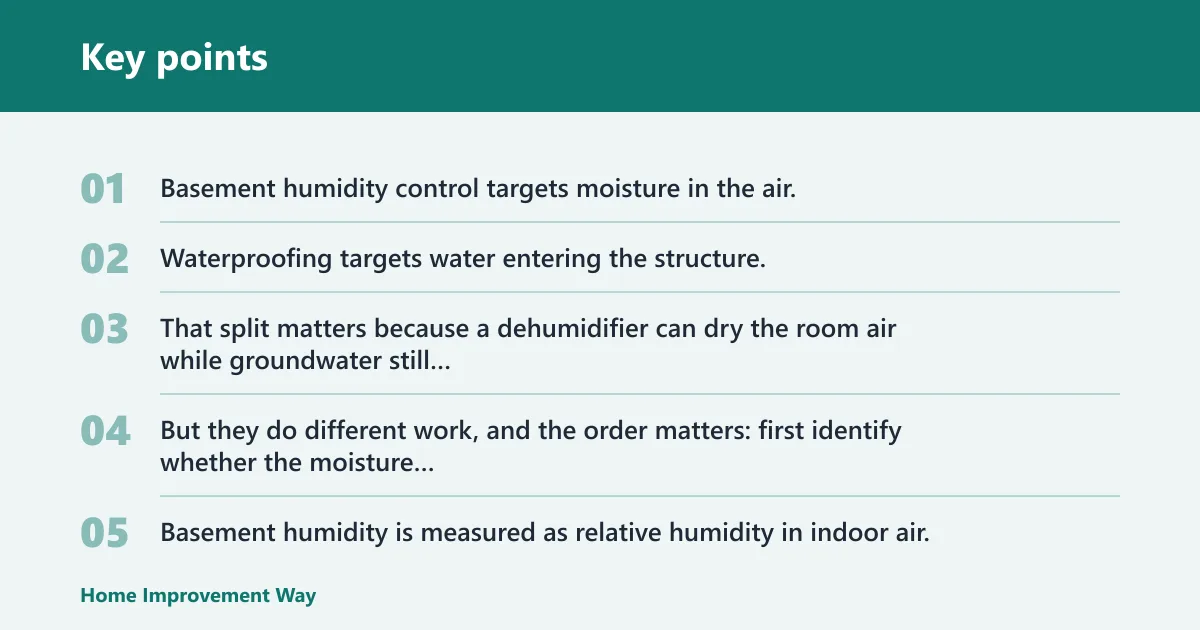
Basement humidity control targets moisture in the air. Waterproofing targets water entering the structure. That split matters because a dehumidifier can dry the room air while groundwater still moves through concrete, joints, or a slab.
The same basement can need both. But they do different work, and the order matters: first identify whether the moisture is airborne or entering as liquid water, then choose the fix that matches the failure point.
Why air moisture and water entry are different problems
Basement humidity is measured as relative humidity in indoor air. It rises from vapor diffusion, condensation on cool surfaces, and evaporation from concrete. Waterproofing deals with hydrostatic pressure, seepage, and structural paths that let water into the basement.
A dehumidifier can lower the air’s moisture load. It cannot stop groundwater from being pushed through a wall or slab. That is why sealant alone often disappoints when the actual problem is water entry.
Where each method belongs in the fix order
Start by checking the source. If you see condensation, musty air, or damp boxes without a clear leak, humidity control may be the first step. If you see wet walls, floor water, or efflorescence, inspect drainage, cracks, and pressure at the foundation.
If a basement of about 900 square feet has a cool slab, sweating ductwork, and no wet wall lines after rain, basement humidity control is often the first step. Basement humidity control is the first move. Suppose the same basement shows a damp corner and white powder at the wall base after a storm. Waterproofing rises to the front of the line.
What is basement humidity?
Relative humidity in basement air
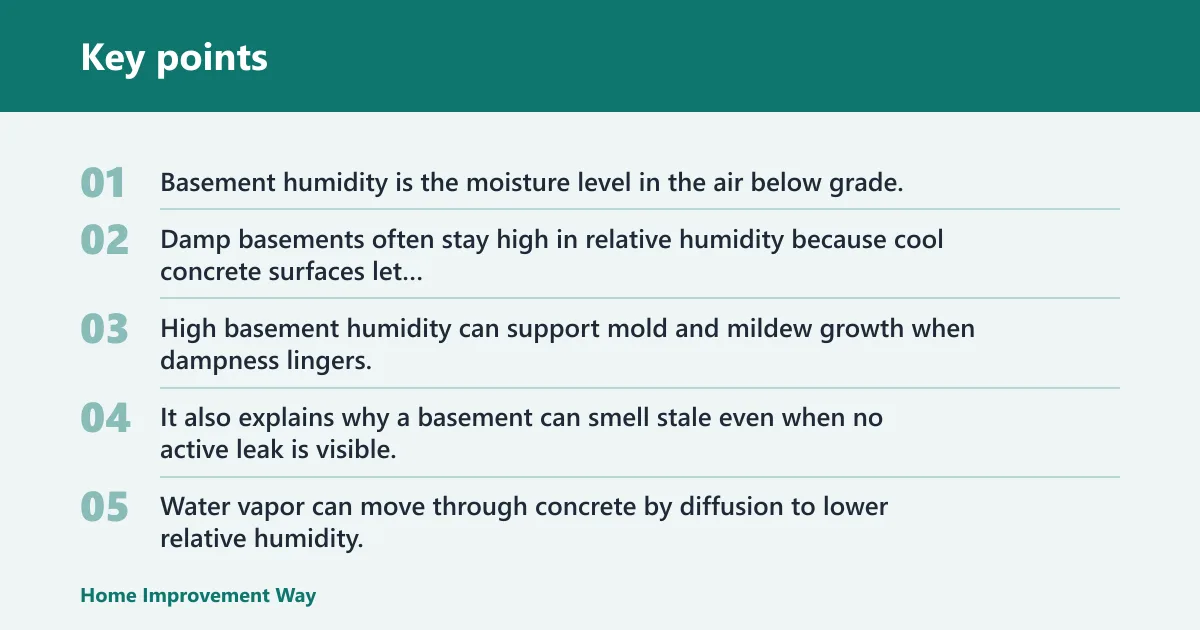
Basement humidity is the moisture level in the air below grade. Damp basements often stay high in relative humidity because cool concrete surfaces let water condense, while the slab and walls keep releasing vapor into the room.
High basement humidity can support mold and mildew growth when dampness lingers. It also explains why a basement can smell stale even when no active leak is visible.
How concrete adds moisture through vapor and evaporation
Concrete is not dry or sealed by default. Water vapor can move through concrete by diffusion to lower relative humidity, and concrete pores can admit groundwater by hydrostatic pressure and wicking. Concrete slabs are also presented as more porous than poured walls.
The basement or slab-on-grade is described as the largest source of home humidity, and the average basement can let in 15–18 gallons of moisture each day. Slab-on-grade construction may allow about 12 gallons of moisture per day.
Why musty smells often track with high humidity
Musty smell is a common symptom of damp basements. It often points to mold and mildew activity, especially when the basement stays humid for long stretches. The smell is a clue, not proof of a single source.
A musty odor can come from condensation on cold surfaces, wet stored items, or moisture moving through concrete. If the smell returns after dehumidifying, look harder for a source that is still adding moisture.
What is basement waterproofing?
Drainage, sealing, and structural repair
Basement waterproofing is a coordinated set of measures that addresses water entry. Those measures include drainage, sealing, structural repair, and humidity control. It is meant for cases where water is reaching the basement, not only making the air damp.
Crack sealing can help with a point leak. It will not solve a broader seepage pattern driven by groundwater or pressure behind the wall.
Interior drainage versus exterior membrane
Interior approaches named in the source material include perimeter drains, sump pumps, and sealants. These collect or redirect seepage after it gets through the concrete, then move it to a sump pump for removal.
Exterior measures include proper grading, membranes, and French drains. An exterior membrane blocks lateral seepage from the outside, but it usually requires excavation and works best with exterior drainage.
Where sump pumps fit in the system
A sump pump removes collected water from an interior drainage system. In cold climates, a freeze-resistant model may be used to reduce winter problems. The pump is part of the drainage system, not a cure for the water source itself.
If hydrostatic pressure keeps forcing water in, a pump can manage the collected flow while the drainage path relieves pressure. Without that drainage path, a sump alone is just a holding point.
Basement moisture decision table
| Symptom | Likely moisture source | Best first fix | When waterproofing is required |
|---|---|---|---|
| Condensation | Warm, moist indoor air hitting cool surfaces | Dehumidifier, air sealing, and vapor control | Only if condensation persists after humidity control and a leak pattern appears |
| Slab vapor | Moisture moving through the concrete slab by diffusion or wicking | Vapor control and dehumidification | If floor dampness or seepage continues, inspect the slab edge and perimeter drainage |
| Wall seepage | Groundwater pushed through walls or joints by hydrostatic pressure | Inspect cracks, joints, and drainage paths | Yes. Drainage, sealing, or structural repair is usually needed |
| Efflorescence | Dissolved minerals left behind by capillary water movement | Trace the wet path and check for seepage at the wall or slab | Yes, if the white powder returns after cleaning or follows rain |
| Musty odor | Persistent dampness, often with mold and mildew | Check humidity, stored items, and condensation points | If odor returns with wet spots, seepage, or efflorescence |
| Standing water | Active water entry, drainage failure, or a crack leak | Stop the entry path and move water to a sump pump or drain | Yes. This is a waterproofing problem, not a humidity-only problem |
How to read the table
Condensation and slab vapor start in the air or at the concrete surface, so humidity control comes first. Wall seepage, efflorescence, and standing water point to water movement through the structure, which means waterproofing moves to the front.
This is where many guides blur the issue. They tell you to dry the basement, but they do not say whether the source is indoor moisture or groundwater entry. Those are different failures.
Why concrete still gets wet
Hydrostatic pressure and groundwater
Hydrostatic pressure is the force that pushes groundwater through foundation materials. When soil around the basement stays wet, that pressure can drive water through pores, joints, and cracks. Sealant alone often fails because it does not relieve the force behind the wall.
That is why drainage matters. A waterproofing system often needs a way to move water away before pressure builds enough to force it inside.
Capillary movement through walls and slabs
Concrete can move moisture by capillary action. The wall or slab may look intact, but water can still travel through tiny pathways inside the material. That is why a basement can feel damp even without a visible leak line.
Concrete slabs are a major source of basement moisture because they are more porous than poured walls. A slab can transmit water vapor into living spaces even when the floor does not show standing water.
Why cracks and joints matter
Cracks, cold joints, and slab edges are the weak points. They are where pressure, wicking, and movement often meet. If moisture appears at the same place after every rain, do not treat it like a simple air-quality issue.
A common first-timer mistake is to paint a damp wall and call it fixed. If the wet line returns at the base of the wall, the real path may be below the floor or outside the foundation.
When is a dehumidifier enough?
Signs the problem is mostly indoor air moisture
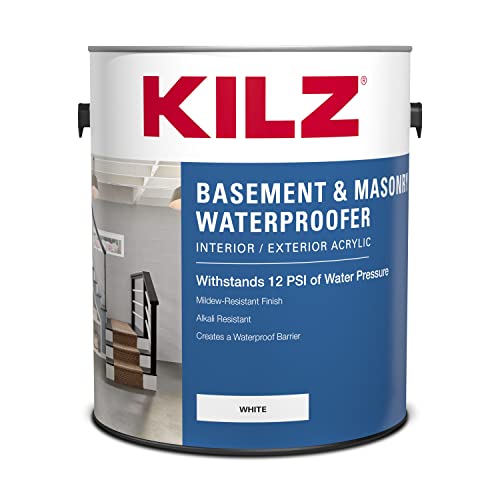
A dehumidifier is often enough when the basement has high relative humidity, light condensation, and no visible seepage or mineral deposits. It works best when the issue is air moisture from vapor, not groundwater entering the structure.
If dampness drops after dehumidification and stays down, the source was likely mostly indoor moisture. If the problem returns after rain or during thaw cycles, keep looking for water entry.
When vapor control and air sealing come first
Start with vapor control when the slab feels cool and damp, stored items pick up a musty smell, and the walls are dry to the touch. Air sealing around rim joists, penetrations, and leaky ducts can also reduce humid air infiltration.
These steps help when the basement is acting like a moisture reservoir. They do not replace drainage if the ground is feeding water into the space.
When a dehumidifier is only a temporary bandage
If you need the dehumidifier to run constantly and the floor still feels damp, the machine is only masking a larger issue. That is especially true if you also see efflorescence, peeling at the wall base, or puddles after heavy rain.
In that case, the fix is not more drying capacity. The fix is to find the entry path and stop the water.
Do you need drainage, waterproofing, or both?
Interior drainage for seepage that reaches the basement
Interior drainage fits basements that already admit water. Perimeter drains capture seepage at the edge and route it to a sump pump. That relieves pressure and moves water out before it spreads across the slab.
This is the common next step when walls are weeping, the floor edge stays damp, or water appears after storms. It is a moisture-entry problem, not just a room-air problem.
Exterior drainage and membranes for lateral water entry
Exterior waterproofing is the right answer when groundwater is pressing laterally against the foundation. Proper grading, exterior membranes, and French drains keep water away from the wall before it reaches the concrete.
Use this path when the outside soil stays wet, the problem repeats during rain, and interior patching keeps failing. Sealants alone do not stop sustained pressure.
How to choose the first repair step
Begin with vapor control if the symptoms are condensation, musty air, and slab moisture without active seepage. Start with drainage and crack inspection if you see wall stains, efflorescence, or wet joints. If the basement has both damp air and water entry, handle the entry path first, then control humidity.
That order keeps you from spending on the wrong layer. Dry the air when the air is the issue. Drain the water when the structure is the issue.
Choose Basement humidity control if or waterproofing
Choose Basement humidity control if the basement is damp mainly because the air stays humid, surfaces sweat, and there is no clear seepage path. Choose waterproofing if water is entering through the slab, wall, joint, or crack, or if you see efflorescence, puddles, or recurring wet spots after rain.
Choose Basement humidity control if…
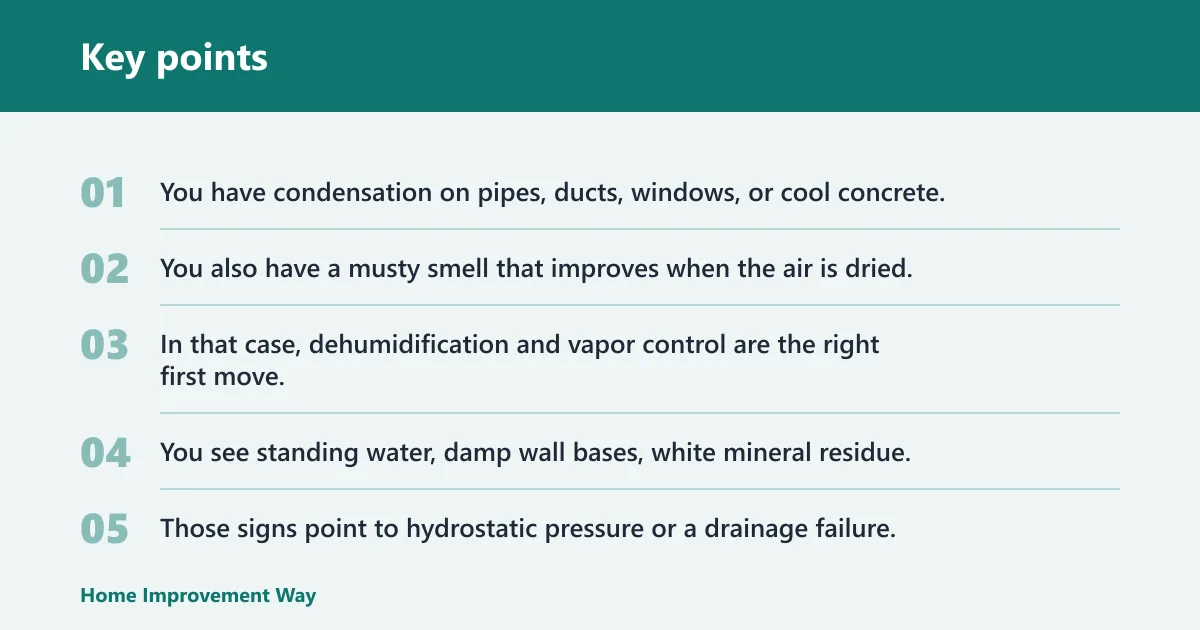
You have condensation on pipes, ducts, windows, or cool concrete, but no visible water entry. You also have a musty smell that improves when the air is dried. In that case, dehumidification and vapor control are the right first move.
Choose waterproofing if…
You see standing water, damp wall bases, white mineral residue, or seepage that tracks with weather and thaw cycles. Those signs point to hydrostatic pressure or a drainage failure. Then the fix is drainage, sealing, structural repair, or an exterior membrane.
A practical rule is simple: dry the air when the source is airborne moisture, and stop the water when the source is entering the basement structure. If you still see wet concrete after humidity control, the basement needs waterproofing work, not another dehumidifier.
Frequently asked questions
What is the difference between basement humidity control and waterproofing?
Basement humidity control manages moisture in the air through dehumidification, vapor control, and air sealing. Waterproofing stops water from entering through walls, floors, joints, or cracks. If the problem is condensation, start with humidity control. If the problem is seepage, drainage or repair is the next step.
When is a dehumidifier enough for a damp basement?
A dehumidifier is often enough when the basement has high relative humidity, light condensation, and no signs of active seepage or mineral deposits. If moisture returns after rain, or if the slab and wall base stay damp, the source is likely water entry rather than just humid air.
What problems can waterproofing fix that humidity control cannot?
Waterproofing can fix seepage, wall leaks, slab-edge leaks, and pressure-driven water entry. A dehumidifier cannot stop hydrostatic pressure or moving groundwater. If the wall base stains, the slab gets wet, or efflorescence keeps returning, waterproofing is the needed repair path.
Can basement moisture come through concrete even without visible leaks?
Yes. Water vapor can move through concrete by diffusion, and concrete pores can admit groundwater by hydrostatic pressure and wicking. That means a basement can feel damp or smell musty even when no stream or puddle is visible on the surface.
Do I need interior drainage, exterior drainage, or both?
Use interior drainage when water already gets into the basement and needs to be captured at the perimeter. Use exterior drainage and membranes when groundwater pressure is the main cause and excavation is practical. Some homes need both, especially when seepage and poor outside drainage happen together.
How does high basement humidity affect mold and musty smells?
High basement humidity supports mold and mildew growth when dampness persists. It also makes musty odors stronger and longer lasting, especially around stored items, cardboard, and cool concrete. Lowering humidity helps, but a repeated smell can still point to a hidden seepage source.
What should be fixed first: vapor control, drainage, or cracks?
Fix the source you can verify first. If the issue is condensation or slab vapor, start with vapor control and dehumidification. If you see seepage, efflorescence, or wet joints, inspect cracks and add drainage before you rely on wall coatings or air drying.
Sponsored / affiliate links. As an Amazon Associate I earn from qualifying purchases. I may earn additional commission from eligible campaigns.